Wesleyan Building // 1870

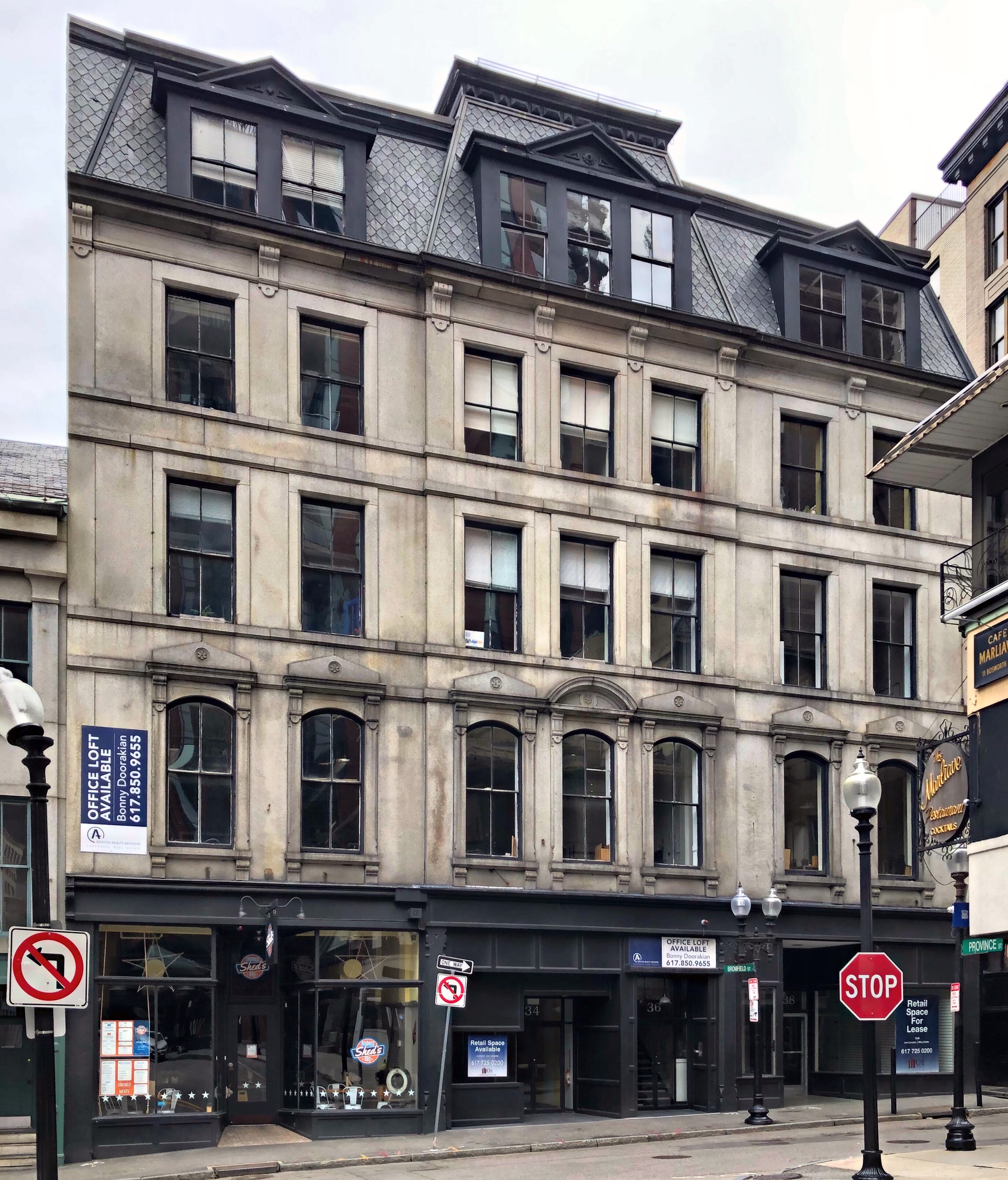
Located between the heavily-trafficked streets of Tremont and Washington Streets in Downtown Boston, you’ll find the Wesleyan Building, centered on Bromfield Street. Constructed in 1870, the Second Empire commercial building was designed by the architectural firm (and brothers) of Billings & Billings, who designed College Hall at Wellesley College just four years later. The five-story granite-clad structure features neo-Grecian detailing and a mansard roof, showcasing the waning popularity of the Second Empire style by the 1870s. The building was constructed adjacent to the Bromfield Street Methodist Church (demolished around 1913) and housed the offices of the Wesleyan Association, which published the newspaper ‘Zion’s Herald‘, a Methodist publication. The building was also occupied by the Emerson College of Oratory by 1890, which later became Emerson College.

Wheatland Rowhouses // 1874

This series of four rowhouses at 233-239 Marlborough Street were built together in 1874 for George Wheatland. Designed as two sets of symmetrical pairs, the four homes together contribute to the character of the Back Bay neighborhood while standing out for their use of materials and detailing. George Wheatland Jr. was a developer of over 100 properties in the Back Bay after the Civil War, and through his business partnerships and savvy land acquisitions and developments, became one of the wealthier residents of the neighborhood. Wheatland was born in Salem, MA and attended Harvard Law School before starting work as an attorney. Within a couple years, he was called to serve in the Civil War and fought for the Union Army, participating in the Siege of Port Hudson in Louisiana! When he returned, he used his legal knowledge and business connections to acquire and develop the filled, newly developable land in Back Bay. These four homes are constructed of brick with scored stucco on the main facade to resemble brownstone, which was more expensive. A large central oriel bay window is situated at each home with the fourth floors incorporated into a mansard roof with Stick style detailing at the dormers.

Captain Edward Penniman House // 1868

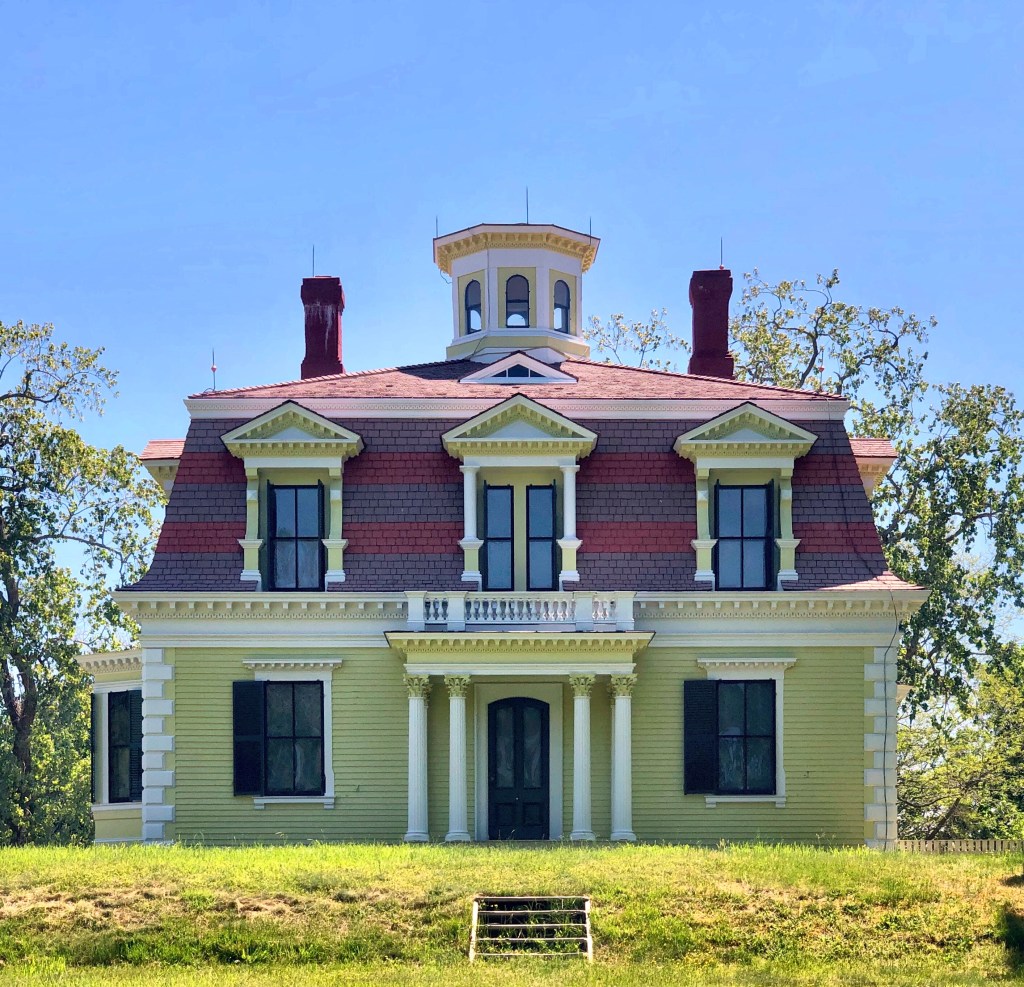
The Edward Penniman House is the finest example of Second Empire style in Eastham, and is one of the finest examples of this architectural style on Cape Cod. The grand home was designed and occupied in 1868 for Edward Penniman (1831-1913), one of the most successful whaling captains in New England.

Born in 1831 in Eastham, Edward Penniman set sail for the first time at age 11. The voyage was to the dangerous and unpredictable waters of the Grand Banks, a rich fishing ground off the coast of Canada’s Newfoundland. Nantucket had a flourishing whaling industry as early as the late 1600s, but it was New Bedford with its deep water harbor and railway system that would become New England’s whaling capital. In 1852 at the age of 21, Penniman would journey to New Bedford and sign on to his first whaling expedition. Later when Penniman became a captain he would select New Bedford as his home port setting sail seven times to hunt whales.

With whale over-harvested in the Atlantic along the shores of New England, whalers were forced to go further and further from home to hunt. Whaling expeditions often spanned three or four years, and it was not uncommon for wives and families of ship captains to go along on the trip. Penniman’s wife, Betsy Augusta Penniman, called “Gustie” by her husband, went on three such voyages often assisting with navigation and other shipboard matters. In addition, each of the three Penniman children accompanied their parents on various journeys with eldest son Eugene eventually becoming a whaling captain himself.

After the Captain’s death in 1913, Mrs. Penniman and their daughter, Betsey, continued to live in the home. Mrs. Penniman’s died in 1921. Betsey Penniman, who never married, stayed around and raised her niece, Irma. Upon Betsey’s death in 1957, the home was left to Irma Penniman Broun. Irma and her husband sold the house with twelve acres to the National Park Service in 1963 when the Cape Cod National Seashore was formed.