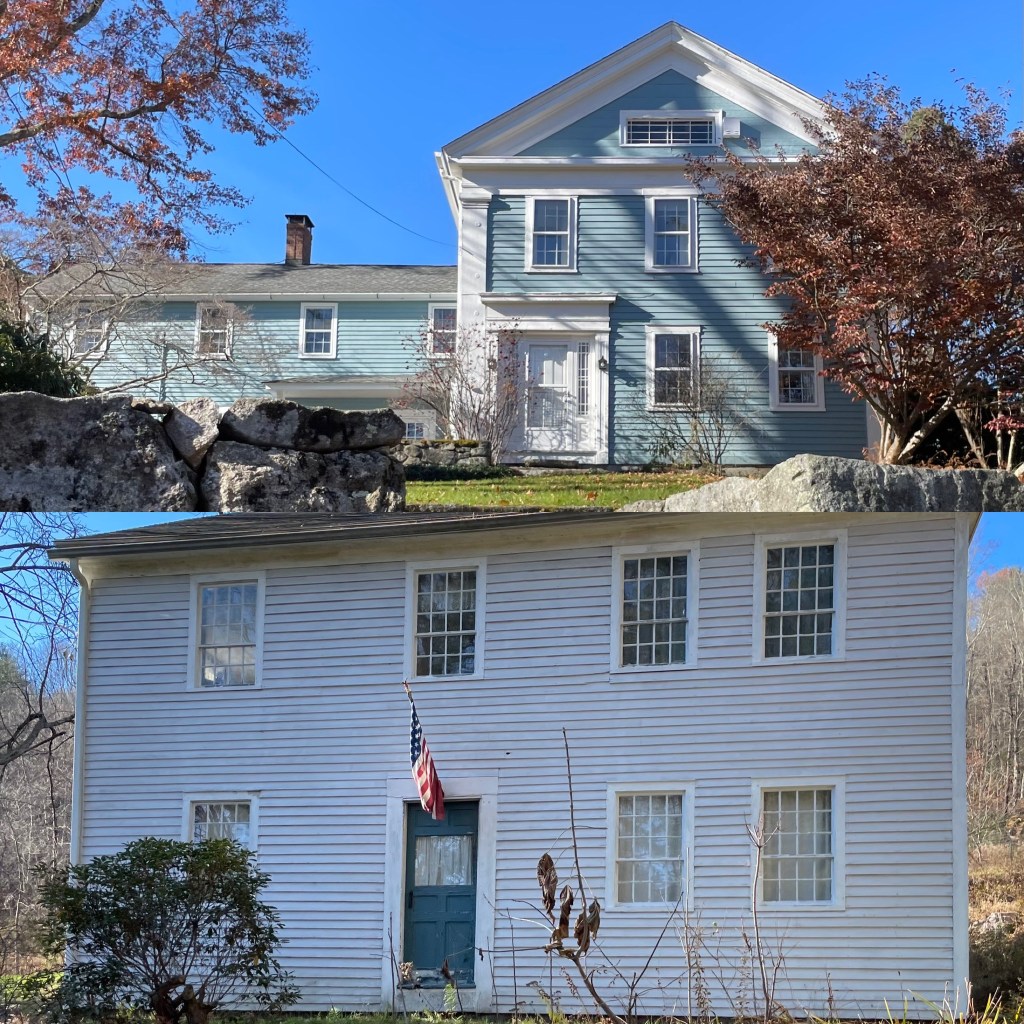
Alson and Sadosa Barbour Houses // c.1840

Alson and Sadosa Barbour (sometimes spelled Barber) grew up in North Canton, Connecticut and resided in these two homes, raising families and farming the land. The blue house was built in 1839 for Alson Barbour, who updated his earlier 1814 home which was gifted to him by his father as a wedding gift. The smaller home was outgrown by Alson, Hannah, and their 12 children (all living to adulthood) and he built this stately Greek Revival home on the quiet, meandering road. Not to be outdone by his brother, Sadosa too added onto his earlier home, also a wedding gift from his father. The 1803 house was enlarged in 1840 and given its present appearance, a modest Greek Revival home with a side-gable roof.

Which house is your favorite?

Adams House // c.1770

This old Georgian house in rural Canton, Connecticut was built before the Revolutionary War for David Adams (1742-1834). After David’s death, the home was willed to his family, and soon after became a local post office for the village, facilitated by the fact Oliver Adams became postmaster for the area. The family built an attached structure as a post office, but it was removed in the early 20th century. The post office was run out of the home by members of the family until the 1930s. Later owners restored the house and discovered that the home originally had a gambrel roof, which matched the office addition.

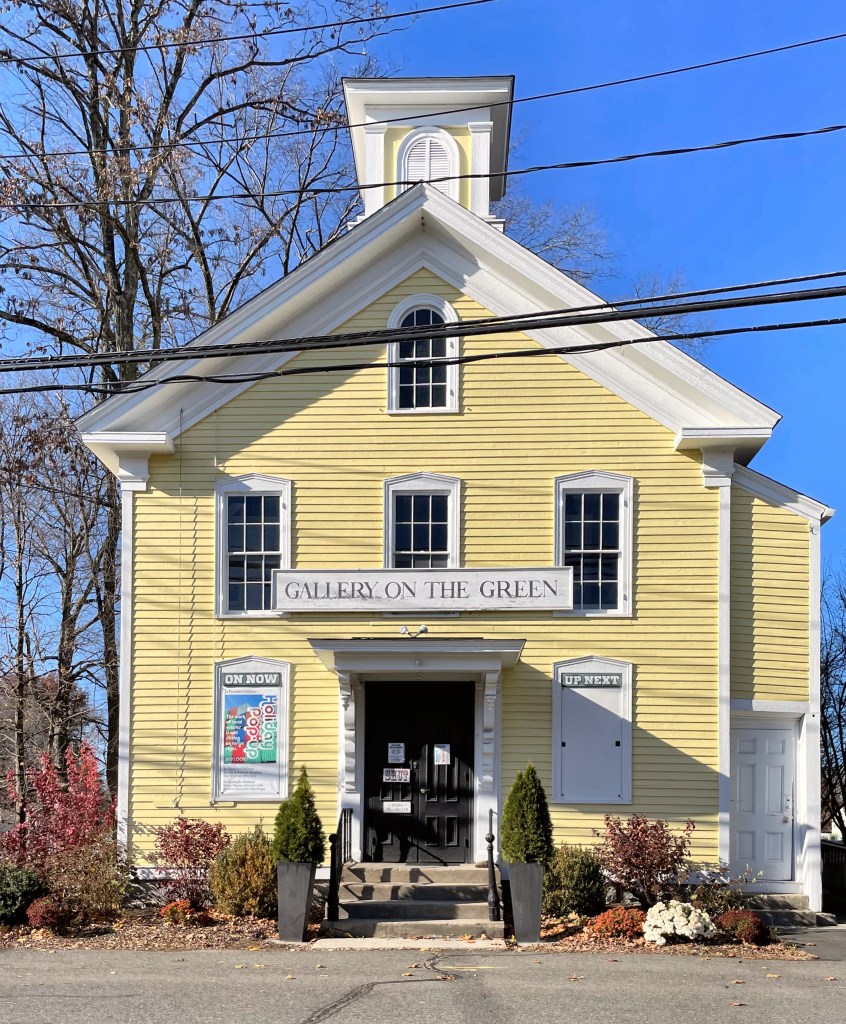
Canton Center Schoolhouse // 1872

Canton, Connecticut, the only town in the state named after a city in China! The land which we now know as Canton had long been inhabited, specifically by the Wappingers, a group in the larger Algonquin speaking tribes. Canton was incorporated out of Simsbury in 1806, and named after the City of Canton in China (now known as Guangzhou), though I am not sure why. The town quickly developed two main villages. Collinsville sits on the Farmington River and its power was harvested for industry; while the center village grew differently as an agricultural village of farms. At the center of town sat a green for civic and town functions and gatherings. The town constructed a school here as far back as 1759, when the rural village was still a part of Simsbury. This is the fourth building on the green and it was built in 1872, and can be classified as Italianate in style. The building was occupied as a school until 1949, and it was used for other city uses until 1971, when the building was rented to the Canton Artist’s Guild and the building was renamed Gallery on the Green. The building remains community-focused and holds exhibits of local artists! Much of the rest of Canton Center lost all of its bucolic charm when the main road became commercialized, prioritizing speeding cars over a walkable village.