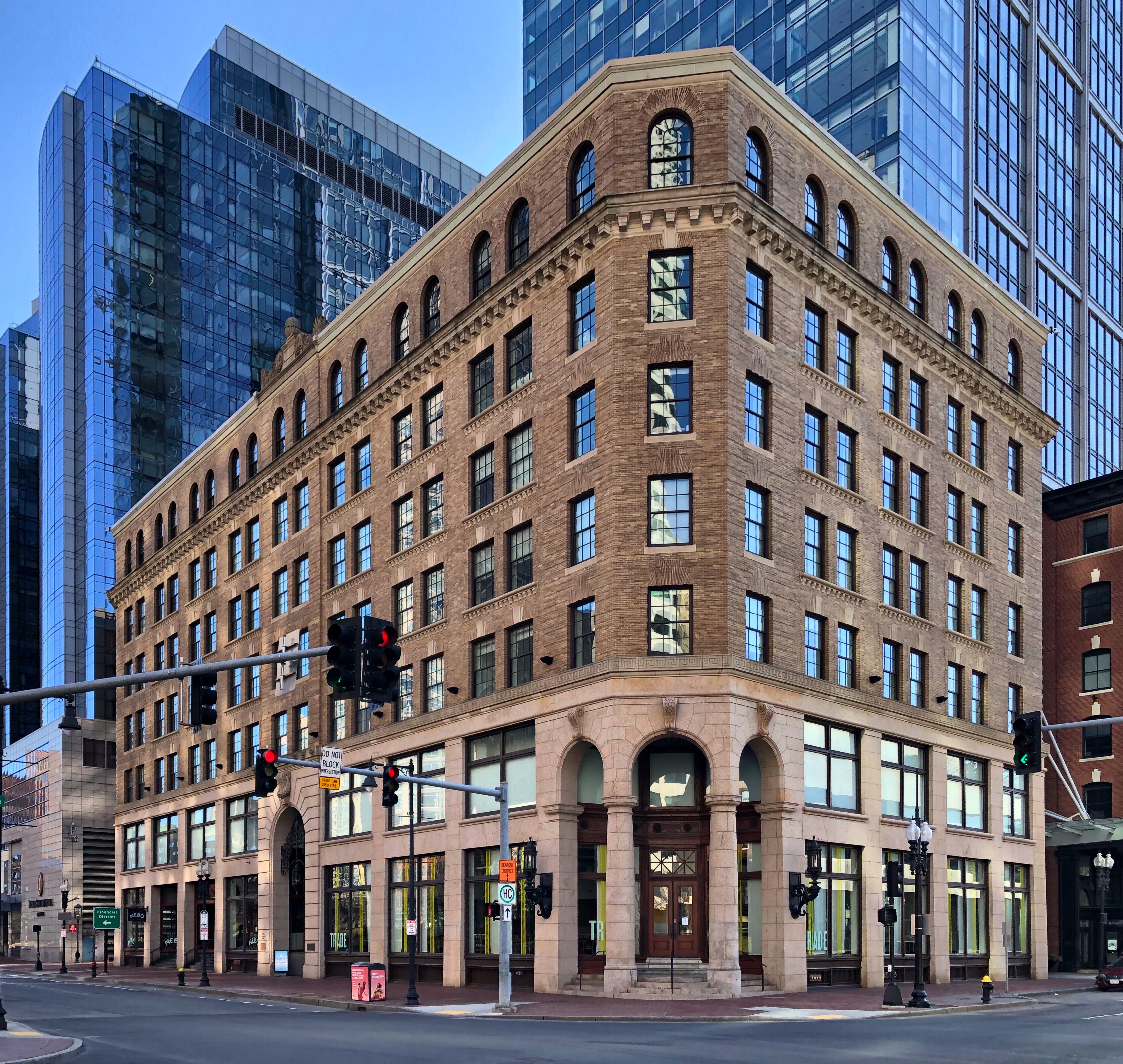
Russia Building // 1897

After the Great Fire of 1872 burned a large portion of Downtown Boston and destroyed the Russia Wharf structures on Atlantic Ave, the city decided to extend Congress St. over the wharf and across a new bridge connecting Downtown to areas being filled in South Boston (now Seaport). The wharf was the center of Boston’s trade with Russia in the late 18th and early 19th centuries. The original wharf buildings were destroyed in the Great Boston Fire of 1872, and the land area was extended by building over the wharf and filling the spaces surrounding it. Three new Russia Wharf buildings were built on the original site of Russia Wharf, near where the Boston Tea Party took place in 1773. Permits were issued in 1897 for the Russia Building and its two neighbors facing Congress St. Opening in 1898, the principle occupant of the Russia Building (seen here) was the Library Bureau, manufacturers of the “Perfected Card System,” library and office Supplies, with branches in other major cities. The buildings were designed by the renowned firm of Peabody and Stearns, who were VERY busy at the end of the 19th and early 20th centuries around Boston.

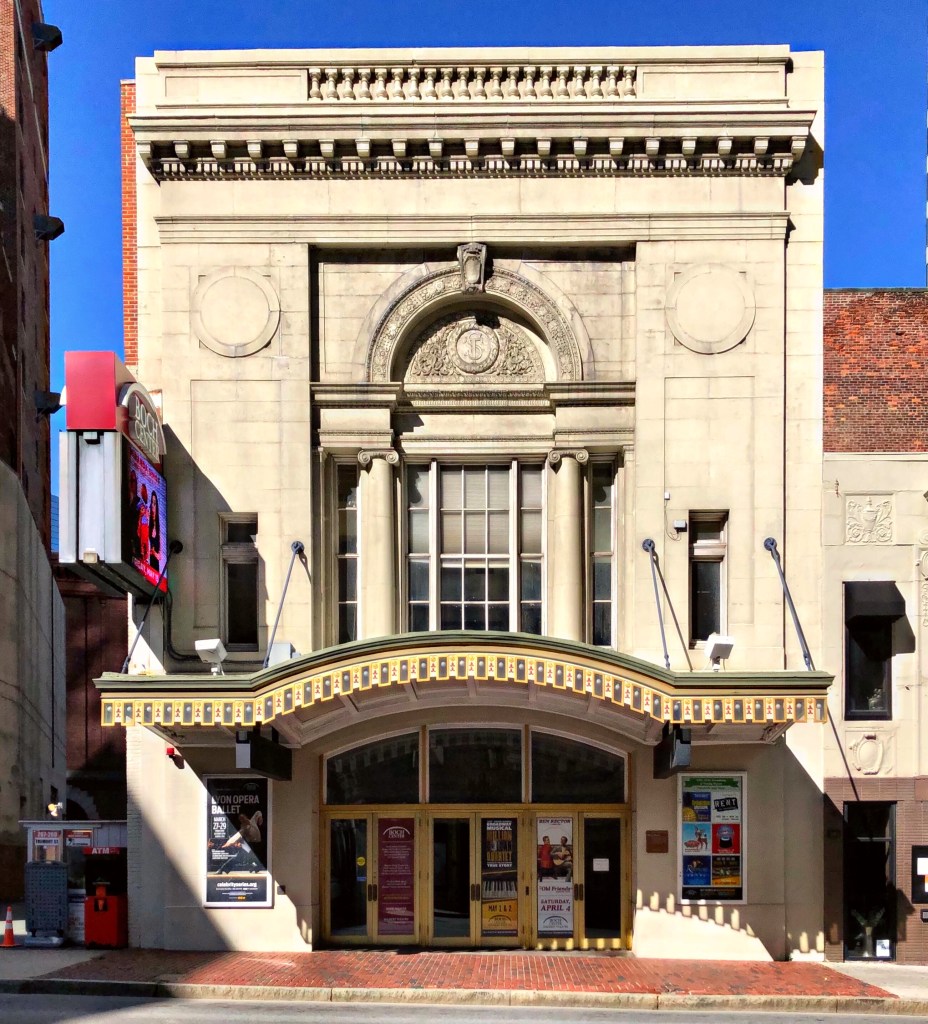
Shubert Theater // 1908

One of the many iconic theaters on Theater Row in Downtown Boston, the Shubert Theater packs a punch for one of its size. Designed in 1908 and originally named the Lyric Theatre, the theatre was built for live performances. The theatre was named in 1910 after Sam S. Shubert, known as the founder of the independent theatre movement. Shubert was the oldest of three brothers and the first to become involved in theatre management in the 1880’s. At the age of just 26, Sam Shubert died due to a train wreck in 1905, and his brothers Lee and Jacob went on to continue their brother’s empire, which included theatres in Boston, New York and Chicago, which operates after their deaths as the Shubert Organization. In February 1996, the Wang Center signed a 40-year lease agreement to operate the theatre with the Shubert Organization, which continues to own the building and property; the theatre reopened after renovation in November 1996. The Boch family became the namesake of the center in 2016, making the full name of the theatre the Shubert Theatre at the Boch Center.

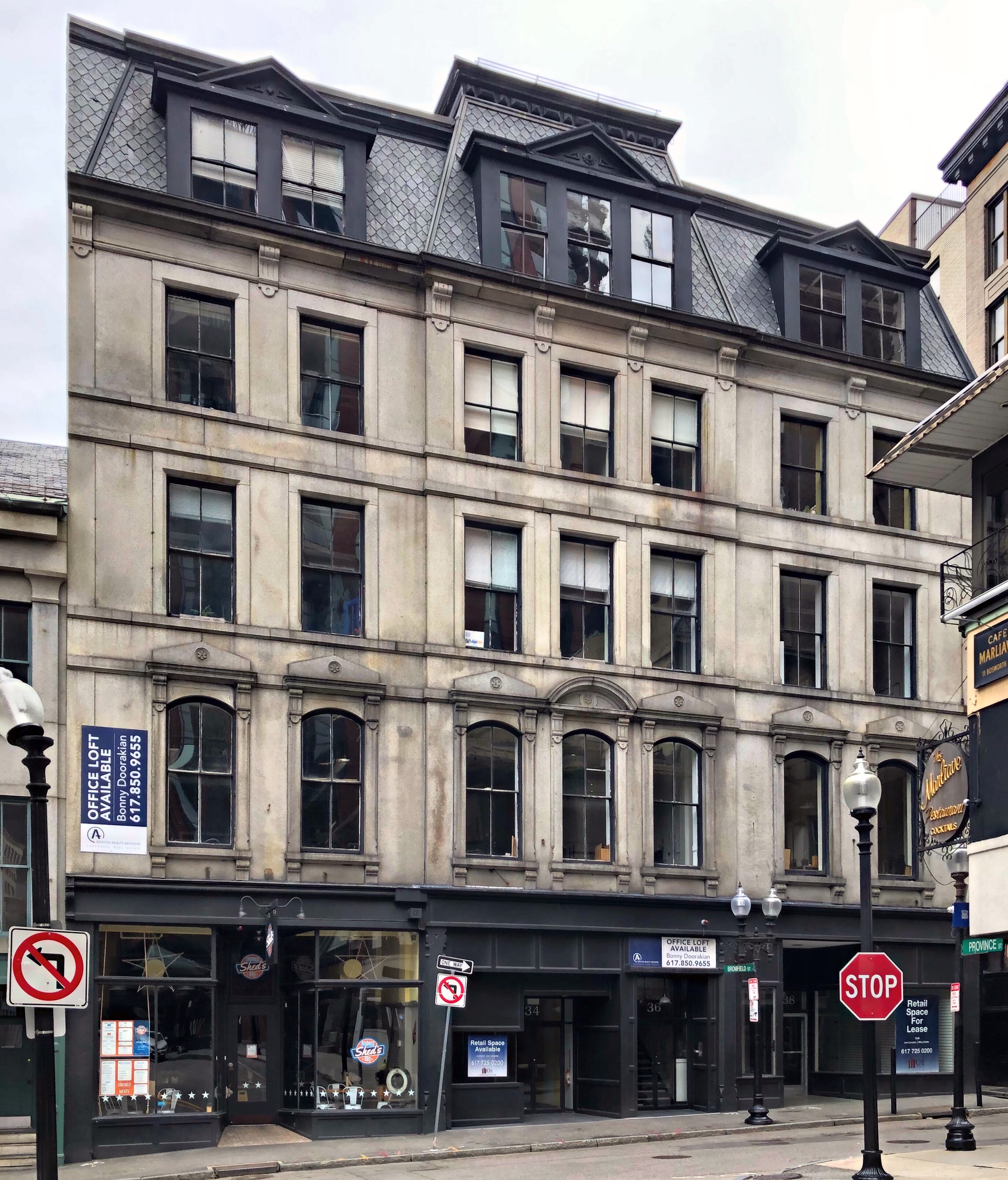
Wesleyan Building // 1870

Located between the heavily-trafficked streets of Tremont and Washington Streets in Downtown Boston, you’ll find the Wesleyan Building, centered on Bromfield Street. Constructed in 1870, the Second Empire commercial building was designed by the architectural firm (and brothers) of Billings & Billings, who designed College Hall at Wellesley College just four years later. The five-story granite-clad structure features neo-Grecian detailing and a mansard roof, showcasing the waning popularity of the Second Empire style by the 1870s. The building was constructed adjacent to the Bromfield Street Methodist Church (demolished around 1913) and housed the offices of the Wesleyan Association, which published the newspaper ‘Zion’s Herald‘, a Methodist publication. The building was also occupied by the Emerson College of Oratory by 1890, which later became Emerson College.

Wheatland Rowhouses // 1874

This series of four rowhouses at 233-239 Marlborough Street were built together in 1874 for George Wheatland. Designed as two sets of symmetrical pairs, the four homes together contribute to the character of the Back Bay neighborhood while standing out for their use of materials and detailing. George Wheatland Jr. was a developer of over 100 properties in the Back Bay after the Civil War, and through his business partnerships and savvy land acquisitions and developments, became one of the wealthier residents of the neighborhood. Wheatland was born in Salem, MA and attended Harvard Law School before starting work as an attorney. Within a couple years, he was called to serve in the Civil War and fought for the Union Army, participating in the Siege of Port Hudson in Louisiana! When he returned, he used his legal knowledge and business connections to acquire and develop the filled, newly developable land in Back Bay. These four homes are constructed of brick with scored stucco on the main facade to resemble brownstone, which was more expensive. A large central oriel bay window is situated at each home with the fourth floors incorporated into a mansard roof with Stick style detailing at the dormers.

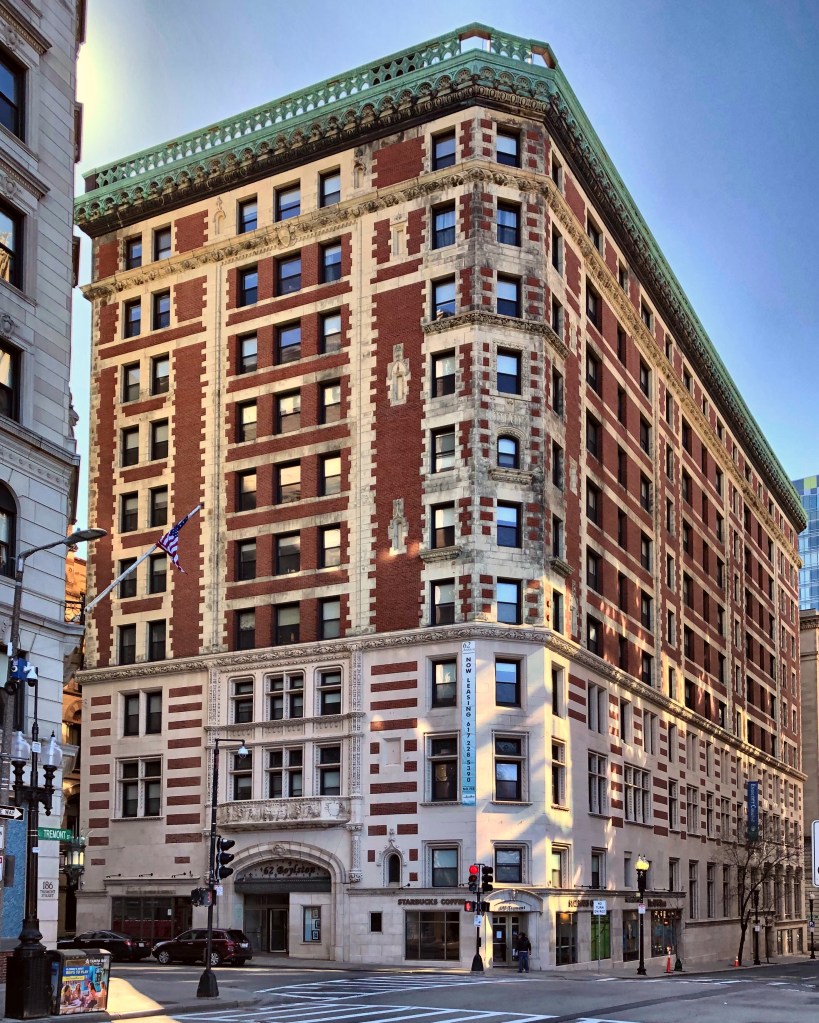
Hotel Touraine // 1897

The Hotel Touraine at the corner of Boylston and Tremont Streets in Boston was built in 1897 as one of the most luxurious hotels in the city. Designed by the local firm of Winslow and Wetherell, the Jacobean Revival style building commands the well-trafficked corner opposite the Boston Common. Early articles described the hotel as “a large and sumptuously equipped house, with internal decorations in the style of the Chateau de Blois (a French chateau). Winslow and Wetherell appeared to have been inspired by the Louis XII wing of the Chateau, as many design elements of the hotel closely resemble it. The hotel was advertised as having 350 rooms valued at $2 a night up to $3 a night for a room with a private bath. Separate men and women’s parlors, a library, and elevator service made the hotel desirable for the upper-class Bostonians and visitors to the bustling Downtown area. The hotel’s rich clientele eventually began frequenting the larger hotels near Copley Square and the stature of the Touraine slipped with a changing Downtown character. By the 1960s, the hotel closed and was converted to apartments.