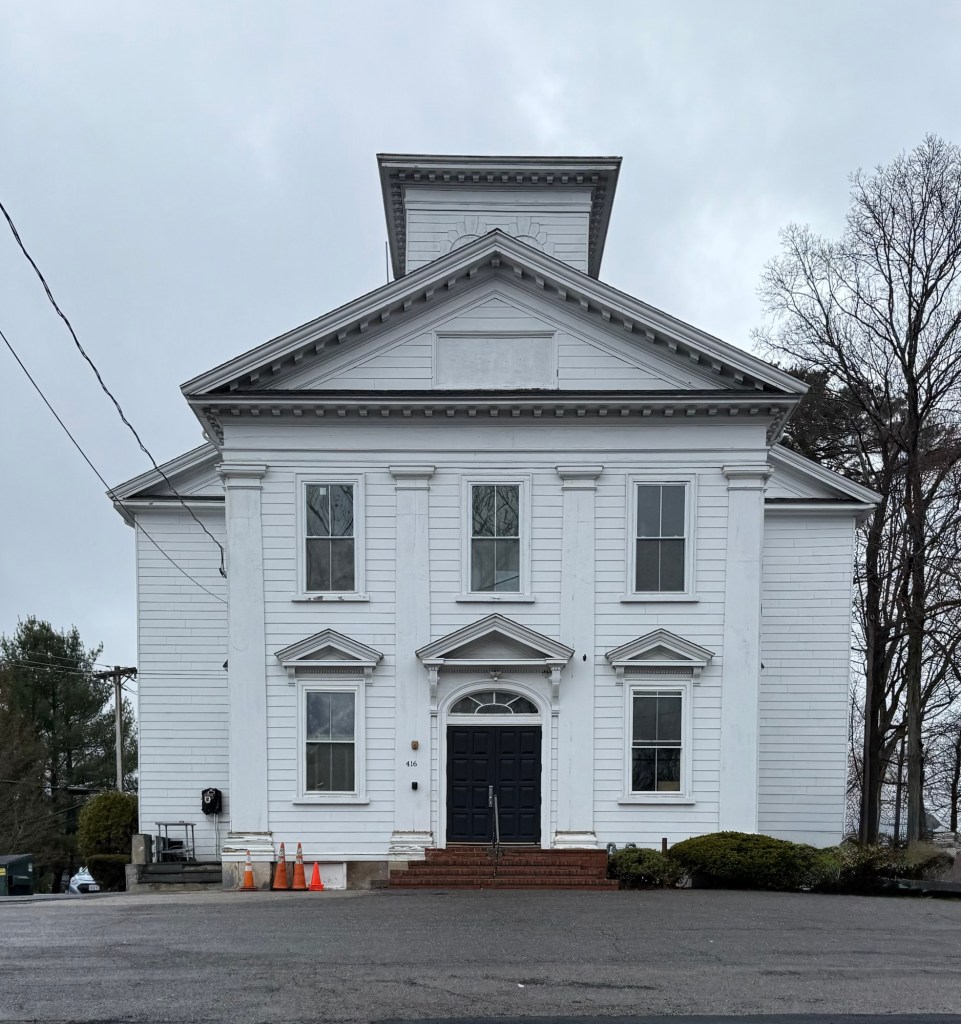
First Congregational Church of Abington – Abington Masonic Hall // 1819

The First Congregational Church of Abington, Massachusetts, was established in 1711. Besides the First Church, there were three additional churches founded in the town’s other villages: The Second Church in South Abington (now Whitman) Third Church of East Abington (now Rockland), and the Fourth Church at North Abington. This edifice was the third building of the congregation, and was built in 1819. The structure was only used as a church for 30 years until 1849, when the congregation built a new church nearby. This structure was sold and converted to a Masonic Hall and District Court for some years. Major changes to the building include the destruction of the steeple from the Gale of 1869, and in 1885, the present entryway was added, extending about 20 feet from the facade to provide a more adequate stairway to the second floor. Today, the building is used as a church for a local Brazilian congregation.
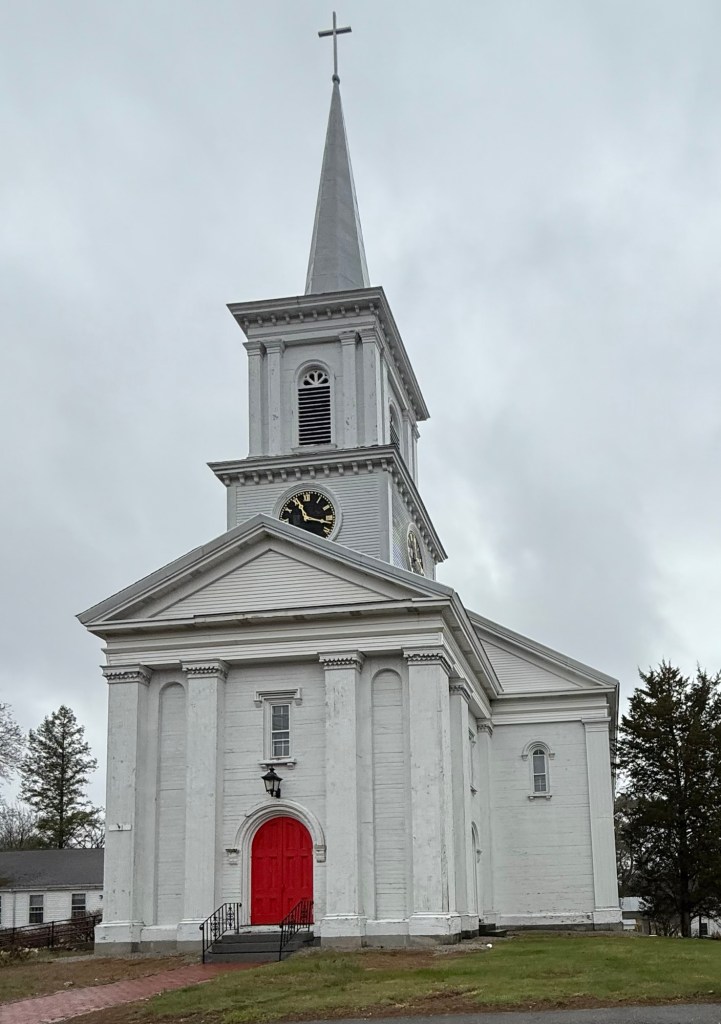
First Congregational Church of Abington // 1849

Abington, Massachusetts was first settled by Europeans in 1668 and was officially incorporated in 1712. Its namesake was is said to have been set by Governor Joseph Dudley as a tribute to Anne Bertie Venables, Countess of Abingdon, wife of the second Earl of Abingdon, who helped Dudley secure the governorship of the Colony of Massachusetts from Queen Anne. Governor Dudley noted in its decree that, “the Town be named Abingdon”. A marginal note on the document gave the spelling as “Abington” with a “t”, which has served as the spelling ever-since. At the center of town, this handsome church is the fourth edifice of the Congregational Church Society in Abington, Massachusetts, and replaced the third church, which was occupied for just thirty years until 1849, when this Greek Revival structure was built. Located a stone’s throw from its former home, this church showcases the increase in membership and relative wealth of the congregation by the middle of the 19th century. The structure with its flushboard siding and bold Doric pilasters, features an arched center entrance and multi-stage tower containing a clock and enclosed belfry.