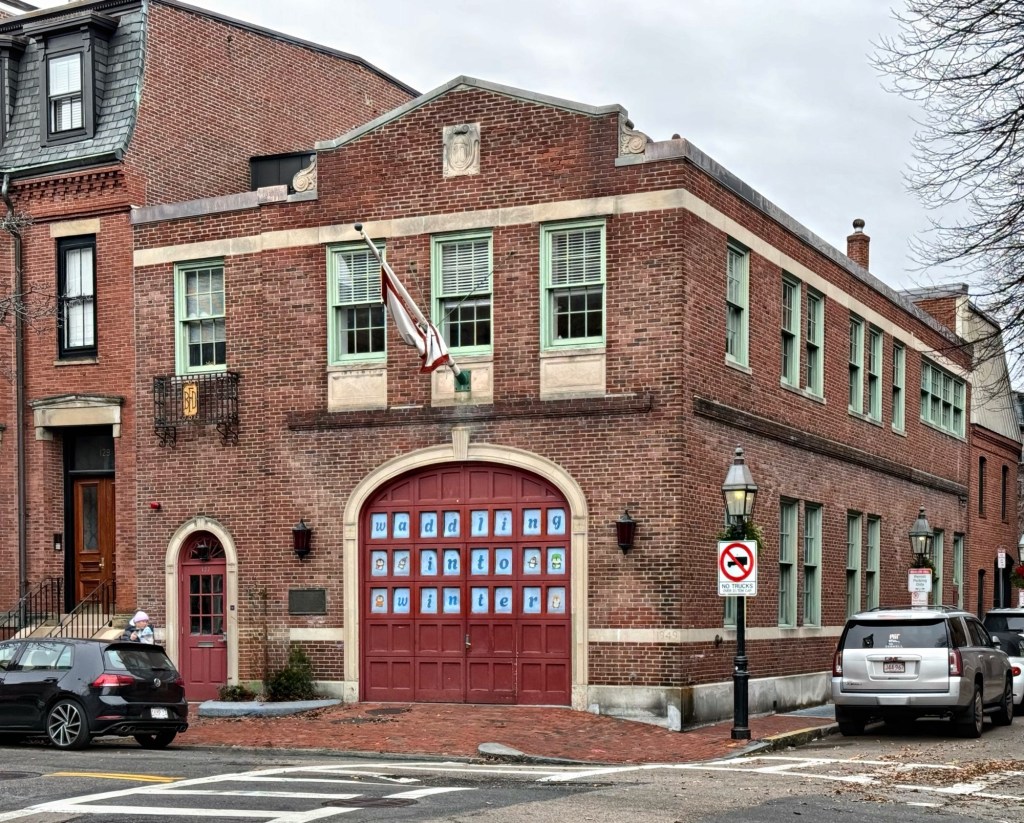
This iconic former firehouse at the corner of Mount Vernon and River streets in Beacon Hill, was built in 1949 and despite its relatively young age, has become an iconic landmark in the neighborhood. Since the mid-19th century, this site has been occupied by a fire station, most of which as a Second Empire, brick engine house with a mansard roof. After WWII, the Fire Department struggled to use the 1860s station which was built before the large, vehicular fire trucks replaced horses-drawn apparatus. In 1946, the Victorian station was razed and architect, John Mathew Gray, furnished plans for a new, Colonial Revival style station that could accommodate the larger fire trucks. The new station opened in April 1949 and Engine 10 remained here until 1982, when the company moved to 123 Oliver Street, Downtown. The Fire Department retained ownership of the building until 1995, and around this time, the building served as the filming location for television shows Spenser For Hire, which ran from 1985 to 1988 and the MTV series The Real World, which was broadcast in 1997. Since 1998, the property has been home to Hill House, Inc. a long-standing non-profit providing sports activities for children, adult education classes and programs for senior citizens.
 Buildings of New England