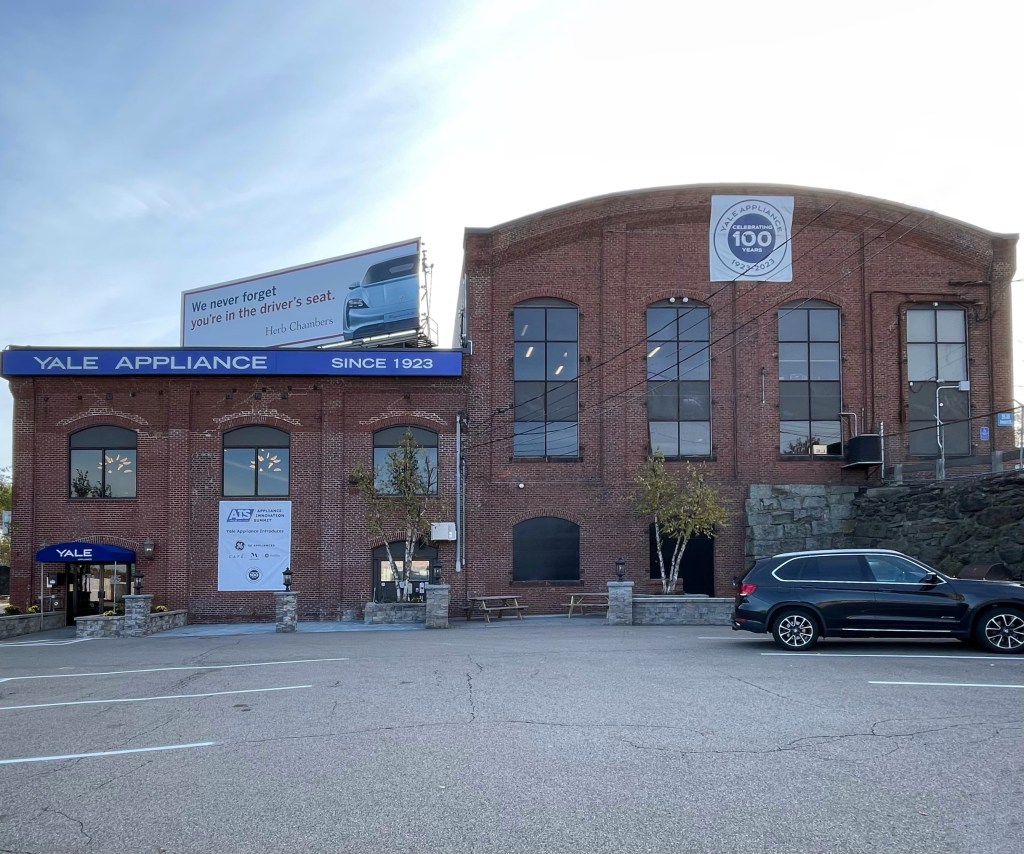
The West End Street Railway was established in 1887 originally as an offshoot of a land development venture, but it rose to prominence when it merged several independent streetcar companies into a single organization. Over the next decade, it became the primary operator of public street transit within the Boston area! During this time, the company maintained one of the largest street railway systems in the world, the first unified streetcar system in the United States, and first electrified system in a major US city. Now, it’s the infamous MBTA. How far they fall… Power plants were needed all over the city to provide electrical power for the company’s street cars, this was the fourth (and final) power station built, and it powered the Dorchester, Neponset, Ashmont and Milton lines. The station was constructed in 1896 on the shores of Dorchester Bay, which allowed for coal to be delivered in barges to the plant. Old stone walls formerly lining the shore can be seen to this day. Landfilling in the second half of the 20th century and the construction of I-93 have since cut off the building from the shore. Eventually the building was sold off and today is home to Yale Appliance, good thing none of their products are coal powered!
 Buildings of New England