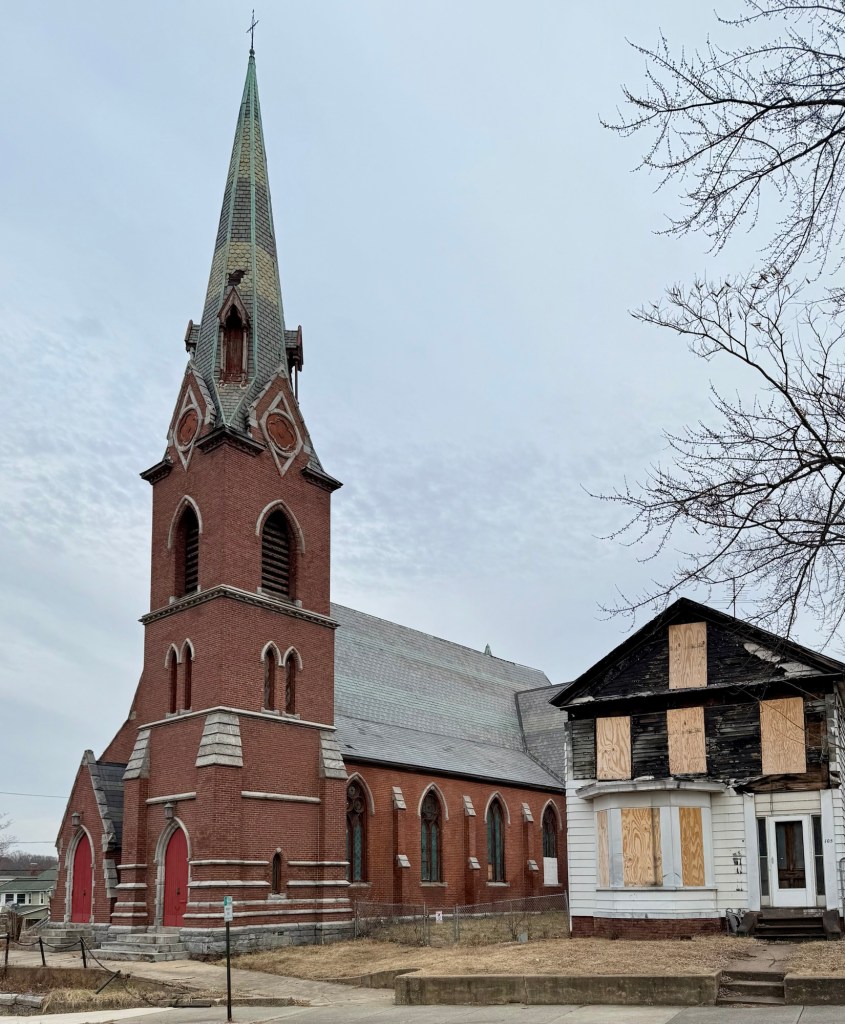
Third Congregational Church of Chicopee // 1868

The Third Congregational Church of Chicopee was built on a prominent lot on Springfield Street in 1868, replacing the congregation’s first church there, which was outgrown. The present building was designed by Charles Edward Parker, a Boston-based architect, who was an expert in Gothic architecture. He would design the Chicopee City Hall just years later. The building is constructed of brick and atop a granite base and features lancet (pointed arch) doors and windows, a corner steeple, and steep gable end with large rose stained glass window. The interior is preserved as well. Due to shifting demographics in Chicopee in the early 20th century, the church merged in 1925 with the Central Methodist Episcopal Church, forming the Federated Church of Chicopee. The congregation eventually closed and the church has sat vacant in recent years, and was briefly listed for sale in 2024, 9,339 square feet for just $200,000.
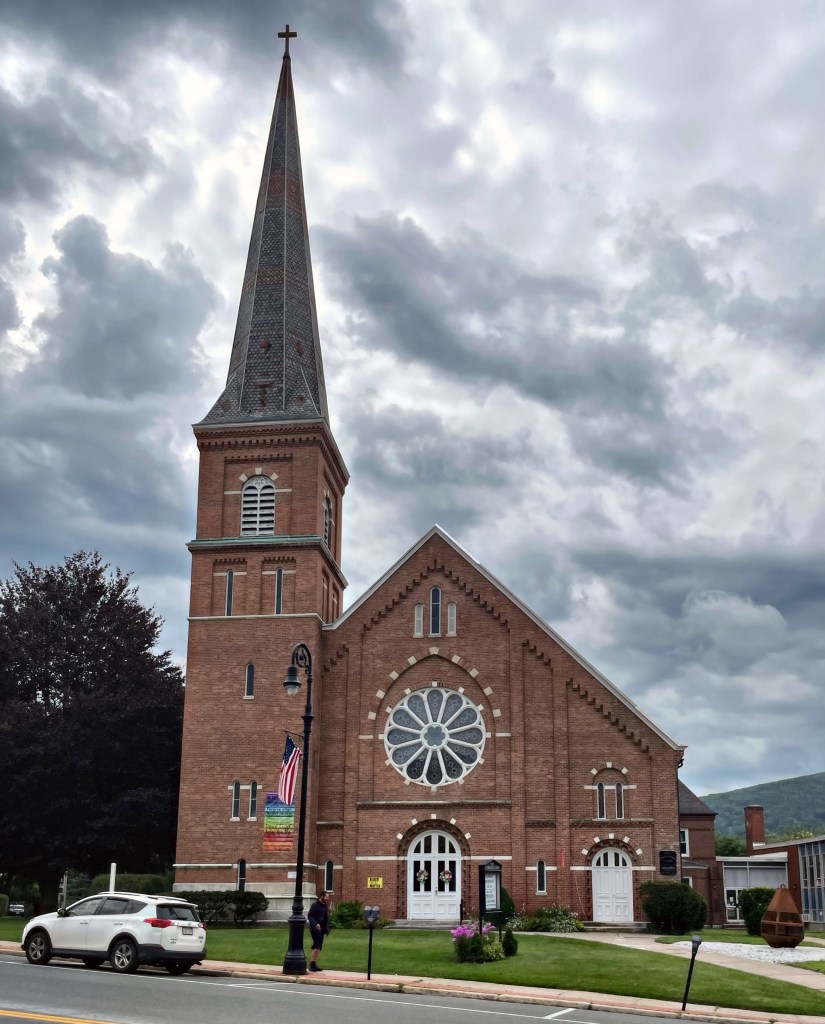
First Congregational Church of North Adams // 1863

Initially the Congregationalists of Adams and North Adams, Massachusetts met in a small, wooden meetinghouse that was lent to them for use by the Baptist Church. The small, but active congregation totaled just 22 people; 5 men and 17 women. The first minister of the church, John W. Yeomans, worked diligently to see the new church succeed. He was able to raise $3000 from Congregationalist members here and in surrounding communities to build a church of their own. In 1827, a new brick meetinghouse was constructed on the site of the current building. Due to the continuing growth of the church, a new building was necessary after membership outgrew the brick meetinghouse. Bricks from the 1827 building were used in the construction of this church. Architect Charles Edward Parker began construction of the First Congregational Church during 1863 and finished building in 1865. The church was constructed in the Romanesque Revival style; which can be seen in the church’s narrow elongated windows that are covered with wide stone arches, as well as its brick and stone construction, and the building’s slate, conical-shaped roof. What a textbook academic example of an early Romanesque church, especially in a relatively remote town!