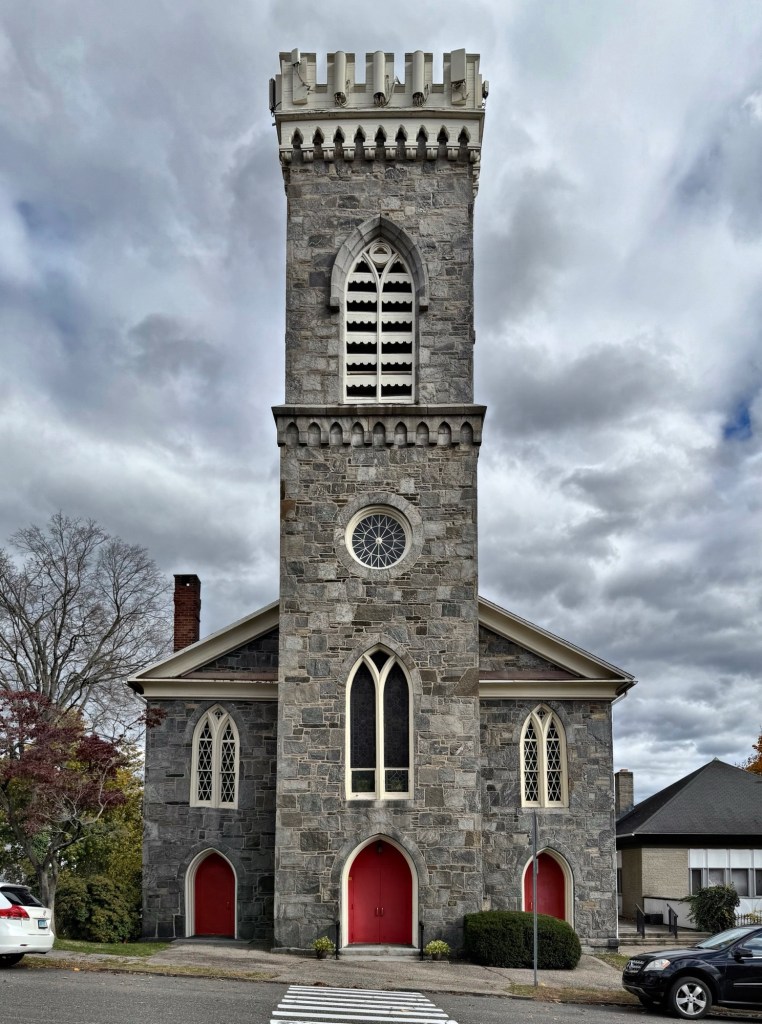
The Gothic Revival style Immanuel St. James Episcopal Church of Derby is a landmark example of the style in this part of Connecticut and serves as the eastern anchor to the Birmingham Green in town. The church dates to 1843 and was built by The stone church was was built by stonemason, Harvey Johnson and Nelson Hinman, a carpenter. The land for the church was donated by Sheldon Smith and Anson G. Phelps, wealthy industrialists in town. The building originally had a wooden steeple, which was replaced by the present stone belfry in 1853. The church merged with another area congregation, which together, have preserved this significant structure, though the communications antennae on the battlements on the belfry is unfortunate.
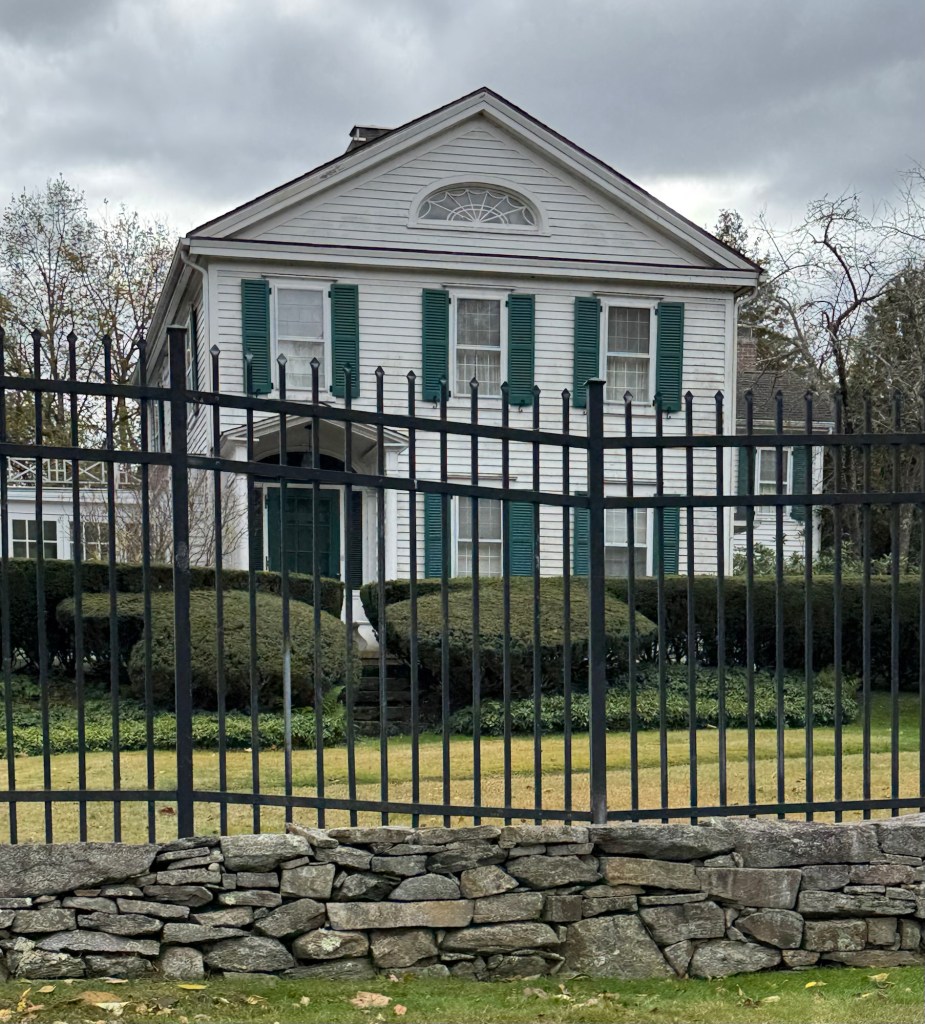
This Greek Revival style farmhouse in Derby, Connecticut, was originally built around 1840, though little is known about its first occupants. In 1867, Wilbur Osborne (1841-1907), who owned and ran several industries in Derby, Ansonia and Bridgeport, and his wife, Ellen Lucy Davis, moved to the house, who together, also ran a dairy farm on their farmland. Their only daughter to survive to adulthood, Frances E. Osborne (1876-1956) took over the farm after her father’s death and became a prominent businesswoman. At age 16, Frances lost the vision in one eye due to an accident, and, as a result, never completed her public school education. Frances Osborne, in an era when women were denied leadership opportunities in the business world, succeeded through pure determination and an excellent business sense. Her achievements included becoming president of Union Fabric Company, vice president of Connecticut Clasp, and treasurer of the F. Kelly Company. She was also a founding partner of Steels and Busks of Leicester, England. She married Waldo Stewart Kellogg in 1919, and he took charge of the dairy, using selective breeding to make the herd “famous throughout New England for quality milk production.” Waldo and Frances Kellogg enlarged and remodeled the house to its current form between 1919 and 1925 adding wings and renovating the interiors in the Colonial Revival style. Waldo Kellogg died in 1928, but Frances stayed in the house until her death in 1956. Just before she died, she deeded her entire 350-acre (140 ha) estate, including Osbornedale, to the State of Connecticut. The state now operates the house and grounds as the Osborne Homestead Museum; the surrounding land comprises Osbournedale State Park.
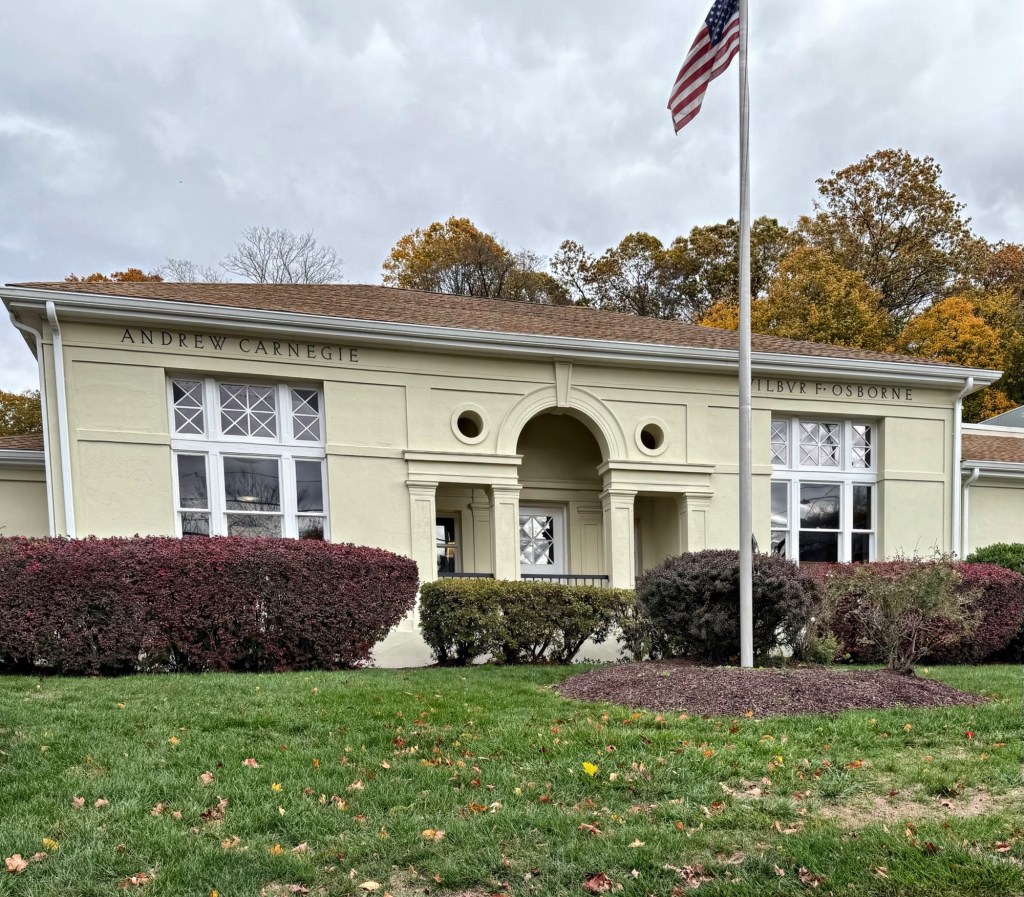
The Derby Neck Library in Derby, Connecticut, is a beautiful example of an early 20th century library and one of a few Carnegie libraries in the state. The beginnings of the library began in 1897, when Wilbur F. Osborne and his wife, Ellen Davis Osborne, who lived at the nearby Osborne Farm, donated $50 to the nearby school to begin a small library in the building. After years of growth, Wilbur Fisk Osborne, requested funds from Andrew Carnegie, who was donating money to communities all across the country for such purposes, to build a new library for Derby Neck. In 1906, Carnegie donated $3,400 to the community, and planning began on the building. Sadly, Osborne died around the time the library opened in 1907. The building was designed in the Classical Revival style by architect, Henry Killam Murphy of Connecticut. Osborne’s daughter, Frances Osborne Kellogg, who inherited her father’s farmhouse nearby, directed the library until her death in 1956. The building was expanded in 1972 and again in 1999.
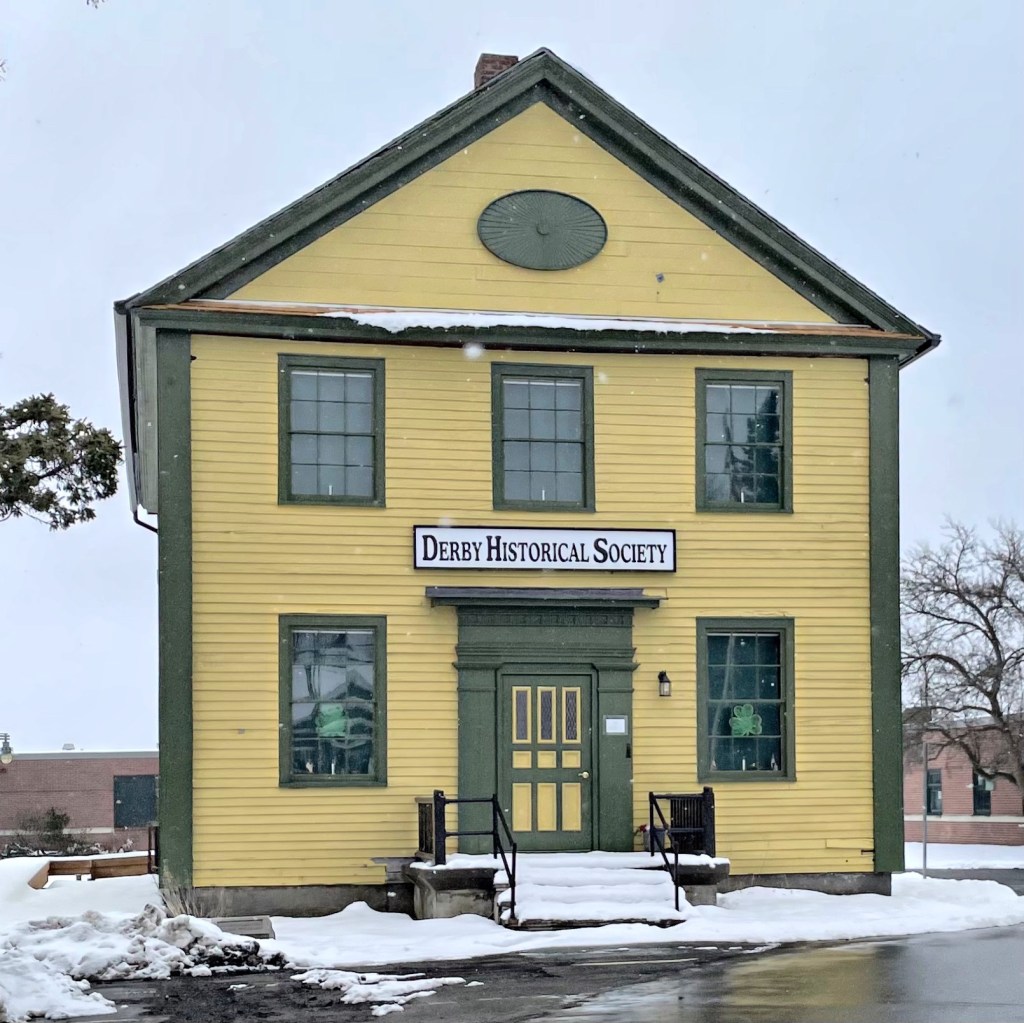
The Derby Literary and Theological Institute, a private boarding school, was opened in 1840 by the Danville Baptist Association on a one-acre plot of land donated by local landowners Lemuel Richmond and Benjamin Hinman. The academy housed 147 students of nearby towns for classes. Two years later, an atheneaum was established in the building as a local library for residents. The building would later become Derby’s public Jr. and Sr. High School as the town’s population at the time was just over 2,000 residents. The school was eventually outgrown and a modern school was built, located nextdoor. This building was gifted to the Derby Historical Society who maintain it to this day.
 Buildings of New England