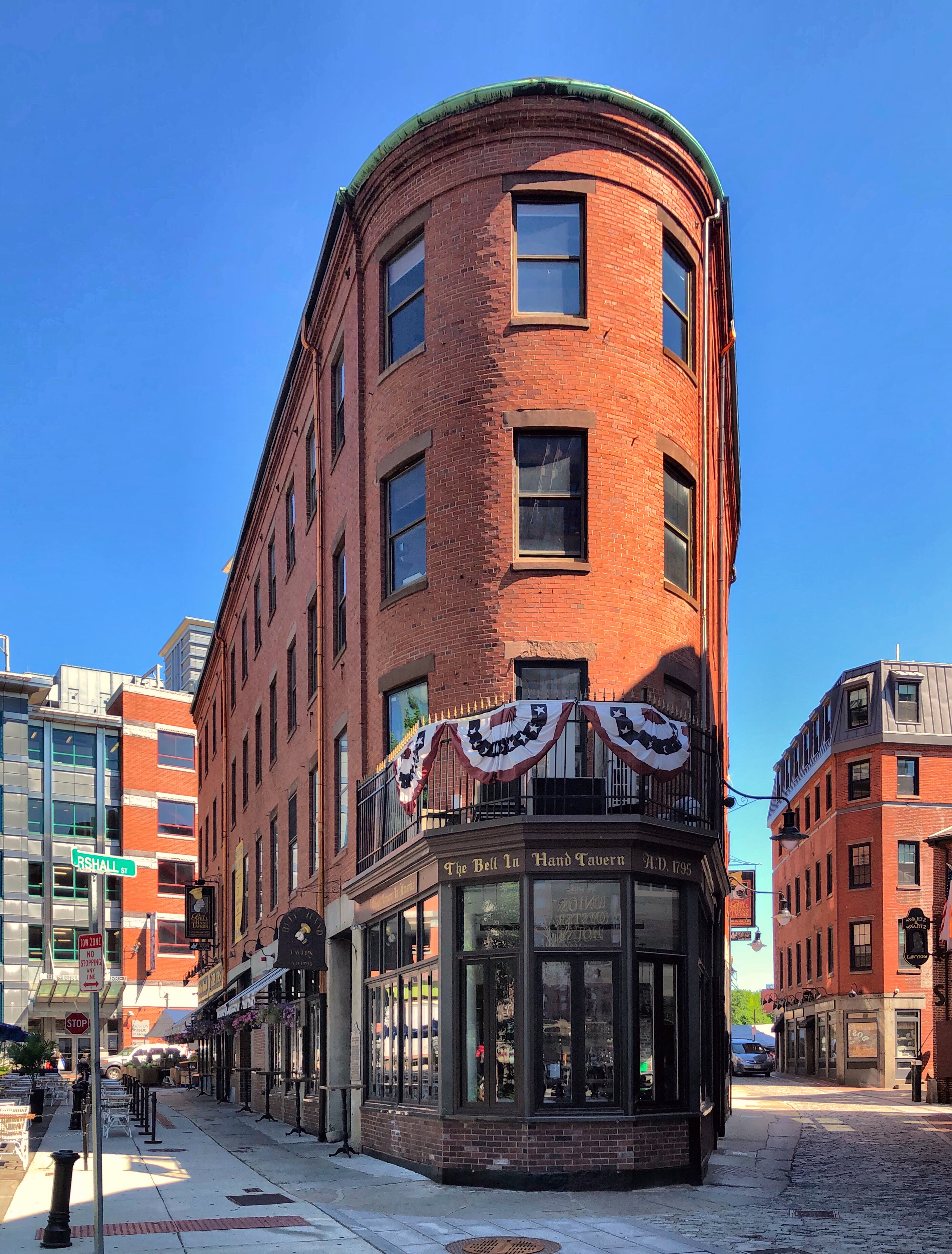
Union Block // c.1842

Located in the Blackstone Block of Downtown Boston, this flatiron building encloses Marshall Street on the Freedom Trail, creating a tight, pedestrian-oriented street that once covered old Boston. The Union Block (c.1842) is a Greek Revival commercial block which typifies this network of short, narrow streets which somehow survived Urban Renewal and the coming of the highway in Boston. The longest running occupant of the building was Ward & Waldron Paper Hangings, which from my understanding, made wallpaper for the estates of Beacon Hill which were being built on the other side of town. After successive ownership, atlas maps show the ownership of the building in 1888 conveyed to Massachusetts General Hospital, which still held title to it past 1938. The building is now home to Bell in Hand, an iconic local pub that was founded in 1795 at another location.
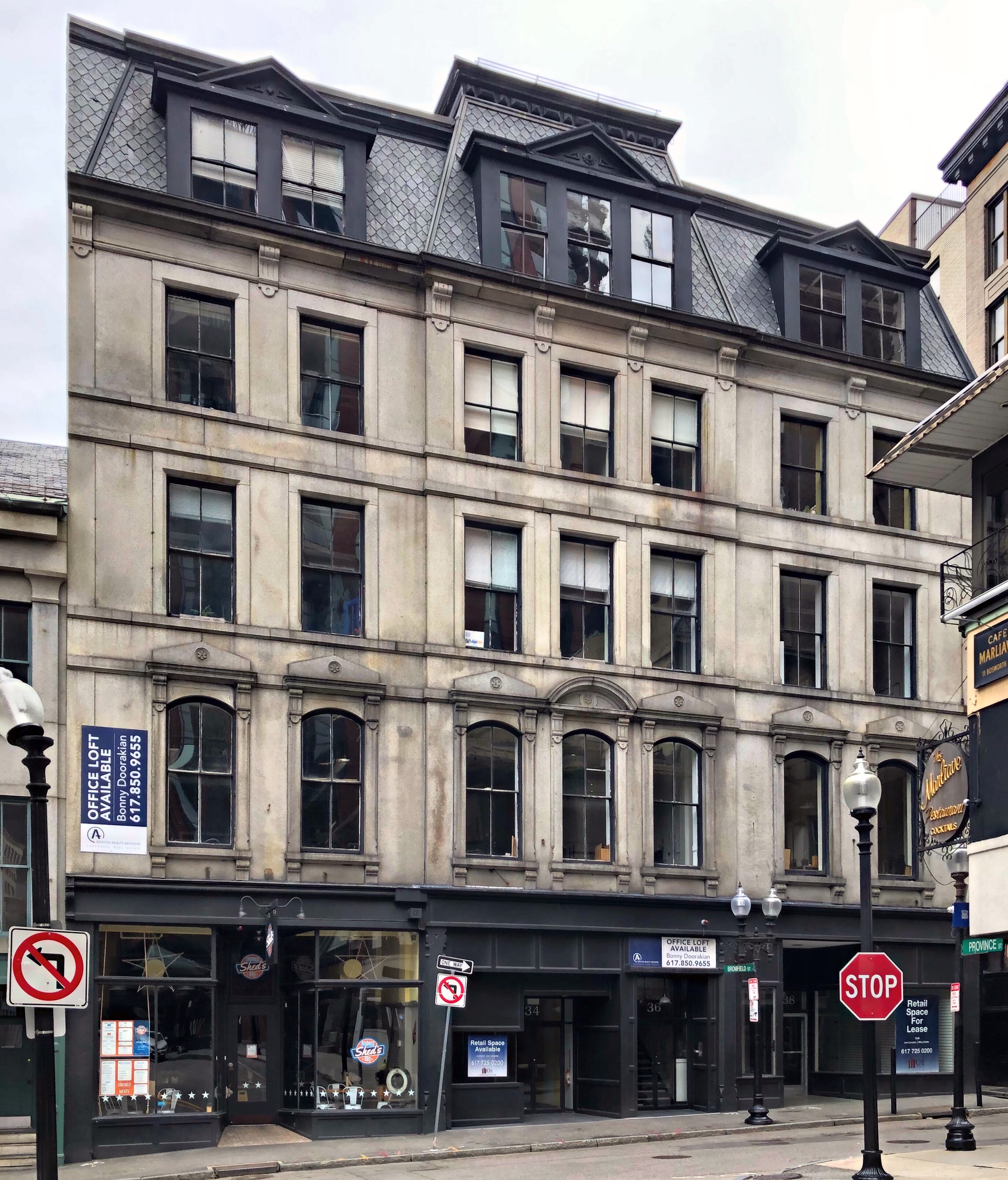
Wesleyan Building // 1870

Located between the heavily-trafficked streets of Tremont and Washington Streets in Downtown Boston, you’ll find the Wesleyan Building, centered on Bromfield Street. Constructed in 1870, the Second Empire commercial building was designed by the architectural firm (and brothers) of Billings & Billings, who designed College Hall at Wellesley College just four years later. The five-story granite-clad structure features neo-Grecian detailing and a mansard roof, showcasing the waning popularity of the Second Empire style by the 1870s. The building was constructed adjacent to the Bromfield Street Methodist Church (demolished around 1913) and housed the offices of the Wesleyan Association, which published the newspaper ‘Zion’s Herald‘, a Methodist publication. The building was also occupied by the Emerson College of Oratory by 1890, which later became Emerson College.

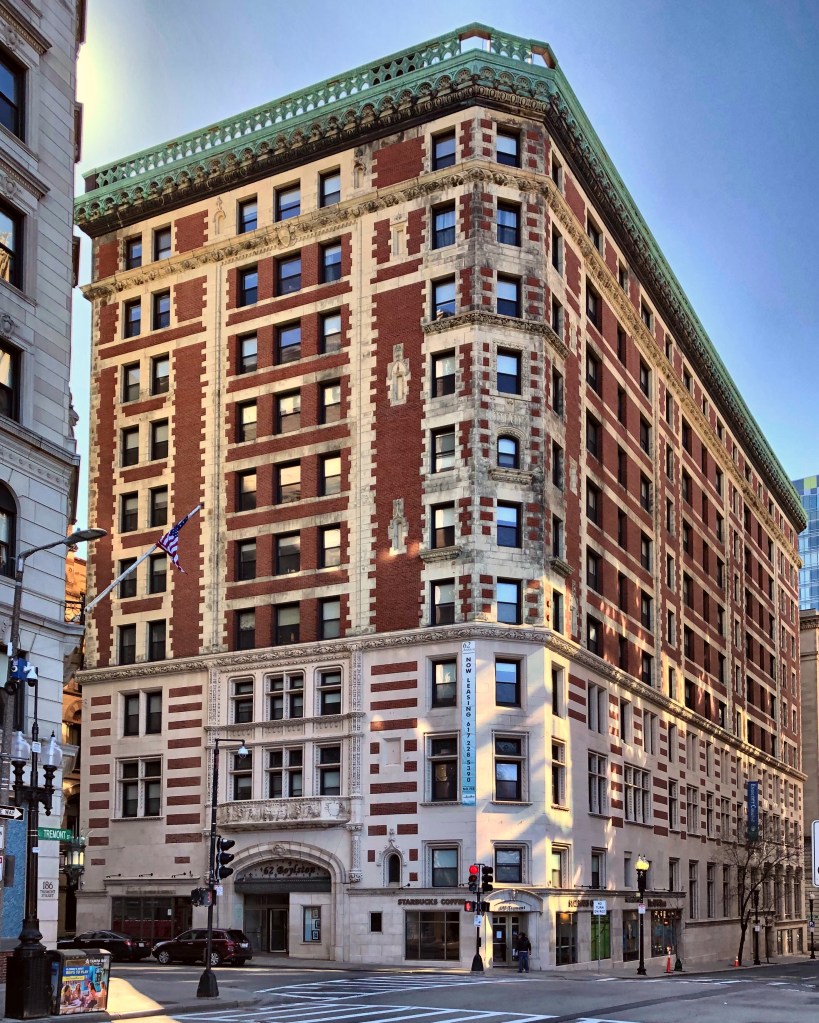
Hotel Touraine // 1897

The Hotel Touraine at the corner of Boylston and Tremont Streets in Boston was built in 1897 as one of the most luxurious hotels in the city. Designed by the local firm of Winslow and Wetherell, the Jacobean Revival style building commands the well-trafficked corner opposite the Boston Common. Early articles described the hotel as “a large and sumptuously equipped house, with internal decorations in the style of the Chateau de Blois (a French chateau). Winslow and Wetherell appeared to have been inspired by the Louis XII wing of the Chateau, as many design elements of the hotel closely resemble it. The hotel was advertised as having 350 rooms valued at $2 a night up to $3 a night for a room with a private bath. Separate men and women’s parlors, a library, and elevator service made the hotel desirable for the upper-class Bostonians and visitors to the bustling Downtown area. The hotel’s rich clientele eventually began frequenting the larger hotels near Copley Square and the stature of the Touraine slipped with a changing Downtown character. By the 1960s, the hotel closed and was converted to apartments.