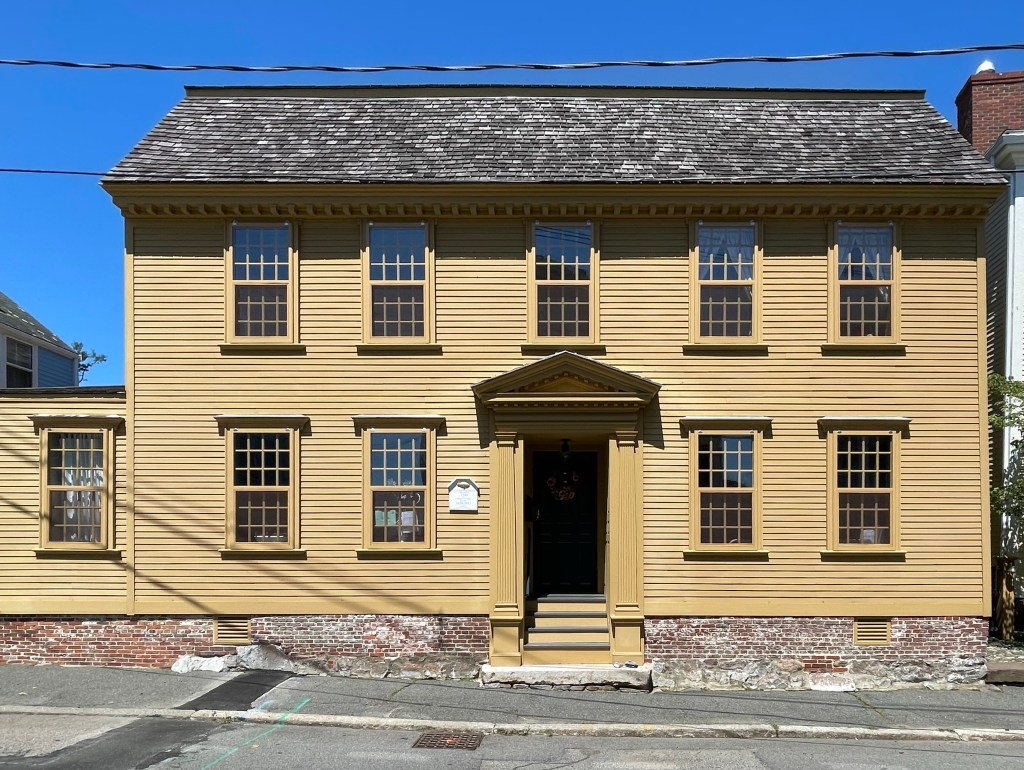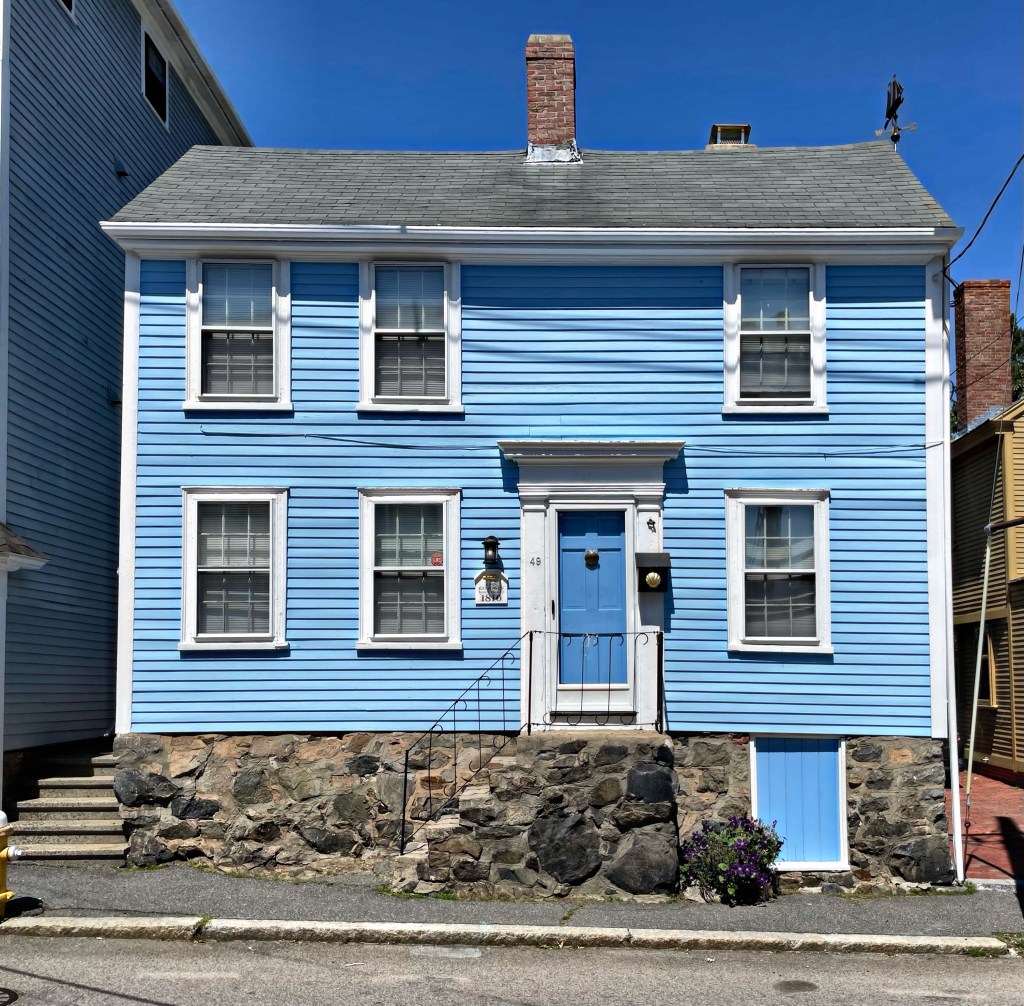
Merritt House // c.1725

In 1725, Samuel Merritt, a fisherman, inherited some of his father’s land in Marblehead and built this house. After Samuel Merritt died in 1743, his second wife Mary, her daughters Mary and Elizabeth and her son-in-law James Dennis, lived in the house. They added the one-story lean-to, giving the house a saltbox roof in 1762. This house, and many others in Marblehead are the reason why human-scaled historic neighborhoods built before the automobile, are some of the best places to explore. Historic preservation equals tourism, which results in tax revenue and property values, stabilizing neighborhoods and cities from the ebbs and flows of the economy. Gotta love it!

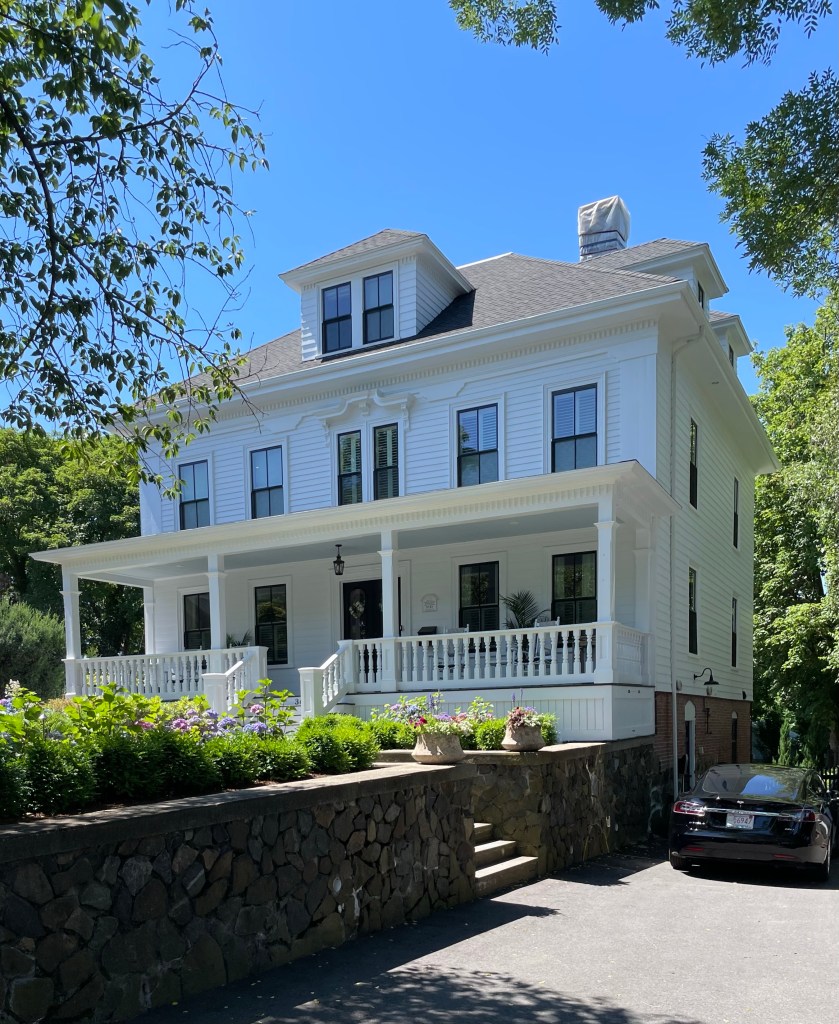
Samuel Sparhawk House // c.1870

In 1870, Samuel Sparhawk built a large Second Empire style mansion on Mugford Street in Marblehead. Samuel and his brother Peter were among the first large shoe manufacturers in Marblehead, and did very well for themselves. Samuel also worked as Director of the Marblehead Savings Bank. In the early 20th century, the property was sold to Asa A. Schofield. In 1910, a fire at the Second Congregational Church destroyed the 1832 building and embers carried and burned the roof of the old Sparhawk House. The mansard roof was replaced with a simpler hipped roof with dormers.
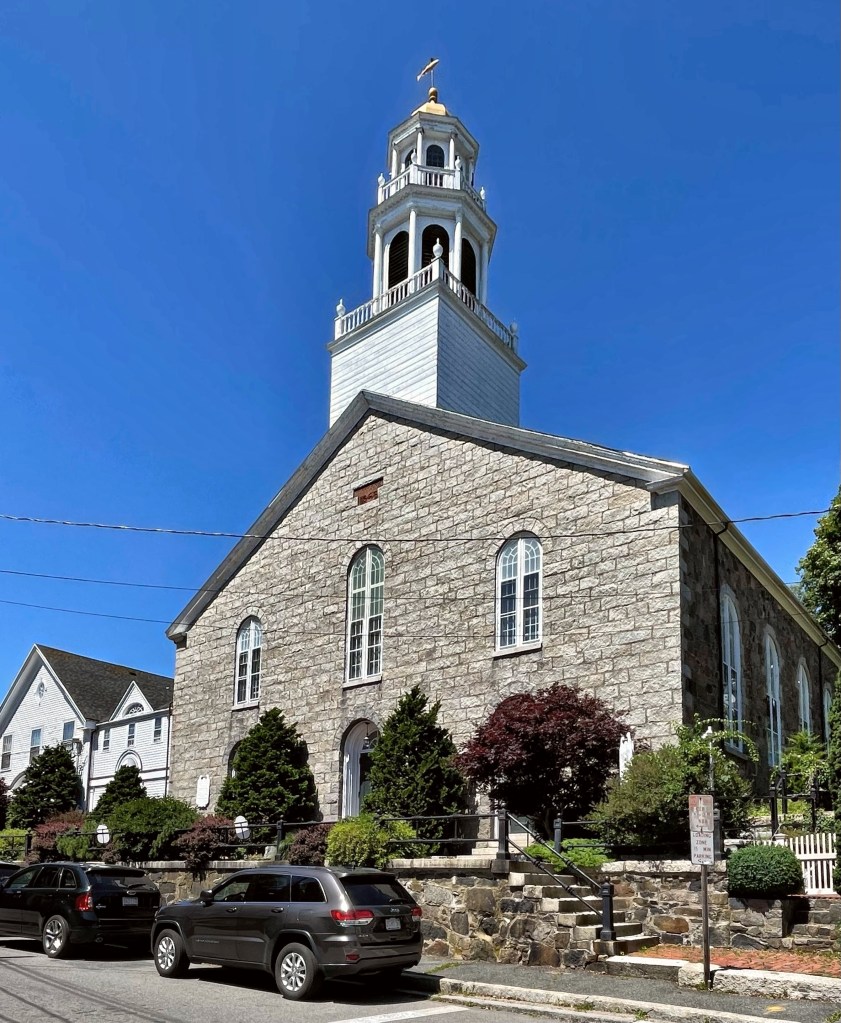
Old North Church, Marblehead // 1825

Old North Church, formally the First Church of Christ Marblehead, was organized in 1635 by fishermen and mariners who formed a church to relieve them of the burden of travel to Salem in order to receive church sacraments and participate in civil affairs (before the separation of church and state). They met in member’s homes until 1638, when a meeting house was constructed overlooking the ocean. By 1695, a “modern” church structure was built on Franklin Street. The structure was not adequate for the growing wealth and prosperity of the town, as Marblehead emerged from local cod fishing to overseas trade. In 1824, merchant-politician William Reed helped the congregation acquire a large lot on Washington Street. Within a year, the new stone church was built. The stone to build the church was blasted from the ledge upon which it stands. In 1879, a wooden meeting house was built to accommodate an increased membership at prayer meetings. The detached meeting house was added onto in 1951, connecting it to the stone church. The two attached buildings were designed/re-designed in the Colonial Revival style to add to the architectural composition of the old Federal period church.

Cross-Kimball House // 1804

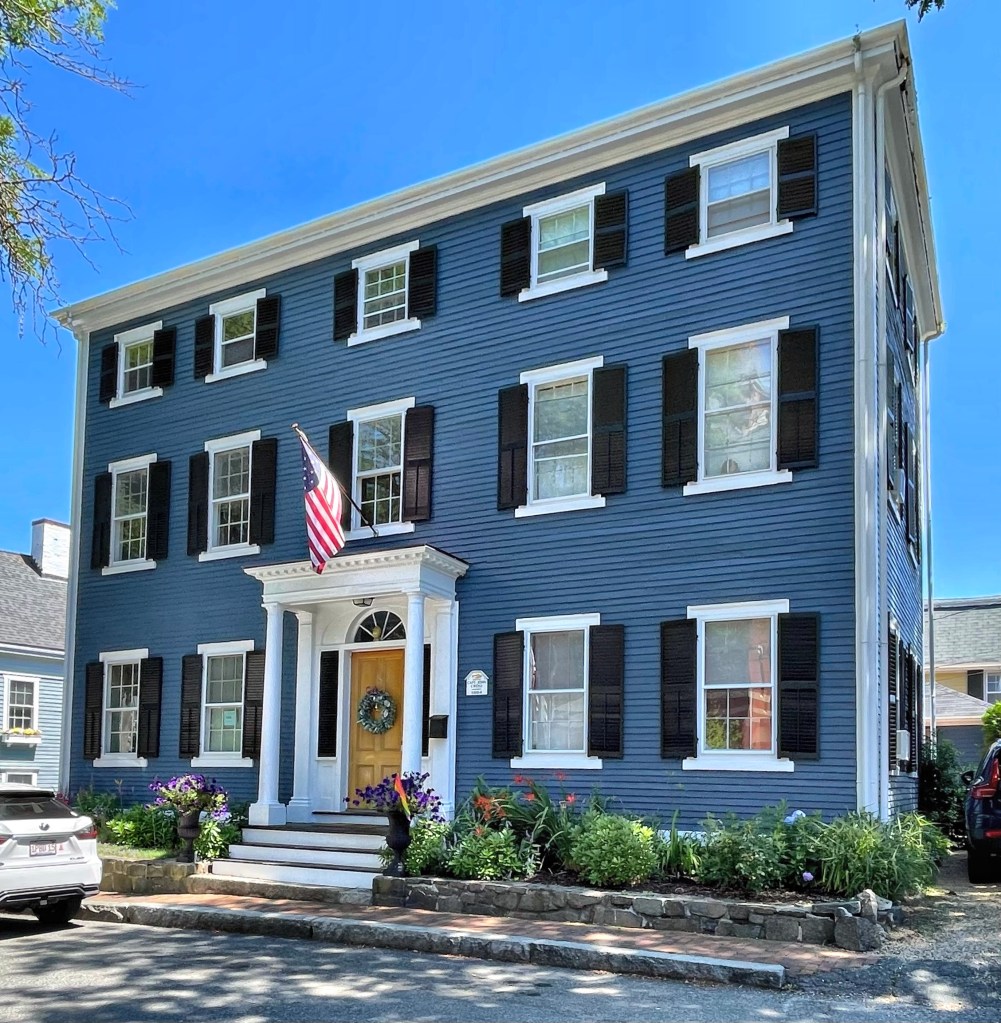
In 1803, sea-captain John J. Cross (1768-1804) began building a large Federal style house on land he purchased from his success on the open sea, largely working for the Hoopers. Sadly, before the home was finished, Captain Cross and all his men aboard his ship, the “Traveller” died at sea. The home, which was to be finished by the time of his return was left abandoned when news got back to the shore of the ship’s loss. His wife and three children were devastated and likely sold the property not long after. The property was owned later by Edmund Kimball, a sea-merchant who married into the Hooper Family. Kimball did well for himself and eventually owned multiple vessels. After his first wife, Mary Hooper Kimball died bearing him six children, Edmund remarried to Lydia Mugford Russell. The family home across from the town’s common has been very well preserved since and is an excellent example of a vernacular three-story Federal home on the North Shore.

Powsland-Homan-Dixey House // 1732

The colonial home at 33 Washington Street in Marblehead was built in 1732 for (and likely by) Jonathan Powsland, a joiner (furniture maker-carpenter). In the 1740s, Peter Homan added the rear lean-to, giving the home a saltbox appearance, possibly after he married into the Powsland family. The home was eventually owned by the Dixey Family. John Dixey (1776-1868) spent a good part of his life as a ship master and had several sons that also went to sea. The most well known son was Richard W. Dixey (1809-1860) who, along with two other Marbleheaders, captained the ship that took the first American Consulate to China.

Homan House // 1744

This perfect Georgian house in Marblehead was built in 1744 for Richard Homan (1713-1803), a sea captain who also fought in the Revolutionary War. In 1736, Richard married Hannah Goodwin, the daughter of William Goodwin, a notable housewright. William Goodwin seemingly gave the newlywed couple land on his estate and likely built this stunning home for them. Hannah died in 1772, and remarried in 1776 to Susanna Stacey, who he also outlived. The couple moved to Ipswich, and this home was sold to his son, William. In the 1800s, the property was owned by William Hawkes Jr., a trader and shopkeeper who apparently operated a “rum shop” out of the first floor of the home. It remained in the Hawkes Family until at least 2013. The house features a gambrel roof of cedar shingles, 12-over-12 windows, a pedimented entry, and a period-appropriate paint color.

John Goodwin House // c.1810

Oh, Marblehead, why are you so pretty? The town of Marblehead was originally called Massebequash after the river which ran between it and Salem. The land was inhabited by the Naumkeag tribe under the sachem Nanepashemet. Epidemics in the early 1600s devastated the tribe’s population leading to it’s colonization. In 1635, the General Court of Massachusetts Bay established the town of Marblehead on land that belonged to Salem. The citizens in Marblehead were less devout and conservative than others in Salem, and they incorporated as their own town in 1649. Now… the name. Marblehead is believed to have gotten its name by settlers who mistook its granite ledges and cliffs for marble. The mistake stuck as the namesake. The town thrived as a fishing village, with many fishermen and sea-based jobs, with homes built on small lots along the warren of narrow streets. This home sits on Washington Street, one of the major streets in the Old Town. The home was built around 1810 for John Goodwin on land formerly owned by his grandfather. The Federal style home sits atop a raised stone foundation and has been excellently preserved.

Ebenezer Pool House // c.1800

Ebenezer Pool (1764-1842) was born in Sandy Bay, a village of Gloucester which later became Rockport. Ebenezer was a direct descendant of John Pool, the second settler of the area, who helped facilitate its beginnings from rocky coastline to vibrant town. Ebenezer was active in the establishment of the Baptist community in Sandy Bay, and his name heads the list of eighteen charter members who were organized into a Baptist Church in 1808 inside his own home, seen here. The Federal style home sits on a prominent lot in the village near Bearskin Neck and looks much like when it was built over 200 years ago.

Captain John Gott House // 1806

One of the best-preserved homes I have seen in Rockport is the John Gott House, an 1806 Federal style property just blocks from Rockport Harbor. The home could be from the 1700s, as the central chimney normally is a feature of earlier homes, but the marker on the house states the 1806 date, so we will go with that! John Gott is a popular name in Rockport, but this home appears to have been built for Captain John Gott (1780-1845), a sea captain who was the son of (you guessed it) John Gott, who lived just down the street. This property also includes a newly built barn and an absolutely charming out-building which I cannot figure out what it was used for.

Joshua Norwood Cabin // c.1680

This old, leaning home sits just outside downtown Rockport and is said to be the oldest house in Rockport. The plaque on the house says it was built in 1680 by Joshua Norwood, the son of Caleb. Joshua Norwood (1682-1775) was born in Gloucester nearly 100 years before the United States was a country, but the plaque on the house means the home was built two years before Joshua was born. I would estimate the home was built in the early-mid 1700s. Joshua married Elizabeth Andrews and they had 16 children. The family apparently resided in the northern part of modern-day Rockport, in this small home for some years until it was moved by wooden barge to the current site, when Sandy Bay (downtown Rockport) saw a huge population surge with the harbor in the early 19th century. The tiny half-cape home was added onto once with the entry room at the front, but besides that, it looks much like it would have hundreds of years ago. There are a lot of mysteries about this home, so if anyone knows more, please share!