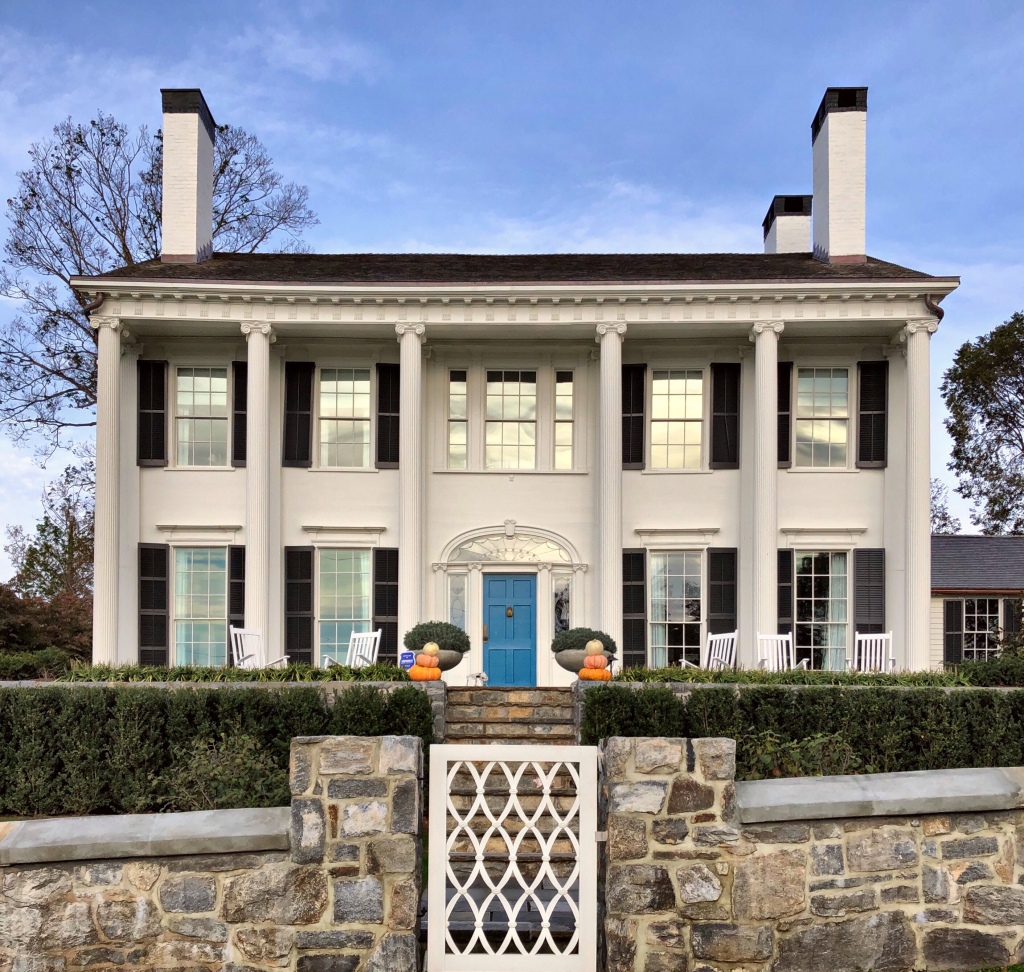
Charles Perry House // c.1830

Charles C. Perry (1795-1870) was a wealthy nineteenth-century shipowner and sea captain and a prominent figure within Southport’s community. After his father’s death in 1814, when Charles was just 25, he inherited a large sum of money from his father’s will and followed his footsteps as a career. Miah Perry’s will stipulated that in order to keep the family together, members were to reside at the family home for five years from his death if neither of the daughters married; “but in case they remain unmarried at the expiration of five years…my estate shall not be divided until eight years from my decease unless one of the said daughters should marry…partition may be immediately thereafter made.” Talk about pressure to get married!
It is unclear if any daughters got married before, (Julia, one daughter died in 1821 at 22 years old). That same year, Charles Perry seemingly got his part of the inheritance and acquired the land upon which this house stands. He was then twenty-six years old and unmarried. He appears to have built it later as a blending of the Federal and Greek Revival styles, perfectly complimenting each other.

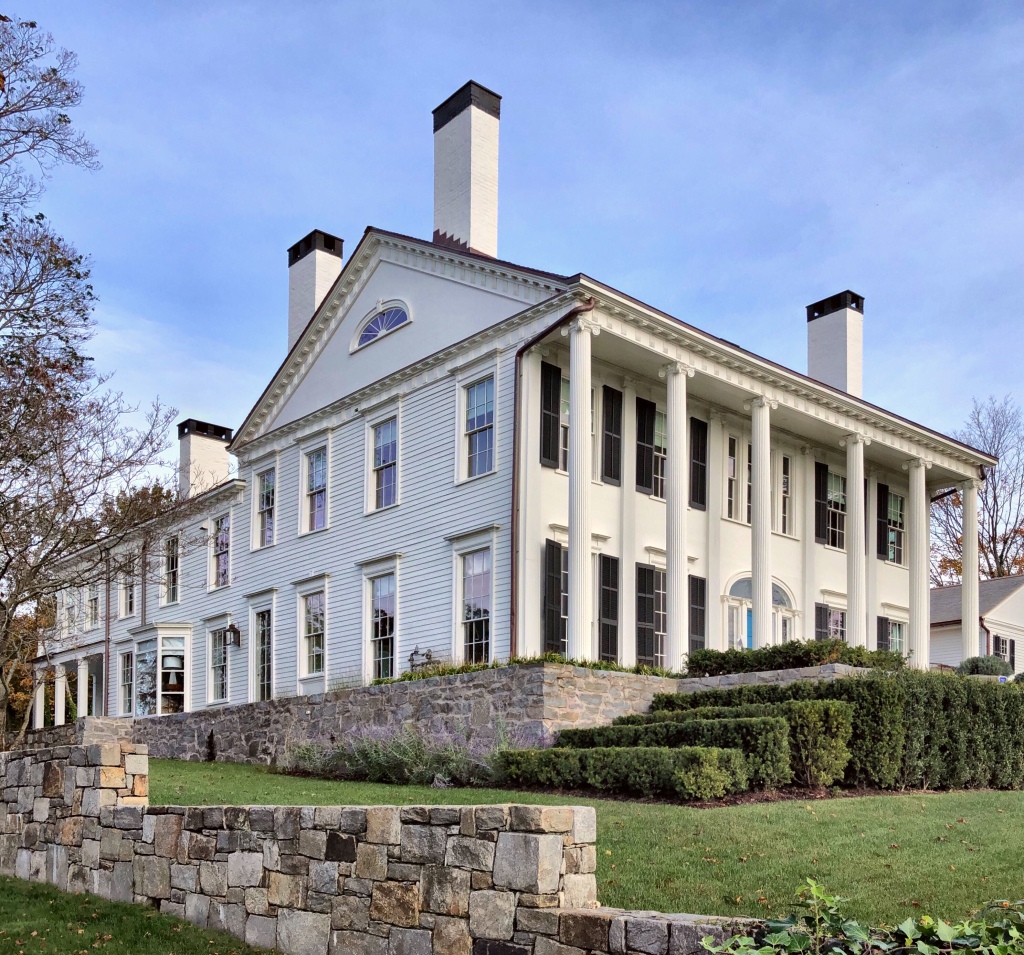
Austin Perry House // c.1830

One of the nicest examples of residential Greek Revival architecture I have ever seen is the Austin Perry House (c.1830) in the Southport area of Fairfield, CT. Austin Perry (1798-1864) was a member of a prominent merchant family, holding businesses in Fredericksburg, Virginia, before returning to Southport to manage a general store. He retired in his forties and resided at this home until his death. His home is a balanced, symmetrical design with massive Corinthian columns surmounted by a carved anthemion motif ornamenting the gable pediment.

William Bulkley House // 1767

The William Bulkley house was built circa 1767 and is one of the few extant pre-Revolution houses in Southport. In 1779, during the Revolutionary War, Fairfield and vicinity were burned and ravaged by Tory Loyalists. Only eleven houses throughout the region survived the burning; one of four in Southport was the Bulkley residence.

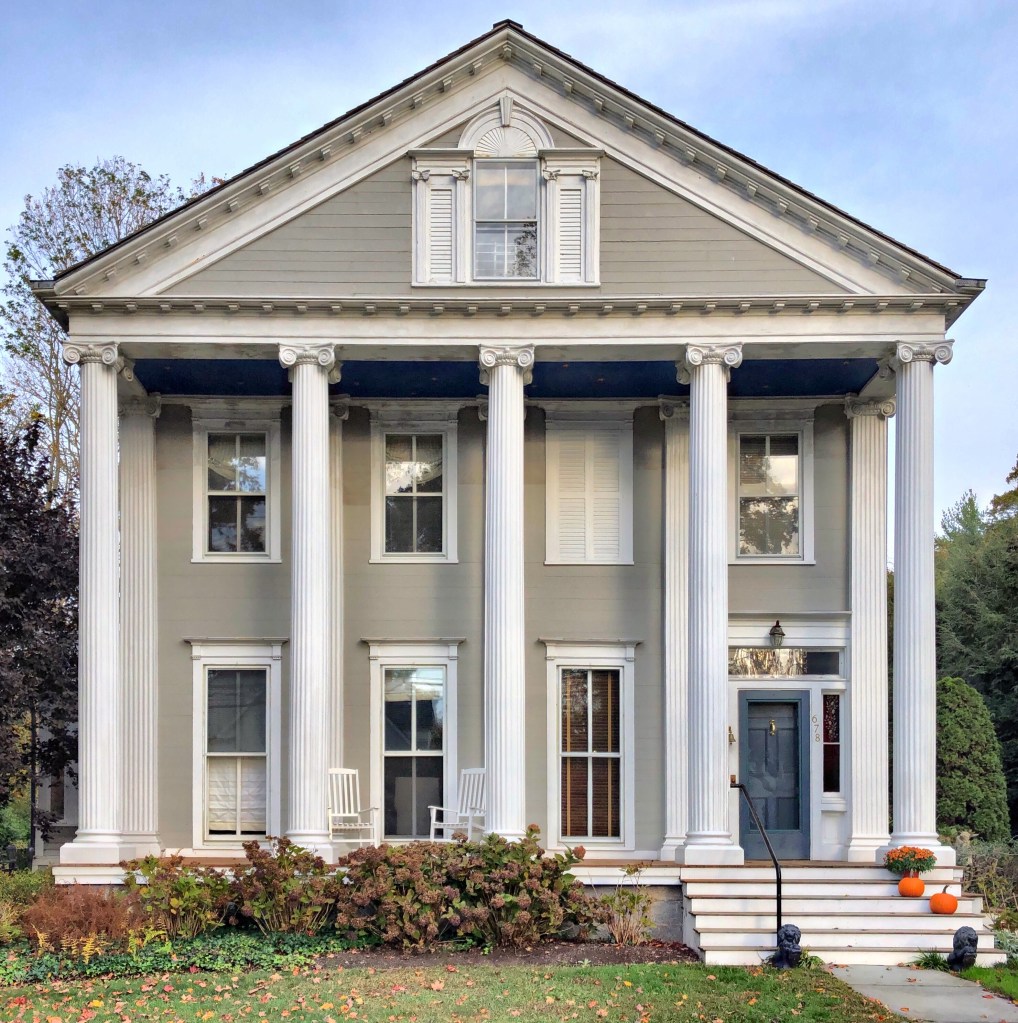
Paschal Sheffield House // c.1826

This Greek Revival home built c.1826, is perfectly articulated in the classical temple form. It was built for Paschal Sheffield, a well-respected member of the Southport community throughout the nineteenth century. His father was a privateer during the Revolutionary War, and moved to Southport to settle and enter in the mercantile trade business. Paschal appears to have been involved in business and local politics until his death. After his death, the home was marketed as a tear down for a new summer resort, but it was retained by future owners.

Ms. Hetty Gookin House // 1874

Warren Demman Gookin (1810-1874) was born in Haverhill, New Hampshire. He was educated at Haverhill Academy and Dartmouth College, graduating from the latter institution in 1830. In 1835 he went to Cuba where he remained for ten years as a sugar planter. Later, he was engaged in a mercantile business in Oregon, finally settling in Brooklyn, NY and working as a shipping merchant in New York City until his death in 1874. After his death, his widow Hetty moved back to her hometown of Southport, CT and built this large home. Later this was the home of Mrs Gookin’s stepdaughter, Mrs Edwin Waterman.

Samuel Allen Nichols House // 1848

Samuel Allen Nichols (1790-1864) was born in Fairfield, Connecticut to a large family. He began his adult career as a farmer, but shifted towards the merchant trade after seeing how the village of Southport began to see massive wealth accumulating. He ran a store in the town and later became involved in local politics serving as the clerk from 1847-1863. A year after he accepted this position, he had this home built on Harbor Road. The 1848 home was Gothic Revival in style with gabled dormers, lancet windows, and decorative bargeboard. Nichols died in 1864 and the home was likely willed to one of his five living children. The home was renovated around 1871 with a Second Empire style Mansard roof and square belvedere to overlook the Southport Harbor. Since then, much of the detailing has been removed, but the home remains as a gorgeous home, changed over time to keep up with the changing architectural tastes of the 19th century.

Perry House-Trinity Church Rectory // 1832

I have a thing for temple-front Greek Revival homes, and this is no exception. This marvelous home was built in 1832 for Francis Dimon Perry (1809-1884), who inherited some of his father’s wealth and became President of Southport National Bank in town. He was a devoted member of Trinity Church throughout his life. Upon Mrs. Perry‘s death in 1893, couple left their residence to the Trinity Church to be used as the parish rectory.

Simon Sherwood House // 1884

The Simon C. Sherwood house, built in 1884, is a fine late nineteenth-century eclectic Victorian home, somewhat unique to the Southport area of Fairfield, CT, which is dominated by early-mid 19th century styles. Simon Couch Sherwood was the son of Edwin Sherwood, a wealthy shipping merchant who made a fortune from trade between New York and Savannah. The Queen Anne-Eastlake style home was added onto with a larger porch, obscuring an original oriel window on the side elevation. Sadly, the home has a safe, yet inappropriate pale yellow body color with white trim, which does not showcase the intricacies of the Victorian era home.

Edwin Sherwood House // 1837

Located next to his son’s house, the Edwin Sherwood House in Southport, Connecticut is an excellent example of Greek Revival residential architecture in New England. The home was built in 1837 for Edwin Sherwood, a sea captain who traded between New York and Savannah with his two ships “America” and “Georgia”. From this wealth, he became President of the Southport Savings Bank and Director of the Danbury-Norwalk Railroad. The home was renovated in 2017 with a modern interior by Ken Gemes, an interior designer.

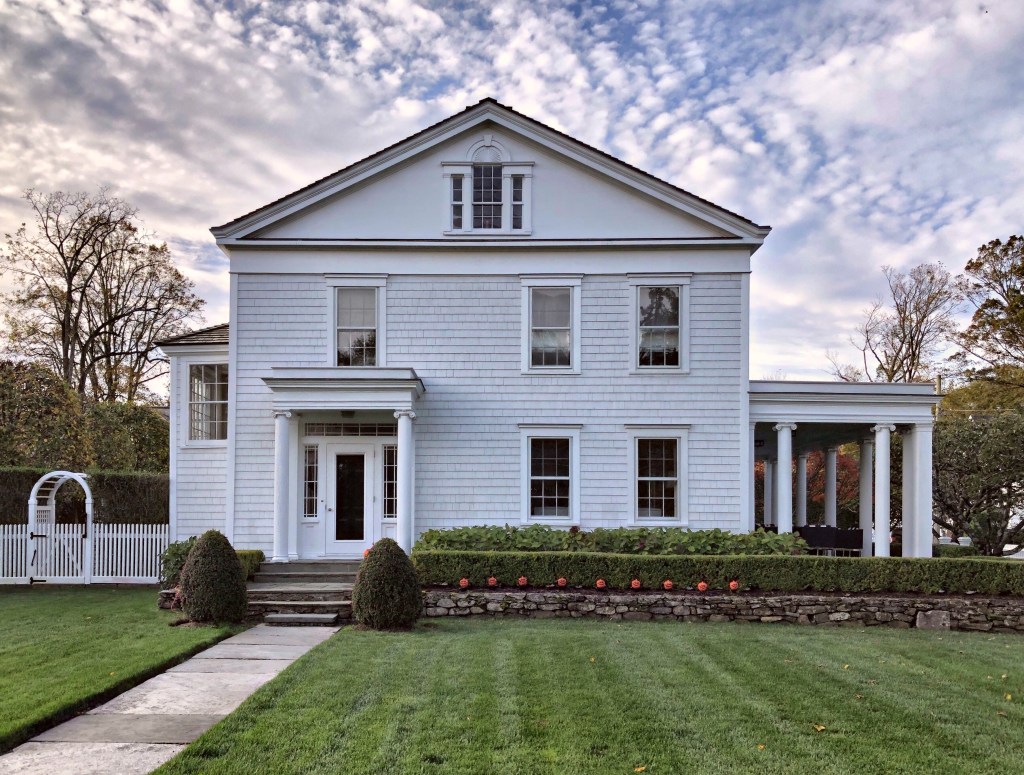
Augustus Jennings House // c.1830

Walking around Southport Village in the town of Fairfield, Connecticut, transports you to an early-mid 19th century town with large Federal and Greek Revival homes overlooking Southport Harbor and the Long Island Sound. This home on Westway Road was built around 1830 for Augustus Jennings (1814-1886), the son of Captain Abraham Gould Jennings. Augustus became a carriage maker in Southport before founding Jennings Brothers, a paper manufacturing company; which in 1867, began to produce Japanese paper products. The Jennings House was originally located near the Pequot Library, but was relocated in 1899, which was likely when the central shingled gable at the roof with Palladian window was added.