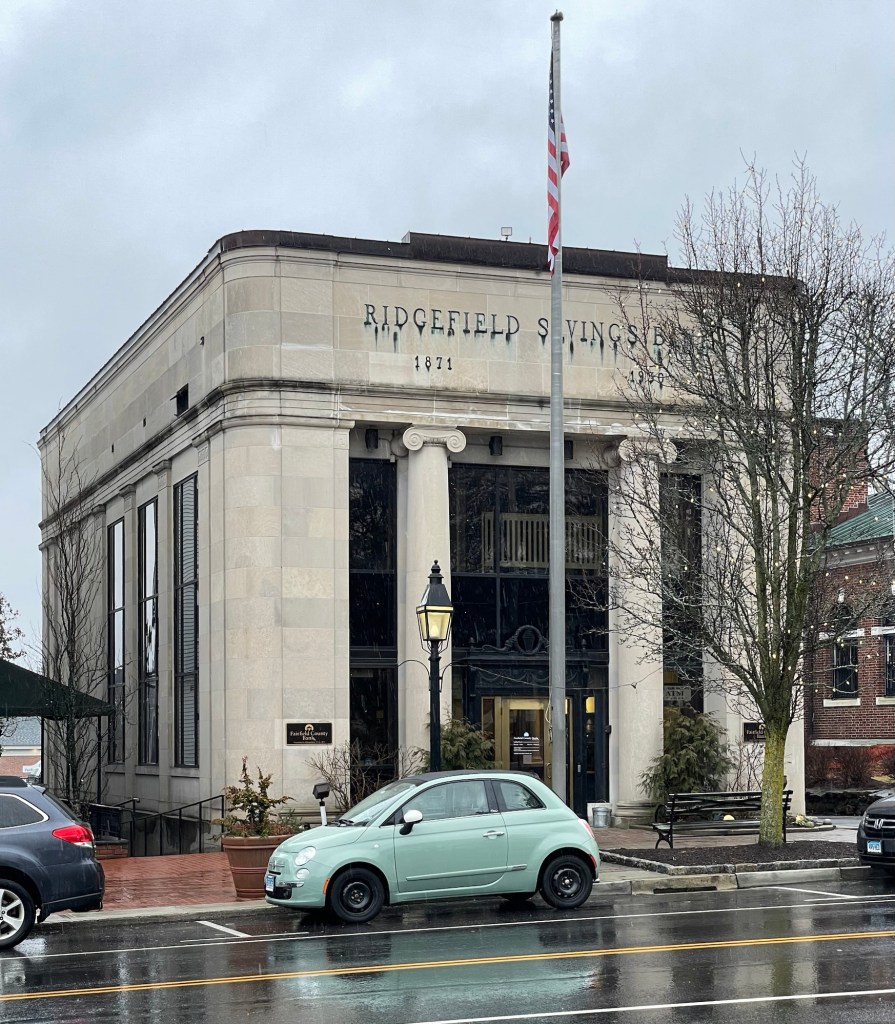
Former Ridgefield Savings Bank Building // 1930

Historically, bank buildings were built with architecture at the forefront to show members and prospective investors that their company instilled prosperity and longevity. Today, many new bank buildings are cookie-cutter designs and lack ornamentation or intrigue… The interwar Ridgefield Savings Bank on Main Street in Ridgefield, Connecticut, was built in 1930 from plans by architects Ralph Hawes and Ernest Strassie in the Neo-Classical style with Art Deco rounded corners and undecorated planes. Dominated by its Classical Ionic portico the bank building is a lasting commercial landmark on the town’s charming Main Street. It is now occupied by the Fairfield County Bank.
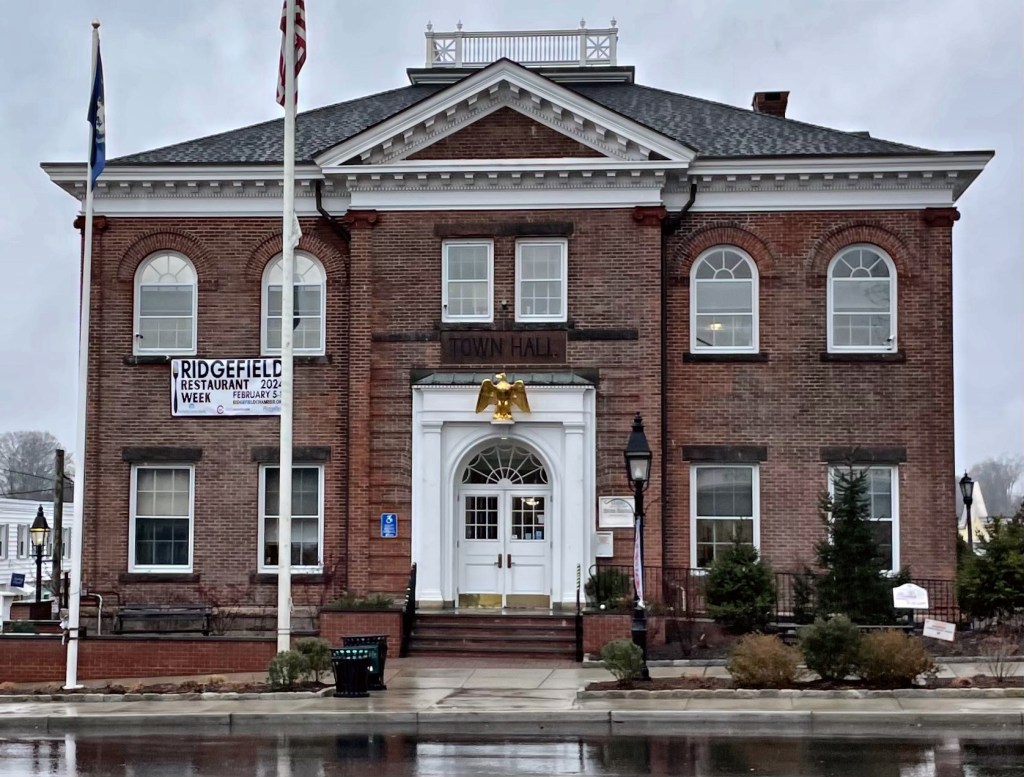
Ridgefield Town Hall // 1896

Ridgefield, Connecticut was settled in 1708 when 24 families from Long Island purchased land from Chief Catoonah of the Ramapo tribe. The Fundamental Orders adopted by Connecticut in 1639 directed would-be settlers, able to support a minister, to establish a settlement, build a Congregational church and farm the land. This is exactly what was done in Ridgefield, beginning in 1708. The original 24 proprietors received 7½-acre home lots drawn by lottery, with a 25th reserved for the minister. The lots were located up and down Main Street from a Common where a Meeting House was built. The town grew and for much of its three centuries, was primarily comprised of old farms. By the late 19th century, spurred by the connection of the railroad, Ridgefield was “discovered” by wealthy New York residents, who assembled large estates in town, a trend that has only picked up in the 21st century! Population growth and a large fire on the town’s Main Street in 1895 necessitated a new Town Hall building. The present Town Hall building was constructed in 1896 from plans by architect Philip Sunderland. Colonial Revival and Romanesque in style, the two-story brick building features a pedimented central bay also containing the entrance with fan light transom, round arched windows, brownstone trim, and narrow pilasters of brick. The building houses town offices today.

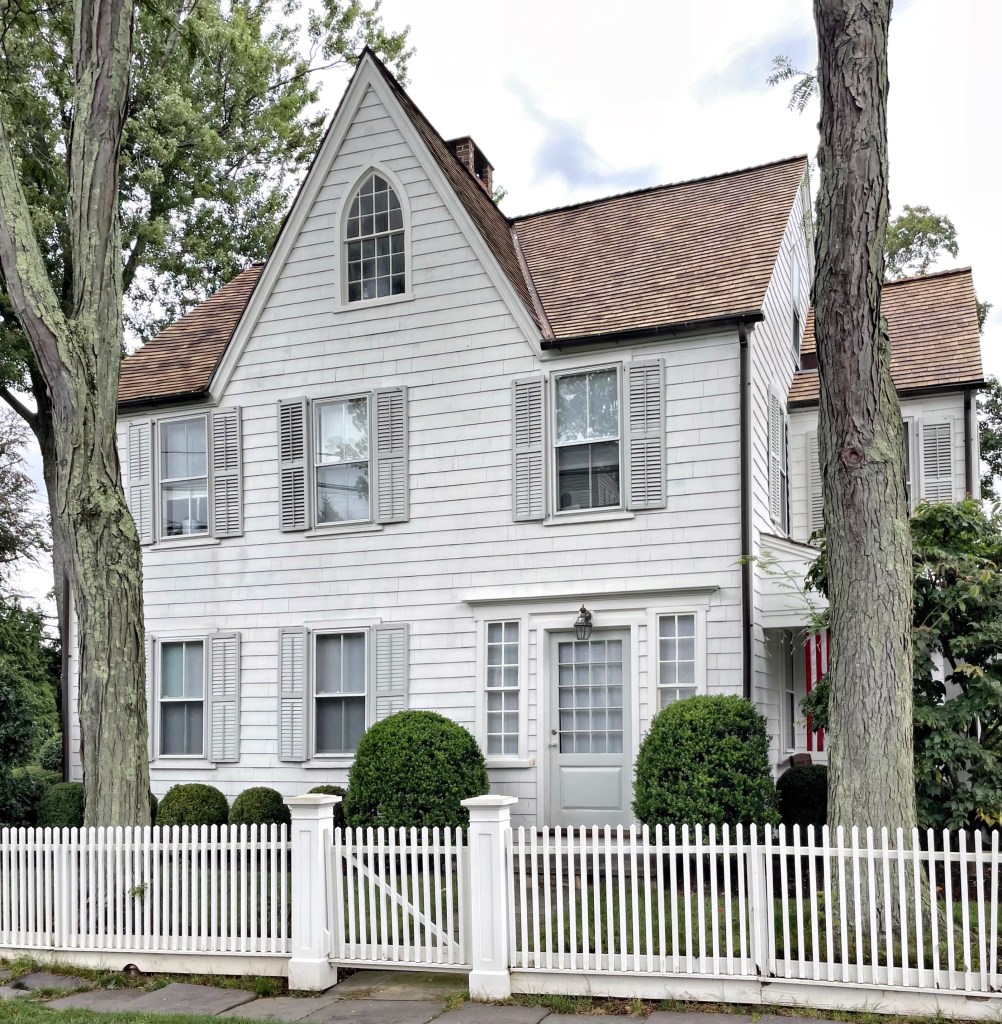
David Bradley House // c.1803

According to a dated board in the attic, this house was built c.1803! The David Bradley House on Old South Road in Southport, Connecticut is a great example of a traditionally designed house that does not need all the bells and whistles to stand out! The house was owned for a number of years by David Bradley, who worked as the village’s postmaster. It was David who likely added the Gothic Revival gable with lancet window and a (since removed) front porch.

Henry Perry House // 1832

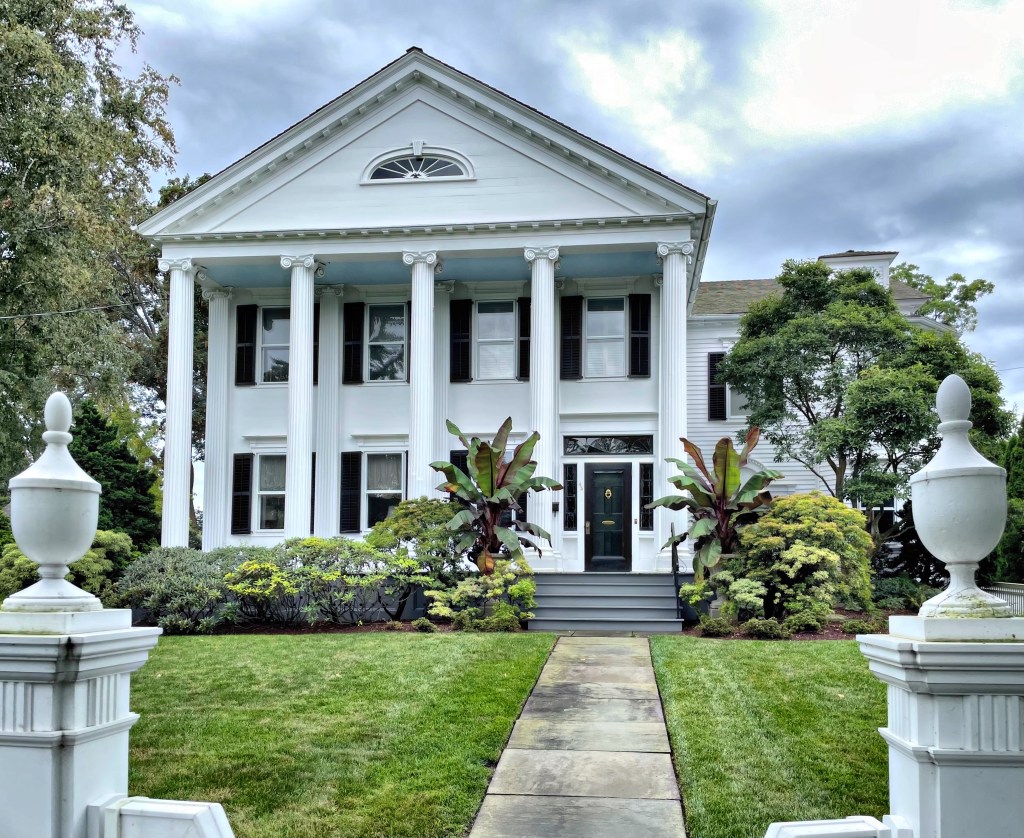
The Henry Perry house was erected in 1832, and is one of the two Greek Revival style structures in Southport which was designed with a five-columned front portico. The other, the Francis D. Perry House, was his brother’s and was built that same year. The house is a temple-front with a fan-light in the pediment and large sidelights and transom at the entry.

William W. Wakeman Mansion // c.1833

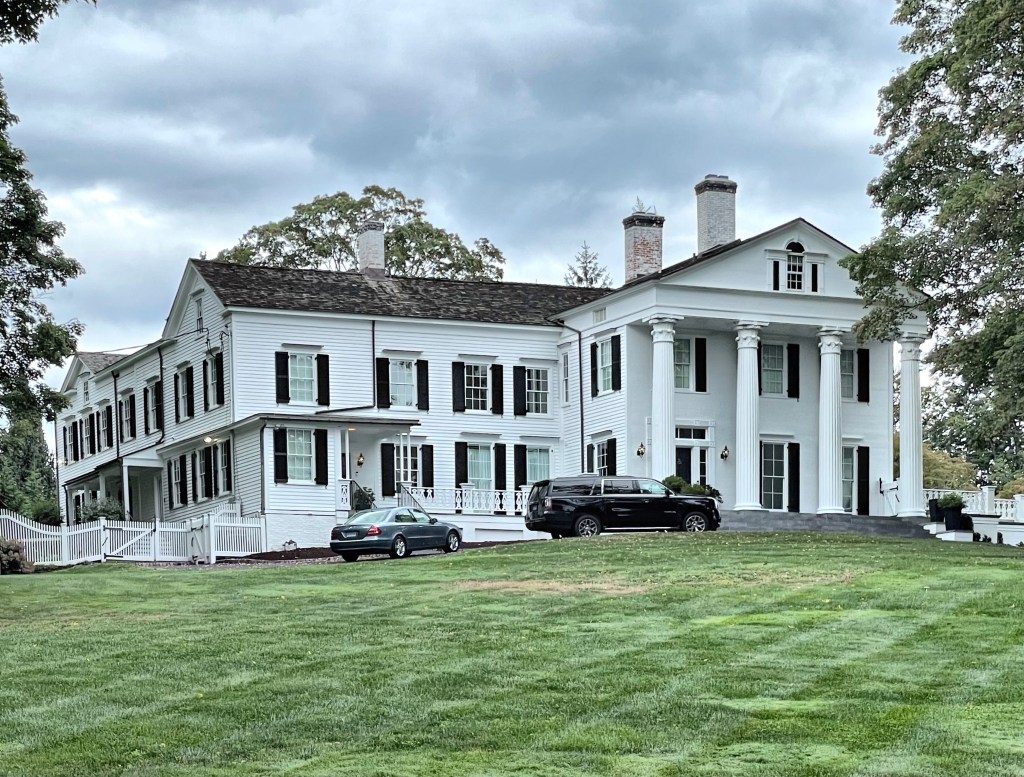
William Webb Wakeman was born in Southport, Connecticut on June 19, 1799, the son of Jesup Wakeman, an eminent citizen of the community. As a young man, William worked with his father in his commercial and trade enterprises. He acquired his own vessel early in his career, and gradually accumulated a line of trade vessels, sailing to New York, Savannah, Georgia and Galveston, Texas. By mid-century he was involved in the East Indian and China trade under the firm name of Wakeman, Dimon & Co. He built and owned a line of steamships during the late 50s, and was commissioned by the Federal government during the Civil War to transport troops and equipment. His massive Greek Revival mansion was built around 1833 on one of the largest house lots in the village, perched high on a hill overlooking the harbor. The three-bayed facade is framed by a two-story portico. Supported by four fluted columns, the capitals and entablature are similar to the “composed” order of Minard Lafever and the “composite” order of Asher Benjamin, popularized in the 1830s and 40s in their pattern books for architects and builders. After William died in 1869, it was likely his widow, Mary Catherine (who lived to be 99 years old, outliving all of her six children) who enlarged the home with massive two-story ells.

Jennings Block // c.1787 & c.1860

Old buildings always have so many stories to tell, and many of those stories are much more than what you can see at first glimpse. This commercial block on the main corner in Southport Village, Fairfield, Connecticut was originally built as a two-story Georgian house with gambrel roof. You heard that right! This corner was the site of a c.1787 Georgian house built for Miah Perry (1766-1814). By the 1860s, the building was owned by Nehemiah Jennings, who took advantage of the prominent site and lack of commercial buildings elsewhere and lifted the old Miah Perry House up, adding a ground commercial floor, extended the building to fill the site, and changed the roof to be a more fashionable Mansard style. Today, the building looks indistinguishable from the late 18th century beginnings, but according to researchers, some of the old beams are still in there!

Ms. Sarah Wakeman House // 1871

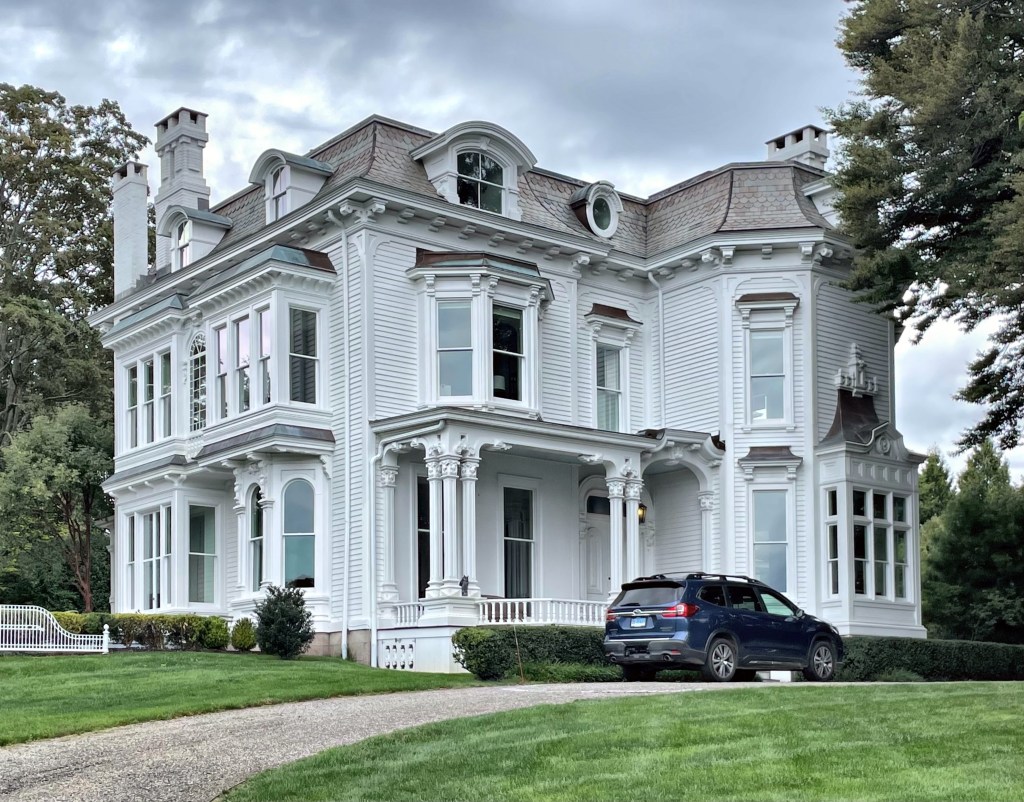
The Southport Chronicle reported on March 1, 1871 that “W. W. Wakeman, is about to erect, on the Hill, a very handsome residence”. The house would be built on Harbor Road in Southport, and was for his sister-in-law, a widow, Sarah Ann Fowler Wakeman and her two daughters, Mary and Frances. The Bridgeport-based architectural firm of Lambert & Bunnell (made up of Henry A. Lambert and Rufus W. Bunnell) teamed up to furnish the plans for this stately Second Empire style mansion. Sarah died in 1872, and the house was occupied by her daughters until 1913.

Trinity Parish Chapel, Southport // 1872

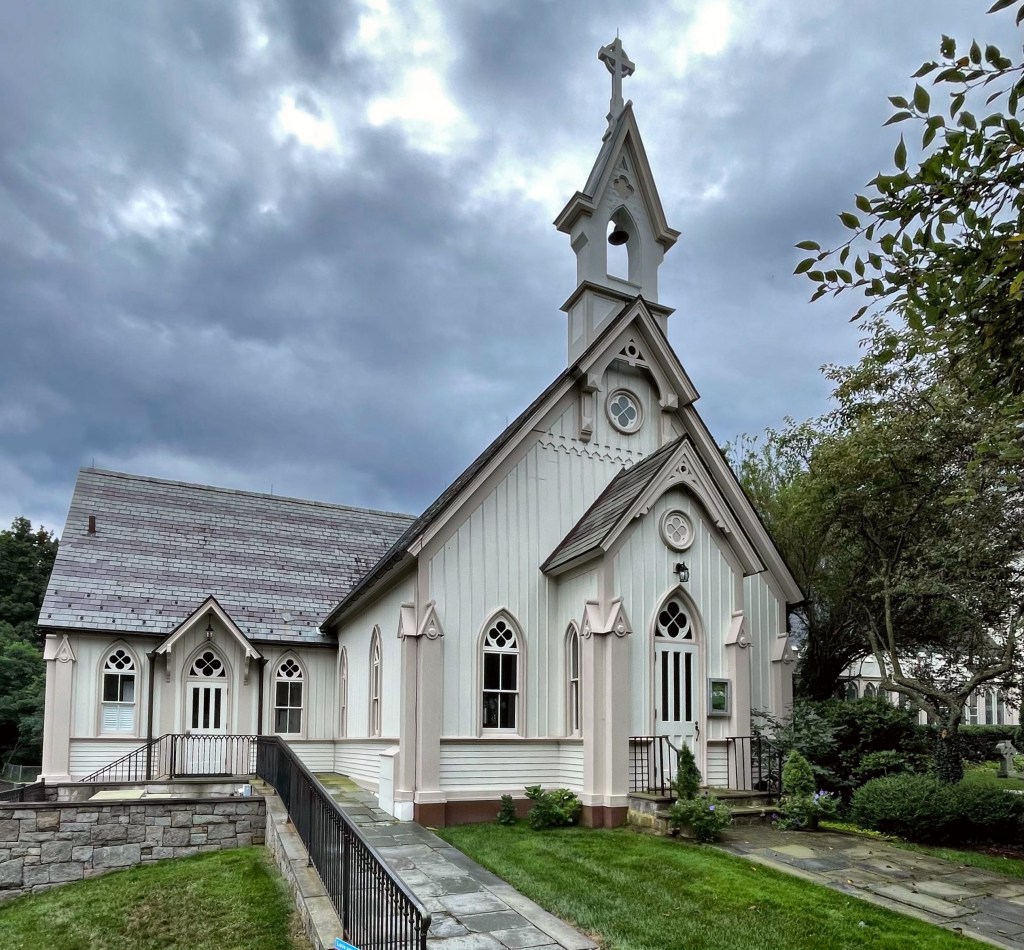
The Trinity Episcopal Church in the Southport section of Fairfield, Connecticut was established in 1725. As the parish and town grew, a large and architecturally stunning church was erected in 1862, and housed services for some of the wealthiest and well-connected residents of Connecticut. During Rev. Edward Wells’ rectorship, it was decided that a parish school was needed, and as an ardent believer in religious training, he started planning for a new chapel for use as a school. The Trinity Parish Chapel was designed by Southport architects Disbrow & Taylor and erected 1871-72. This Gothic Revival building is an excellent example of the rural church architecture which enjoyed widespread popularity throughout the country during the mid 19th century. Designed on a simple rectangular and decorative wooden bell cote, the small chapel’s board-and-batten siding and modest though strong Gothic details create a composition which compliments the more grand church just steps away. The chapel was originally built as a free-standing building, but was connected by a large, brick addition in the 20th century.

Chidsey-Dimon House // c.1850

Located on Harbor Road in Southport, CT, this stunning Italianate residence is properly sited on a small bluff overlooking the village’s harbor. According to historic maps, the house was owned by an “I. Chidsey” who appears to be Isaac Chidsey (1793-1865). The large Italianate style home is boxy in form and stands three full stories with two original one-story side wings. Sleeping porches were added in the early 20th century; those along with the rooftop belvedere, would allow for sweeping views of ships entering and exiting the harbor here. The house was recently restored by the architectural firm of Fairfax & Sammons and it looks amazing!

Charles Gilman House // 1871

Southport, the coastal village in Fairfield, Connecticut is an old house lover’s dream! Case-in-point, the Charles Gilman House. Charles Gilman, a Bridgeport lawyer, constructed this house on the ridge parallel to Main Street in Southport between 1871-1874. The building is a fine example of the Stick style of architecture, in which the decoration on facades and gable ends reflects the building’s internal structure. Gilman used the services of two New York architects, J. Cleaveland Cady and William H. Beers, to design the house and the later (1900) library addition, respectively. In the 20th century, the house was owned by Richard Joyce Smith, an attorney who was hired to guide the New Haven Railroad through a long and tricky bankruptcy reorganization ending it it being acquired by the Penn Central in 1975.