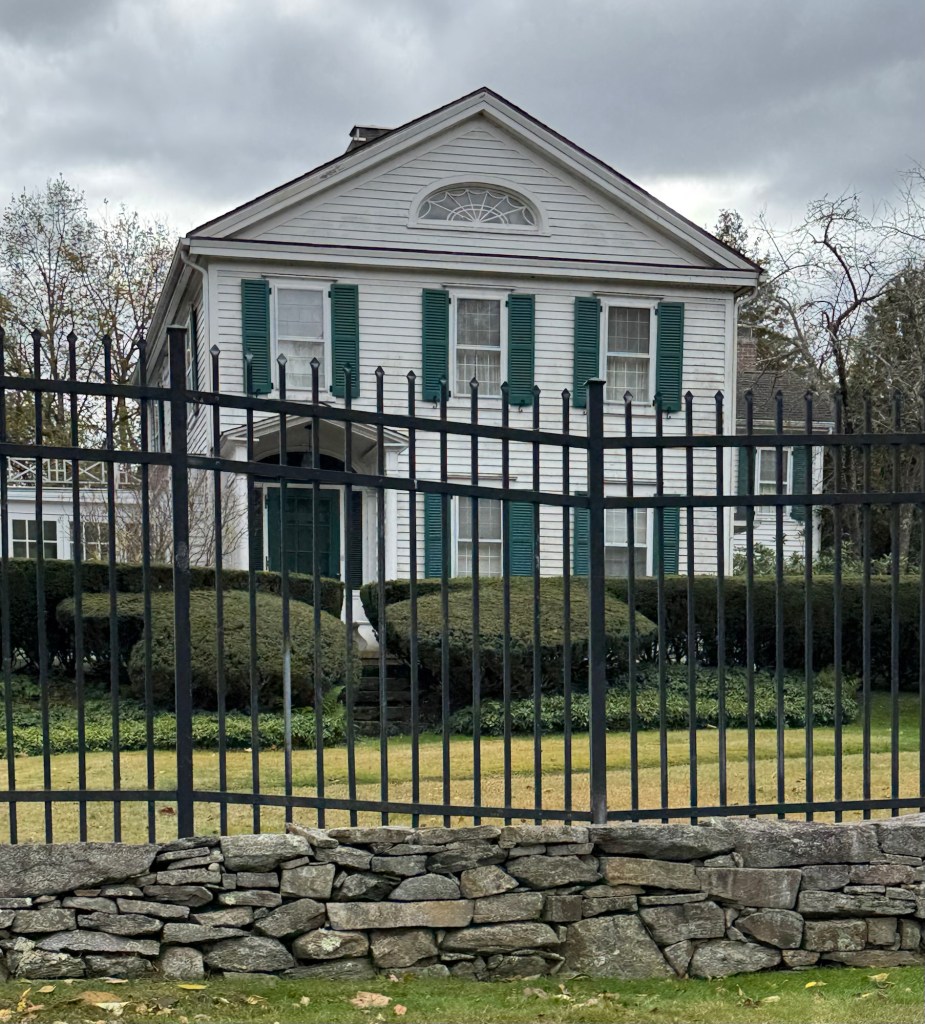
This Greek Revival style farmhouse in Derby, Connecticut, was originally built around 1840, though little is known about its first occupants. In 1867, Wilbur Osborne (1841-1907), who owned and ran several industries in Derby, Ansonia and Bridgeport, and his wife, Ellen Lucy Davis, moved to the house, who together, also ran a dairy farm on their farmland. Their only daughter to survive to adulthood, Frances E. Osborne (1876-1956) took over the farm after her father’s death and became a prominent businesswoman. At age 16, Frances lost the vision in one eye due to an accident, and, as a result, never completed her public school education. Frances Osborne, in an era when women were denied leadership opportunities in the business world, succeeded through pure determination and an excellent business sense. Her achievements included becoming president of Union Fabric Company, vice president of Connecticut Clasp, and treasurer of the F. Kelly Company. She was also a founding partner of Steels and Busks of Leicester, England. She married Waldo Stewart Kellogg in 1919, and he took charge of the dairy, using selective breeding to make the herd “famous throughout New England for quality milk production.” Waldo and Frances Kellogg enlarged and remodeled the house to its current form between 1919 and 1925 adding wings and renovating the interiors in the Colonial Revival style. Waldo Kellogg died in 1928, but Frances stayed in the house until her death in 1956. Just before she died, she deeded her entire 350-acre (140 ha) estate, including Osbornedale, to the State of Connecticut. The state now operates the house and grounds as the Osborne Homestead Museum; the surrounding land comprises Osbournedale State Park.
 Buildings of New England