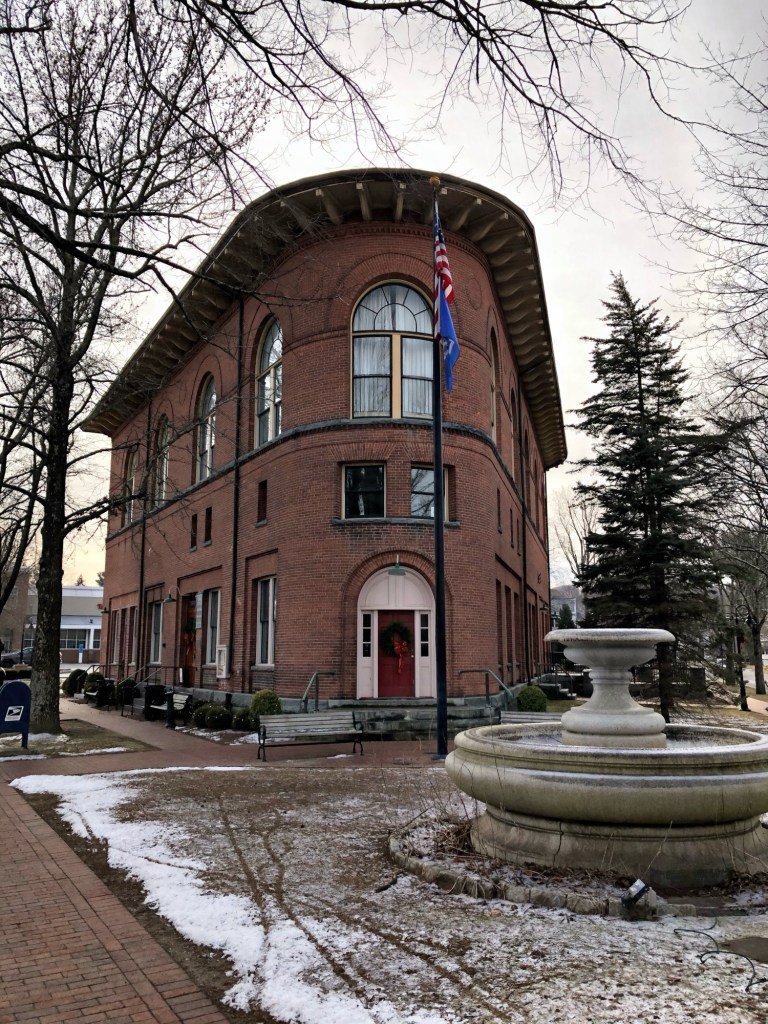
The town of Deep River, in Middlesex County, is located in the lower Connecticut River Valley and was originally colonized as part of the Saybrook Colony. The community was incorporated in 1859 as Saybrook and renamed Deep River in 1947. An early shipbuilding and quarrying town, it later manufactured wire goods, lace, glass, ivory combs, and piano keys and is today a small community of just over 4,500 residents. The original town hall for Saybrook (Deep River) was used until it was destroyed by fire in 1891. The community, which was bolstered by a vibrant industrial community, began planning for a new, stately town hall at a triangular lot at the corner of Elm and Main streets. Plans were completed by Springfield architect, Francis R. Richmond, who laid out the flatiron building with town offices on the ground floor with an auditorium/opera house space on the upper floors. The Romanesque Revival style building features prominent rounded corners with arched openings, a granite string course, and overhanging bracketed eaves.
 Buildings of New England