Dr. F. W. Jackson House // 1903

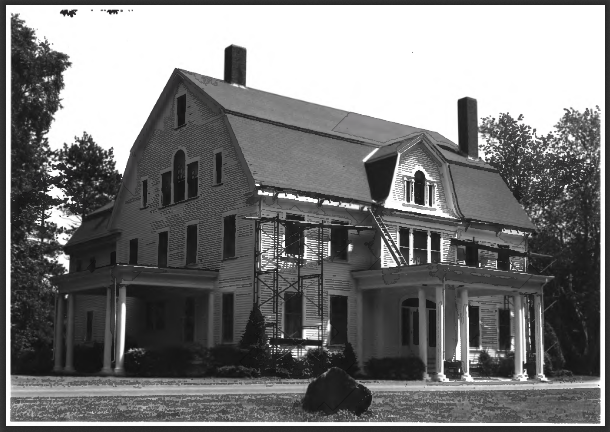
One of the largest Colonial Revival style homes I have ever seen is located in the unassuming small town of Jefferson, Maine. Built in 1903 on the northern shore of Damariscotta Lake, the house stands three-and-a-half stories tall with a broad gambrel roof and clapboard walls. The house was built for Dr. Fred W. Jackson in the Colonial Revival style by relatively unknown Waltham, Massachusetts-based architect Samuel Patch. Dr. Jackson studied medicine and for several years practiced his profession in Providence, Rhode Island. There, he built up a large medical practice and accumulated property, later marrying into a wealthy family. This house in Jefferson was the family summer estate, and Frederick was said to have owned 1,000 acres and laid out bridle paths, gardens, and landscapes in the vast estate. Across the street, a massive gambrel-roof barn was built to house his livestock as part of his gentleman’s farm.
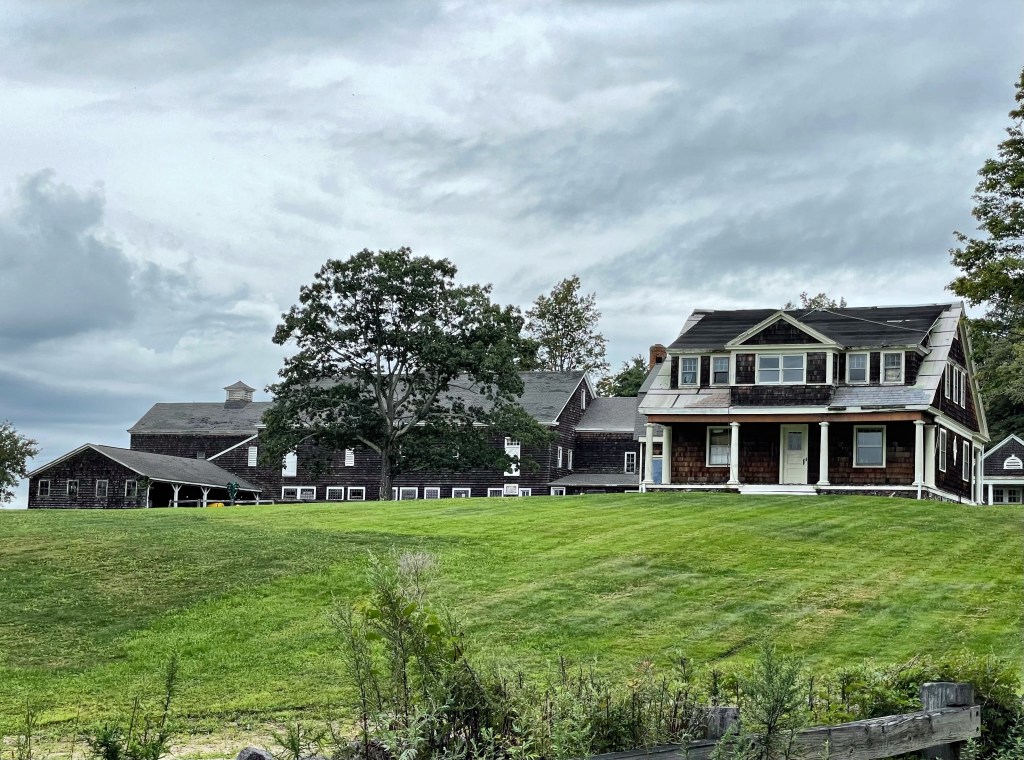
Tranquility Farm – Superintendent’s Cottage and Creamery // 1894

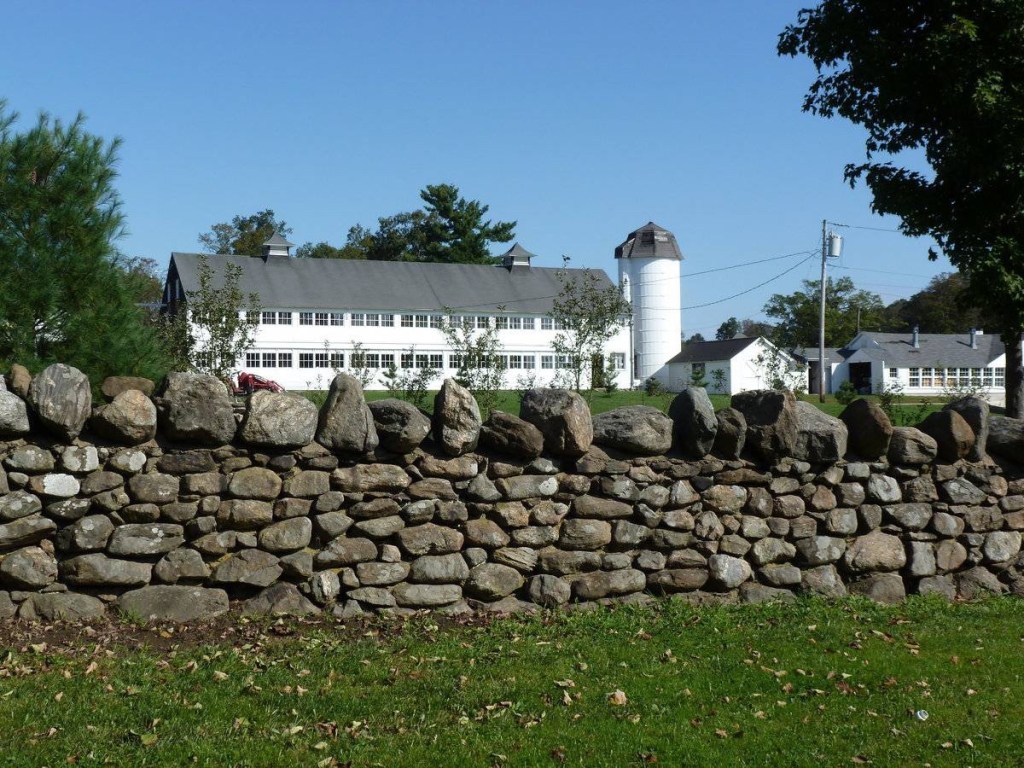
Any good gentleman’s farm needs a superintendent to actually oversee all the labor being done to harvest crops and take care of the livestock (because a millionaire owner cannot be burdened to deal with such mundane matters…) When John Howard Whittemore, a successful industrial-era businessman purchased an old farm in Middlebury, Connecticut to spend summers and time out of industrial malaise, he knew that along with a summer home for his family, he would need to build other structures on the 300-acres of rolling hills. The famed architectural firm of McKim, Mead & White was hired by Whittemore to design many of the buildings on the grounds, from the main house, to the superintendent’s cottage to a boathouse. The firm designed this superintendent’s cottage (which currently looks to be getting a new roof) and the creamery in the rear. Both are great examples of the Shingle style in modest, agricultural structures.

Tranquility Farm – Farmhouse and Barn // c.1840

Tranquillity Farm, spanning the rolling hills around Lake Quassapaug in Middlebury Connecticut, was originally a 303-acre model/gentleman’s farm developed by John Howard Whittemore, a successful industrial-era businessman in Naugatuck, and his wife Julia Spencer Whittemore. Whittemore was a major figure in Naugatuck, sponsoring a series of commissions of McKim, Mead & White for buildings in the city center. For his country farm estate, he again commissioned McKim, Mead & White to design a new country house, a farm superintendent’s house, boat house on the lake, and other outbuildings for a working farm. An older farm was purchased, which included a modest Greek Revival style farmhouse dating to the early-mid 19th century (seen here) and a large wooden barn. Both of these were kept and incorporated into the estate near the southern entrance to the property, possibly to harken visitors back to the charm of rural living. The sweeping landscape, featuring miles of distinctive stone walls lining the roads and crisscrossing the fields, was designed by Charles Eliot and completed by Warren H. Manning – both protégée of Olmsted.

Brook Farm // 1894

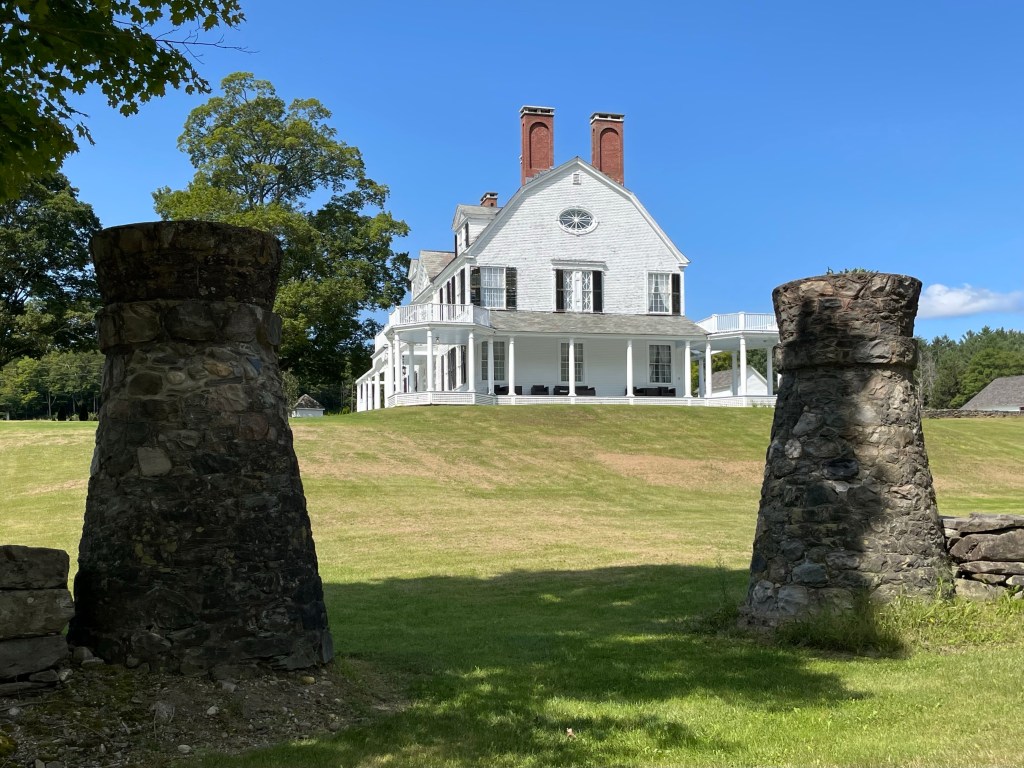
By the late 1800s, Vermonters had left the state in high numbers as agriculture began to sharply decline as a career path in New England, with many leaving to urban centers and manufacturing towns. Vermont politicians responded to the de-population with initiatives to encourage the redevelopment of existing farms by seasonal residents with money who could summer there to escape the hustle and bustle (and dirty air) of urban centers. Towns threw events like “Old Home” days with activities to entice affluent family members to return home and bring their money with them. After 1850, railroads made it easier for urban families to trade the heat and congestion of the city for the beauty of Vermont. One of these wealthy expats was James Hale Bates (1826-1901), who was born in Cavendish, Vermont, and moved to New York and worked in advertising, operating a major firm there. He retired in 1895, after the completion of Brook Farm one year earlier, a gentleman’s farm that he had built in his ancestral hometown of Cavendish. This massive Colonial Revival mansion was the centerpiece among sweeping fields and orchards contained by rustic stone walls. It is believed that Vermont architect, Clinton Smith, designed the estate house and many of the out-buildings on the site from the carriage and cow barns to the caretaker’s house and creamery. In recent years, the estate was operated as a vineyard, but it appears to be closed now. This is one of the hidden gems of Vermont and one of the most stunning Colonial Revival homes I have seen!

“Red Tower” // 1780 & 1895

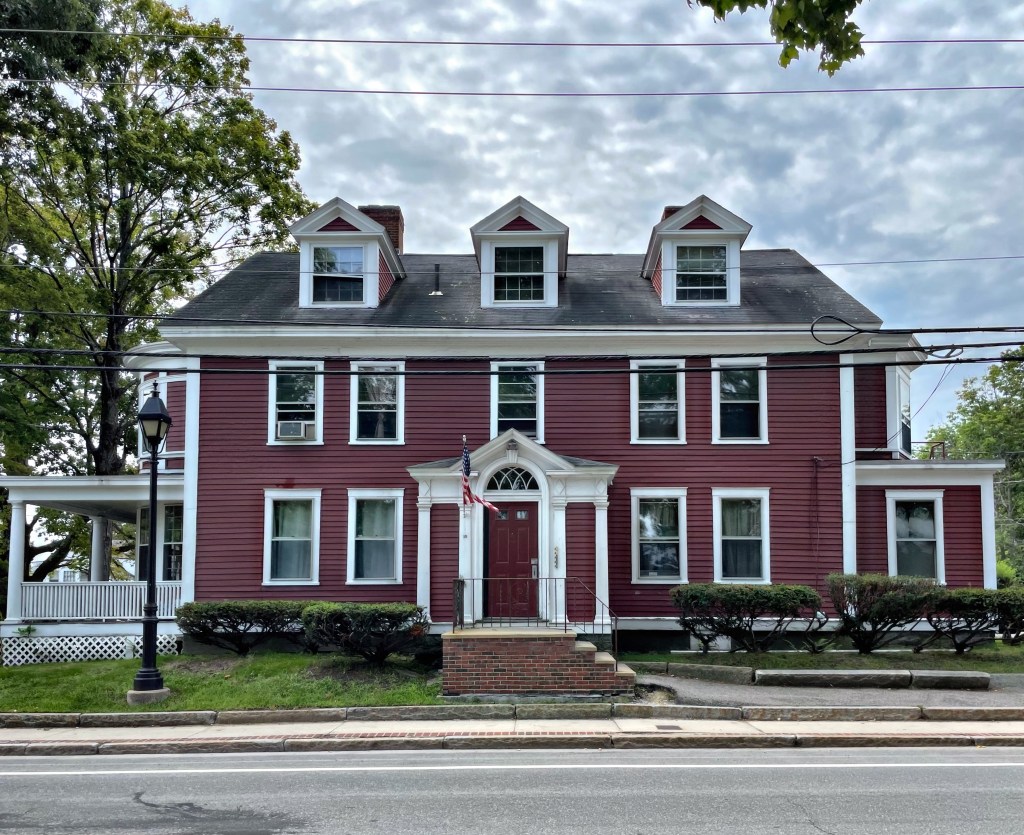
One of the most interesting homes in Durham, NH, sits right on Main Street, and while lacks much of its original grandeur, the house still has a story to tell. When mining engineer, Hamilton Smith met and married Alice Congreve while working in London, the couple envisioned and planned for a sprawling gentleman’s farm in New England to retire to. In 1895, the couple purchased the 1780 Rev. Blydenburgh home on Main Street, a large Federal style mansion. When Alice and Hamilton retired to the Red Tower in 1895, they set about renovating the estate into a jewel of the Gilded Age. They added a three-story tower to the rear of the home, large additions and Colonial Revival alterations, and they purchased large land holdings behind the house for a working farm. On the farmland, they built a carriage house, creamery, and men’s and women’s accessory buildings (a billiards building and tea house, respectively). Hamilton could only enjoy the home for a couple years until his death in 1900. His widow created the family cemetery at the farthest extent of the property and built the stunning Smith Memorial Chapel (last post). In the 1940s, much of the property was sold off and developed for a residential neighborhood for UNH faculty, and the Red Tower mansion was converted to an apartment house for students.