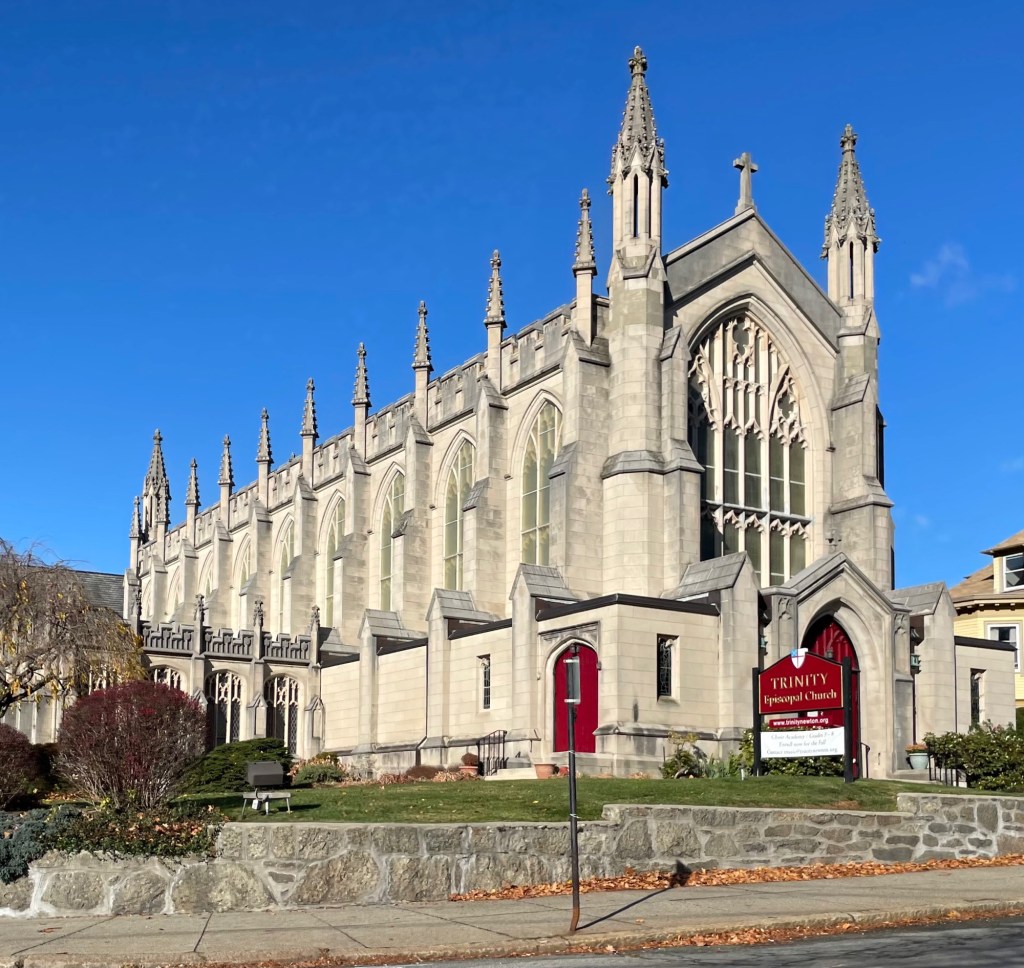
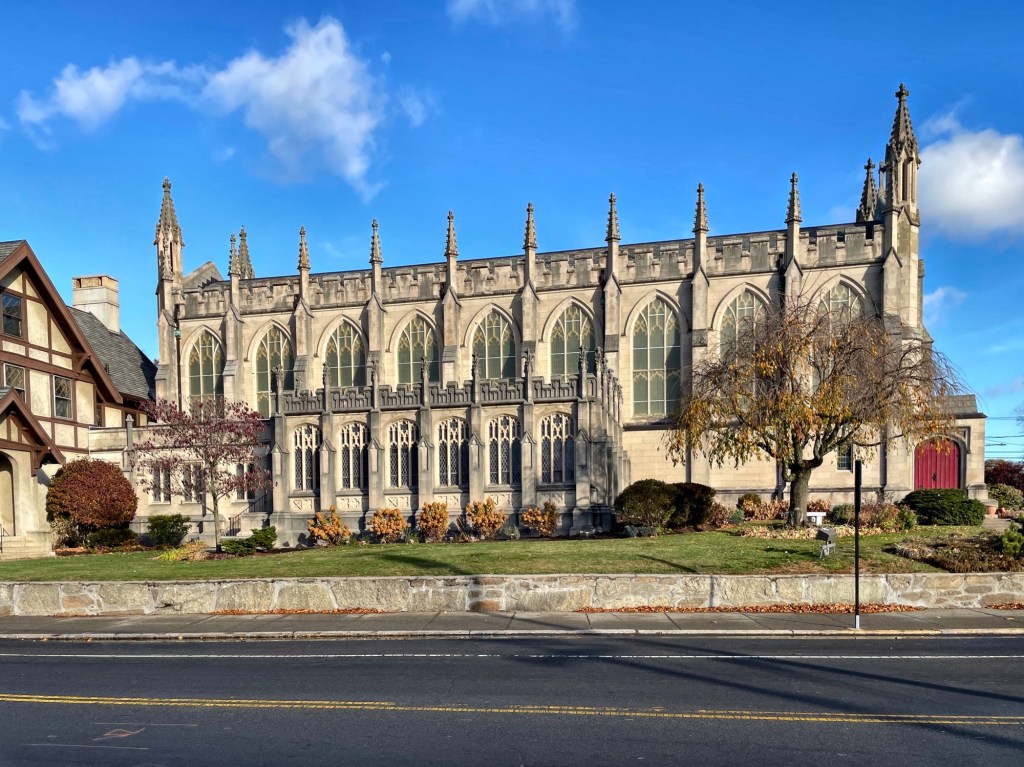
Trinity Episcopal Church, Newton // 1915

The Trinity Episcopal Church in Newton Centre is one of the most unique and architecturally significant buildings in the village. Episcopalians began meeting in Newton Centre by at least 1889 and began discussions about erecting their own church. A small wood-frame chapel was built (since relocated and used by the Newton Parks Department) and provided worship space for years until the 1910s when the congregation acquired enough funds to build a more substantial structure. The cornerstone for the new church, which was designed by architect George W. Chickering, was laid in May of 1915, and the building was completed in 1916. Modeled after the stunning King’s College Chapel in Cambridge, England, the high-style Gothic edifice is notable for the crenelated parapet and pinnacles rising above the buttresses.
Corbin-Norton House // 1891

Sited prominently on Ocean Park in Oak Bluffs, the Corbin-Norton House overlooks the Nantucket Sound with no buildings obscuring the gorgeous sunrises. When the home was originally built in 1891, it belonged to Philip Corbin, a manufacturer of household hardware and locks from New Britain. Conn., who got his start as a locksmith apprentice and grew his business until it employed 15,000 people. Corbin summered on Martha’s Vineyard and saw the shift from Cottage City, a Methodist-oriented summer resort town to Oak Bluffs, an exclusive summer colony. The house was built by Eli A. Leighton, a carpenter from Oak Bluffs whose descendants still live on the Is­land. The house remained in the Corbin family for some 40 years, after which it changed hands a number of times, at one point, housing a doctor’s office. By that time, nearly all of the historic character had been stripped of the home with replacement vinyl windows, removed trim and finials, and a monochrome color scheme. In 1991, when Peter Norton, the computer soft­ware magnate, and his wife, Eileen, de­cided to buy the old Corbin house for a reported $350,000, it was begging for someone with the resources to restore it. The restoration would take three years to complete, and Mr. Norton commissioned a team of consultants, ar­chitects and contractors to do the job. They meticulously restored the home, only to have the misfortune of a fire which destroyed the home. Norton funded the replica which was completed soon after, and passers-by wouldn’t be able to tell the difference!