The Colony Hotel // 1929

As Woodstock New York surged in popularity as a retreat for American and European artists, savvy businessmen from Manhattan could not help themselves but to envision ways to make a little extra money. Morris Newgold and his son, Gabriel of New York City who purchased the Overlook Mountain House in 1917, sought to expand their upstate lodging empire and built a secondary establishment in the village of Woodstock, the Colony Hotel. The Colony Hotel serve as a more modest establishment to the grand Overlook Mountain House atop Overlook Mountain and would be a staging area and a stopover point for guests coming up the Hudson River by boat or train. Guests would spend the night at the Colony and eat at its fine restaurant before making the arduous trip up the mountain to the Overlook Mountain House the next day. The Colony Hotel appears to have been Gabriel’s idea who prided himself on the new building being “pretentious” as it was much more substantial than the more modest, vernacular buildings around the village. Gerald Betz of nearby Kingston was the architect for the Colony Hotel. Construction began for the Colony Hotel in 1927, and it opened to guests the summer of 1929. Morris died in 1940 and Gabriel continued to manage the Colony until his son took over from 1945 until the 1960 but as event space for arts and antiques fairs. It became known as the Colony Arts Center. The Colony’s website goes on to state that the building sat empty almost entirely through the next forty years. It was recently restored by artists Alexia and Neil Howard who converted it to a music venue and beer garden, it is pretty amazing and a must-see for history buffs visiting Woodstock.

Woodstock Artists Association & Museum // 1919

By 1919, artists from all over the United States and Europe were living and creating art in Woodstock, NY. As a thriving and expanding group of diverse individuals, the need for a welcoming and open-minded gallery space was quickly recognized. To facilitate this, a group of five painters established two complimentary organizations: The Woodstock Art Association (later changed to Woodstock Artists Association in 1933) who would maintain the exhibition space and set its artistic principles, and the Artists Realty Company who would finance the construction and maintenance of the physical space. The five painters being: Carl Eric Lindin (1869-1942), John F. Carlson (1874-1945), Frank Swift Chase (1886-1942), Henry Lee McFee (1886-1953) and Andrew Dasburg (1887-1979). New York City architect William A. Boring was commissioned to design the new museum and art space for the group. Boring (whos career was anything but boring) briefly worked for McKim, Mead and White for a year before starting his own practice with Edward Tilton in 1891. His most noted work is his 1897 Immigration Station on Ellis Island for which he and Tilton won the design competition as relative unknowns. The refined Colonial Revival building for the Woodstock Artists Association sits right in the middle of the village and its symmetrical façade is defined by a central double door entrance with transom and pedimented enframement. Of particular interest is the row of four elliptical windows above the double-hung windows.

Tannery Brook House – Old Forge House // c.1780

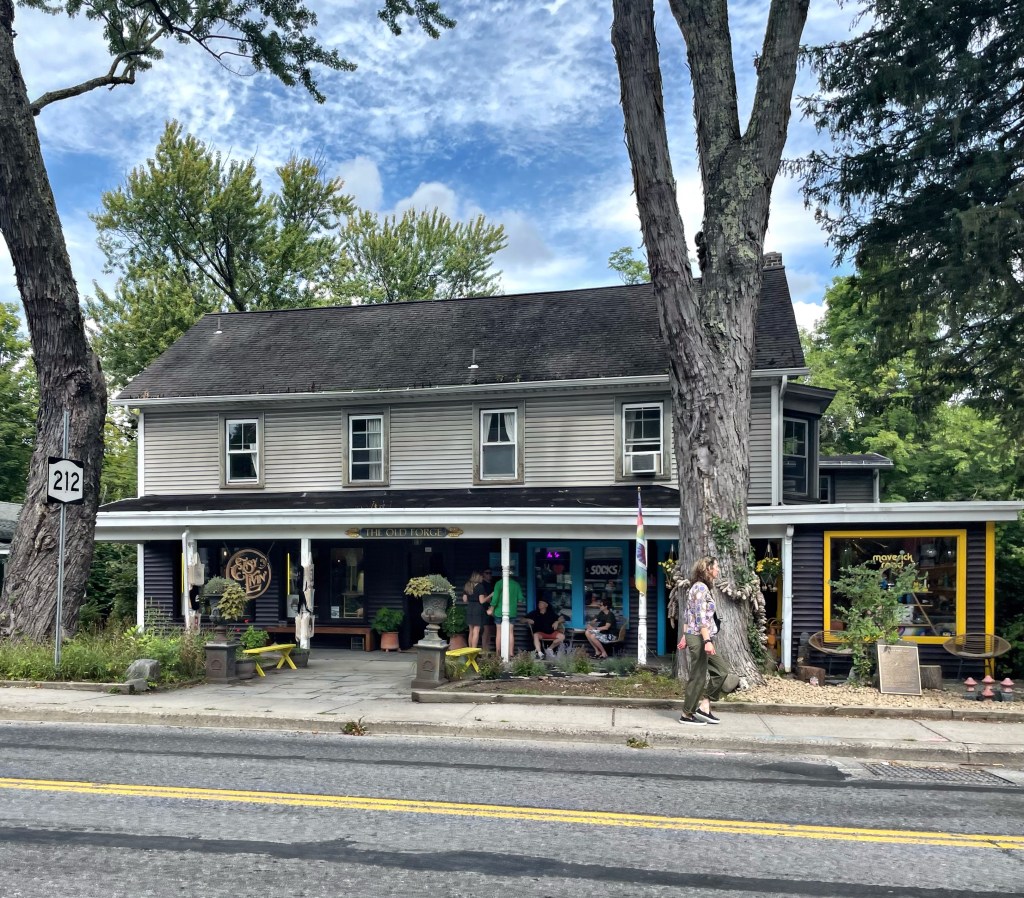
One of the oldest extant buildings in Woodstock Village is the old Tannery Brook House. The building (or a part of it) was originally an old grist mill developed by Isaac Davis and it was later turned into a saw mill. Around the end of the Civil War, the structure was home to the village blacksmith operated by John Wigram Davis, then it was enlarged as a barn for wagons and carriages. Later, owner Peter Longendyke operated a boarding house from the building. Around 1904, the New York Art Students League is believed to have had their first summer art class in the upstairs rooms of the building. In 1935, owner Lamonte Simpkins remodeled it as “The Art Shop”. Upstairs Mr. Simpkins sold clothes, shoes and drygoods, while downstairs The Art Shop and Tannery Brook Garden Flourished. The building was rebranded as the Old Forge House, as a nod to its historic use. It remains a vernacular, and important piece of Woodstock’s rich history from sleepy industrial village to vibrant artist community.

Krack House // 1870

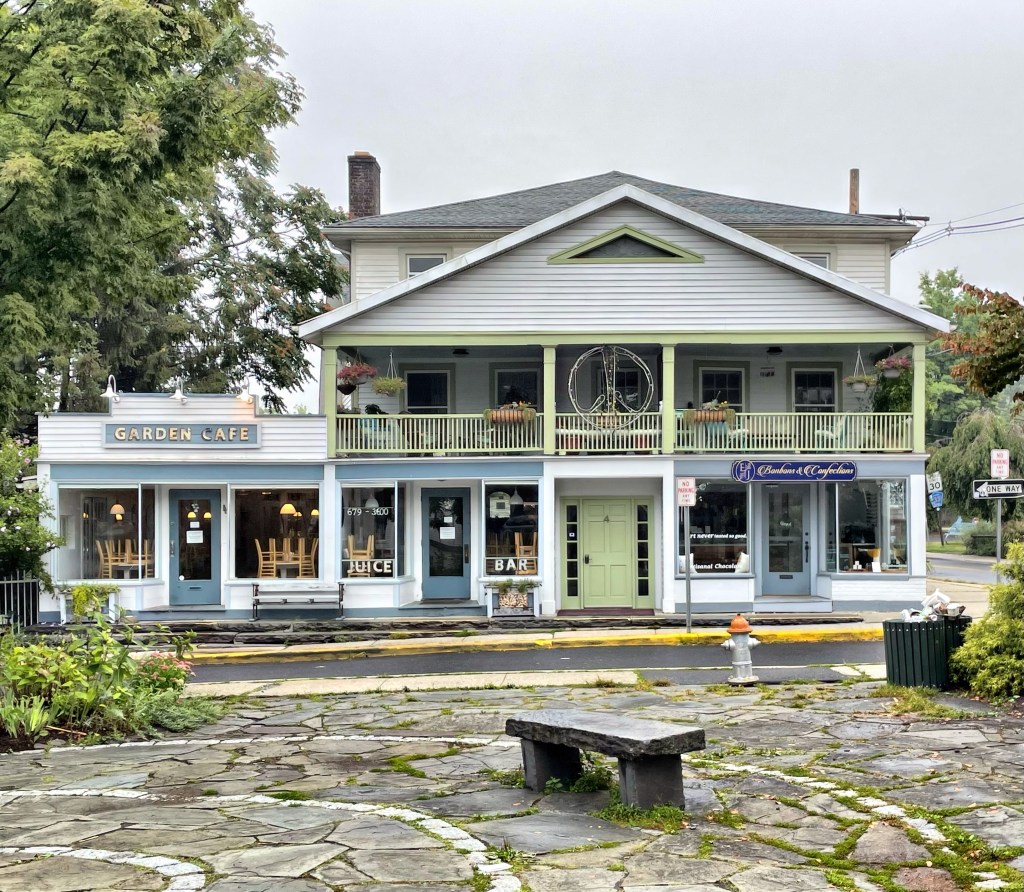
One of the largest buildings in the charming village of Woodstock, NY, is the former Krack House… I know what you are thinking, and no it was not due to illegal activity! The Krack House was developed in 1870 by Charles H. Krack (1824-1893), as a response to the success of other summer hotels built nearby as the area saw a boom in tourism. Charles Krack was born in Germany and after serving in the military there, he arrived to America in the mid-1800s. Here, he served as an overseer of a Georgia plantation, and moved to New York City after the Civil War, operating a hotel in Manhattan. He later became the owner of a floating bathhouse on New York City’s East River anchored near Grand Street, and made great money, investing it up the Hudson in Woodstock. In Ulster County, he got involved in politics. The Krack House was a summer lodging facility with food service and all the best amenities in the village. After Charles’ death in 1893, the property was eventually purchased by Stanley Brinckerhoff Longyear, who rebranded the hotel in his name, The Longyear. The building appears to now contain apartments above commercial spaces.