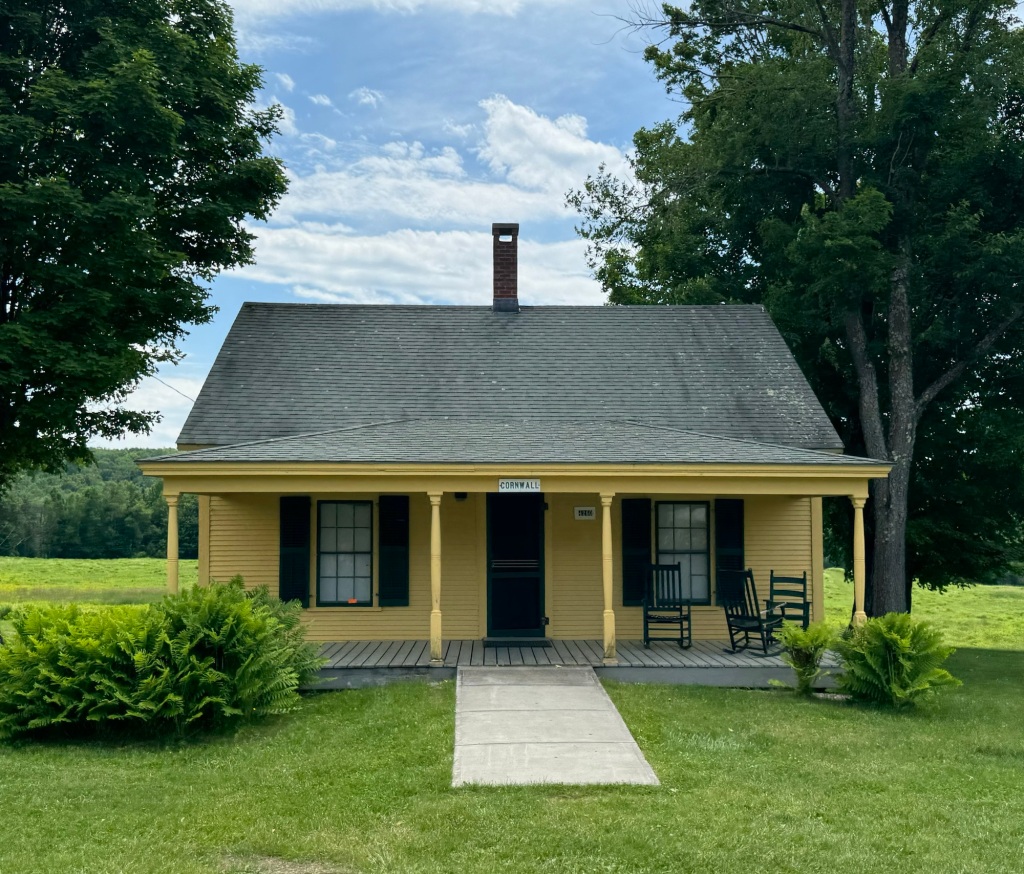
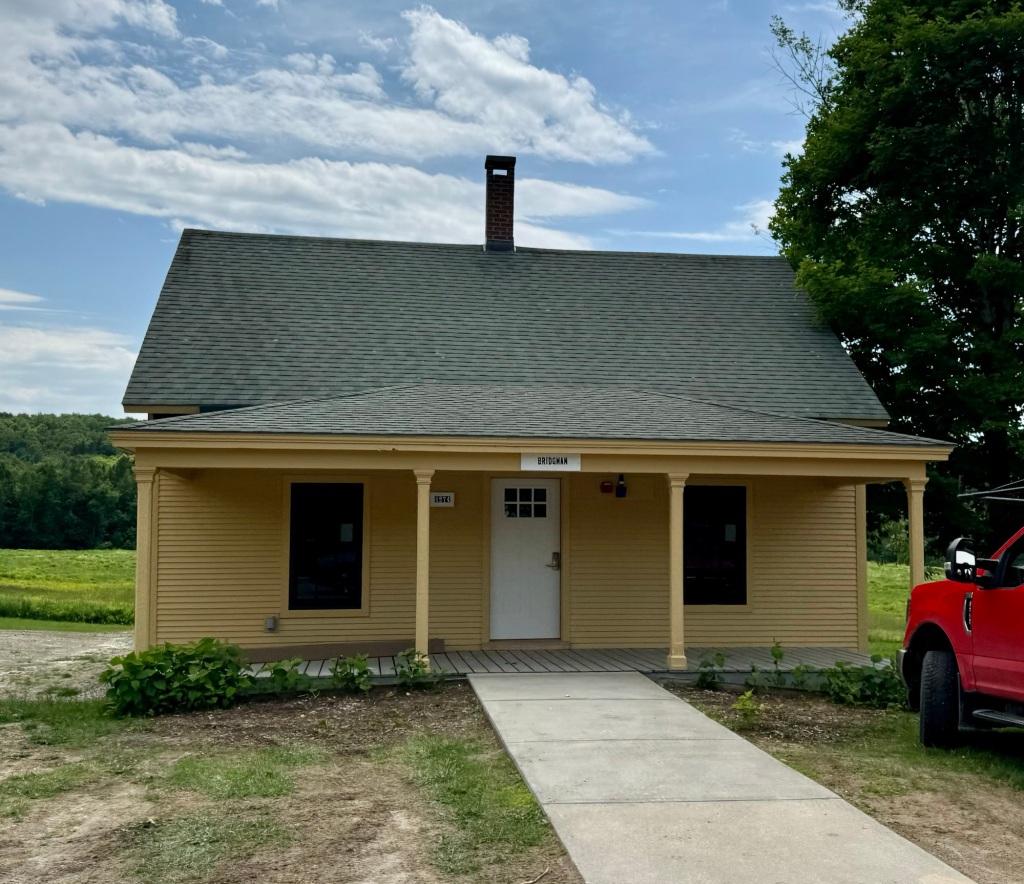
Bread Loaf Campus – Bridgman & Cornwall Cottages // 1881

Welcome back to the Bread Loaf Campus! For more early history and context of the complex, check out the post on the Bread Loaf Inn. By 1900, owner Joseph Battell’s enterprise exceeded the capacity of the original inn, and cottages were added to accommodate more guests visiting his new permanent home in the mountains of Ripton, Vermont. Special friends who summered regularly at Bread Loaf purchased lots with water and sewage rights, and with Battell’s assistance, built their own family cottages to spend their summers. The first two, Bridgman and Cornwall, were constructed across the street from the Inn around 1881 and are near-identical, modest vernacular cape houses with full-length front porches. The original owners were Charles William and Ellen Campbell Bridgman and Henry Bedinger Cornwall respectively. Both cottages have since been donated to Middlebury College and are important preserved pieces of its Bread Loaf campus.
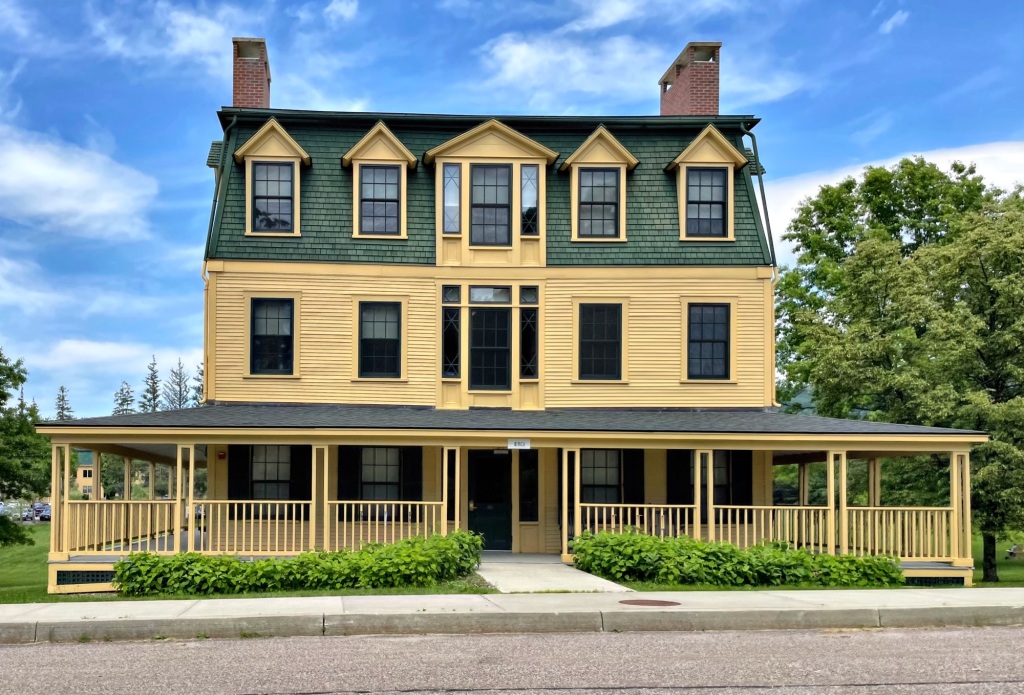
Bread Loaf Campus – Birch Cottage // c.1900

Welcome back to the Bread Loaf Campus! For more early history and context of the complex, check out the post on the Bread Loaf Inn. By 1900, owner Joseph Battell’s enterprise exceeded the capacity of the original inn, and cottages were added to accommodate more guests visiting his new permanent home in the mountains of Ripton, Vermont. An early cottage built by Battell is this late-Mansard structure, named Birch Cottage. The structure clearly took cues from the Bread Loaf Inn, built over a decade earlier, and originally had two floors of porches wrapping around the entire structure.

Bread Loaf Inn // 1882

The Breadloaf Inn is a rare intact example of Vermont’s Victorian resort architecture that also has important associations with the environmental movement and for American literature. Located in the quiet town of Ripton, Vermont, this impressive structure was built in 1882 by eccentric philanthropist Joseph Battell. Mr. Battell attended Middlebury College in the early 1860s but he was forced to abandon his studies due to ill health. On the advice of his doctor, Battell spent a weekend at a farmhouse in nearby Ripton where the clear mountain air would help cure his ailing lungs. He so loved the beauty of the surrounding hills that he decided to buy the old farmhouse, which became known as the Bread Loaf Inn, named for Bread Loaf Mountain not far away. Over the years, numerous new buildings, porches, and barns were added in order to accommodate Battell’s many friends and guests. The Inn, which was remodelled from the farmhouse in 1882, and the surrounding mountains served as Battell’s home and sanctuary for the rest of his long life. He amassed land holdings of over 30,000 acres of forest, preserving it in perpetuity until his death in 1915, becoming the state’s largest landowner when he died. Battell’s vast mountain estate was left to Middlebury College, who brought the seasonal inn back to life as the summer Breadloaf School of English. In 1926 the college added the Breadloaf Writers’ Conference, drawing such luminaries as poet Robert Frost, who spent summers at a cabin nearby. The complex is maintained by Middlebury College to this day, who do a great job at preserving the original buildings.