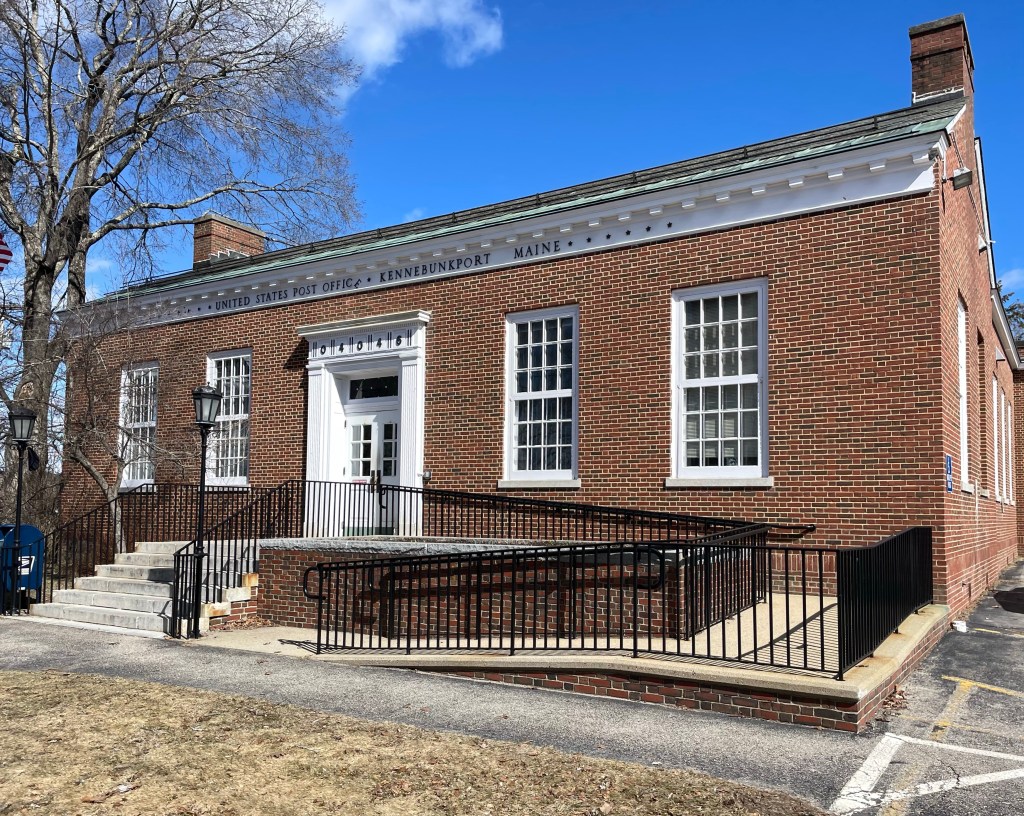
Kennebunkport Post Office // 1941

During the Great Depression, the federal government built over 1,100 post offices throughout the country as part of the New Deal’s Federal Works Agency. Many of the post offices funded and built in this period were designed by architect Louis Simon, Head of the Office of the Supervising Architect for the U.S. Treasury. Few architects had such a role in designing buildings nationwide than Federal architects who designed buildings ranging from smaller post offices like this to courthouses and federal offices. They really are the unsung designers who impacted the built environment in nearly every corner of the nation. As part of the Treasury Department Section of Fine Arts, artists were hired to complete local murals inside many post offices built in this period, depicting local scenes and histories of the towns they were painted in. In Kennebunkport, artist Elizabeth Tracy who submitted a preliminary sketch of her piece “Bathers” which was approved depicting a beach scene, though the townspeople had not been consulted. Unfortunately, the opinion of a vocal part of the Kennebunkport populace was highly negative to Tracy’s painting, largely due to the fact that her beach scene depicted people on a beach in adjacent Kennebunk, not Kennebunkport! Within a few years, the townspeople gathered funds to hire artist Gordon Grant to paint a satisfactory replacement mural in 1945. The new mural remains inside the post office.
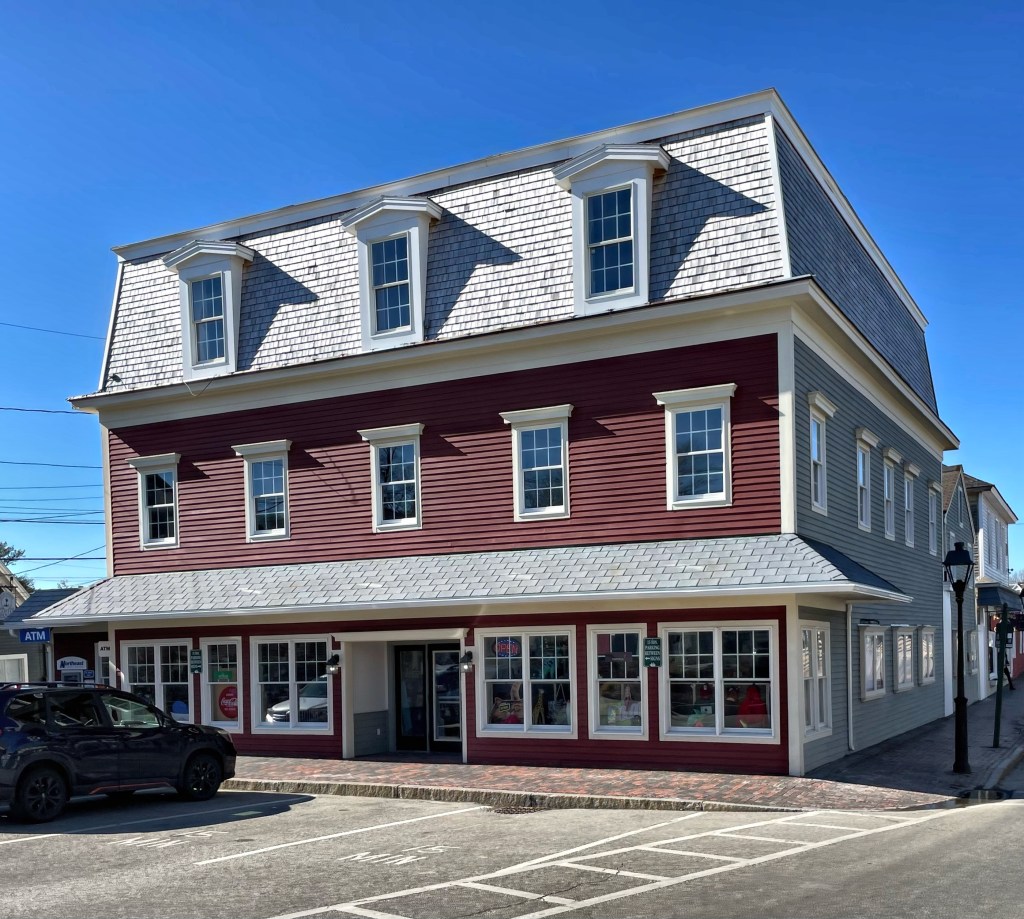
Luques Store // 1827

In 1827, a young Andrew Luques (1791-1873) built a store in the village of Kennebunkport, Maine where he sold dry goods, hardware, and fancy goods to the area’s citizens. As the village grew around him, the store grew and occupied the entire block near a drawbridge, which spanned the Kennebunk River to Harbor Village in adjacent Kennebunk. The business did well and the store was eventually inherited by Anthony Luques in the late 1850s. Anthony expanded the store, modernizing it and added a Mansard roof for an additional floor. Anthony continued operating the store until his death in 1890, when it was sold to a member of the Dennett Family. Around 1900, the building was occupied by a few businesses, with one taking advantage of the town’s recent desirability as a summer resort colony by selling bathing suits and hammocks. The building remains a visual and important anchor to the human-scaled and walkable village of Kennebunkport.

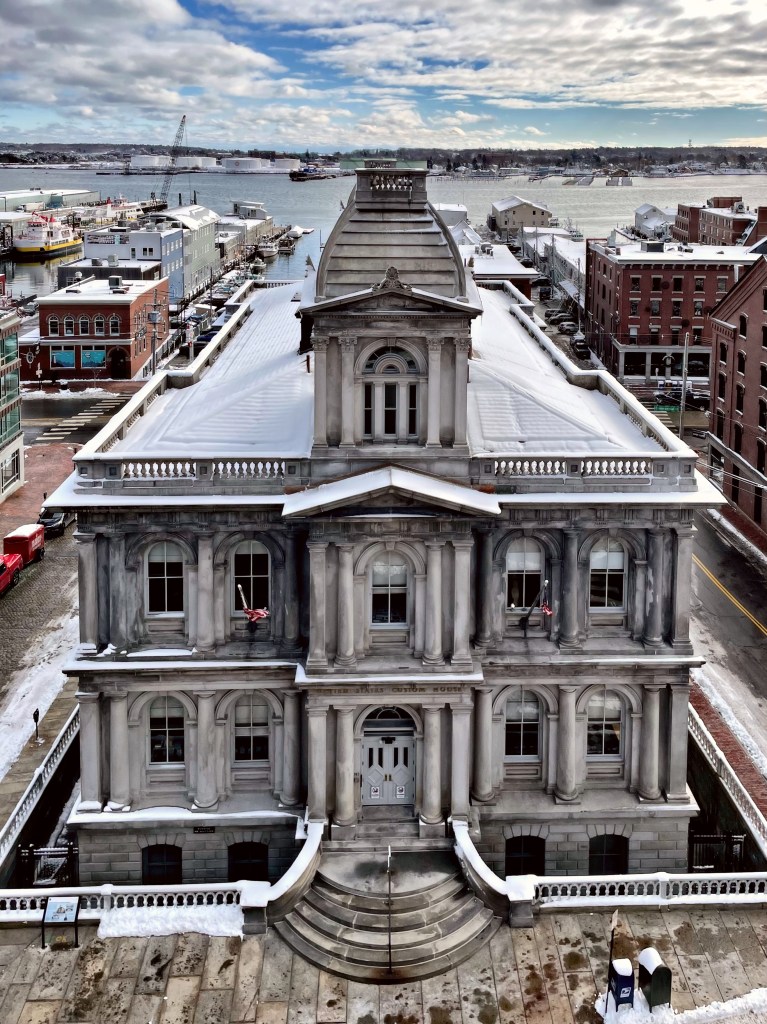
Portland Custom House // 1868

Probably my favorite building in Portland, Maine is the former Custom House building, an imposing granite building located a stone’s throw from the Portland Harbor. It was built to accommodate the city’s growing customs business, which, by 1866, was collecting $900,000 annually in customs duties—making Portland one of the most significant seaports in the country. The building is typical of the notable designs completed under the direction of Alfred B. Mullett, Supervising Architect of the Treasury from 1865 to 1874. Constructed between 1867 and 1872 (due to delays in obtaining granite for the upper stories) the U.S. Custom House combines elements of the Second Empire and Renaissance Revival styles and is one of the best preserved custom houses in New England. The interior custom hall is especially remarkable.