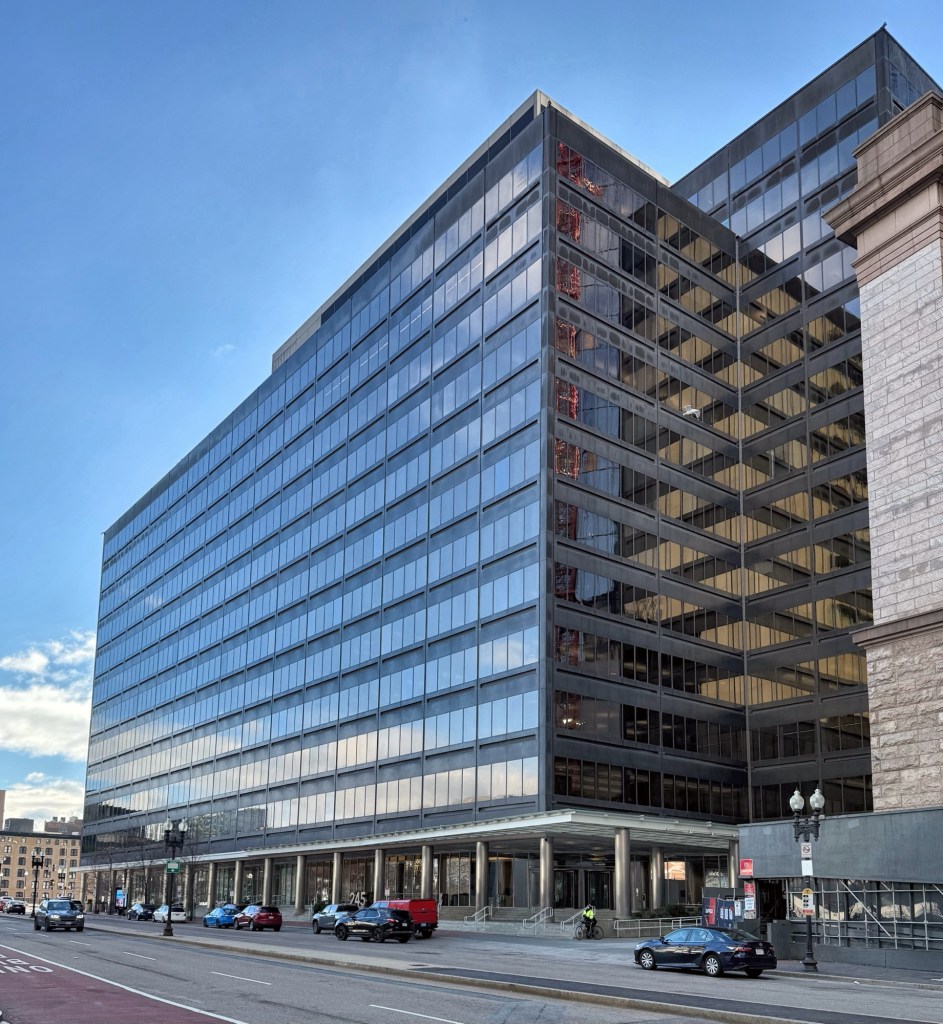
Stone & Webster, established in 1893 by MIT graduates Charles Stone and Edwin Webster, was a national leader in electrification and power generation, and provided services in engineering, construction, environmental remediation, infrastructure, and plant operation for industrial clients. After the Boston Redevelopment Authority acquired and demolished sections of South Station for redevelopment, Stone & Webster decided to relocate their offices to this new site. Los Angeles-based architectural firm Welton Becket & Associates, designed the office building in a late International-style, which serves as a counter to the masonry and classically designed, South Station nearby. The steel frame with metal and glass skin and boxy form are effective at delineating the building from its neighbor, but is not pedestrian-friendly at the ground level as the raised ground floor is lined at the sidewalk by concrete steps. The building is now largely leased to Fidelity Investments.
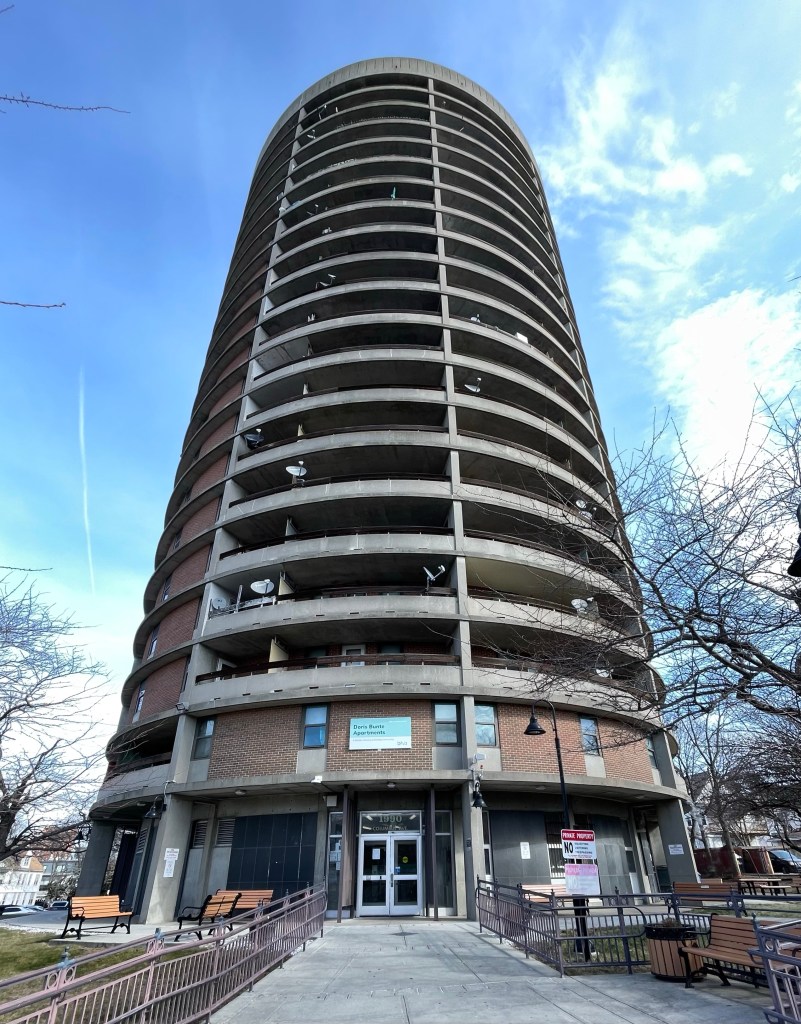
In the second half of the 20th century, parts of Boston saw disinvestment by private property owners as well as local and state government. With people leaving Boston for the suburbs, the hemorrhaging of tax revenue led urban planners to go big and institute ‘Urban Renewal‘ policies and planning to demolish what they believed to be substandard housing and invest in Modern apartments and car-oriented developments. The triangular shaped new community was as comprehensive as any urban renewal district in the region; indeed of the ten General Neighborhood Renewal Plans created by the BRA in 1961, Washington Park was the most self contained Urban Renewal District in the city. It included new police and fire stations, a courthouse, two public libraries, a shopping mall, a health center, elementary school and five garden style housing developments totaling almost 2000 apartments or townhouses. At its completion in 1975, $70.4 million had been invested to build the new community of which $31. 3 million came from the federal government. Part of this massive undertaking was the construction of elderly housing, which resulted in this 20-story cylindrical tower at the southernmost edge of the Urban Renewal area. The tower was constructed between 1967 and 1970 and was designed by Boston-based architectural firm Richmond & Goldberg, led by Isidor Richmond and Carney Goldberg. Apartments were “integrated” with with 70% Black and 30% White residents, all with private balconies and an emergency pull-chain system in kitchens and bedrooms for the elderly residents. As far as mid-century apartment towers go, this one is pretty interesting and unique. The building was renovated a few years ago and renamed the Doris Bunte Apartments. In 1969, Buntè was nominated to the Boston Housing Authority board, making her the first female public housing tenant to serve. In 1972, she was elected to the Massachusetts House of Representatives, becoming the first woman of color to serve in the Massachusetts legislature, and the first female to serve in the House leadership in 68 years. While there, Buntè helped found the Black Legislative Caucus and the Caucus of Women Legislators.
Modern architecture can often compliment and blend into the context of historic neighborhoods, and this example in Boston’s South End neighborhood is one of the best examples locally. In 2002, developers eyed a long-vacant lot on the busy Mass. Ave corridor through the South End and began designs of a contextual addition to the streetscape. Dolezal Architecture was tasked with designing a modern residential building that would comply with local historic district regulations, a balance that can be difficult to accomplish. Employing traditional masonry, solid-to-void ratios, massing, and bays, but in a modern context, the building blends in with its surroundings yet is architecturally interesting. The building contains ten condos in a single building which reads more like two distinct structures.
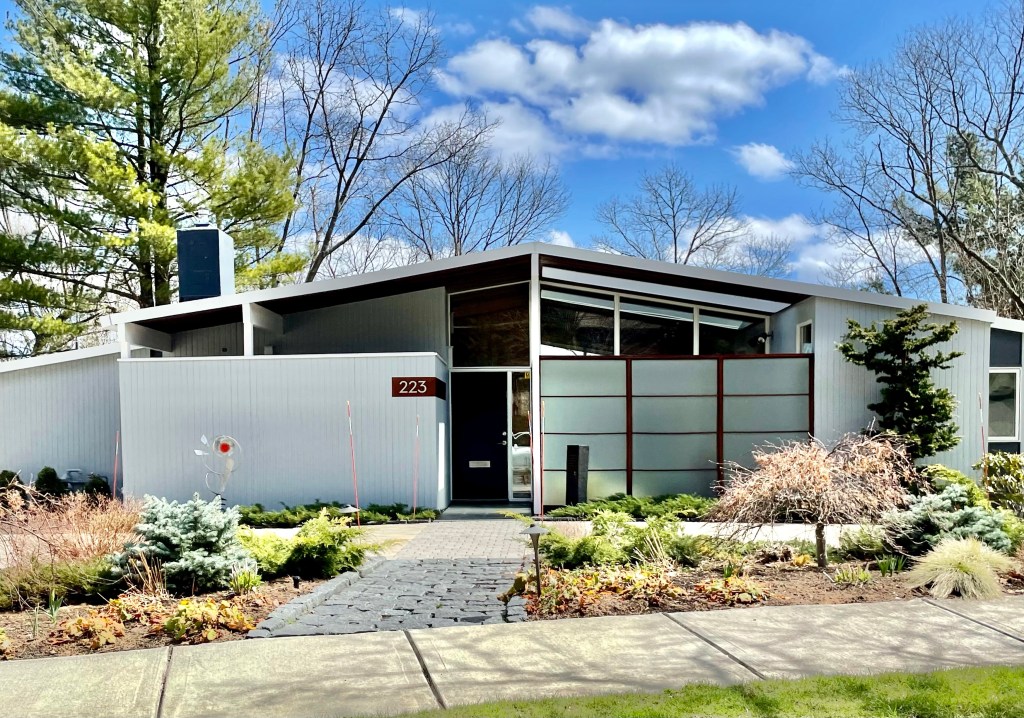
Occupying the highest elevation (315 feet) in Newton, Massachusetts Baldpate Hill and its residential development encompasses perhaps the largest concentration of architect-designed custom homes from the 1940-1960 period in the city. Newton realtor Arnold Hartmann purchased large land holdings in the minimally developed Oak Hill village, developed some land into the Newton Country Club and other areas for suburban neighborhoods. He laid out building lots on Baldpate Hill from 1926 to the late 1950s, and many of the homes were built after WWII. One of the later homes built is this house, built in 1959 from plans by the architectural firm of Hoover & Hill of Cambridge. The home features a low-slung roof with the home in a Ranch form, yet extends to two stories as the hill drops off at the rear of the home. A small garden is located in the front yard, and terraced yard is located at the rear.
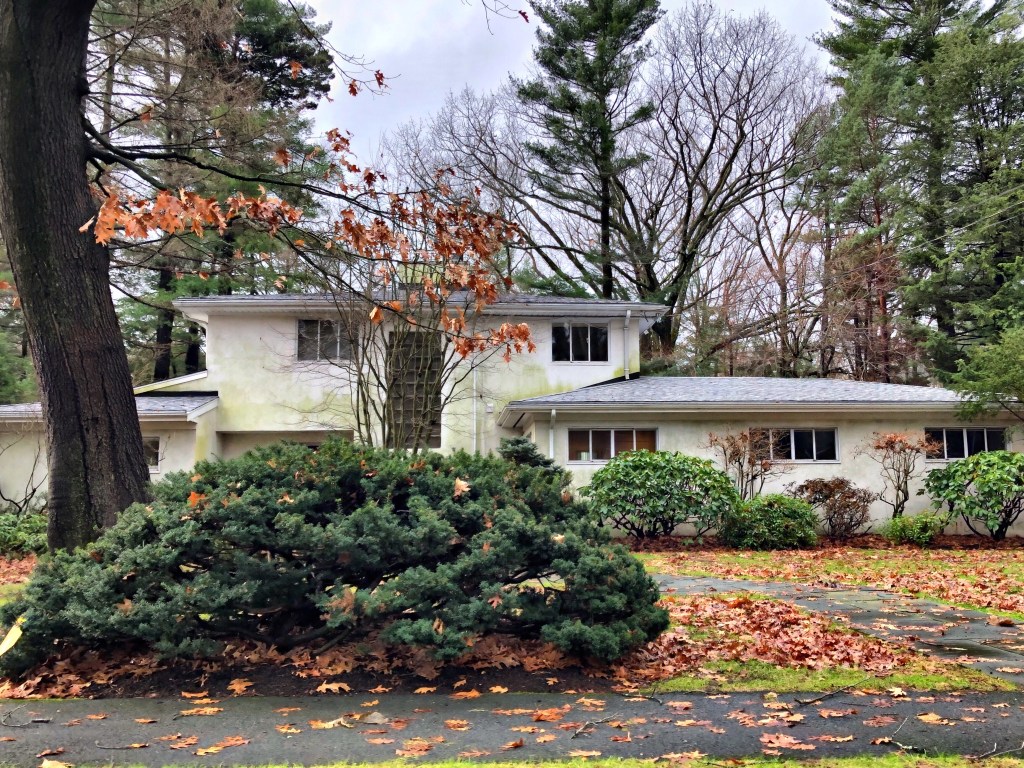
Built in 1935 (the same year as the Webber House in the last post), the Melnick House in South Brookline shows how the historically oriented designs of colonial New England converged with the Modern principles brought over from the Bauhaus movement from Germany. The 1930s were an interesting time for residential design around Boston as the two diverging styles were often located in the same neighborhoods. The Melnick House was designed by architect Samuel Glaser for Edward S. T. Melnick and his wife, Ethyle Melnick. Edward worked in Downtown Boston as the assistant division manager at Filene’s department store. Architect Samuel Glaser (1902-1983) was born in Riga, Latvia and at the age of four came to the United States with his family, settling in Brookline. He studied architecture at MIT and started his own practice in Boston a niche as a designer of moderately priced homes, particularly in the expanding suburbs where young Jewish families had begun living. The Melnick home combines the austere stucco walls and lack of applied ornament typical of late 1930s Modern architecture in the Boston area with a hipped-roof main block and flanking wings more commonly associated with traditional style houses of the same period. The home features a vertical glass block window which illuminates the interior stair hall.

 Buildings of New England