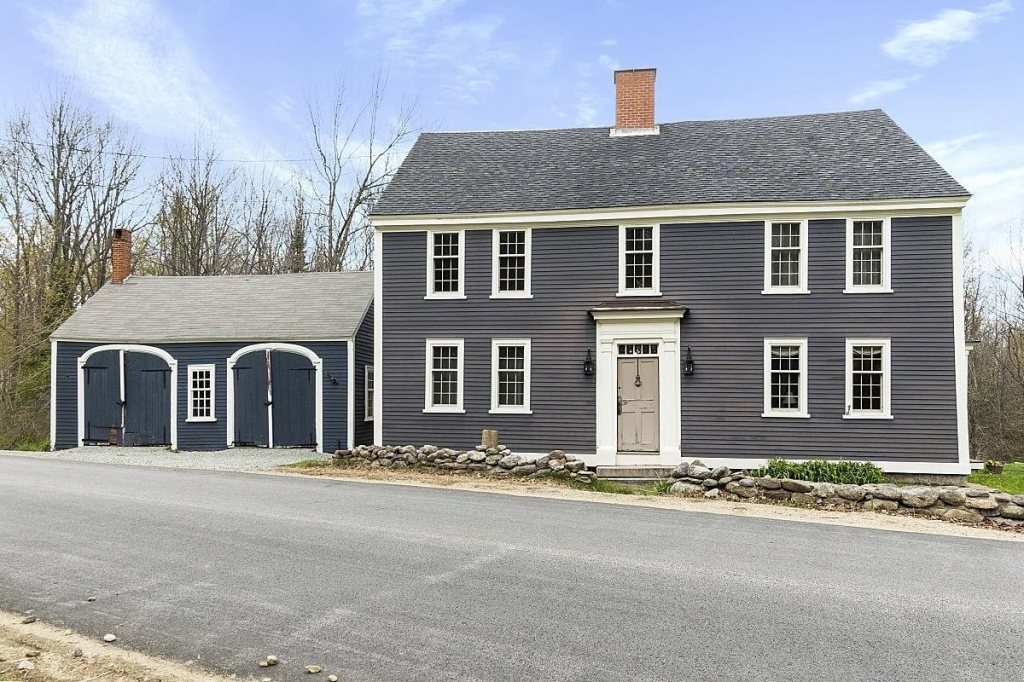
Isaac Appleton Homestead // 1756

One of the oldest (if not the oldest) extant houses in Ipswich, New Hampshire is this Colonial home on Appleton Road, which gets its name from the first owner, Isaac Appleton. Deacon Isaac Appleton III (1731-1806) was one of the town’s original settlers who came to New Ipswich from Ipswich, Massachusetts. He held the office of town clerk and of selectman and was a deacon for thirty years. He responded to the call to arms from Concord to fight in the American Revolution. Deacon Isaac Appleton III was the father of Samuel Appleton, a wealthy Boston merchant; and Nathan Appleton, a merchant and politician in Boston and head of the famous Appleton Family which would influence Boston business and politics for generations. Samuel Appleton would fund and establish the Appleton Academy in New Ipswich, the second oldest in New Hampshire after Phillips Exeter Academy. The Isaac Appleton Homestead remains in a great state of preservation and sits just outside the town center.
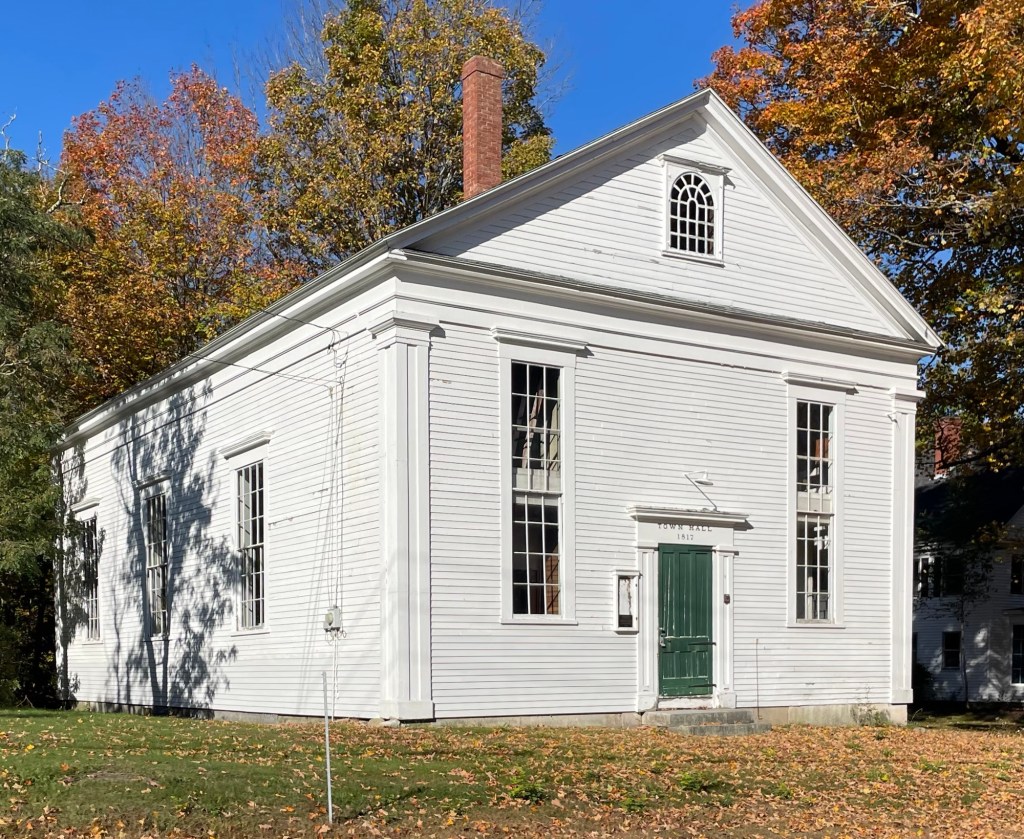
Old New Ipswich Town Hall // 1817

New Ipswich, New Hampshire, is a town that oozes New England charm! Winding back roads are lined with Colonial-era homes and buildings, lovingly maintained by stewards and neighbors to create the quintessential small town feeling. New Ipswich was granted in 1735 to 60 inhabitants of Ipswich, Massachusetts, where the name is derived, by colonial Governor Jonathan Belcher and the General Court of Massachusetts. European settlement began here in 1738, when Abijah Foster arrived to the area with his wife and infant daughter. At the center of town, a new Town Hall was built in 1817 as a combination town hall and private academy with funds provided by the town government and by the trustees of New Ipswich Academy. The building was constructed under the direction of Deacon Nathaniel Gould, using materials salvaged from a disused meetinghouse of 1770. The arched gable window is reputed to have been taken from the meeting house, as are twisted balusters on the gallery stairway inside. As completed in 1817, the building had a full second floor which provided the academy with a lecture room, a small library, and a laboratory, but that was taken over by 1869 when the Town renovated the building, removing a tower and belfry, and occupied the second floor spaces. The building is still owned by the town, and is used occasionally for civic functions, with town offices in a mundane, newer building a short distance away.