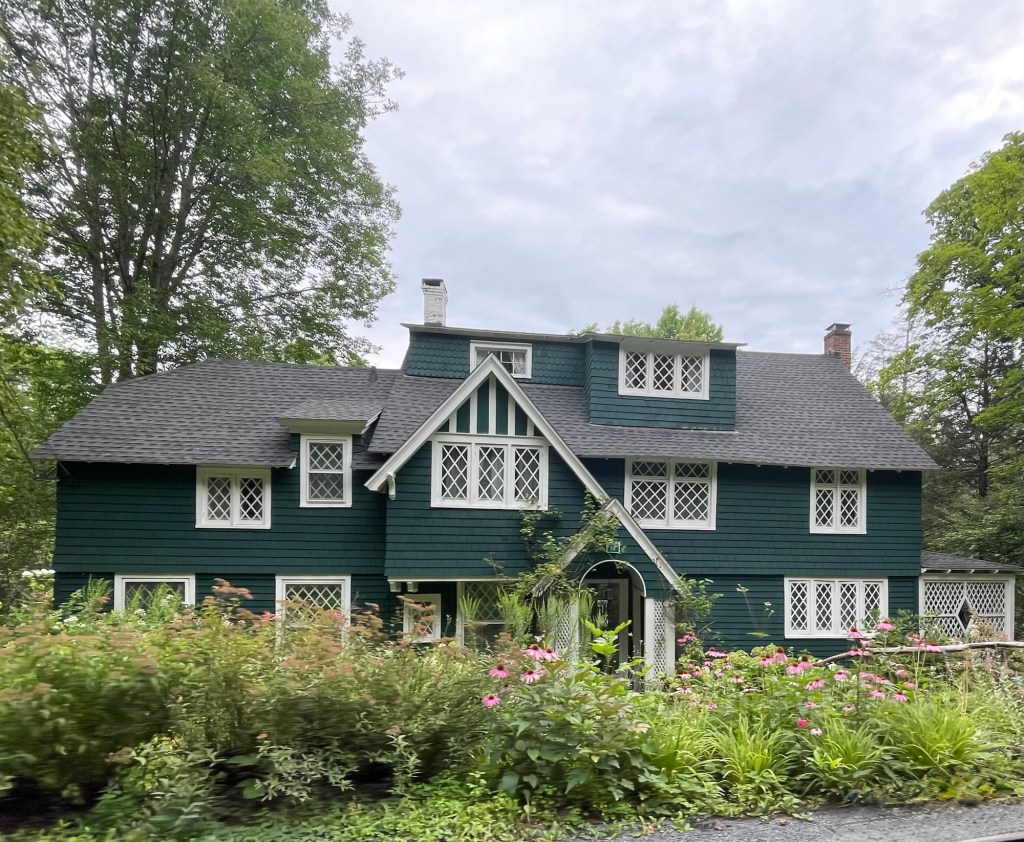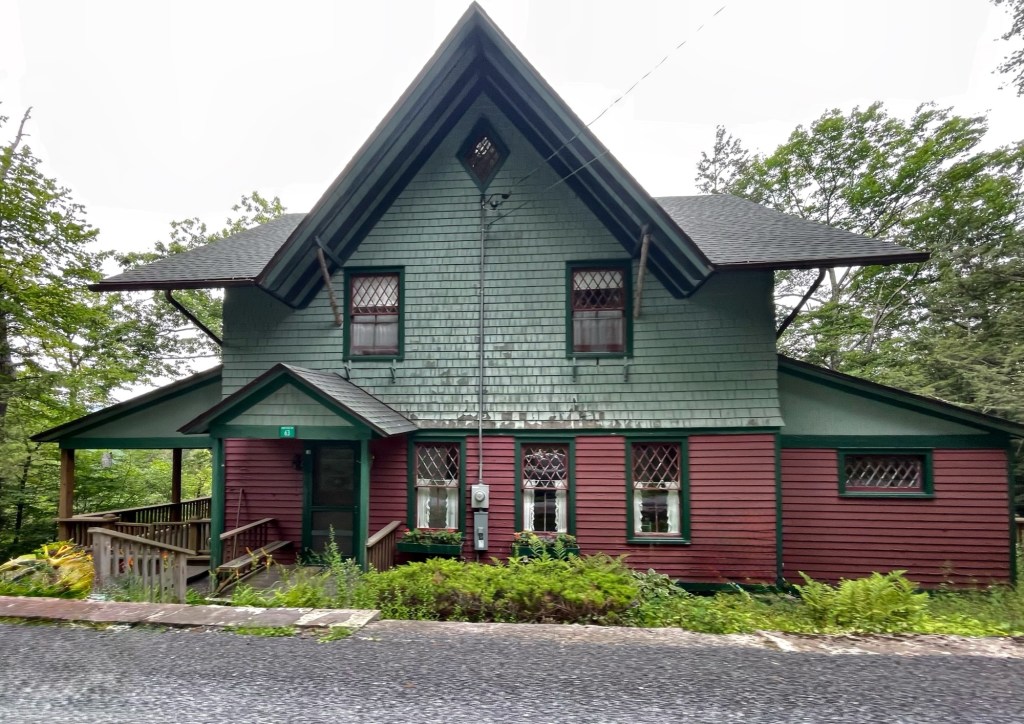
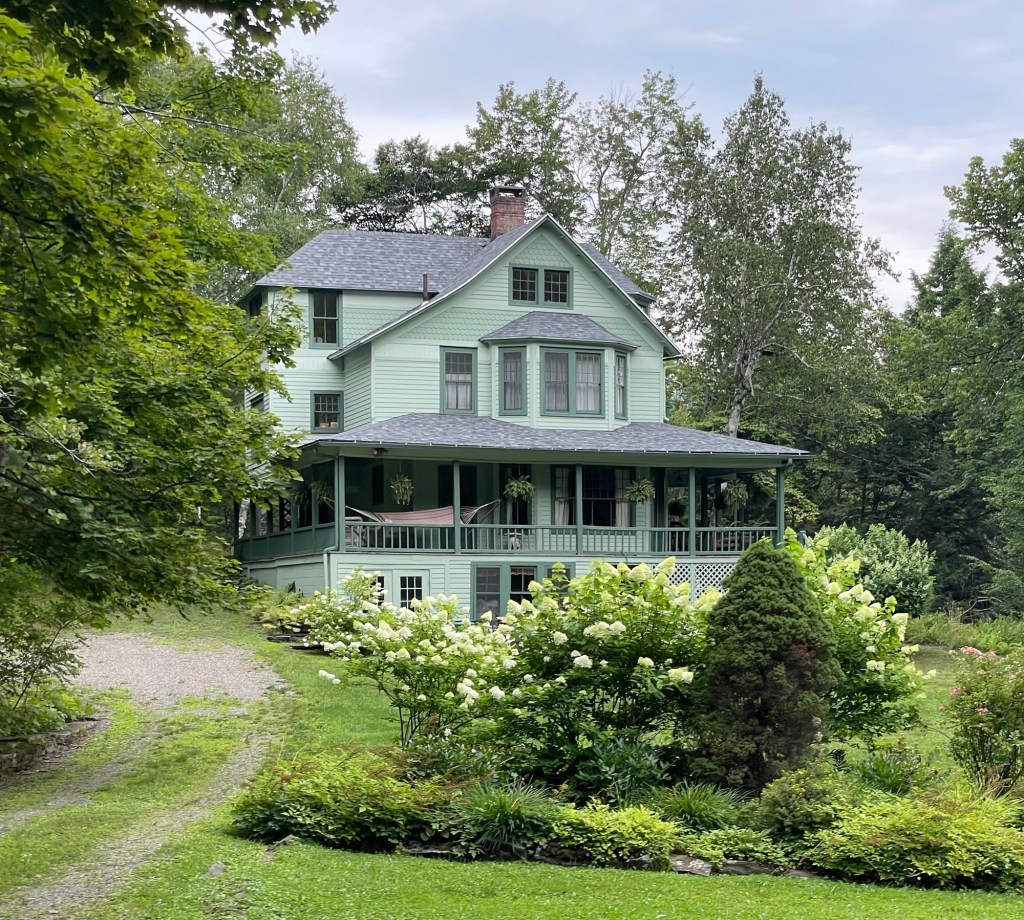
Crossways Cottage // c.1890

Tucked away in the town of Hunter in the Catskill Mountains of New York, the summer colony of Twilight Park has stood as an exclusive and private resort community established in the late 19th century. Twilight Park was born out of the Twilight Club, a Manhattan social club in the late-19th century and brought to life by founder, Charles F. Wingate. Mr. Wingate traveled to the mountaintop in 1887, and became enamored by its natural beauty. He arranged for the purchase of a former sheep’s meadow and led the construction of the first cluster of cottages in what would become a large community of over 100 summer homes. Cottages were laid out on roughly parallel roads at different elevations and on old connecting paths that later became roads with all lots built on ledges overlooking the Catskills. The first cottages were log cabins, and quickly followed by larger, Queen Anne style “cottages” as others invested in the development. Crossways Cottage is one of the many unique late-Victorian summer “cottages” in the exclusive Twilight Park colony in the Catskills of Hunter, New York. The cottage stands out for its cross-gable roof with overly deep eaves which are supported by rustic twig brackets, diamond sash windows, and the use of varied clapboard and shingle siding. 
Four Winds Cottage // 1889

Tucked away in the town of Hunter in the Catskill Mountains of New York, the summer colony of Twilight Park has stood as an exclusive and private resort community established in the late 19th century. Twilight Park was born out of the Twilight Club, a Manhattan social club in the late-19th century and brought to life by founder, Charles F. Wingate. Mr. Wingate traveled to the mountaintop in 1887, and became enamored by its natural beauty. He arranged for the purchase of a former sheep meadow and led the construction of the first cluster of cottages in what would become a large community of over 100 summer homes. Cottages were laid out on roughly parallel roads at different elevations and on old connecting paths that later became roads with all lots built on ledges overlooking the Catskills. The first cottages were log cabins, and quickly followed by larger, Queen Anne style “cottages” as others invested in the development. This cottage, known as “Four Winds”, was built in 1889 during the first phase of development in Twilight Park, and it is notable for its varied siding, wrap-around porch, bay window, and elevated siting to provide better views of the landscape.

Braeside Cottage // 1888

Tucked away in the town of Hunter in the Catskill Mountains of New York, the summer colony of Twilight Park has stood as an exclusive and private resort community established in the late 19th century. Twilight Park was born out of the Twilight Club, a Manhattan social club in the late-19th century and brought to life by founder, Charles F. Wingate. Mr. Wingate traveled to the mountaintop in 1887, and became enamored by its natural beauty. He arranged for the purchase of a former sheep meadow and led the construction of the first cluster of cottages in what would become a large community of over 100 summer homes. Cottages were laid out on roughly parallel roads at different elevations and on old connecting paths that later became roads with all lots built on ledges overlooking the Catskills. The first cottages were log cabins, and quickly followed by larger, Queen Anne style “cottages” as others invested in the development. This cottage, known as Brae Side Cottage, was built in 1888 during the first phase of development in Twilight Park, and it is notable for its varied siding, diamond-pane windows, complex roof form with dormers, and the laticed entry.

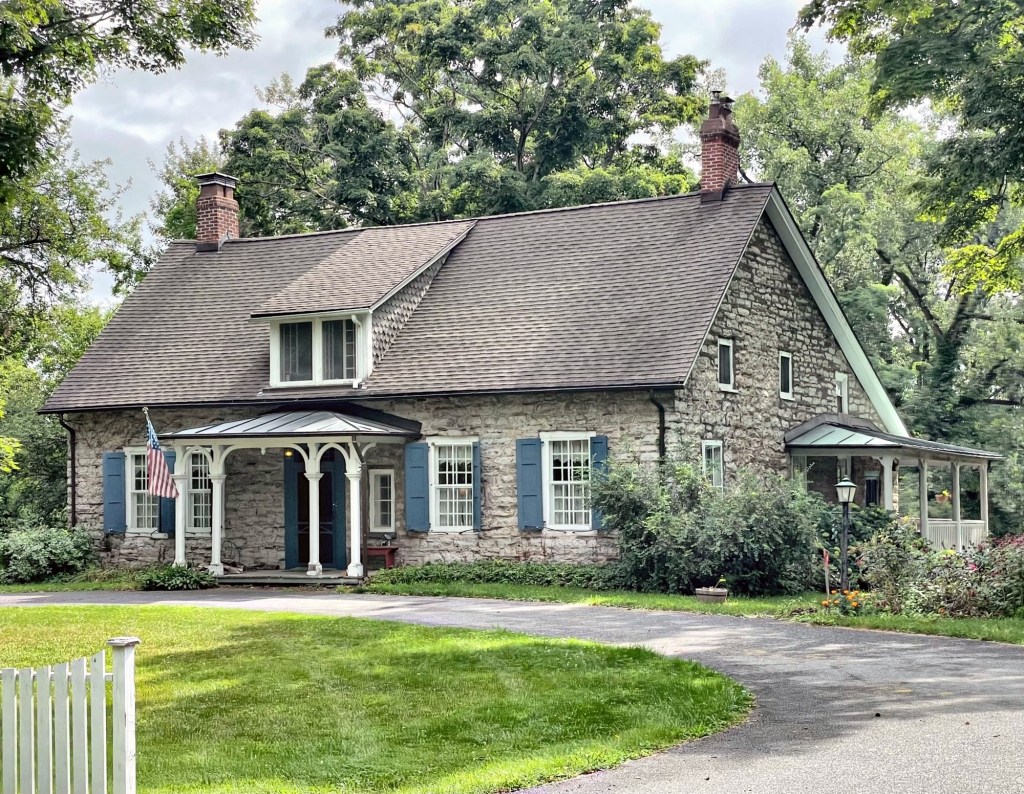
Cornelius Person House // c.1770

The Cornelius Person House is a pre-Revolution stone dwelling built in the Katsbaan village of Saugerties, New York. The residence was constructed around 1770 by Cornelius Person (1744-1827) a merchant who held a store just south of this home. The store was apparently used as a meeting place for Patriots during the Revolutionary War and Cornelius fought in the local militia at the time. After the war, John Jacob Astor was said to have traded with local fur trappers at the store. The Person Stone House was originally a smaller dwelling and was expanded multiple times to give it the center hall appearance and later saltbox rear. Later alterations include the porches, but the house retains so much of its original charm.

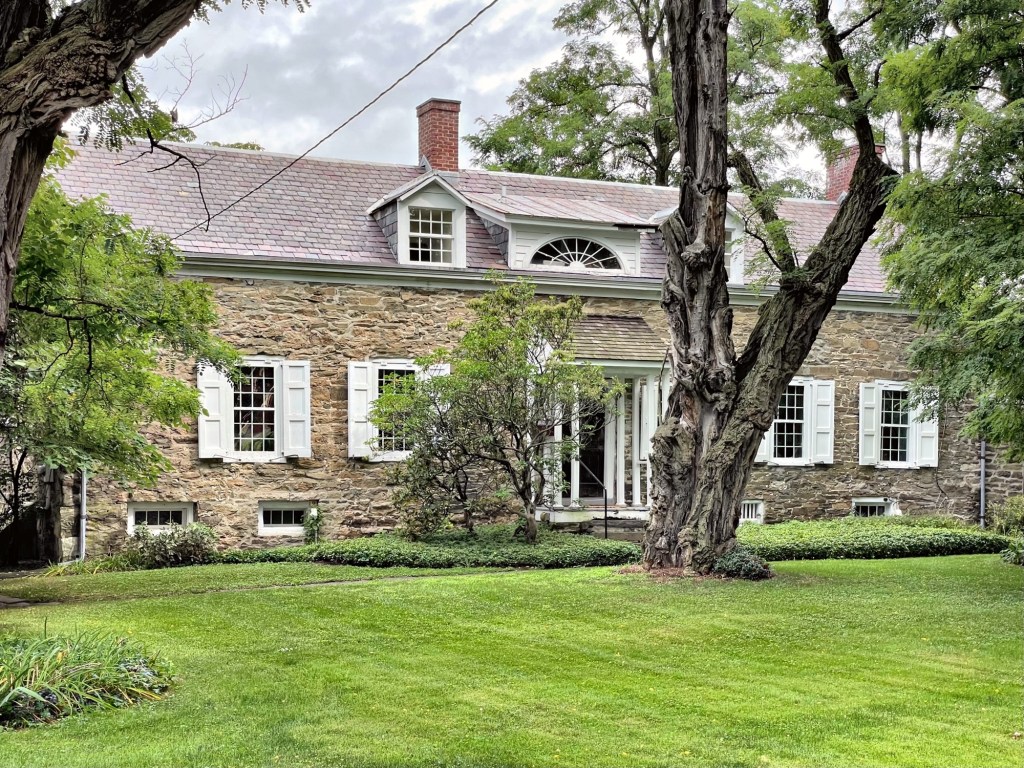
DuBois-Kierstede Stone House // 1727

Ulster County, New York, is known for its many stone houses, largely built in the 18th and 19th centuries by Dutch and other European settlers to the region. This stone house in Saugerties was built beginning in 1727 by Hiskia DuBois (Du Boys), who established a 40-acre farm here. The original homestead was the one-and-a-half-story east wing of the present structure and occupied by Hiskia until his death in 1757, afterwhich, the property was inherited by his son David, who would sell the farmstead to Dr. Christoffel “Christopher” Kiersted (1736-1791), the first doctor to take up a residence in present-day Saugerties. After Dr. Kiersted died in 1791, the property was expanded and enlarged to its current composition, likely by his son, John Kiersted. Under the ownership of John, a grove of Black Locust trees were planted in the front yard setting the cottage in a small forest. The DuBois-Kierstede Stone House is currently the home of the Saugerties Historical Society, which operates the structure as the Kiersted House Museum, along with a preserved Dutch Barn on the site.