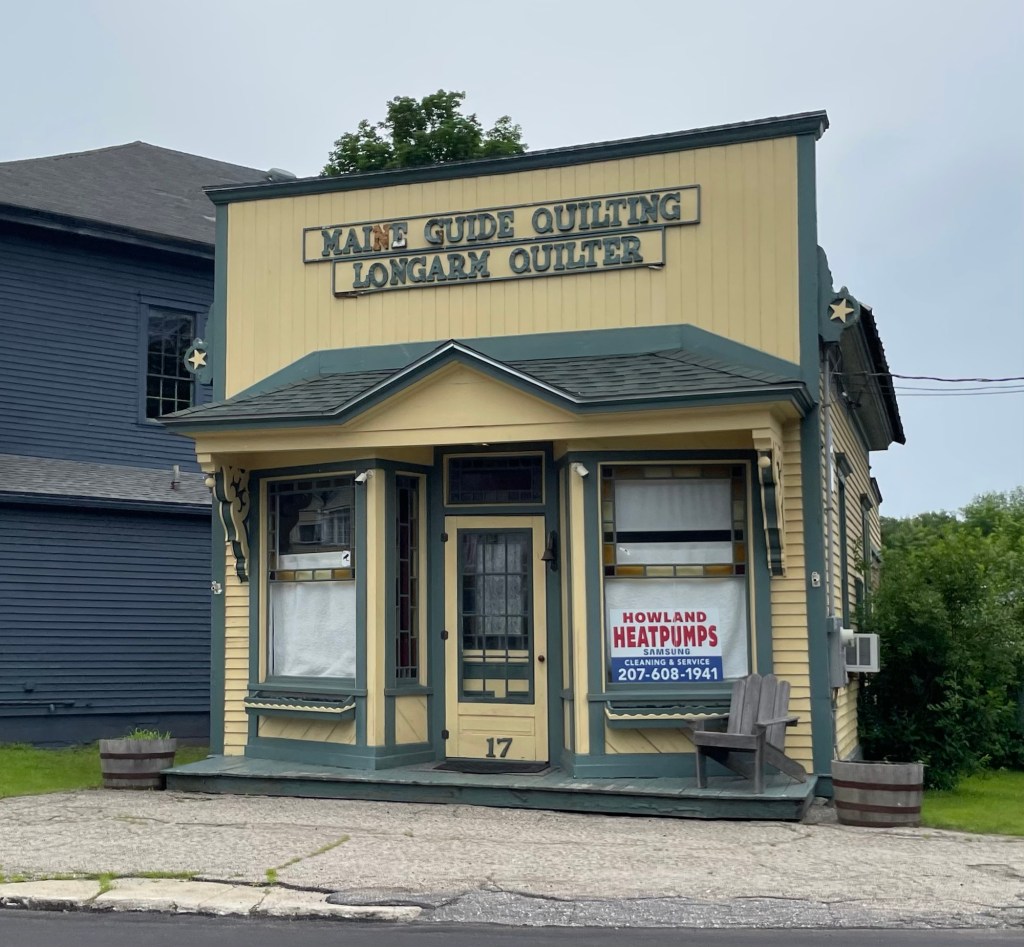
Ms. Perkins’ Millinery Shop // c.1890

This charming one-story shop sits on the Porter-side of Kezar Falls village, a district that spans the Ossipee River between Porter and Parsonsfield, Maine. This shop was built at the end of the 19th century as a millinery shop (womens’ hat store) for Ms. Florence Perkins (1862-1950), who appears to have been unmarried all of her life. Retaining almost all of its original decorative detail, the building has a symmetrically arranged facade with two-sided projecting bays; the upper sash in the facade windows, including that in the entrance door, has a border of small rectangular colored glass panels. The storefront is a rare survivor of this period, with not many other examples in the area.
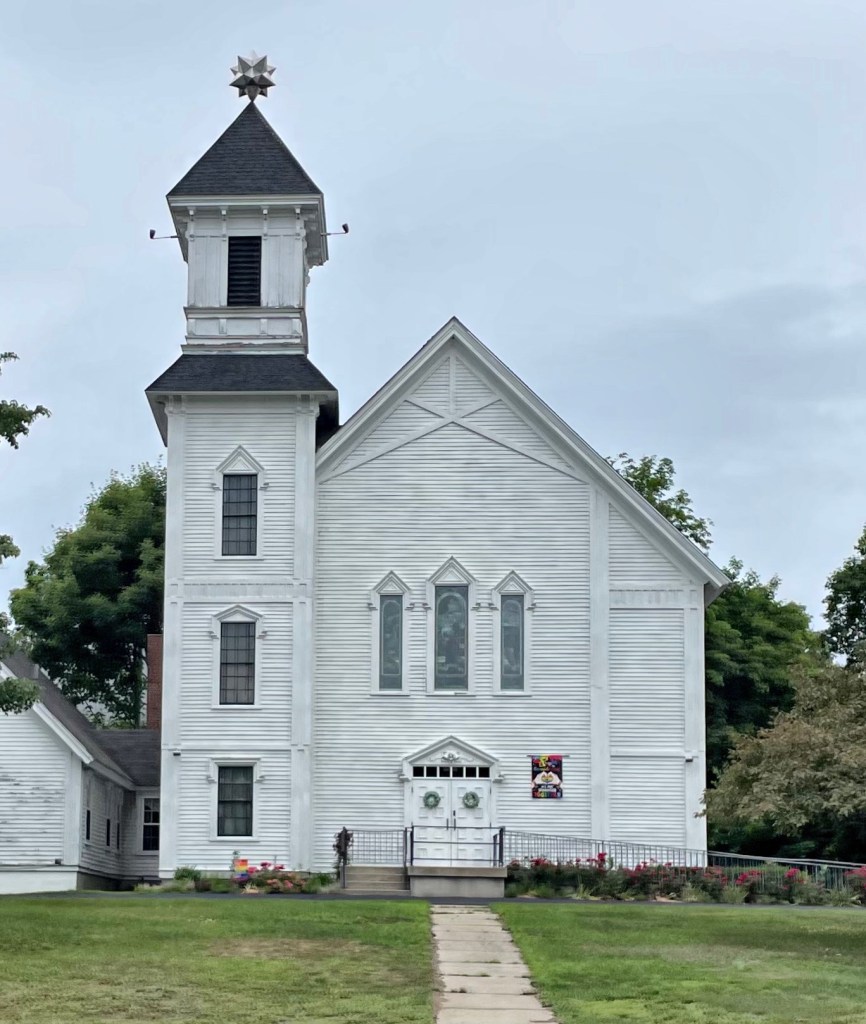
Riverside Methodist Church, Porter // 1883

The focal point of the riverside village of Kezar Falls in Porter, Maine, is this large frame church building with prominent siting and grand proportions. This is the Riverside Methodist Church, built in 1883 in the Stick/Eastlake style by Portland architect Charles H. Kimball. The first Methodist services held in the town of Porter were in 1833, when a church was formed in the small town. Soon after 1839, a gable-roofed meetinghouse with tall lancet windows was erected near where the present church stands. The original church still stands, but in a much-altered form and was used as a local fire station. The church remains owned by local Methodists and is well-preserved.

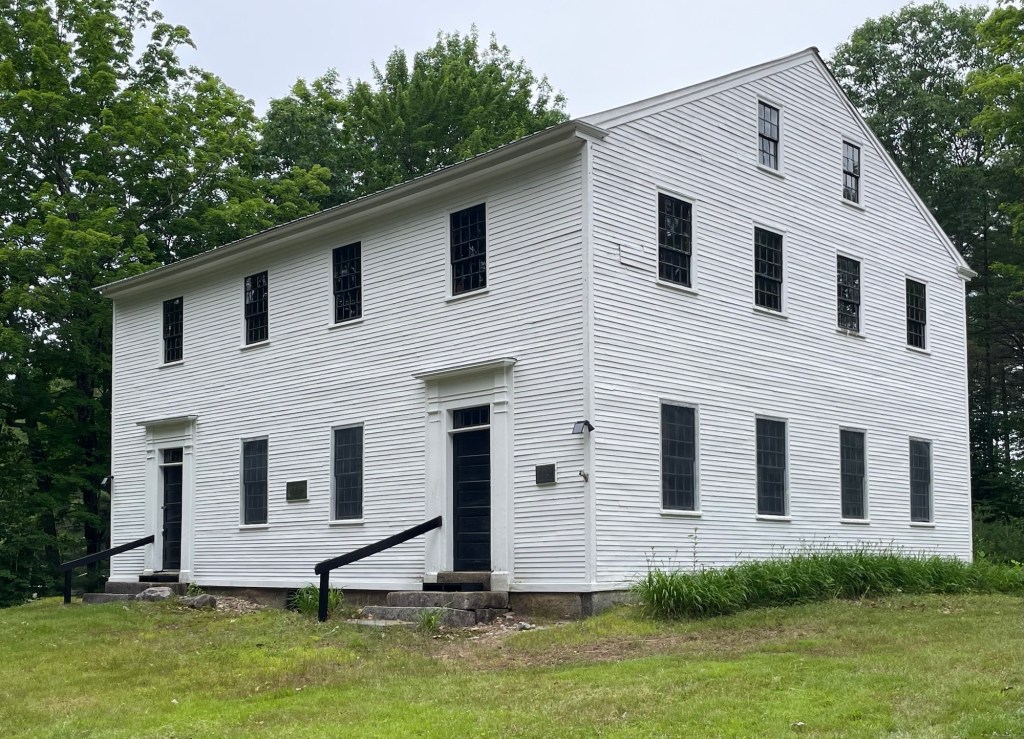
Old Porter Meetinghouse // 1818

Welcome to Porter, Maine! The town is located on the Maine/New Hampshire border and was first called Portersfield Plantation. Porter was incorporated in 1807 and named after its first proprietor, Dr. Aaron Porter (1752-1837). The Porter Meetinghouse was built beginning in 1818 and it is said that it was not completely finished until 1824. The original congregation was a Freewill Baptist organization led by Reverend Jeremiah Bullock, and were known locally as “Bullockites“. The structure housed the Baptists and town meetings as needed. The plain vernacular, meetinghouse is typical of many early meetinghouses of the period in rural New England. The inside retains its original character with its space as a single large chamber with a gallery above on three sides. The walls are plaster, much of it original, with trowel marks visible. The main floor is populated with original box pews and a replica pulpit. The structure is a rare survivor!