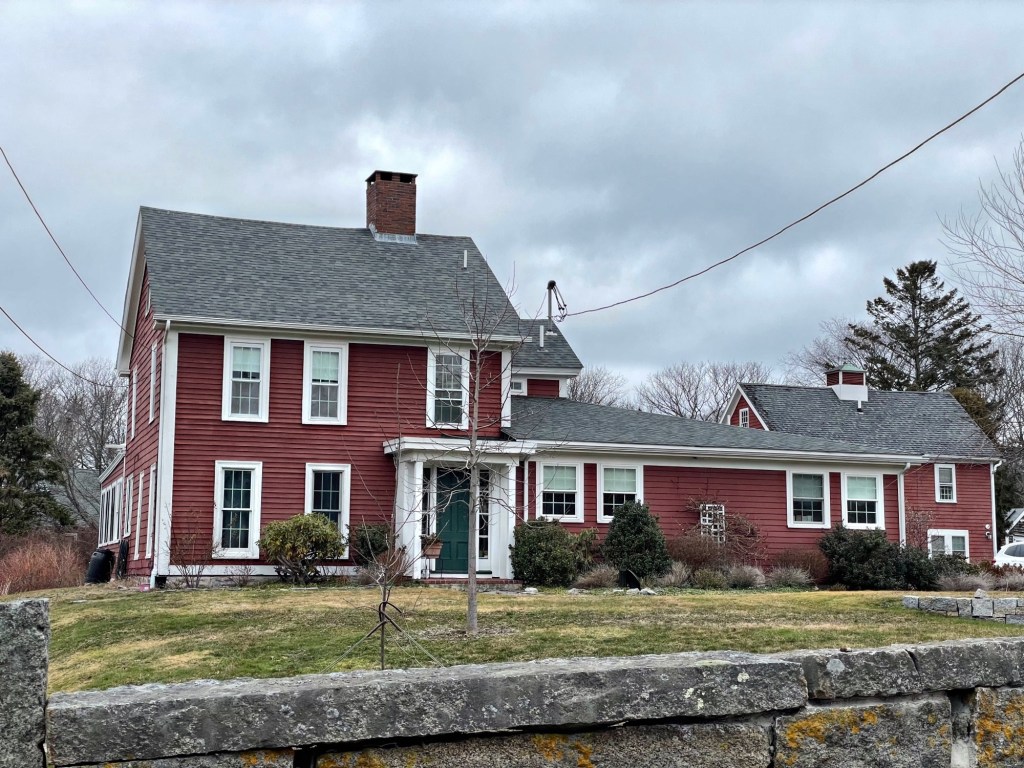
Oak Knoll Cottage // c.1877

One of the earlier cottages built in the Oceanview summer colony of Rockport, Massachusetts is this charming example of a late-Italianate style residence on Phillips Avenue. Local lore states that the cottage was owned by Lucy Canney, the wife of Edwin Canney, who operated multiple granite quarries in town. Oak Knoll was possibly used as a boarding house for visiting guests of the quarries to stay at when inspecting the quality of the granite. The Canney’s sold off much of their property in the area by the end of the 19th century, and the cottage was later owned or occupied by Dr. Helen Morton (1834-1916), a Boston-based obstetrician and one of the early generation of women physicians practicing in Boston in the nineteenth century. Dr. Morton spent most of her time in a townhouse on Marlborough Street in Boston’s Back Bay with her possible partner, another obstetrician, Mary Forrester Hobart, but likely escaped to this cottage for some rest and relaxation for the summers.

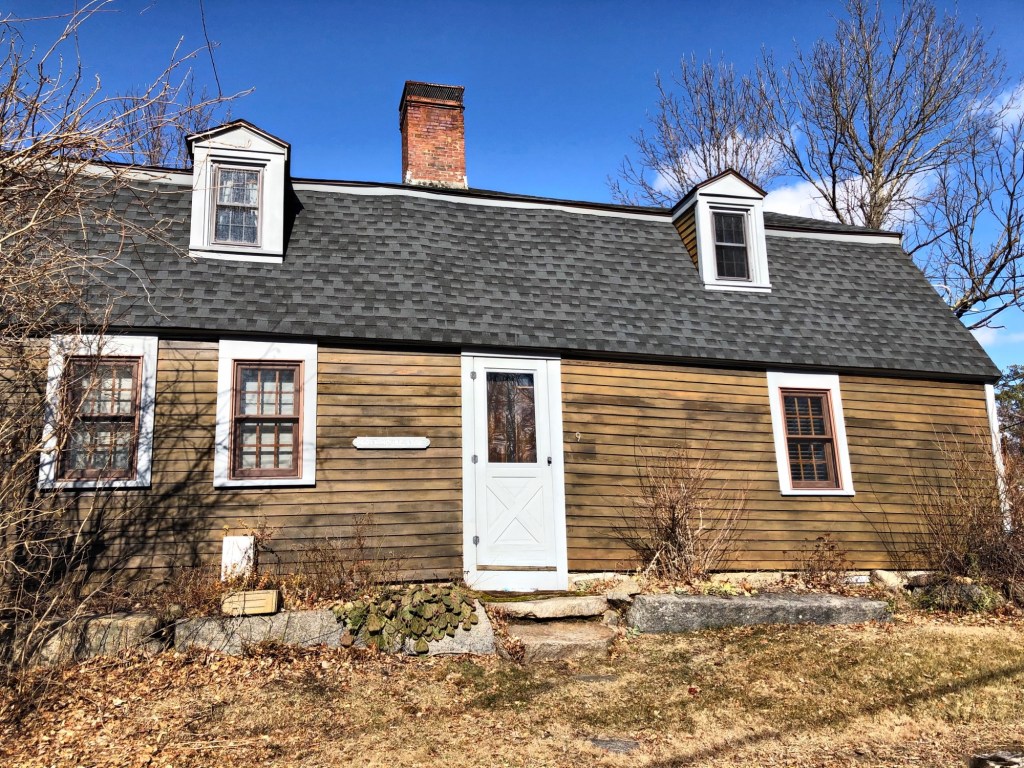
Eben Phillips Cottage // c.1877

In the mid-1800s, Rockport, Massachusetts was best-known as one of the main ports for the quarrying and shipping of fine granite up and down the east coast of the United States. While the rocky coastline made granite a prime industry, the natural scenery also made the coastal areas desirable for residential development. While many of the coastal developments here never took-off as they did in nearby Gloucester, Magnolia, and Beverly, there are some notable summer colonies that sprouted up! In 1855, Eben B. Phillips an oil dealer in Boston, purchased undeveloped wooded lots and pastures, and slowly began to lay out roads and survey for developable lots for summer cottages on a peninsula near Pigeon Cove. The development was named “Oceanview” and it was marketed as the extreme point of Cape Ann. Development was very slow to materialize, and started in earnest in the 1870s. Eben Phillips built this summer cottage before 1877 (possibly as early as 1850), where he would spend summers until his death in 1879. The cottage retains much of its original character and is a rare survivor of the rustic style cottages which were built before the phase of larger Shingle and Queen Anne residences were built in later decades.

Rockridge Cottage // c.1830

Few houses in Rockport, Massachusetts showcase the town’s history as a granite exporter as well as this large residence on the appropriately named Granite Street. The history of this dwelling goes back to 1828 when a young Samuel Parker (1801-1878) married Jane Boyd Rowe that year. From this marriage, Samuel and Jane inherited her family’s farmland here, which worked well for her new husband’s ambitions. Samuel Parker was engaged in granite quarries in Quincy, Massachusetts before moving to Rockport to establish a business here. In Pigeon Cove, Samuel worked as a foreman for the Pigeon Hill Granite Company and clearly used some of the granite quarried on the site to erect this stately home by around 1830. Samuel would later leave his wife for about 10 years to participate in the California Gold Rush from 1850-1860, but returned due to his older age. Their granite home became known as Rockridge Cottage through the subsequent generations of owners, all descendants of Samuel and Jane. The dormers and Victorian-era portico at the entrance were likely added in the latter decades of the 19th century.

“The Old Castle” // c.1712

Located in Pigeon Cove, the northern section of Rockport, Massachusetts, the “Old Castle” is an iconic landmark in the charming coastal town. The exact year it was built is not known, but it is believed to have been built in 1712 by Jethro Wheeler (1692-1755), a shoemaker who settled here from nearby Rowley. In 1724, Jethro deeded the property to his son Benjamin, and he moved out of town. Benjamin, is turn sold the property to his son Benjamin in 1769. Benjamin Jr.’s son, John D. Wheeler in 1792 inherited the property and added the lean-to/kitchen room to the rear to create the present saltbox roof form. Various Wheelers continued to own the Old Castle for another hundred years. The property was gifted in 1929 to the Pigeon Cove Village Improvement Society, and is presently under ownership of the Sandy Bay Historical Society, who manage the property as a house museum. The house with its overhanging second story reads like a garrison, a common element in First Period houses in Essex County.

Norwood-Babson Farmhouse // 1799

Located in northern Rockport, Massachusetts, you will find this charming Colonial-era farmhouse set amongst the backdrop of ocean cliffs and granite quarries. At the tip of Pigeon Cove, adjacent to the present-day Halibut Point State Park, James Norwood purchased land and would erect this house by 1799 for his family (possibly built from an older dwelling formerly on the site). After James’ death, the property was willed to his daughter and son-in-law and sold a few times until 1820, when it was purchased by David Wallis Babson who raised his family here. As granite-quarrying became a lucrative trade in Rockport by the early-mid 19th century, David’s son Joseph bought twelve of the Babson Farm acres from other family members to organize a stone cutting business here. The property would leave the Babson Family decades later, but retained the family name until today. Edwin Canney would purchase the remaining 70-acre Babson Farm, selling it to the Rockport Granite Company. For the next thirty years, industrial-scale mining and shipping would redefine Halibut Point over the next thirty years. The quarries are now a State Park, and the former Norwood-Babson farmhouse remains intact as a significant piece of the town’s earlier history.

Gott House // 1702

Halibut Point State Park in Rockport is one of the most enchanting places in Massachusetts and it has so many layers of history! Before white settlement, Halibut Point was used seasonally by the Pawtucket people who came to harvest its wild fruits, fish and game on the land. In 1702, Samuel Gott (1677-1748) purchased eight of the 6-acre lots on Halibut Point. At the time, there were no roads to Halibut Point, but Samuel built this house on the land, and he began to farm here. The property passed down the family line and was later owned by Joshua (1754-1846), who came of age just as the War for Independence began. Joshua enlisted with the Revolutionary Army as it was being formed in Boston, and in 1776, he joined General Washington’s forces in the unsuccessful defense of New York. He returned home to lead a long and useful life as farmer and fisherman and was known as Captain Gott. As of the 2010s, the property remained in the same family, handed down through the generations from Samuel Gott over 320 years to today. How cool!

Ebenezer Pool House // c.1800

Ebenezer Pool (1764-1842) was born in Sandy Bay, a village of Gloucester which later became Rockport. Ebenezer was a direct descendant of John Pool, the second settler of the area, who helped facilitate its beginnings from rocky coastline to vibrant town. Ebenezer was active in the establishment of the Baptist community in Sandy Bay, and his name heads the list of eighteen charter members who were organized into a Baptist Church in 1808 inside his own home, seen here. The Federal style home sits on a prominent lot in the village near Bearskin Neck and looks much like when it was built over 200 years ago.

Universalist Church of Sandy Bay // 1829

This Unitarian Universalist Church in Rockport was built in 1829 after 23 founders came together to sign a compact to build a new church. The Gothic Revival church building was given its 93-foot steeple in 1867 and it has stood tall since! The church stands just off Main Street and has long been active in local and national events since its founding. The church’s website states, “In 1843, we prepared resolutions against slavery, intemperance, and war. In 1861, a person threw a smoking bomb through a window into our sanctuary, during an anti-slavery lecture by a noted abolitionist. The crowd evacuated, but later returned to hear the rest of the talk. In 1884, our Society hired its first female pastor, Lorenza Haynes, past Chaplain to The Maine Senate and House. Today, the church collaborates with the Cape Ann Slavery and Abolition Trust, which investigates and shares the role the slave trade played in Cape Ann’s families, industries, and economies and in the lives of enslaved people.

Captain John Gott House // 1806

One of the best-preserved homes I have seen in Rockport is the John Gott House, an 1806 Federal style property just blocks from Rockport Harbor. The home could be from the 1700s, as the central chimney normally is a feature of earlier homes, but the marker on the house states the 1806 date, so we will go with that! John Gott is a popular name in Rockport, but this home appears to have been built for Captain John Gott (1780-1845), a sea captain who was the son of (you guessed it) John Gott, who lived just down the street. This property also includes a newly built barn and an absolutely charming out-building which I cannot figure out what it was used for.

“Granite Lodge” // 1851

I love Rockport because every time I walk the winding, narrow streets, I find something new. This time, I stumbled upon this absolutely amazing mansion, built at the height of the romantic period of architecture. The home was built in 1851 by Solomon Torrey and his wife, Susanna Norwood. Susanna was the daughter of Charles Norwood, a descendant of Joshua Norwood, who owned much of the land in this part of town and lived in the c.1680 cottage down the street (last post). Solomon Torrey was the son of a quarry owner in Quincy, who seemingly moved to Rockport to continue in the family trade (the “Rock” in Rockport). Solomon and Susanna were gifted some land from her father to build a fine home, when the couple were still in their 20s! Before this, Solomon traveled west to partake in the California Gold Rush, his newlywed wife Susanna kept a diary, while he was away, mentioning her dream “stone cottage” where she and her family would live a long life together. When Solomon returned, the couple built their dream home, and had two daughters, Aria and Susannah. Sadly, Solomon lived only 5 years after his return from the Gold Rush and died at just 33 years old. Susannah was aided by her family, raising her two daughters, never remarrying, living in her dream home without the love of her life until her death in 1908, at 81 years old.