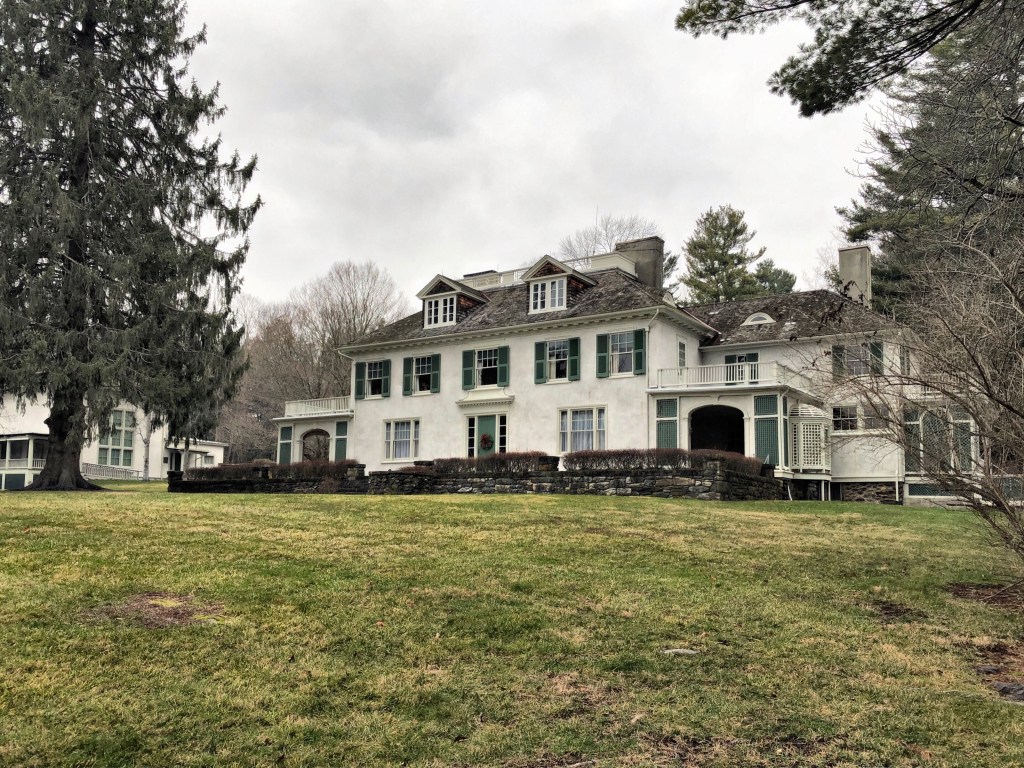
Chesterwood // 1901

Chesterwood is the former summer home, studio and gardens of American sculptor Daniel Chester French (1850–1931), who is best known for creating two of our nation’s most powerful symbols: the Minute Man (1871–75) at the Old North Bridge in Concord, Massachusetts, John Harvard in Harvard Yard, and Abraham Lincoln (1911–22) for the Lincoln Memorial in Washington, D.C. Daniel Chester French was one of the most successful artists of the late 19th and early 20th centuries, producing more than 100 works of public sculpture. In the fall of 1895, he and his wife drove by horse and buggy and discovered the resort town of Stockbridge. They returned the next summer and purchased the Marshall Warner farm from the family who had purchased the land from Mohican Native Americans. The French family and two maids moved into the white clapboard farmhouse the next summer. To ensure that his summer would be productive as well as restful, he improvised a studio in the barn. He asked his friend and colleague, architect Henry Bacon, to design a studio for him (Bacon would later work with French on the Lincoln Memorial). Soon, in spite of renovation, the original farmhouse was deemed inadequate and French commissioned Bacon to design a residence, completed in 1901. The family owned the home for decades, even after Daniel Chester French’s death. Much of the credit for Chesterwood’s preservation and metamorphosis from summer retreat to public site belongs to Margaret French Cresson (1889–1973), the sculptor’s daughter. After her parents’ death, she maintained the property and began to use it year-round, assembled the work of her father, and established the estate as a historic site of the National Trust for Historic Preservation.
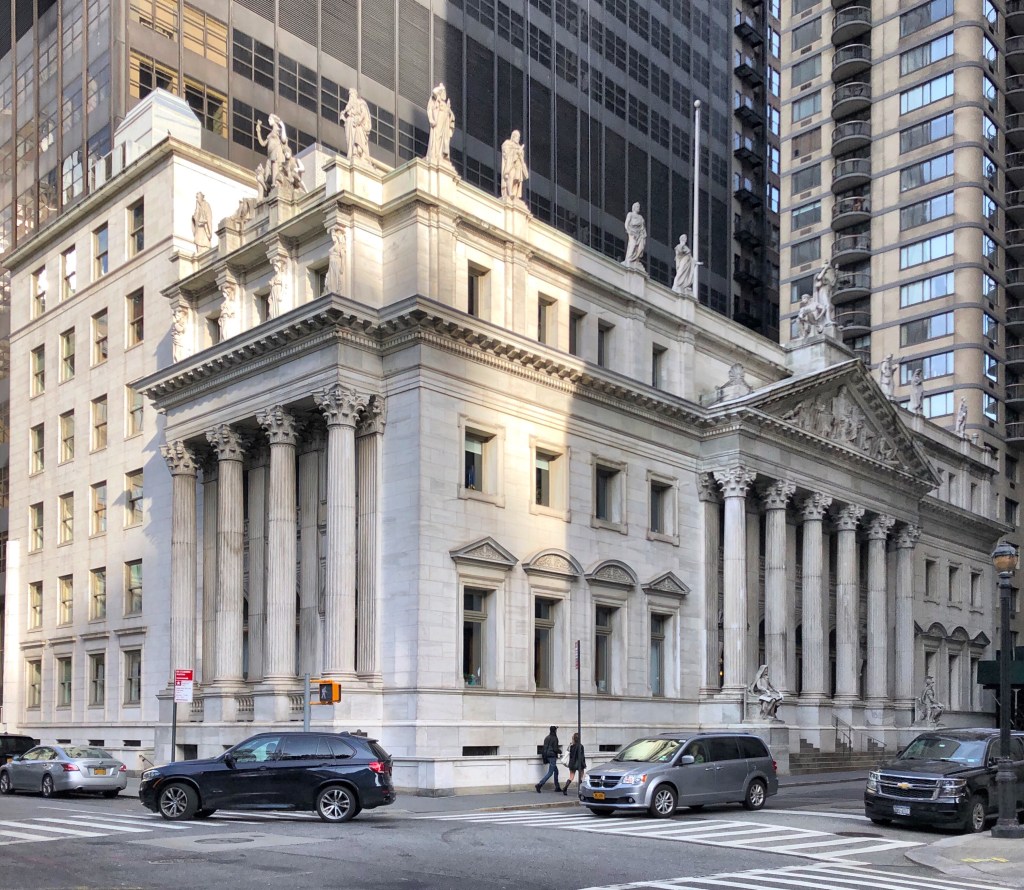
New York Appellate Courthouse // 1899

Distinguished for its classic beauty, this small marble courthouse expresses the best of Classical tradition, in its columned portico and fine sculptures adorning it. Located at the edge of Madison Square Park, the building was constructed between 1896 and 1899 to serve as a courthouse for the Appellate Division of the New York State Supreme Court. The marble Classically inspired Beaux-Arts courthouse, was designed by James Brown Lord and is considered to be an excellent example of the City Beautiful movement, which sought to introduce monuments and beautification to American cities. Of the nearly $650,000 spent on the building, 25 percent was spent on sculpture, a huge sum at the time. Sixteen sculptors – sponsored by the National Sculpture Society and among of the most esteemed of the day – worked on the thirty 12-foot marble statues on the facade, the most ever to work on a single building in the United States. Sculptures by Daniel Chester French, Charles Henry Niehaus, Karl Bitter, and more adorn the balustrade and entrance steps. Additionally, four caryatids sculpted by Thomas Shields Clarke on the Madison Avenue front, showcase a rare feature not typically seen in American architecture, representing the four seasons.

In 1953 a $1.2 million restoration of the facade was undertaken by the Department of Public Works during which the huge marble statues were removed and cleaned. It was at this time that the general public first realized one of the lawgivers was Mohammed. Representatives from Pakistan, Egypt and Indonesia petitioned the State Department to destroy the statue rather than restore it, citing Islamic canon that forbids the depiction of human beings in painting or sculpture. When the statues were replaced in 1955, each was moved over one spot to fill in the void where Mohammed had stood. Today one empty pedestal remains.

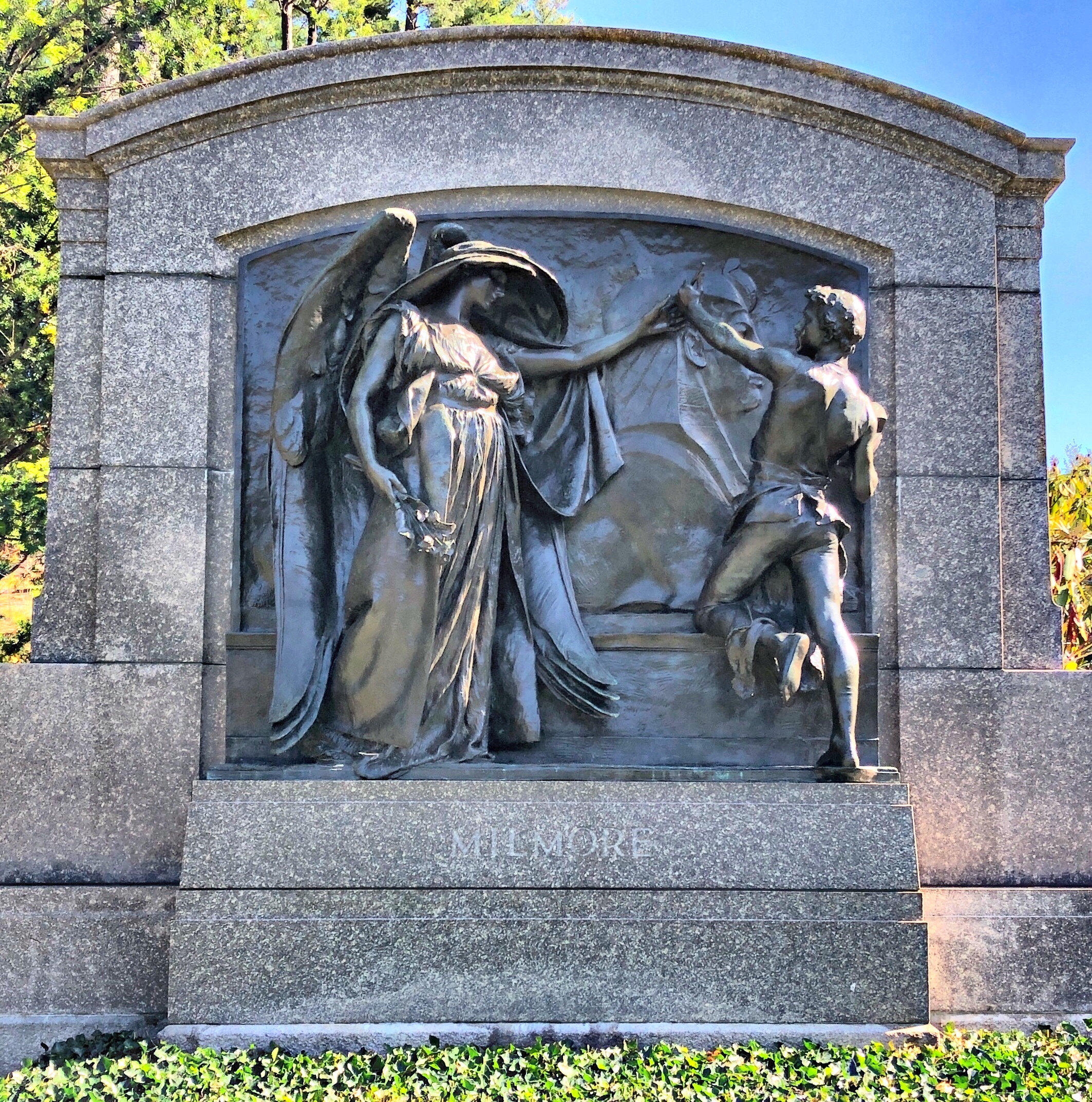
The Angel of Death and the Young Sculptor // 1893

While not a building, I must feature one of the most stunning pieces of art I have seen, at a cemetery! Titled “The Angel of Death and the Young Sculptor“, this massive monument was is a sculpture in bronze, and one of the most important and influential works of art created by sculptor Daniel Chester French and is located at Forest Hills Cemetery in Boston. Also known as the Milmore Monument, it was commissioned after the death of brothers, Joseph, James, and Martin Milmore (1844–1883). The Milmore brothers immigrated to the United States from Ireland in 1851, Joseph becoming a stone carver and Martin a sculptor. The will of Martin Milmore’s older brother, Joseph, called for creation of the monument, which was to commemorate the life of his older brother, Martin. As Martin Milmore had been a sculptor himself, French decided to depict the artist at work, with the Angel of Death interrupting his work, with death grabbing the chisel from Martin’s hand as he works. Martin Milmore was 39 years old when he died.

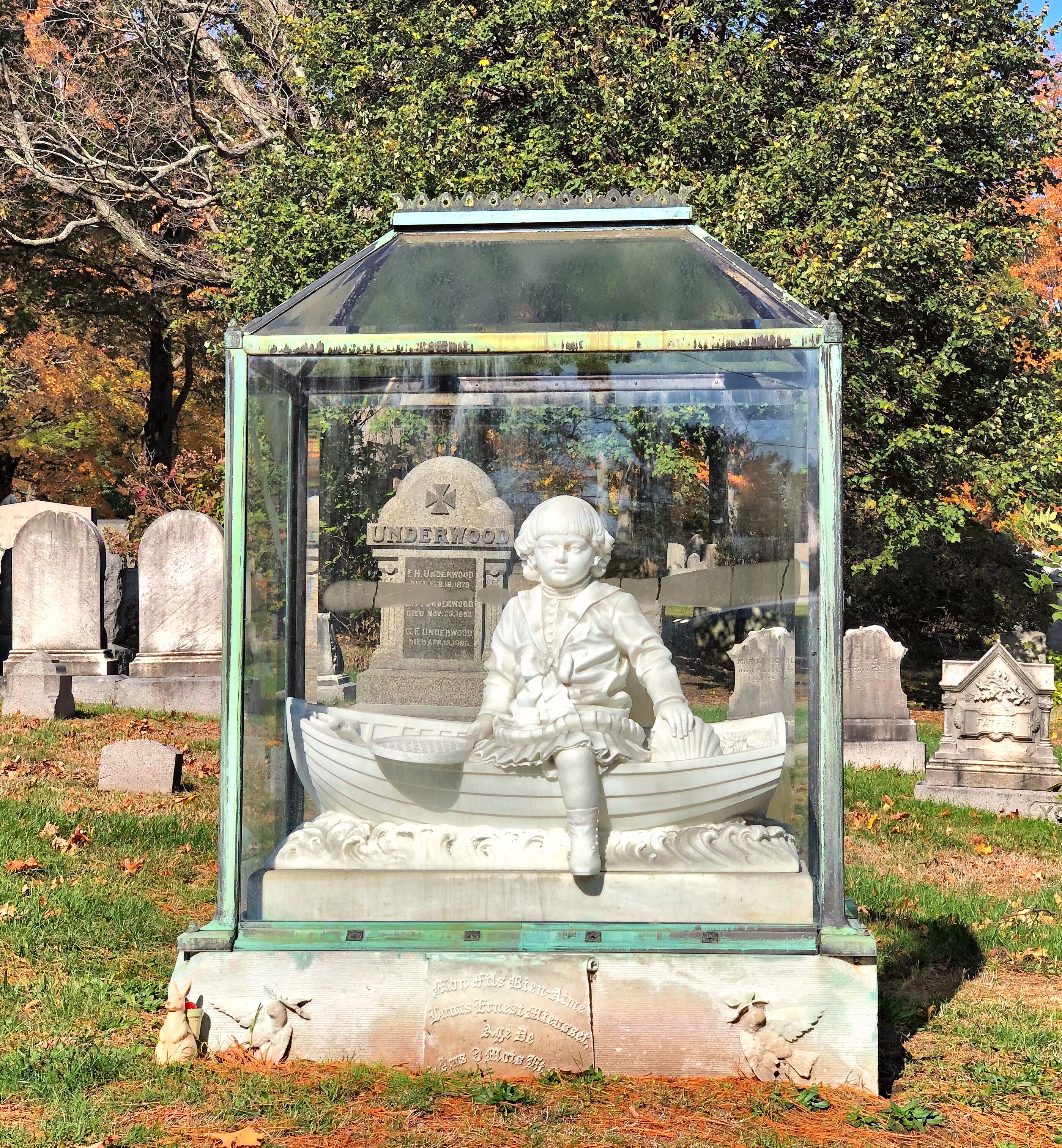
Forest Hills Cemetery, “Boy in a Boat” // 1886

While this funerary sculpture is not a building, I couldn’t help but share one of the most captivating graves in New England for Halloween, “The Boy in a Boat”. Louis Ernest Mieusset (1881-1886), just four years old, died of Nephritis, a kidney inflammation and Scarlet Fever. His mother, Madame Louise Mieusset, took every penny she had saved for the boy’s education and put it towards a commission of a funerary sculpture, depicting her late son’s playful spirit. Madame Mieusset worked as a hat-maker in Boston, barely scraping by until her death in the 1930s. She died penniless, and wished to be buried near her beloved son, but she did not have enough money set aside to be interred in the cemetery and was set to be buried in a pauper’s lot, until (legend says) Boston Mayor James Curley paid her burial expenses, allowing for her eternal rest with her late son Louis. The sculpture is carved of white marble and depicts Louis playing in a boat with a tennis racket in one hand and a shell in another. The funerary sculpture is enclosed in a bronze and glass vitrine to protect it as the marble was believed to be too soft to stand up to weathering, the artist is unknown.