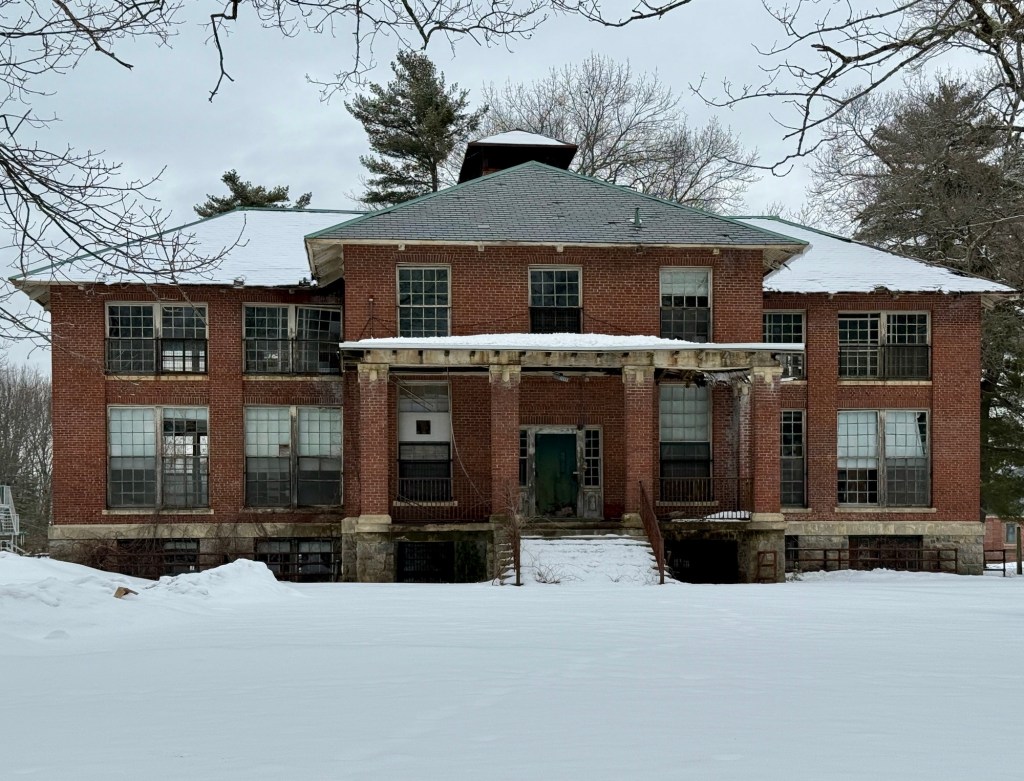
Wrentham State School // 1910

The Wrentham State School (also known as the Wrentham State Hospital) was authorized in 1906 as a school for the “feeble-minded”, and the campus is comprised of a few dozen buildings largely from the early to mid 20th century. The school was founded to house and treat developmentally disabled children and was the first in the state of Massachusetts to employ a standardized plan for wards and employee housing. A site occupied by farmhouses just north of Wrentham Center was selected and purchased by the Commonwealth of Massachusetts. The school officially opened in 1910 and brick structures were built to house students and workers. In its first year, 217 pupils were admitted to the facility, roughly half boys and girls. A majority of the early ward buildings were constructed in the early years of the school, with most designed by the Boston architectural firm of Kendall, Taylor & Stevens, who also designed many other similar facilities around the country in the early 20th century. Most buildings are examples of the Arts & Crafts and Colonial Revival styles built of brick. Today, the campus is comprised of roughly half, deteriorating historic buildings and half are used as part of the Wrentham Developmental Center, which continues the important (and under-funded) work of treating psychiatric and developmental disorders of patients.
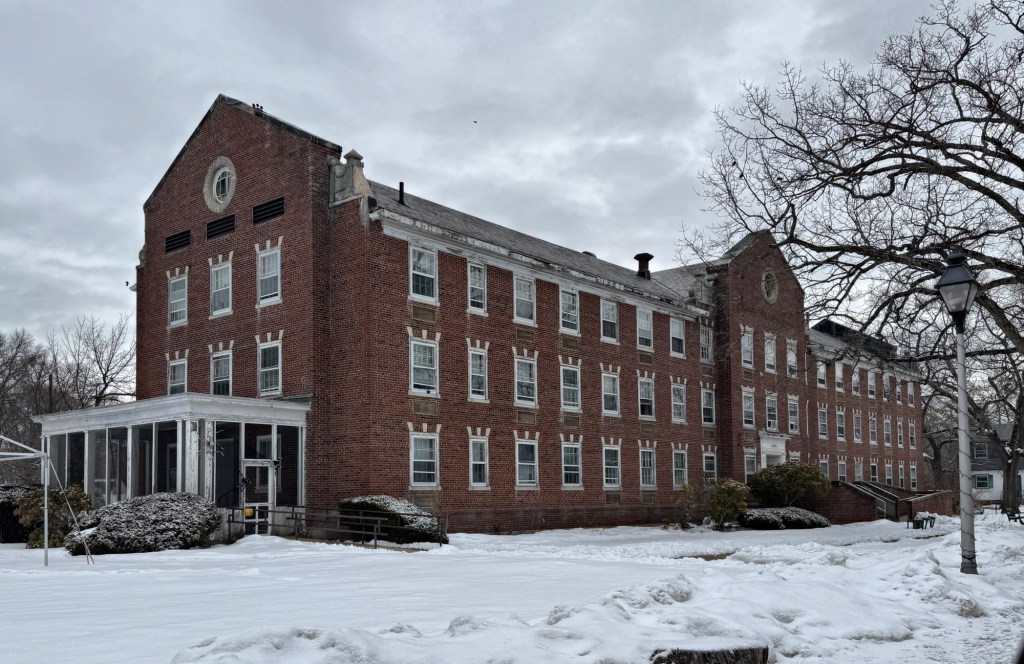
Former Vermont State Hospital // 1890

The former Vermont State Hospital campus in Waterbury, Vermont, is a 36.3-acre campus of institutional buildings that have been converted for use as state government offices. A sprawling array of more than 17 structures, the hospital, which historically treated mental disorders, was first funded by the Vermont State Legislature in 1888. Construction began on the plans by the Boston architectural firm of Rand & Taylor in 1890. The architects designed the landmark main administration and auditorium building at the core, which is built of brick on a rusticated stone foundation and under a steep hipped slate roof. The building is connected by single-story links to two-and-a-half-story wings, which are attached to clustered two-story cylindrical wards. In planning the hospital, Rand & Taylor stressed the isolation of patients and stressed the importance of light and air in each room and restricted height of the building to facilitate egress from upper floors in the event of fire or emergency. The asylum has a dark history in that Dr. Eugene A. Stanley, the Superintendent from 1918–1936, was an advocate of eugenics and espoused forced sterilization and advised the Eugenics Society based on his patients records. From this, the word, “Waterbury,” became used in a derogatory sense, and did harm to the town for years. The hospital was closed in 2011 due to flooding in the aftermath of Tropical Storm Irene, and after a thorough renovation by architects Freeman French Freeman and Goody Clancy, the complex re-opened in 2015 as State Offices with renovated historic assets and modern, contextual new buildings.