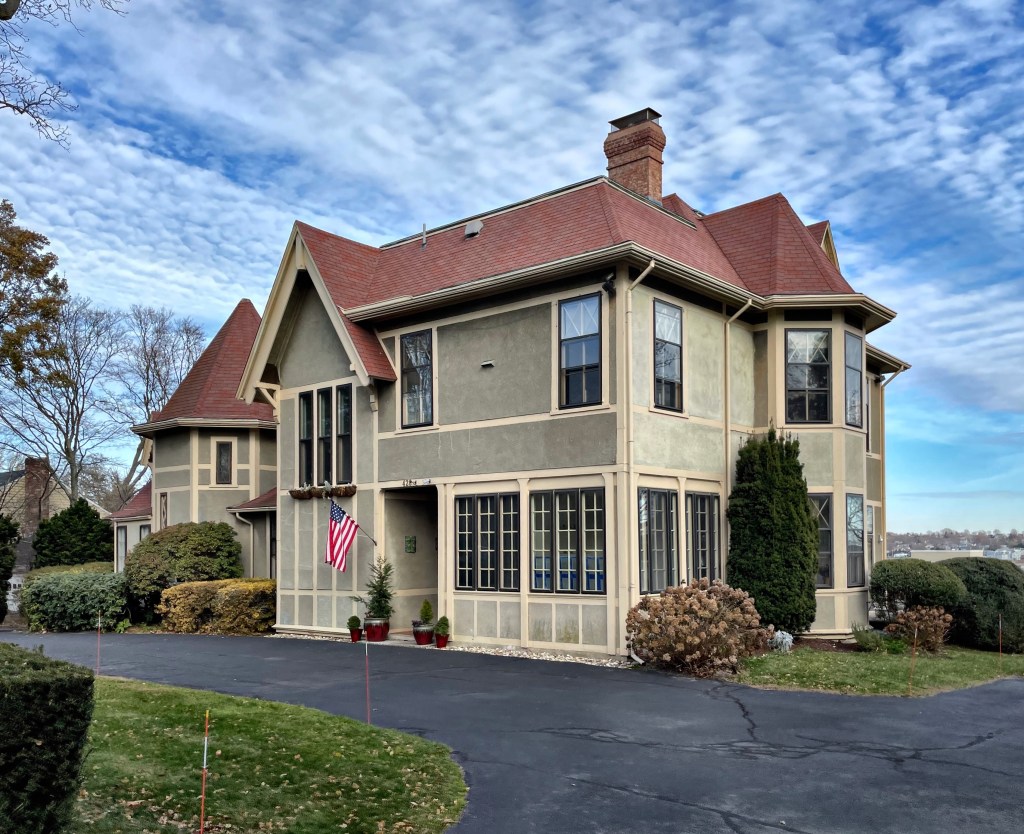
“Morningside” // 1872

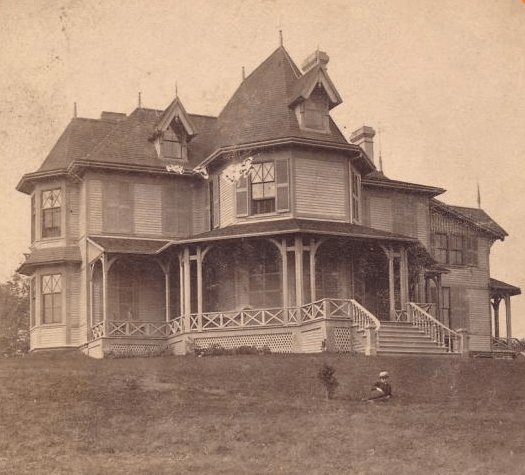
While many of the summer cottages in Newport retain much of their architectural and historical integrity, it is not always the case. This cottage, named “Morningside” barely resembles its original 1873 design. The summer home was built for William Barton Rogers (1804-1882), a scientist, educator, and best-known as founder of the Massachusetts Institute of Technology. He sought a place of rest and leisure, away from the stresses of Boston and running a new college, so he hired the Boston firm of Cabot & Chandler to design a Stick style cottage for him to spend the summer months at. In his diary for October 11, 1872, Mr. Rogers wrote, “Removed [from Cliff House Cottage] to our new home on Gibbs Avenue, at 4.30 o’clock. I have decided to name the place ‘Morningside.'” The house was his respite from stresses and he loved to spend time here with his family. President Rogers died after collapsing during a speech at MIT’s 1882 commencement exercises. His last words were “bituminous coal.” After the property sold out of the Rogers estate, the house was remodeled with stucco siding and much of the original Stick detailing was removed or covered. Morningside is now divided into condominiums.

Morningside c.1880s

The Anchorage Cottage // 1878

This charming Victorian cottage in Newport was built in 1878 for Henrietta and Dr. Stephen Cambreleng Powell as their summer cottage. The well-connected couple hired New Haven architect David R. Brown to design the residence, which is an excellent example of the Queen Anne and Stick/Eastlake architecture styles. David Brown, the architect, apprenticed under the famed Henry Austin for years in New Haven, Connecticut before becoming a partner of the firm. As any good summer cottage needs a fun name, the couple named their cottage “The Anchorage”. The cottage is now known as the Old Beach Inn, and is among Newports many charming old inns.

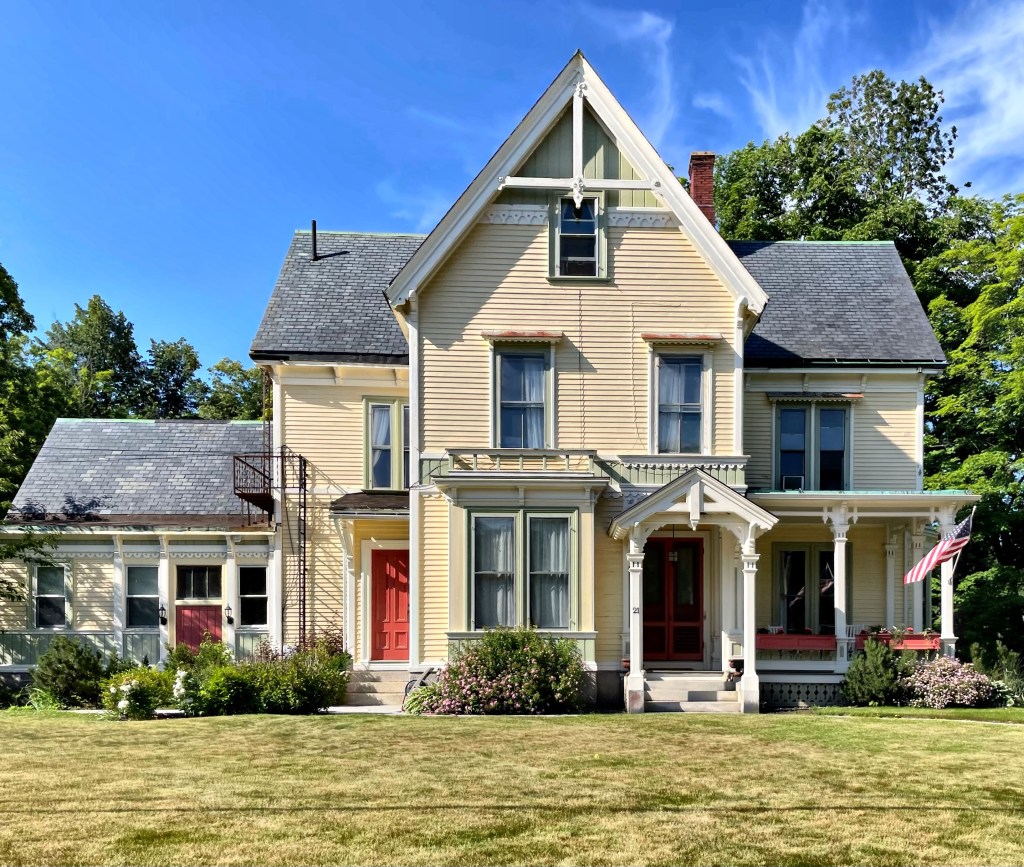
David Whiting House // c.1875

David Whiting (1810-1892) was one of the most prominent men in Wilton, NH in the 19th century. He was involved in local business and politics, eventually using his prominent land at a convergence on Main Street to erect the Whiting House, a large hotel. The building burned down in 1874, along with his other buildings nearby. He donated some of the land to the town, who built the present Town Hall, and he built a new home on another part of the site. This house was likely built for David Whiting as his own residence, shortly after the fire. The house was designed in the fashionable Stick style and represents the best in Victorian-era architecture.

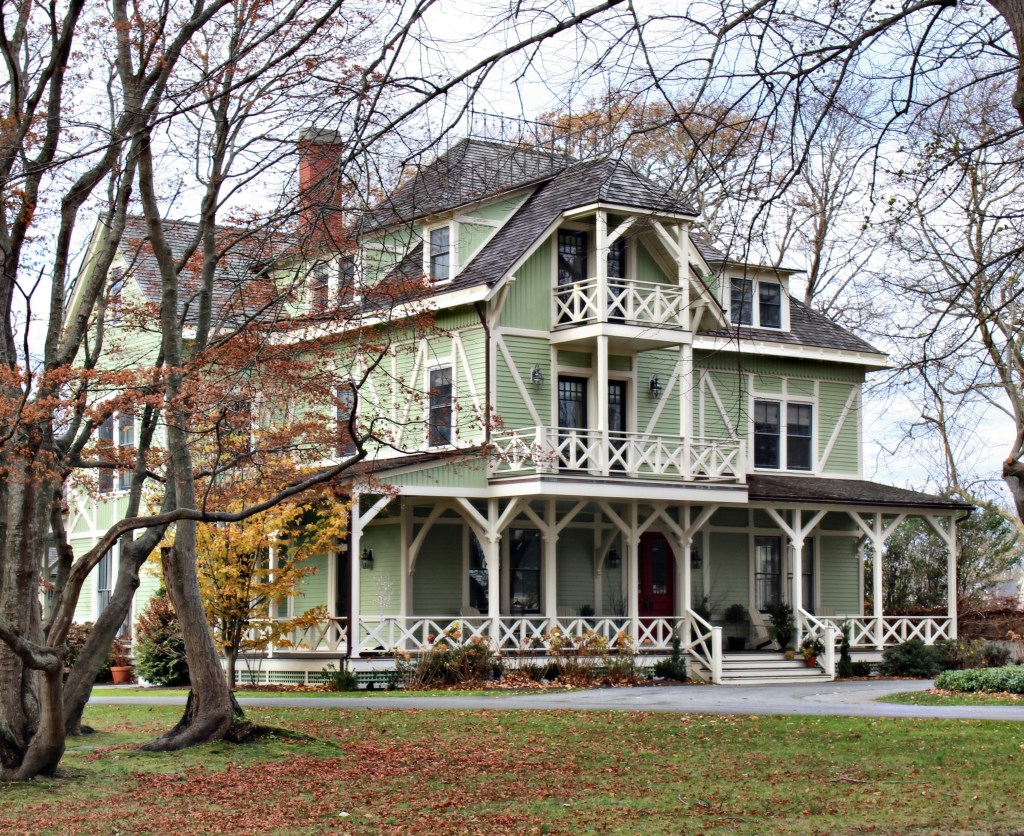
“Rest Haven” – “Le Chalet” // 1870

Bellevue Avenue in Newport is best-known for its massive summer cottages, many of which are built of stone and look more like art museums than a house. “Rest Haven” is one of the most stunning summer cottages in Newport and can stand toe-to-toe with the later mansions which neighbor it. The Stick style cottage was built in 1870 as a spec. house for merchant and financier John N.A. Griswold, who had his own cottage farther up the street (last post). Similar to his own house, he hired world-renowned architect Richard Morris Hunt to design the house, which was to be sold soon after completion for a profit to Anna Gilbert of New York, a wealthy widow who wanted to keep up with high-society in Newport. Anna Gilbert’s son, Charles Pierrepont Gilbert, was a New York architect who trained at the Ecole des Beaux Arts in Paris. He and his wife, Clara, summered at Resthaven until 1916. The home was likely renamed “Le Chalet” by a subsequent owner. The cottage was altered over the years, but restored a number of years ago by Newport Collaborative Architects and Behan Bros, and looks stunning!