First Congregational Church of Chicopee // 1825

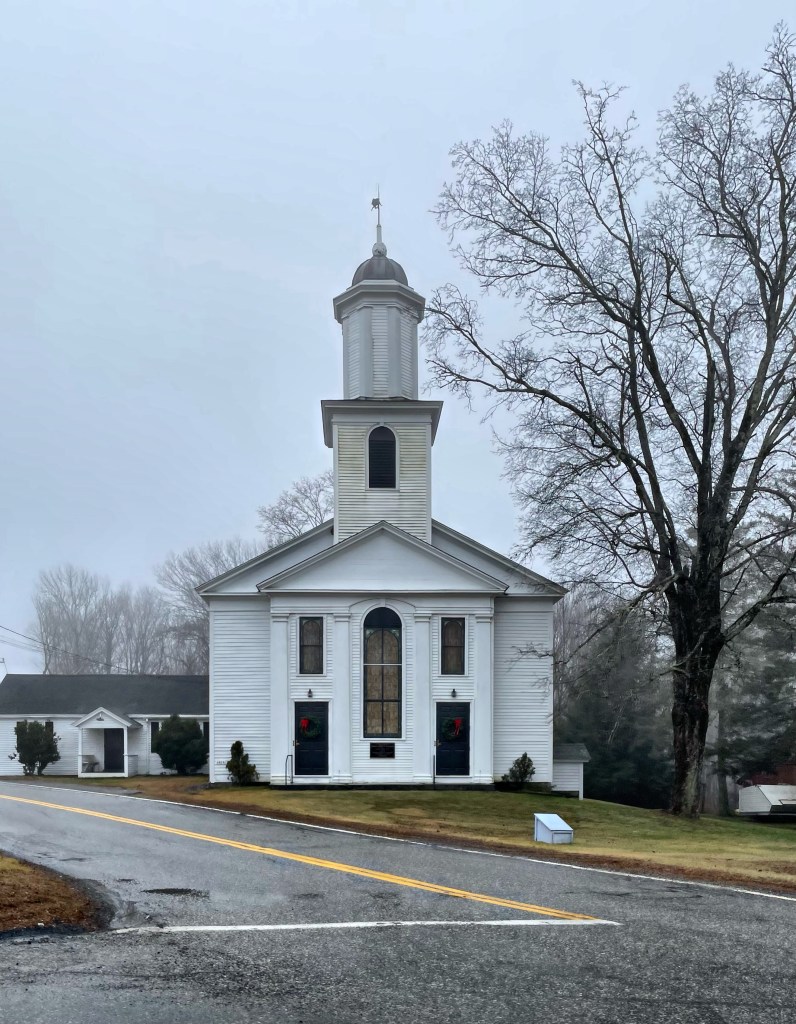
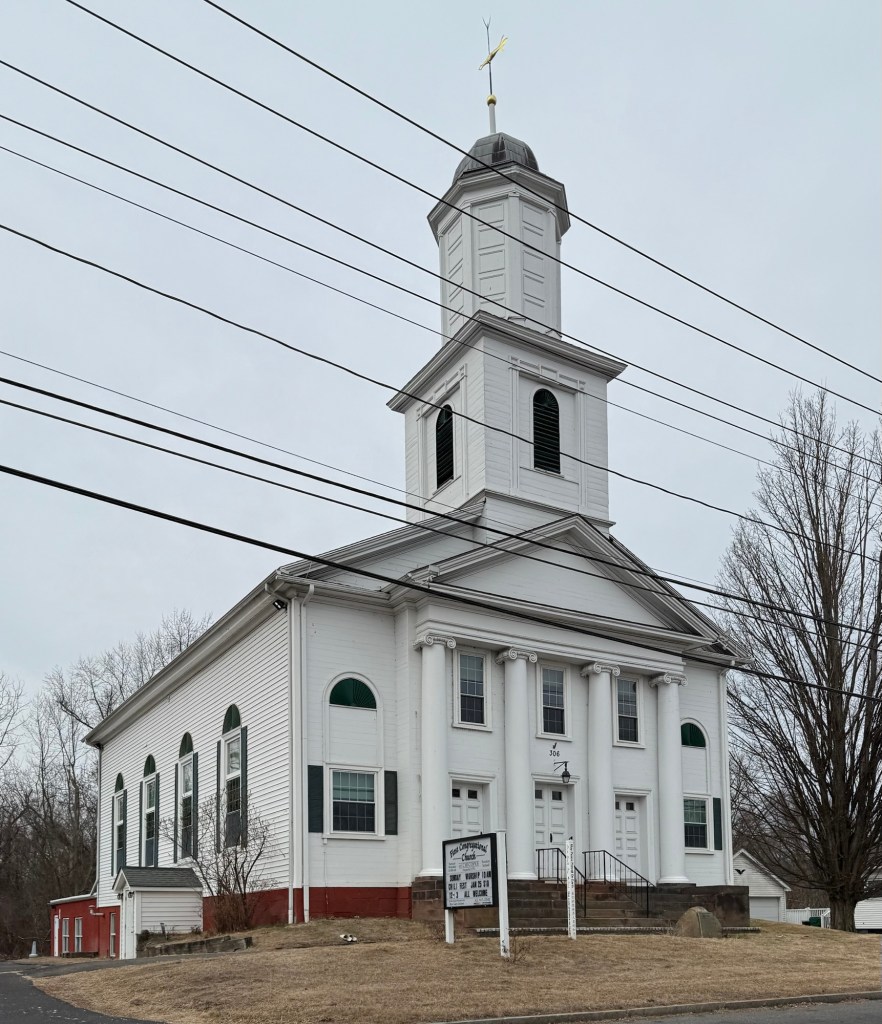
The First Congregational Church Society of Chicopee was organized as the Second Church of Springfield in 1751, when residents of land today known as Chicopee and Holyoke (then a part of Springfield) sought a parish church closer to their homes. Before Chicopee officially split from Springfield in 1844, the Second Church of Springfield built this Federal-Greek Revival style church building in 1825. Shepherd and Whitmarsh, prominent builders of Springfield were hired to erect the church. Both were trained under architect, Isaac Damon, thus the close resemblance to his designs for this church in Chicopee. The clapboard structure is simply designed but holds strong proportions and symmetry. The church has a four-columned portico with Ionic columns and a two-story square tower containing the belfry, blind octagonal stage with molded trim above, all capped by a dome surmounted by a weathervane. While the church now has replacement windows and plastic, ill-fitting shutters, the building is in great shape and tells the story of the early days of the development of Chicopee from sleepy parish town to industrial city.
Goshen Congregational Church // 1832

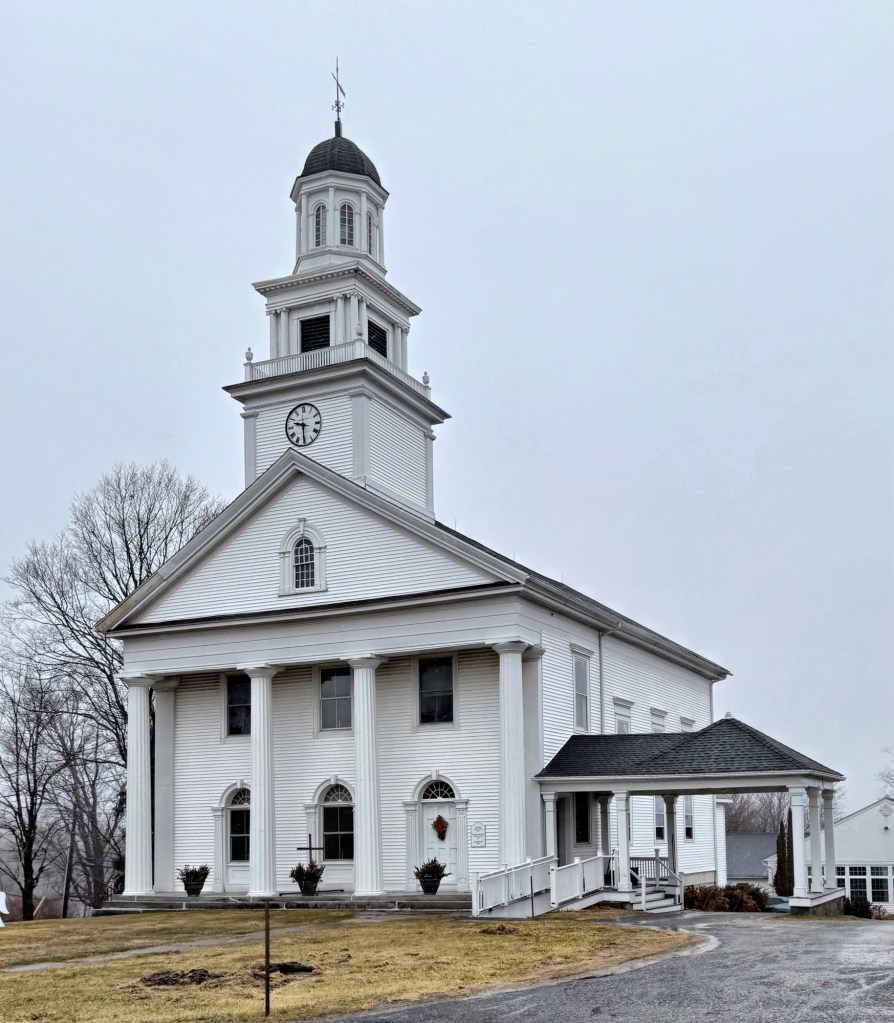
The town of Goshen, located in Litchfield County, is located in the northwestern part of Connecticut was first settled by European colonizers in 1738, with the town incorporating a year later. The community was named after the Land of Goshen, a part of ancient Egypt in the Bible. Goshen primarily grew as rural and agricultural in character, with limited industry and commercialization compared to other nearby towns. The town center village was home to the Congregational Church as far back as 1750. In 1832, the present Congregational Church was built from plans by Benjamin E. Palmer, a carpenter-builder who also built the Windham County Courthouse in Brooklyn, Connecticut. The church blends both Federal and Greek Revival styles, and Palmer likely took inspiration from Asher Benjamin’s design guidebooks. The church retains much of its original character even with the altered steeple, porte-cochere, and conversion of three-door facade to a single-entrance in 1894.

Ashby Congregational Church // 1835

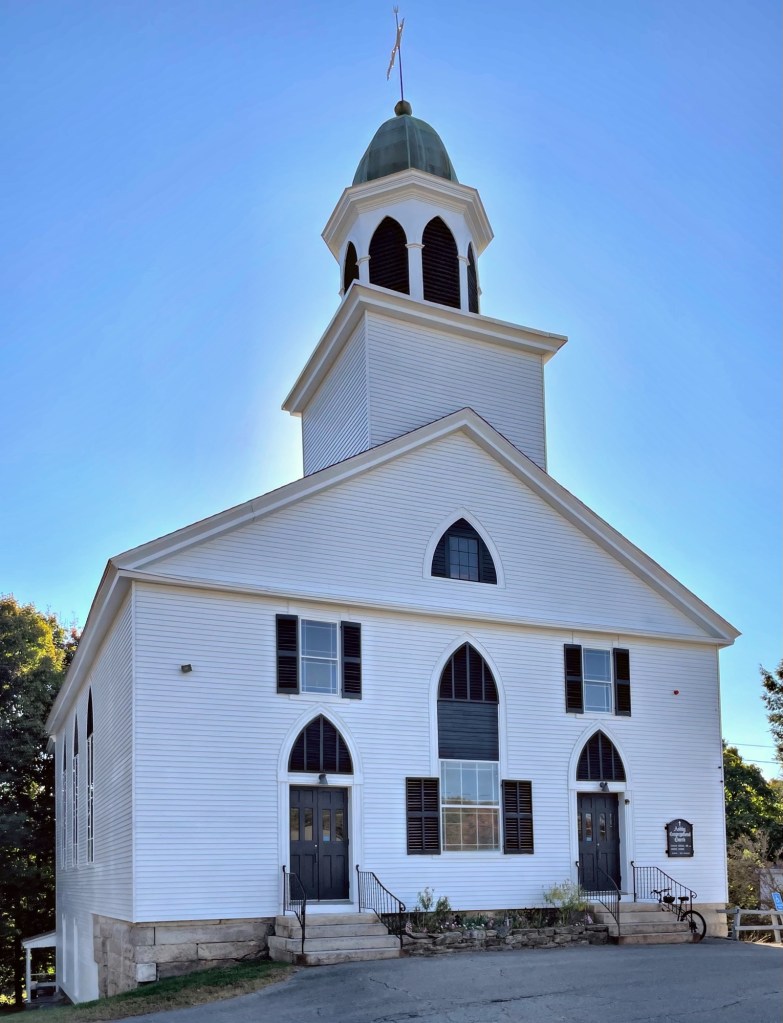
Combining Greek and Gothic revival styles, the 1835 Ashby Congregational Church in Ashby, Massachusetts, is a significant building showcasing the transitional tastes of ecclesiastical architecture in 1830s New England. The church had its beginnings in 1818, when a group of church members disillusioned to the current teachings separated from the town’s Unitarian roots and the accompanying meeting house, the First Parish Church. In 1820 a church for the Congregationalists was built on the opposite end of the town common. In 1835 it was sold and this, the current church building was constructed on a new site facing the Common. The original 1820 church building became the Ashby Academy and is now a Grange Hall. The design of the Ashby Congregational Church shows the leaning towards Gothic detailing wit its prominent pointed arch detailing, yet retains some traditional Greek Revival features like the two-story pediment and pilasters at the belfry.

Old Baptist Meetinghouse, Willington // 1829

The Baptist Meetinghouse in Willington was built in 1829 by a local carpenter Albert Sharp, in a transitional Federal/Greek Revival style, common for the period. Its clapboarded facade has a projecting pavilion with two entrances flanking a two-story round-arched window. Four pilasters are surmounted by a wide entablature and the flushboarded pediment of the pavilion. Round-arched windows are repeated on the side elevations and the belfry, which is topped by an octagonal drum and a small dome. The Willington Baptist Church was organized in 1828, started by Rev. Hubbell Loomis, the fourth pastor of the Congregational Church across the common. Rev. Loomis was prominent both as a minister and an educator, and founder of Shurtleff College of Illinois. During his pastorate at the Willington Congregational Church, Mr. Loomis had strong tendencies toward Baptist sentiments. From this, membership of the congregational church split, some leaving for a new Baptist belief and others remained at the congregational church. The two congregations were split until 1911, when they again worshiped under the same roof, as the Federated Church of Willington, meeting in this building.