Little Building // 1917

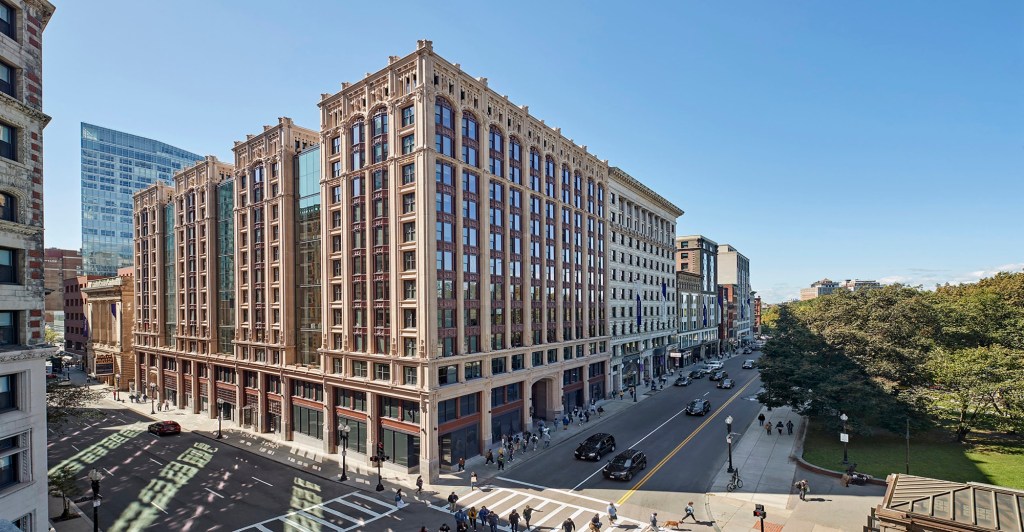
The Little Building sits prominently at the busy corner of Boylston and Tremont streets overlooking the Boston Common. Like the Colonial Theater next door, the Little Building was designed by architect Clarence Blackall and named after its developer and owner, John Mason Little. Blackall designed the Little Building in the Neo-Gothic style with a steel frame and a two-story Tudor-arched entrance on Boylston Street. The original facade was granite and cast stone, and the floors were made from reinforced concrete. The building replaced the Hotel Pelham which occupied the site since the 1850s. After being completed in 1917, the Little Building was considered significant enough that it was featured in American Architect and Building News, highlighting many architectural details inside and out. The Little Building was advertised as a “City Under One Roof” with 600 offices, dozens of shops, a post office, restaurants, and connections to the nearby subway and theaters. Emerson College purchased the Little Building in March 1994 for $5 million and converted the building to dormitories. After years of deteriorating masonry, Emerson College hired Elkus Manfredi Architects to oversee a full renovation of the building, including a sweeping facade restoration and the insertion of three glazed elevations between street-facing light wells. The “new” Little Building is a splendid re-imagining of a historic building, showing how old buildings can be renovated to meet contemporary uses through well intentioned design and care.
Hotel Boylston // 1870-1894

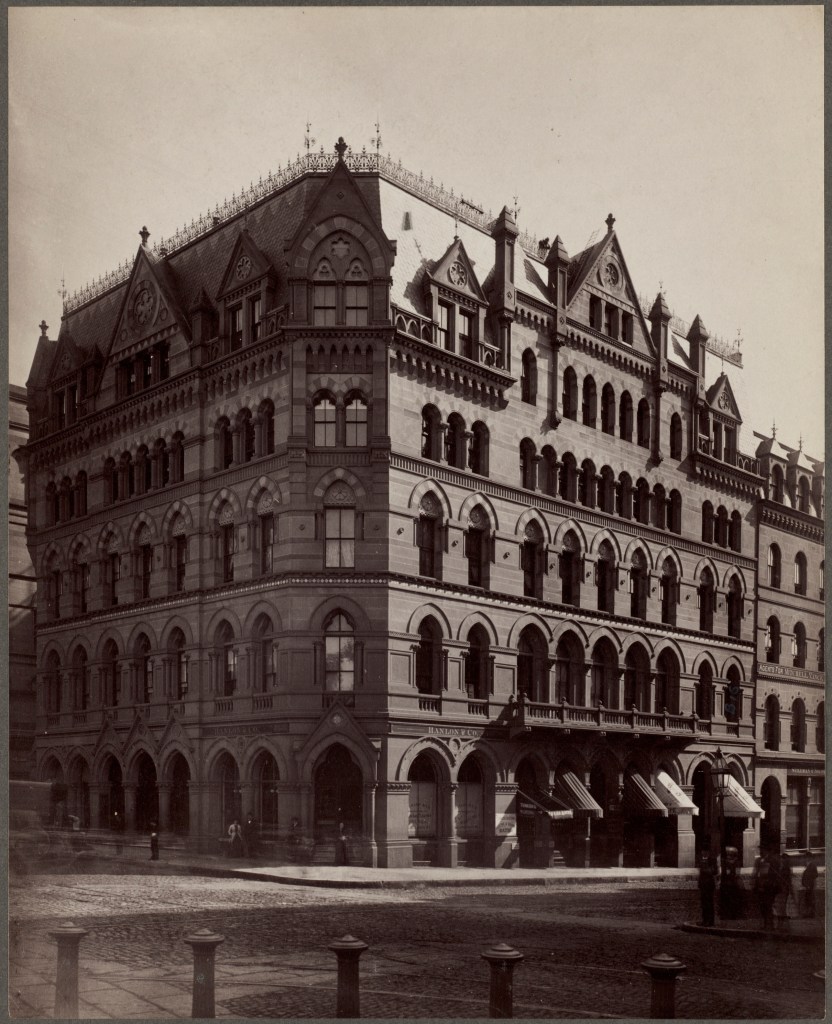
C.1875 image of Hotel Boylston, BPL image.

Standing just 24 years, the Hotel Boylston at the corner of Boylston and Tremont Streets, evoked the Victorian-era grandeur of Boston. Built in 1870, the Victorian Gothic hotel (what we consider apartment building today) was designed by the architectural team of Cummings and Sears, who were very busy at the time in Boston and beyond. The 5 1/2-story building was constructed of sandstone and featured Gothic arches, dormers of varied sizes and shapes, and a mansard roof with iron cresting. The building (and the three others on Tremont Street) was razed in 1894 and replaced with the Hotel Touraine a few years later.

General Crane House // c.1670-1908

Crane House c.1900, courtesy of BPL.

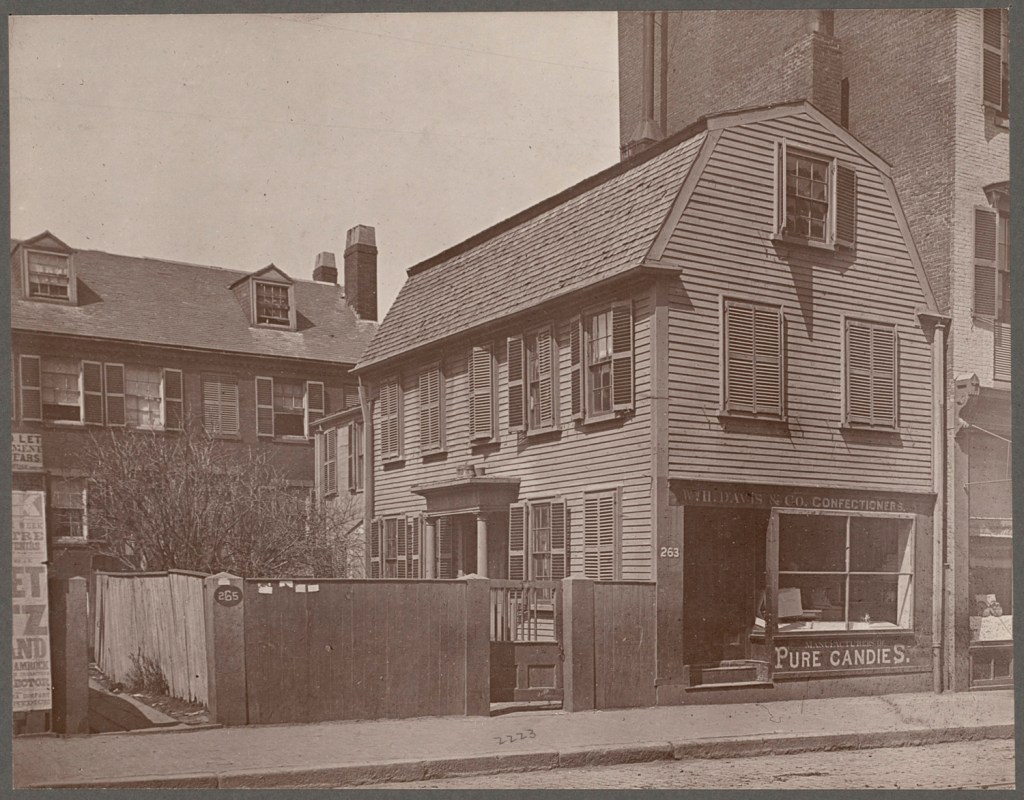
Formerly located on Tremont Street in Downtown Boston, this ca.1670 Georgian gambrel home went from residence to candy shop to billboard in its lifetime. The home was constructed by John Crane (1744-1805), who was a housewright by trade but a patriot and soldier most importantly. At the tender age of 12, he had an early military experience when he substituted for his father in the French and Indian War when his father received the draft. Records state that Crane was an active member the Sons of Liberty, a secret revolutionary organization that was founded by Samuel Adams to fight taxation from the British government. Hours before the Boston Tea Party, Crane and the other participants met at his shop at his home to disguise themselves as American Indians as disguises for the events that would take place that night. He was in the hold of one ship when he was knocked unconscious by a falling crate of tea. His fellow patriots thought him dead and hid him under a pile of wood shavings in a carpenter’s shop off the harbor, only for Crane to recover later. Less than a year later, Crane and his family moved to Providence, Rhode Island where he would later serve under a militia there in the Revolutionary War. After serving, and seeing battle, he was awarded land in Whiting, Maine (Maine was part of Massachusetts at the time) where he built a home and spent his last days.

Crane House, c.1880s, courtesy of BPL.

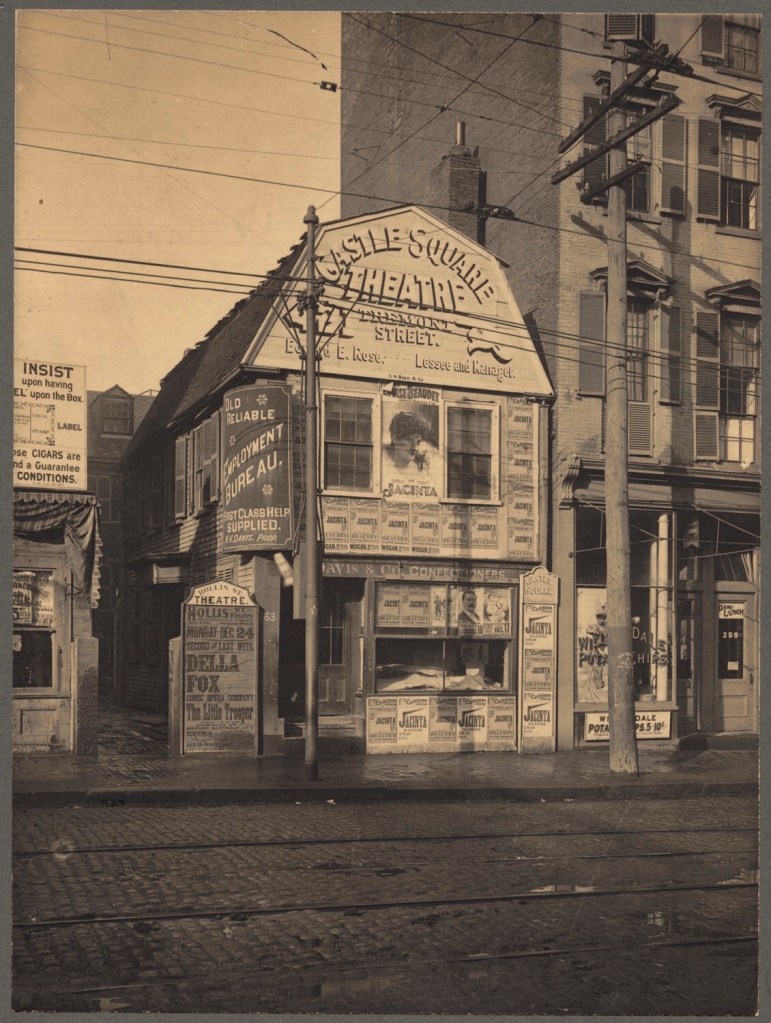
His former house on Tremont Street in Boston was occupied as a home until the late 19th century until it was occupied by a confectionary shop, with a storefront added on the street. Due to the shifting demand for theater-oriented development and lodging, the candy shop began struggling. The owner, James Grace, then allowed for the home to be covered with signage and notices advertising various theaters nearby. Ironically, the home was demolished by 1908 for the Shubert Theater, which remains today.