Mount Wachusett Summit House // 1870-1970

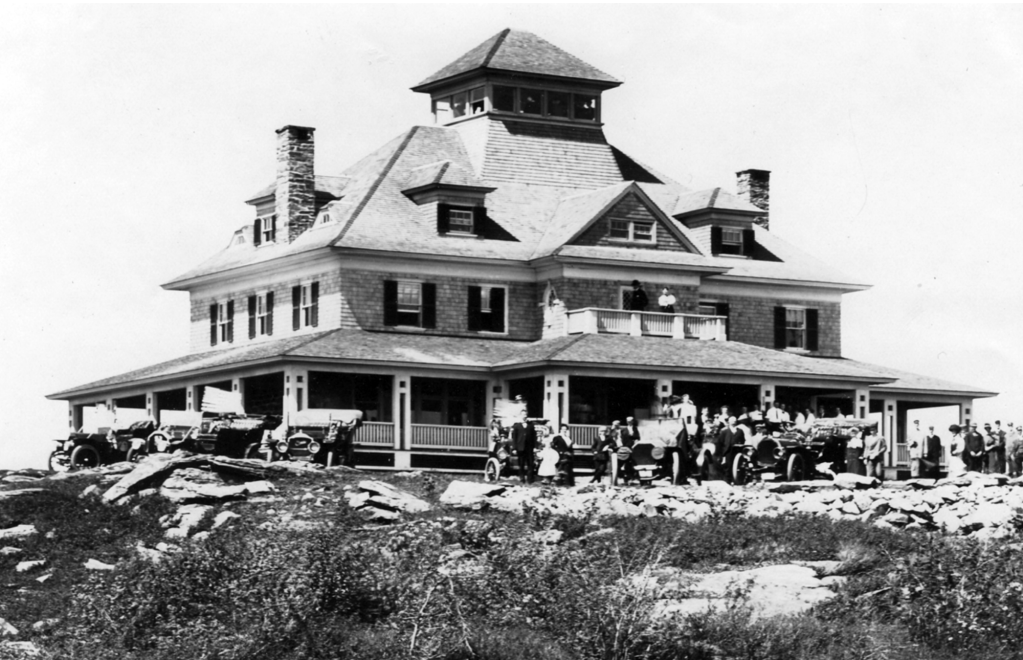
Third Summit House, courtesy of Princeton Historical Society.

Built as three buildings over a span of one hundred years, Mount Wachusett’s Summit House stood over the town of Princeton, Massachusetts, and epitomized the rise of tourism in the community in the late 19th and early 20th centuries. In as early as 1866, William Morse began selling candy and cigars to summer tourists at the summit of Mount Wachusett, later building the first Summit House in 1870. The small stone building was a respite for visitors who walked or took horses up the mountain until 1874, when the Wachusett Mountain Company built a road to the top drawing even more visitors from the summer-resort boom in Princeton. As the mountain saw increased visitors, a second hotel, built in 1884 by Phineas A. Beaman, was constructed and nicknamed the “Tip Top,” with lodging in 30 rooms, with water supplied by a windmill on the shore of Summit Pond. Stagecoaches carried guests up from the Princeton train depot, and the season is estimated to have drawn around 30,000 visitors a year at its peak. The third Summit House, built in 1907, is known from postcards as a hotel that treated the summit as a parlor. The building was slated for demolition in 1970 to make way for a new recreational facility, but burned to the ground later in the year. Today the hotels are gone, but the summit still draws visitors by foot, car, or ski gondola, who take in the views of Massachusetts.
United States Hotel, Boston // 1839-1930

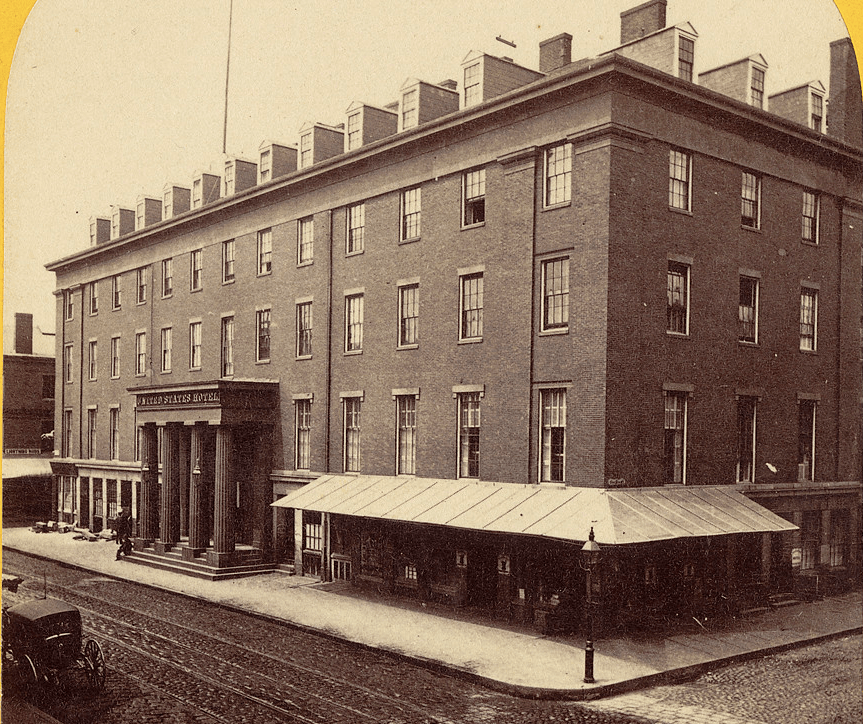
On August 18, 1929, the United States Hotel in Downtown Boston closed its doors for good. Once housing and feeding over 700 guests per night, the hotel saw severely declining numbers by the time of the Great Depression. Construction on the hotel commenced in 1837, and it was completed two years later in 1839. The hotel was operated by the Messrs. Holman and Clark, who saw an immediate success due to the hotel’s location central to Boston’s major train stations. The hotel (which first contained 300 rooms) did so well that the building was expanded numerous times with undulating additions to maximize light and air into the many rooms. At the hotel, over 150 employees served the guests at their rooms, the dining halls, bathing facilities or the stables which had drivers ready at a moments notice. The United States Hotel was one of the finest establishments in Boston and was thought to be the largest in the country by the middle of the 19th century. The size and amenities however was the downfall of the iconic hotel as Boston’s train stations saw fewer passengers in the early decades of the 20th century. Owners of the hotel sought to squeeze out every last dollar from the complex before they locked her up for good, hosting an auction on everything from beds to a chair said to have been sat on by Charles Dickens during his stay. The hotel was razed in 1930.

Mount Pleasant House // 1875-1939

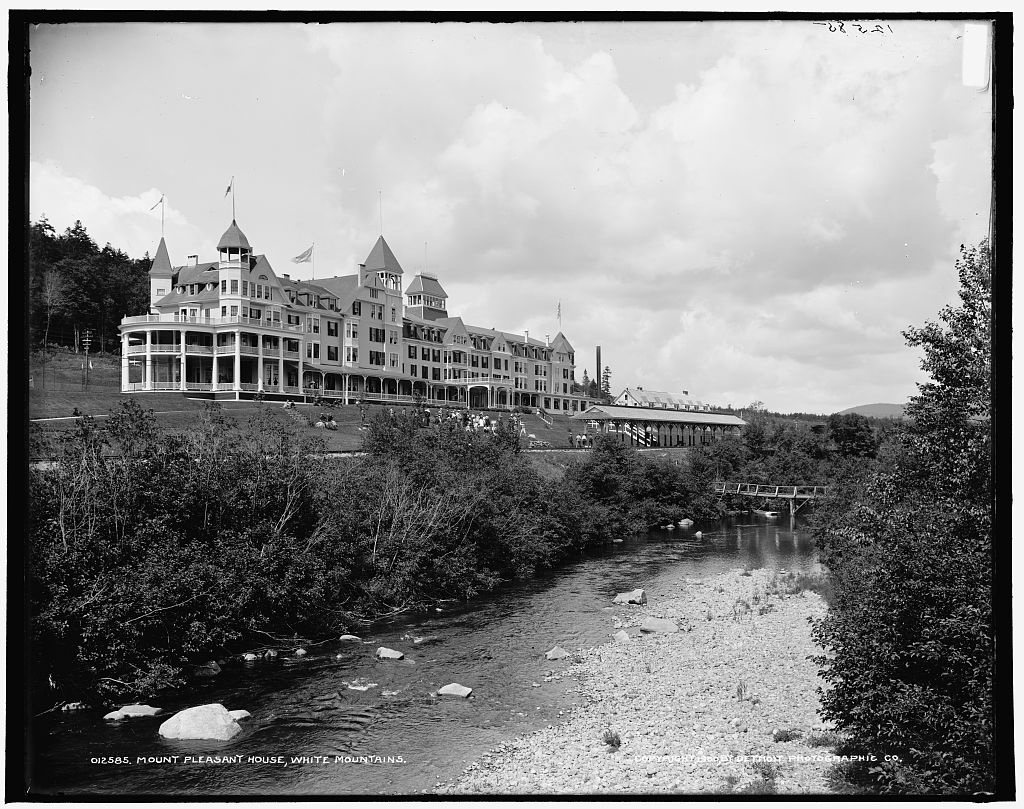
One of the earlier grand hotels in the White Mountains of New Hampshire, was Mount Pleasant House, built in 1875 after the arrival of the railroad through Crawford Notch. The hotel was located on a small hill where the Lodge at Bretton Woods is currently sited, across the street from the iconic Mount Washington Hotel. It was built by lumberman and investor John T.G. Leavitt and opened the following year. It was then a simple, almost box-like structure with only forty rooms, later expanded and “modernized” to accommodate the growing waves of affluent visitors from New York City and Boston every year. In 1881, Leavitt sold the hotel to Oscar Pitman and Joseph Stickney, the latter eventually became sole owner and acquired land across the street to build the Mount Washington Hotel in 1900. Possibly as a practice for his larger endeavor across the street, Stickney hired one of Portland’s leading architects, Francis H. Fasset, to design the additions and alterations. When Stickney died in 1903, just a year after his larger hotel was built, both properties were willed to his wife, Caroline. She ran the company through changing economic conditions and when she died, in 1936, the hotels were left to her nephew, F. Foster Reynolds. Reynolds decided that the Mt. Pleasant was not worth the expense needed to maintain it, and in 1939, ordered the building demolished, replaced decades later with the present building.

Hotel Boylston // 1870-1894

C.1875 image of Hotel Boylston, BPL image.

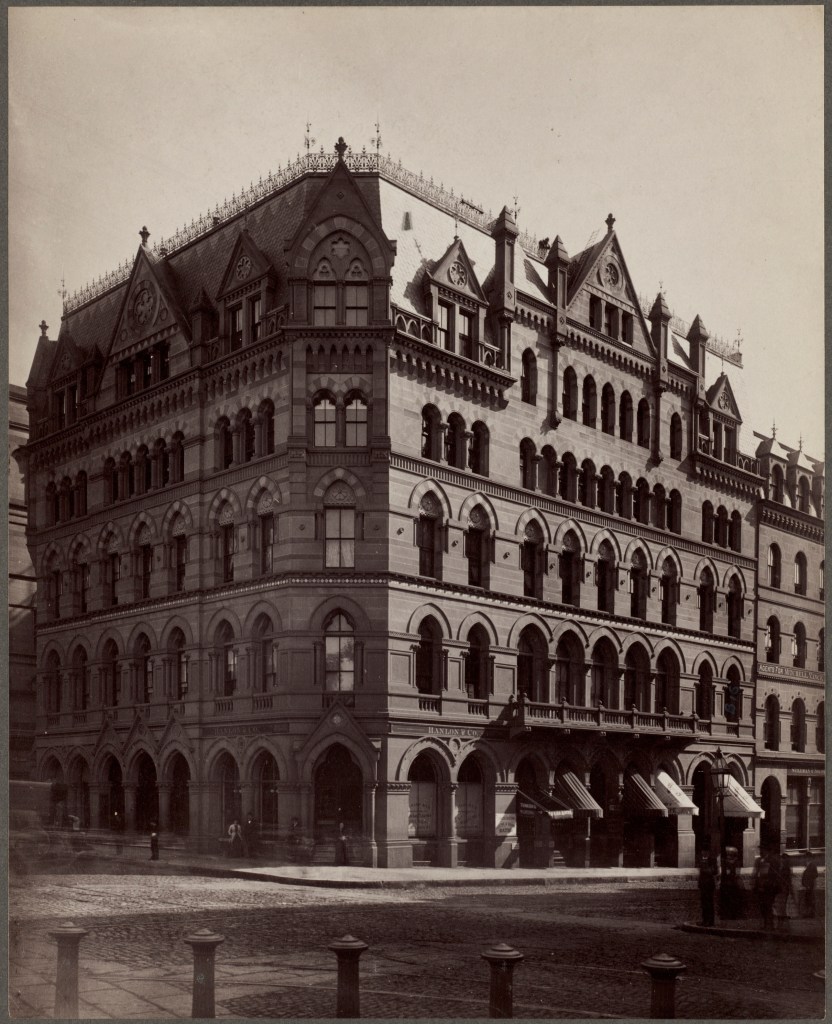
Standing just 24 years, the Hotel Boylston at the corner of Boylston and Tremont Streets, evoked the Victorian-era grandeur of Boston. Built in 1870, the Victorian Gothic hotel (what we consider apartment building today) was designed by the architectural team of Cummings and Sears, who were very busy at the time in Boston and beyond. The 5 1/2-story building was constructed of sandstone and featured Gothic arches, dormers of varied sizes and shapes, and a mansard roof with iron cresting. The building (and the three others on Tremont Street) was razed in 1894 and replaced with the Hotel Touraine a few years later.