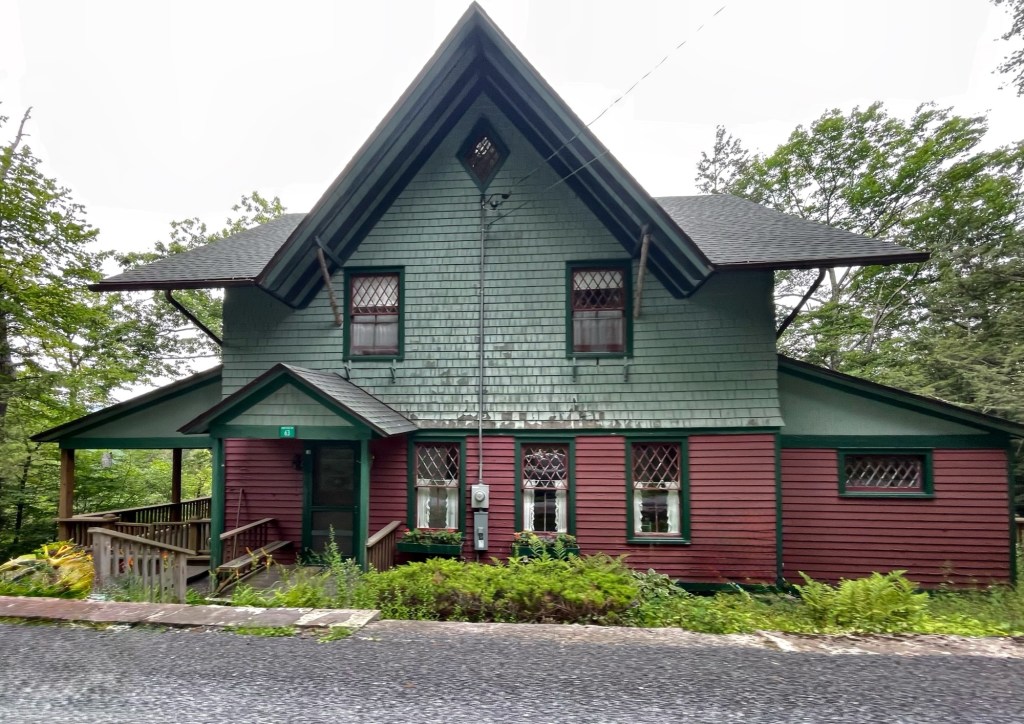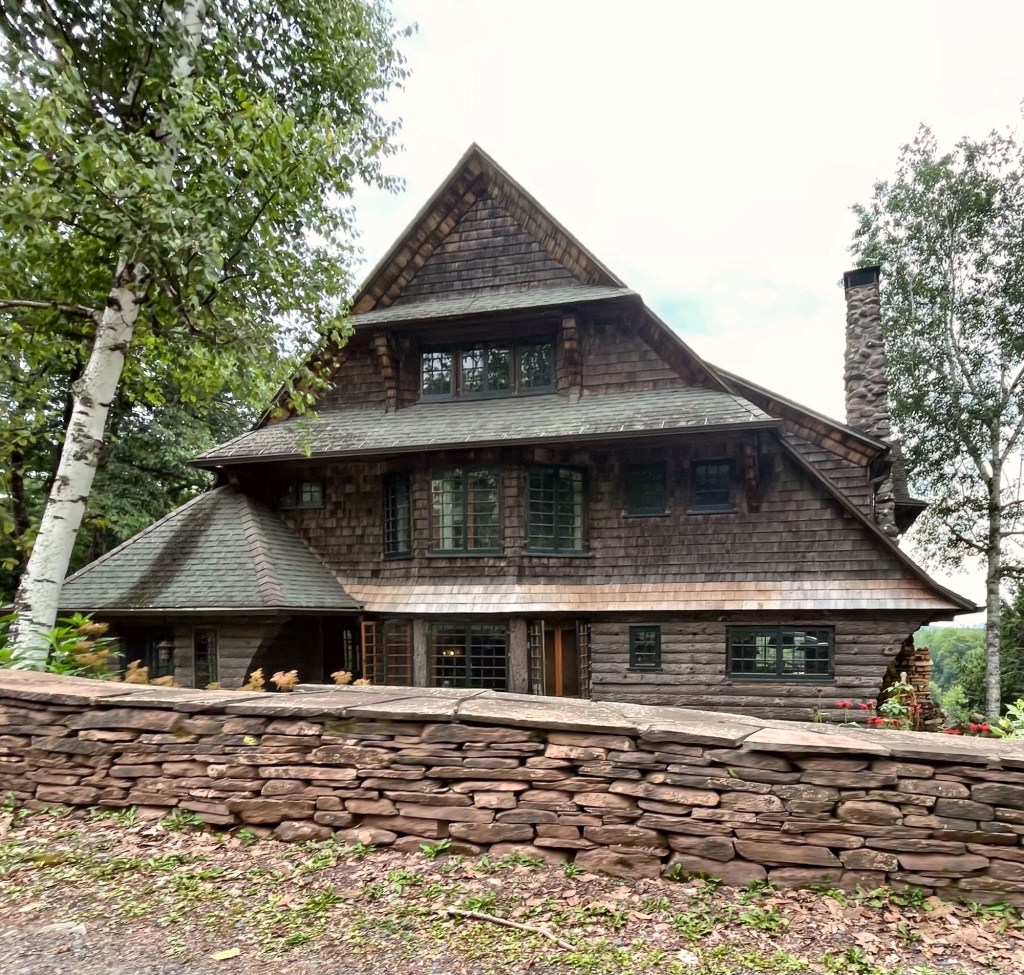
Highways Cottage // 1902

One of the more unique and enchanting historic summer “cottages” I have seen in my travels is this early 20th century rustic example in the Onteora Park colony. Built in 1902 for John S. Stanton Sr. (1837-1933), this residence was later the summer home of Dr. Edward Ahrens and his wife, Gertrude, who founded the Mountaintop Arboretum nearby. The house stands 3 1/2-stories tall and features horizontal log siding on the ground floor and cedar shingle siding above. The facade is dominated by the broad gable end roof that extends downwards to the first floor at flared eaves on the sides and over the windows.
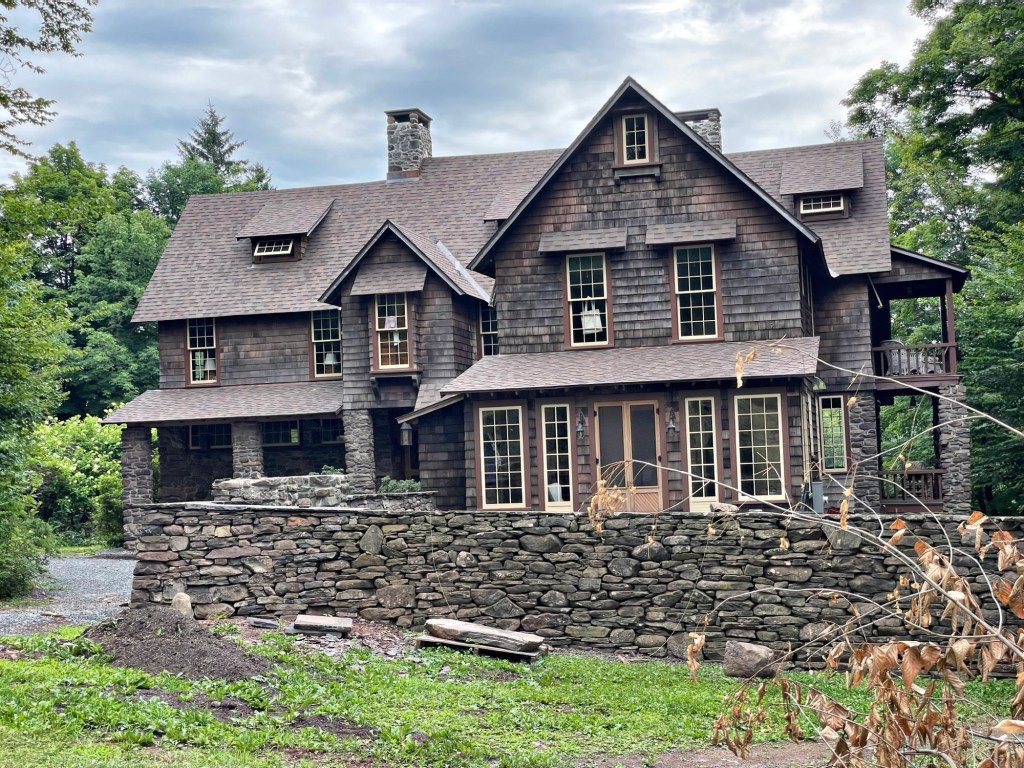
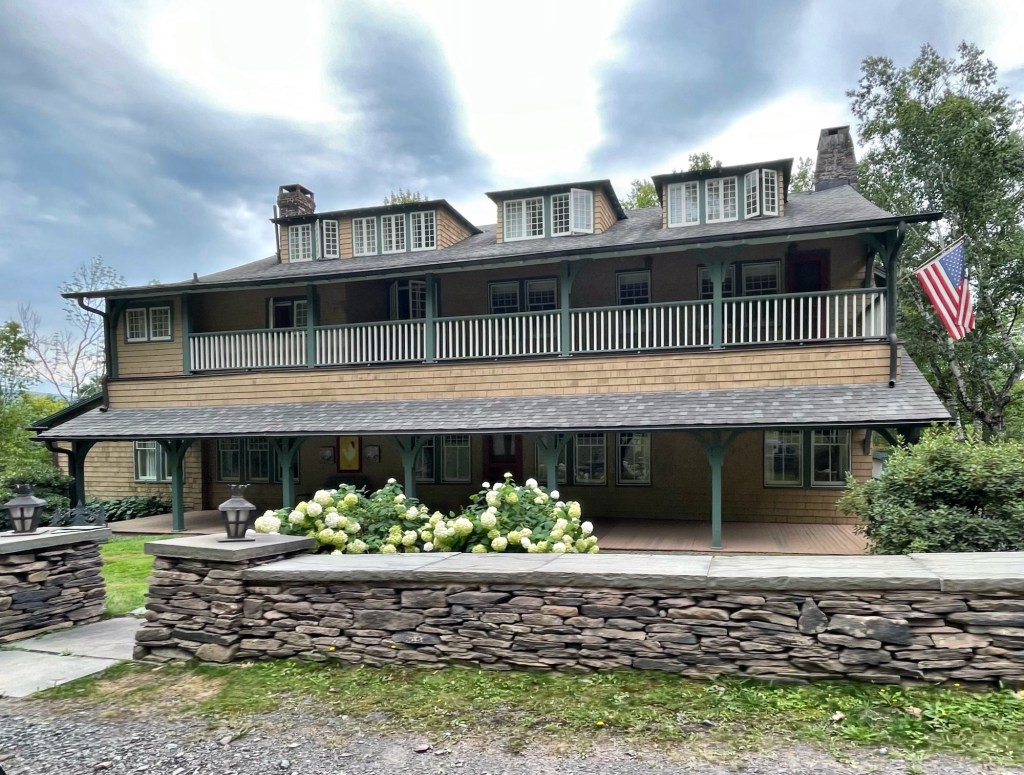
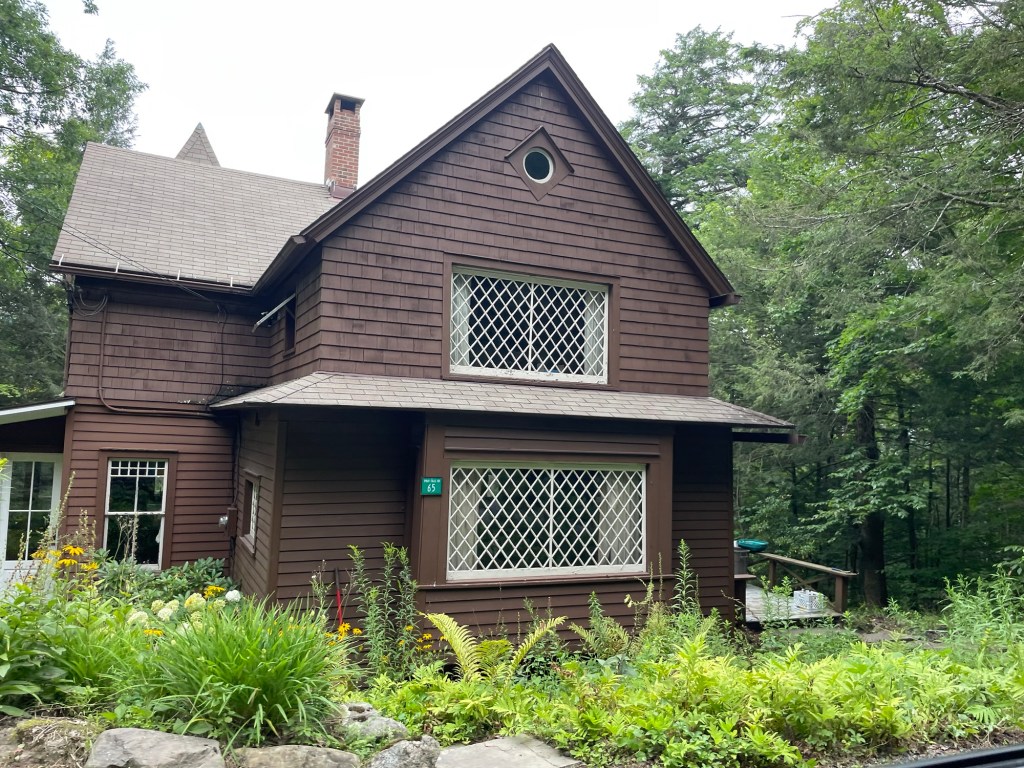
Beauford Lodge Cottage // 1902

This handsome cottage on Thurber Road in the Onteora Park colony in the Catskills of New York, was built by 1902 for Col. James P. Kimball (1840-1902), and his wife, Maria (Brace) Kimball, as their summer home. James Peleg Kimball was one of the most renowned U.S. Army surgeons of the late nineteenth century. The home was meant to be the couple’s place of respite, but Col. Kimball died here in 1902, not long after the family moved into the home to enjoy the fresh air of the Catskills. Maria Kimball retained the cottage for years until it was sold in 1919, and owned later by Clayton McMichael of Pennsylvania, and a director of the Onteora Summer Theatre. The rustic Shingle/Arts and Crafts style cottage was originally named Beauford Lodge, and was later named Stone Acres by McMichael.

Former Bear and Fox Inn // 1888

Once the heart of the Onteora Park colony in the Catskills Mountains, this large building was known as the Bear and Fox Inn. The inn was built in 1888 from plans by young architect Dunham Wheeler (1861–1938), the son of the founder of the colony, Ms. Candace Wheeler, along with three cottages, while Ms. Wheeler’s Associated Artists interior design company provided the upholstered furnishings. Candace’s daughter, Dora (Wheeler) Keith, painted an inn sign depicting a bear and fox dancing by the light of the moon. In the early development of Onteora Park, there was no sewer or water system, and the original cottages had no kitchens built within the homes. As a result, the Bear and Fox Inn provided a space where cottagers would meet daily for meals. By the 20th century, cottagers would add kitchens inside their homes, and some dinners and events were moved to the Field House. The Bear and Fox Inn was altered with the removal of the large dining room, and converted to a private residence, which remains to this day. The structure is an excellent example of the Arts and Crafts style in a rustic finishes, typical for Upstate New York summer cottages.

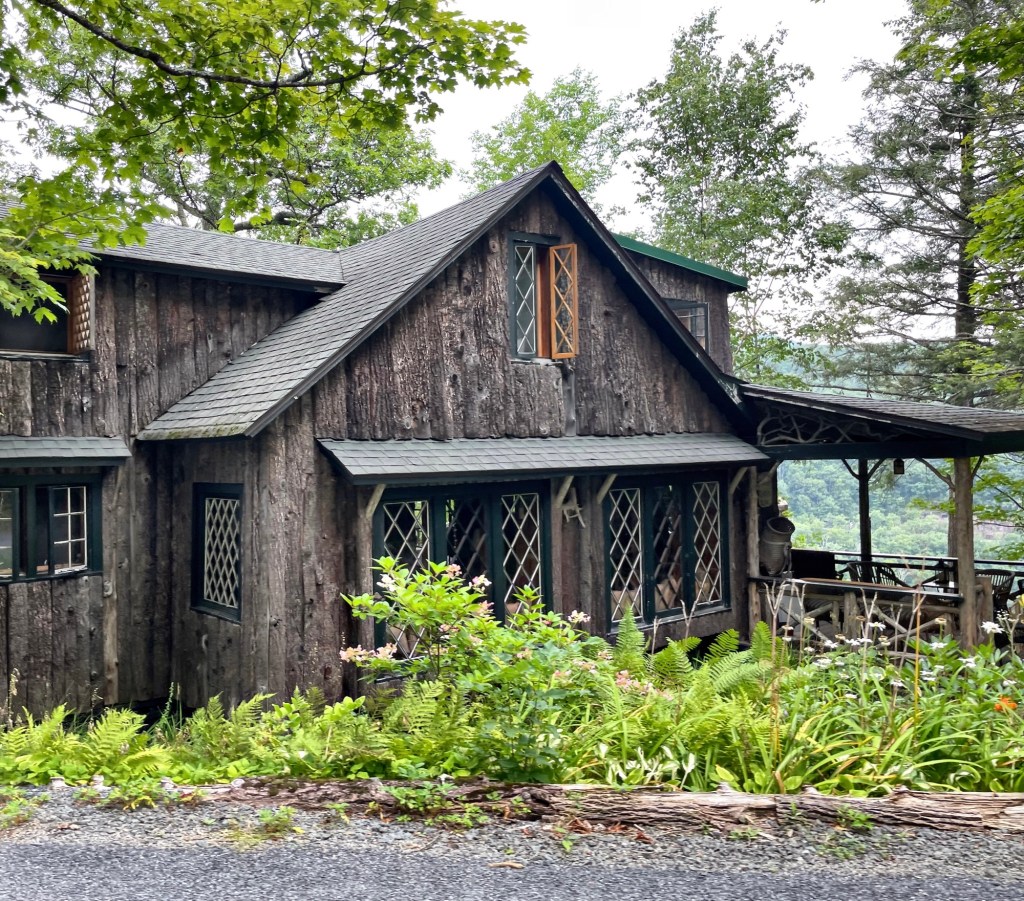
Crossways Cottage // c.1890

Tucked away in the town of Hunter in the Catskill Mountains of New York, the summer colony of Twilight Park has stood as an exclusive and private resort community established in the late 19th century. Twilight Park was born out of the Twilight Club, a Manhattan social club in the late-19th century and brought to life by founder, Charles F. Wingate. Mr. Wingate traveled to the mountaintop in 1887, and became enamored by its natural beauty. He arranged for the purchase of a former sheep’s meadow and led the construction of the first cluster of cottages in what would become a large community of over 100 summer homes. Cottages were laid out on roughly parallel roads at different elevations and on old connecting paths that later became roads with all lots built on ledges overlooking the Catskills. The first cottages were log cabins, and quickly followed by larger, Queen Anne style “cottages” as others invested in the development. Crossways Cottage is one of the many unique late-Victorian summer “cottages” in the exclusive Twilight Park colony in the Catskills of Hunter, New York. The cottage stands out for its cross-gable roof with overly deep eaves which are supported by rustic twig brackets, diamond sash windows, and the use of varied clapboard and shingle siding. 

Sans Souci Cottage // 1894

Tucked away in the town of Hunter in the Catskill Mountains of New York, the summer colony of Twilight Park has stood as an exclusive and private resort community established in the late 19th century. Twilight Park was born out of the Twilight Club, a Manhattan social club in the late-19th century and brought to life by founder, Charles F. Wingate. Mr. Wingate traveled to the mountaintop in 1887, and became enamored by its natural beauty. He arranged for the purchase of a former sheep’s meadow and led the construction of the first cluster of cottages in what would become a large community of over 100 summer homes. Cottages were laid out on roughly parallel roads at different elevations and on old connecting paths that later became roads with all lots built on ledges overlooking the Catskills. The first cottages were log cabins, and quickly followed by larger, Queen Anne style “cottages” as others invested in the development. This cottage, known as Sans Souci Cottage, was built in 1894 in Twilight Park, during the “rustic” period, where Queen Anne Victorian styles made way for a more rustic, Arts and Crafts mode. The cottage was built for owner John McClure and it is notable for its varied siding, diamond-pane windows and large porch overlooking the Catskills.

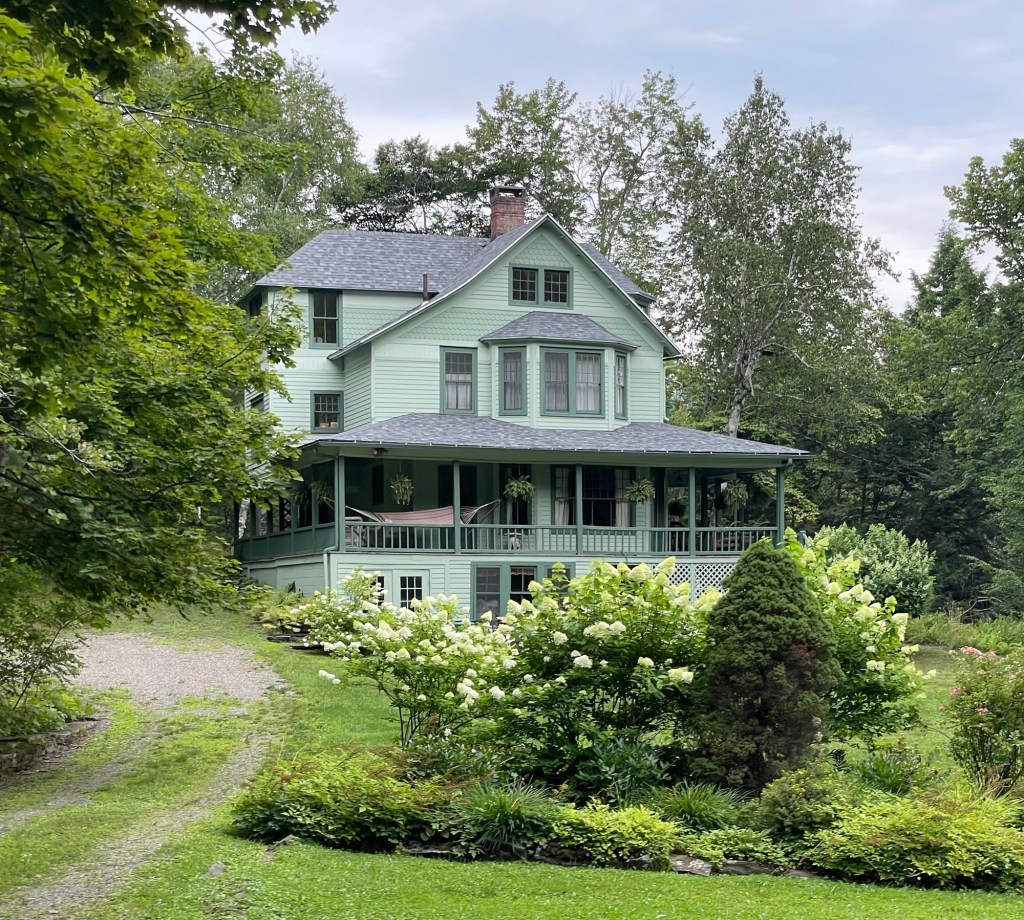
Four Winds Cottage // 1889

Tucked away in the town of Hunter in the Catskill Mountains of New York, the summer colony of Twilight Park has stood as an exclusive and private resort community established in the late 19th century. Twilight Park was born out of the Twilight Club, a Manhattan social club in the late-19th century and brought to life by founder, Charles F. Wingate. Mr. Wingate traveled to the mountaintop in 1887, and became enamored by its natural beauty. He arranged for the purchase of a former sheep meadow and led the construction of the first cluster of cottages in what would become a large community of over 100 summer homes. Cottages were laid out on roughly parallel roads at different elevations and on old connecting paths that later became roads with all lots built on ledges overlooking the Catskills. The first cottages were log cabins, and quickly followed by larger, Queen Anne style “cottages” as others invested in the development. This cottage, known as “Four Winds”, was built in 1889 during the first phase of development in Twilight Park, and it is notable for its varied siding, wrap-around porch, bay window, and elevated siting to provide better views of the landscape.

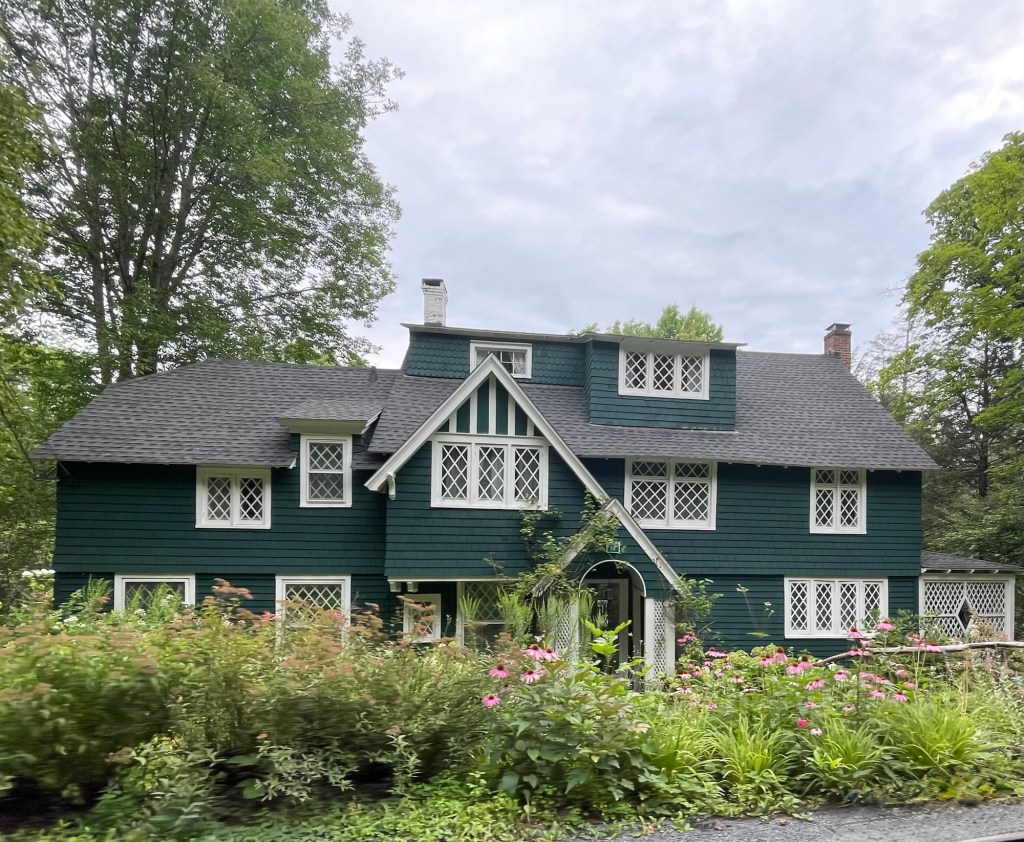
Braeside Cottage // 1888

Tucked away in the town of Hunter in the Catskill Mountains of New York, the summer colony of Twilight Park has stood as an exclusive and private resort community established in the late 19th century. Twilight Park was born out of the Twilight Club, a Manhattan social club in the late-19th century and brought to life by founder, Charles F. Wingate. Mr. Wingate traveled to the mountaintop in 1887, and became enamored by its natural beauty. He arranged for the purchase of a former sheep meadow and led the construction of the first cluster of cottages in what would become a large community of over 100 summer homes. Cottages were laid out on roughly parallel roads at different elevations and on old connecting paths that later became roads with all lots built on ledges overlooking the Catskills. The first cottages were log cabins, and quickly followed by larger, Queen Anne style “cottages” as others invested in the development. This cottage, known as Brae Side Cottage, was built in 1888 during the first phase of development in Twilight Park, and it is notable for its varied siding, diamond-pane windows, complex roof form with dormers, and the laticed entry.

Cosy Cabin // 1887

Tucked away in the town of Hunter in the Catskill Mountains of New York, the summer colony of Twilight Park has stood as an exclusive and private resort community established in the late 19th century. Twilight Park was born out of the Twilight Club, a Manhattan social club in the late-19th century and brought to life by founder, Charles F. Wingate. Mr. Wingate traveled to the mountaintop in 1887, and became enamored by its natural beauty. He arranged for the purchase of a former sheep’s meadow and led the construction of the first cluster of cottages in what would become a large community of over 100 summer homes. Cottages were laid out on roughly parallel roads at different elevations and on old connecting paths that later became roads with all lots built on ledges overlooking the Catskills. The first six cottages were log cabins, with this example, likely in the first batch. From maps and a report on the area, this early cottage appears to have been named “Cosy Cabin” and was first occupied by Mr. Wingate, the founder of the Twilight Club and Twilight Park. The cottage is unique for its vertically laid logs still containing their bark, and the rustic porch balustrade and detailing.

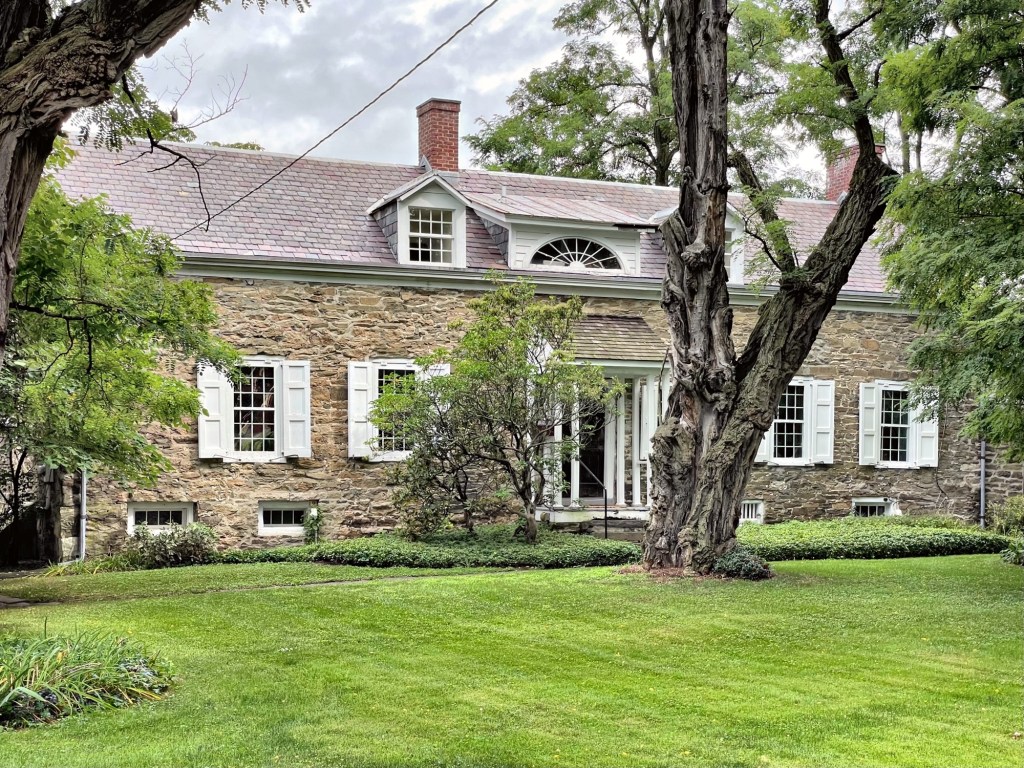
DuBois-Kierstede Stone House // 1727

Ulster County, New York, is known for its many stone houses, largely built in the 18th and 19th centuries by Dutch and other European settlers to the region. This stone house in Saugerties was built beginning in 1727 by Hiskia DuBois (Du Boys), who established a 40-acre farm here. The original homestead was the one-and-a-half-story east wing of the present structure and occupied by Hiskia until his death in 1757, afterwhich, the property was inherited by his son David, who would sell the farmstead to Dr. Christoffel “Christopher” Kiersted (1736-1791), the first doctor to take up a residence in present-day Saugerties. After Dr. Kiersted died in 1791, the property was expanded and enlarged to its current composition, likely by his son, John Kiersted. Under the ownership of John, a grove of Black Locust trees were planted in the front yard setting the cottage in a small forest. The DuBois-Kierstede Stone House is currently the home of the Saugerties Historical Society, which operates the structure as the Kiersted House Museum, along with a preserved Dutch Barn on the site.

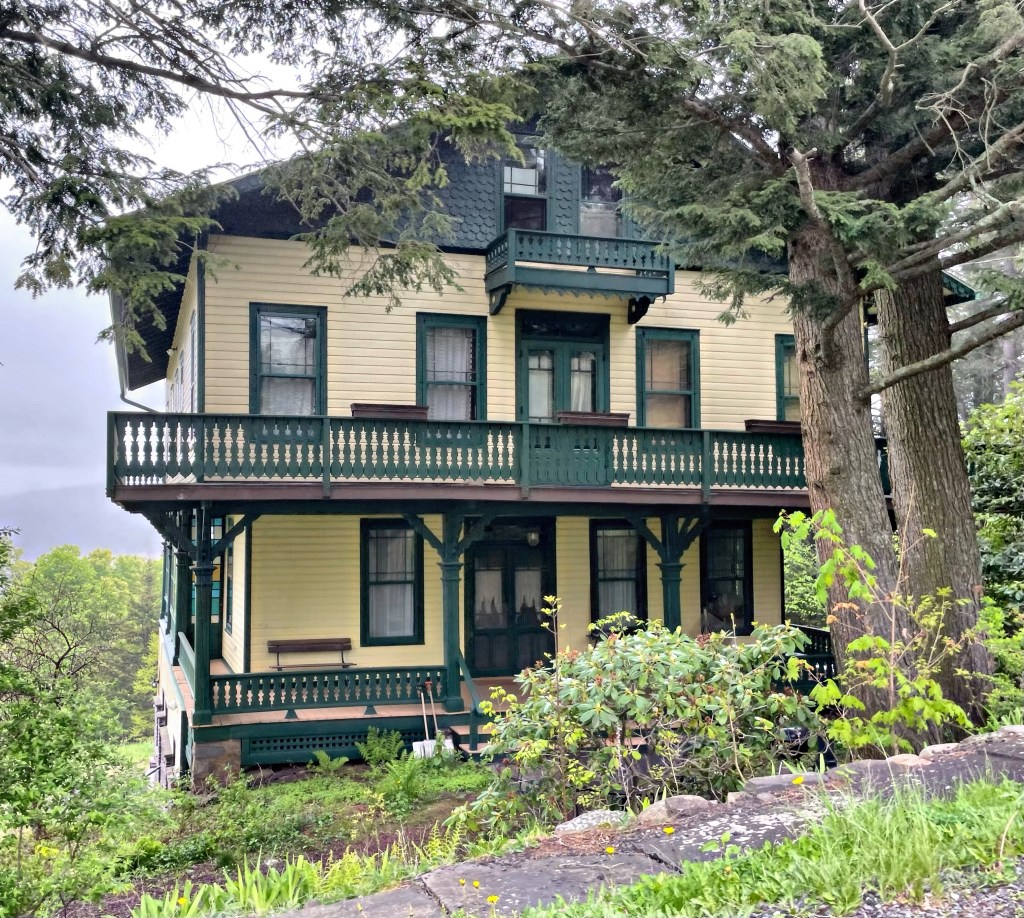
Keller Cottage // 1896

It wouldn’t be a German-developed summer colony with at least one Chalet-style summer cottage, would it? The Keller Cottage in Elka Park, New York, was built in 1896 for John Keller (1867-1924) and his German wife, Caroline Goehring (1866-1917) who summered in the colony for a few months of the year from Brooklyn, N.Y. The 3,500-square-foot, 6-bedroom “cottage” includes a sunroom with stained glass, original unpainted wood-paneled walls and oh, just some jaw-dropping views of the Catskill Mountains for good measure!