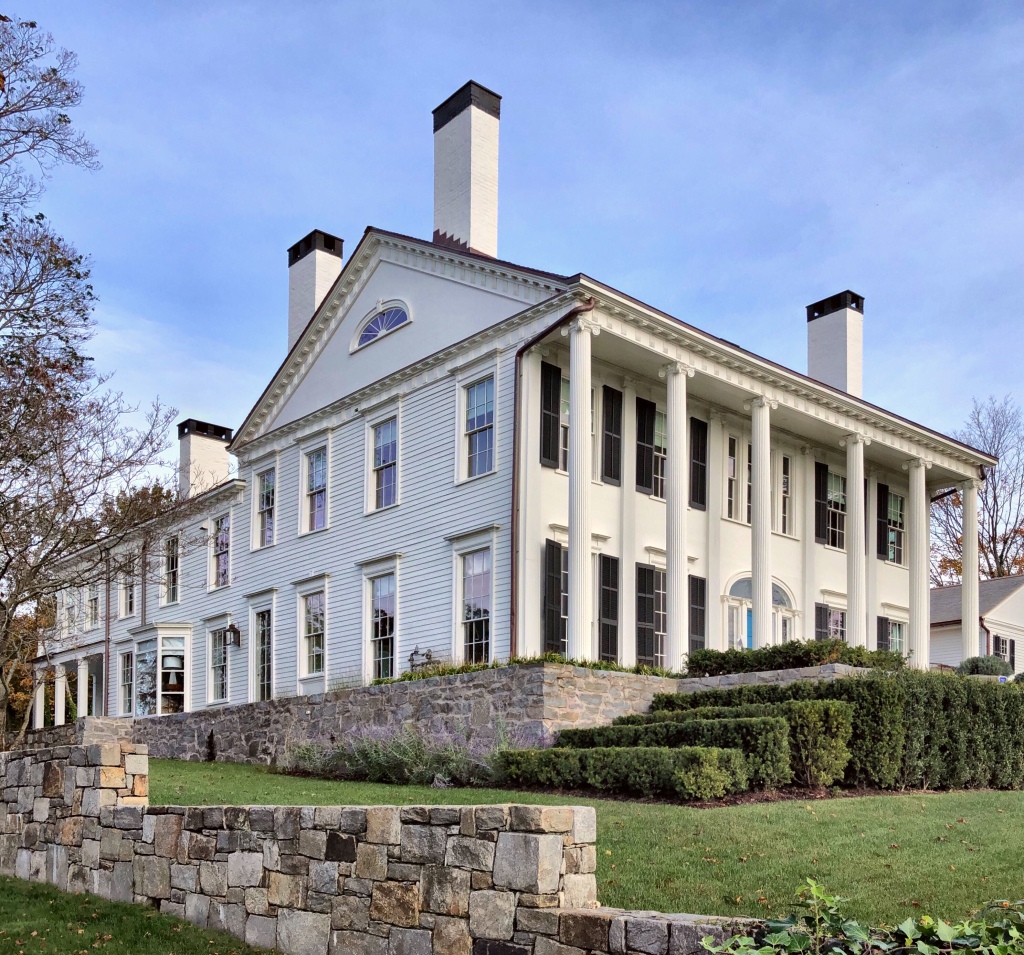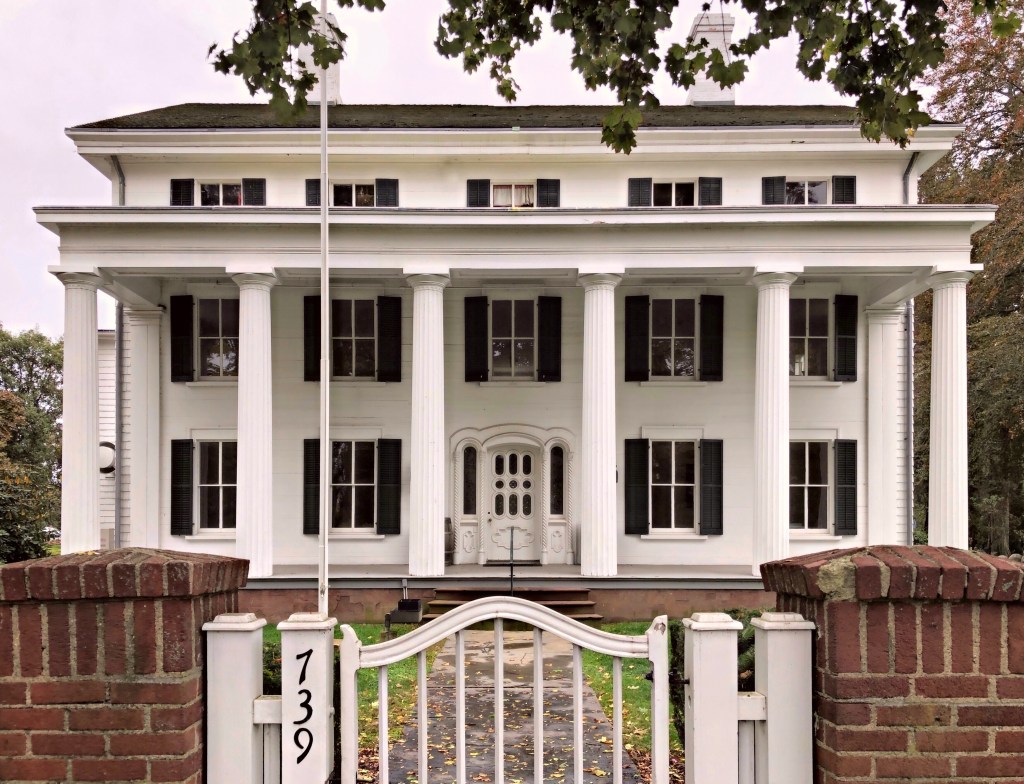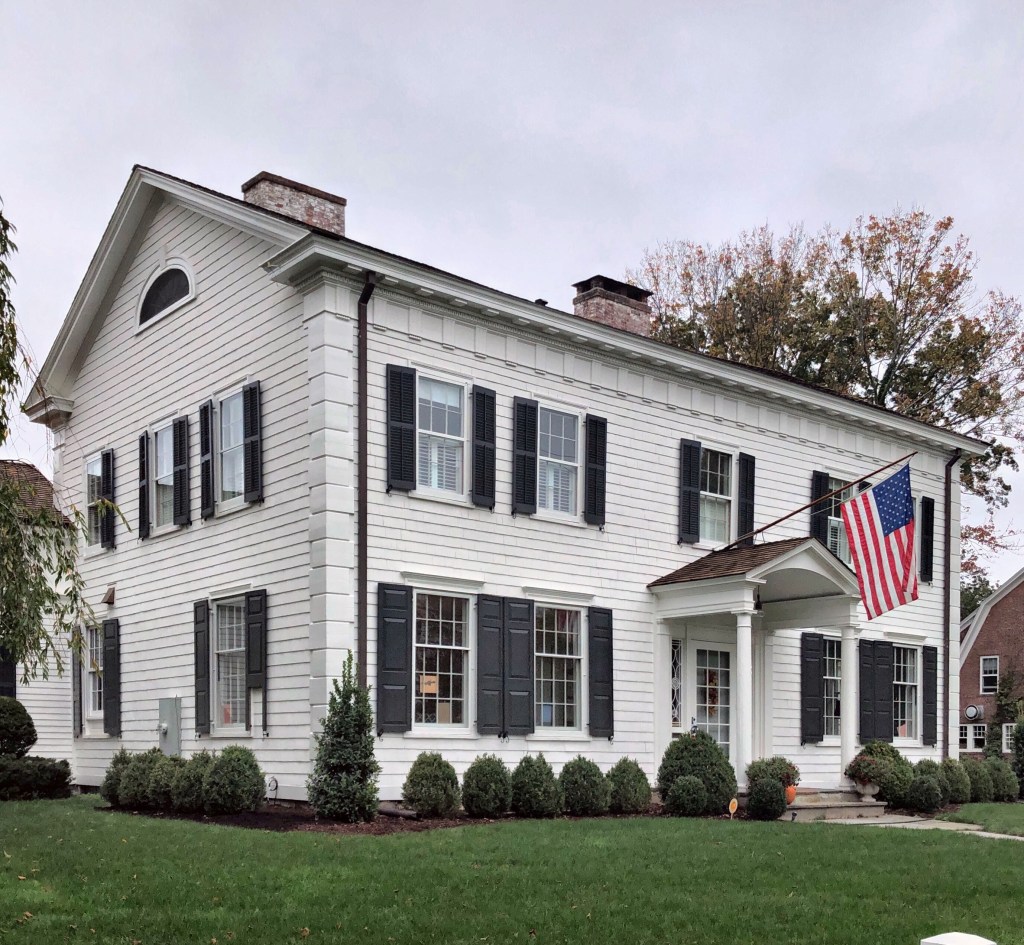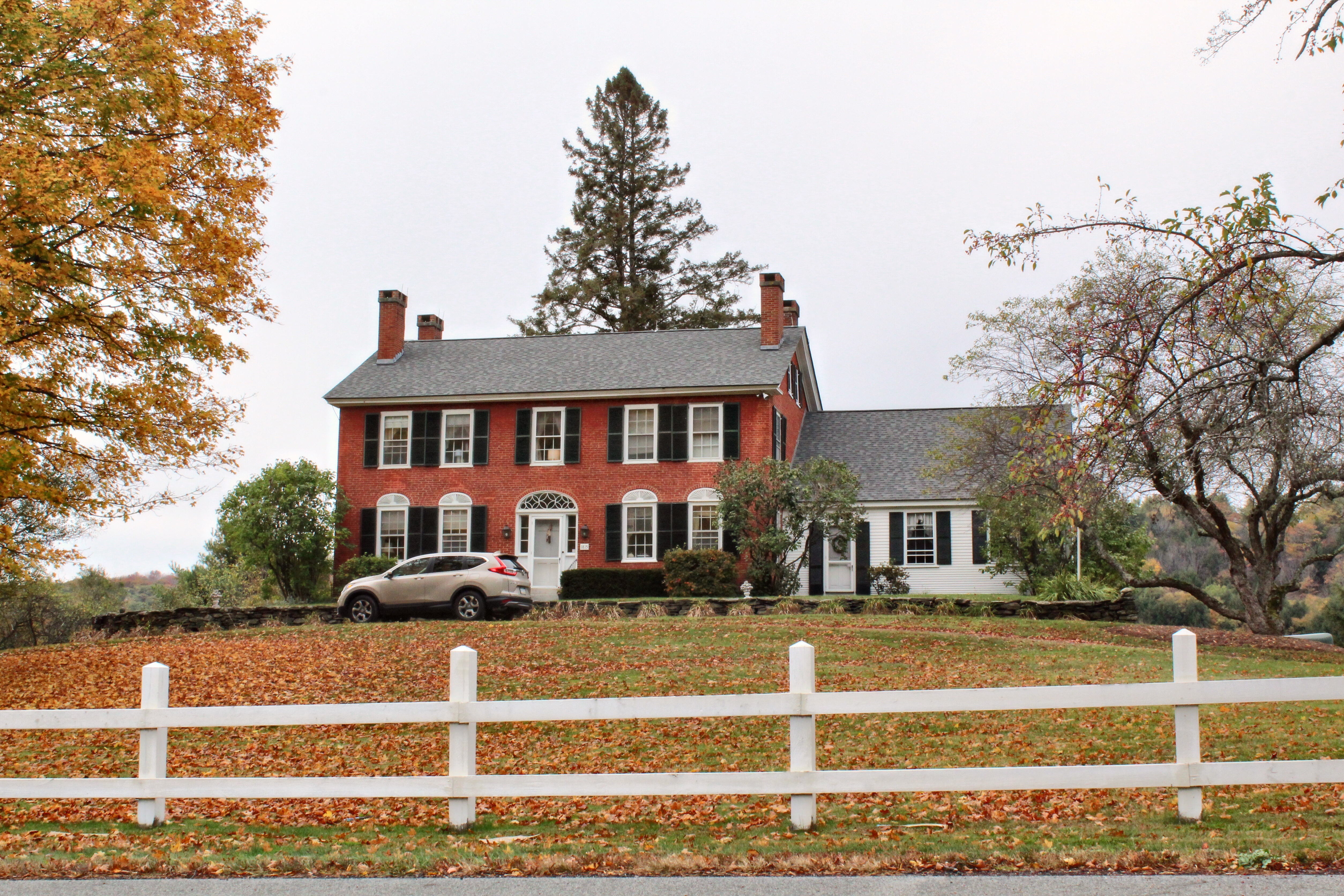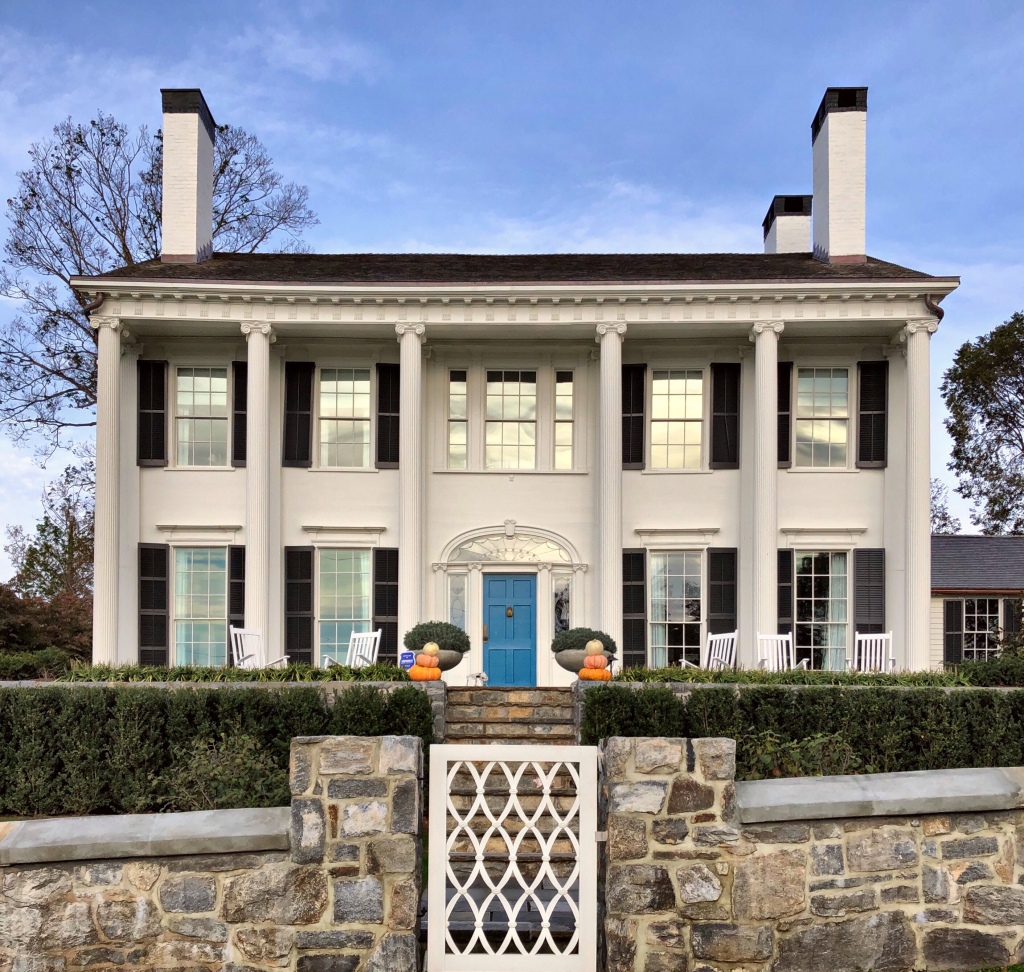
Hosford Stone House // c.1835

Josiah Hosford of Thetford, Vermont built this stone house for his family in about 1835. Hosford was a stone mason who built a series of stone houses in town, using stone quarried in nearby Lyme, New Hampshire. Josiah Hosford (1802-1883), was the grandson of Aaron Hosford, one of the earliest settlers in the North Thetford area. The distinguished family contributed resided and contributed to the town’s vibrant history, as ministers, teachers, artists, farmers, and tradespeople. A fire at the home in the early 1900s gutted the interior, and the owner at the time, a carpenter, reconstructed the interiors, shingled the side gables, and added on the porches.

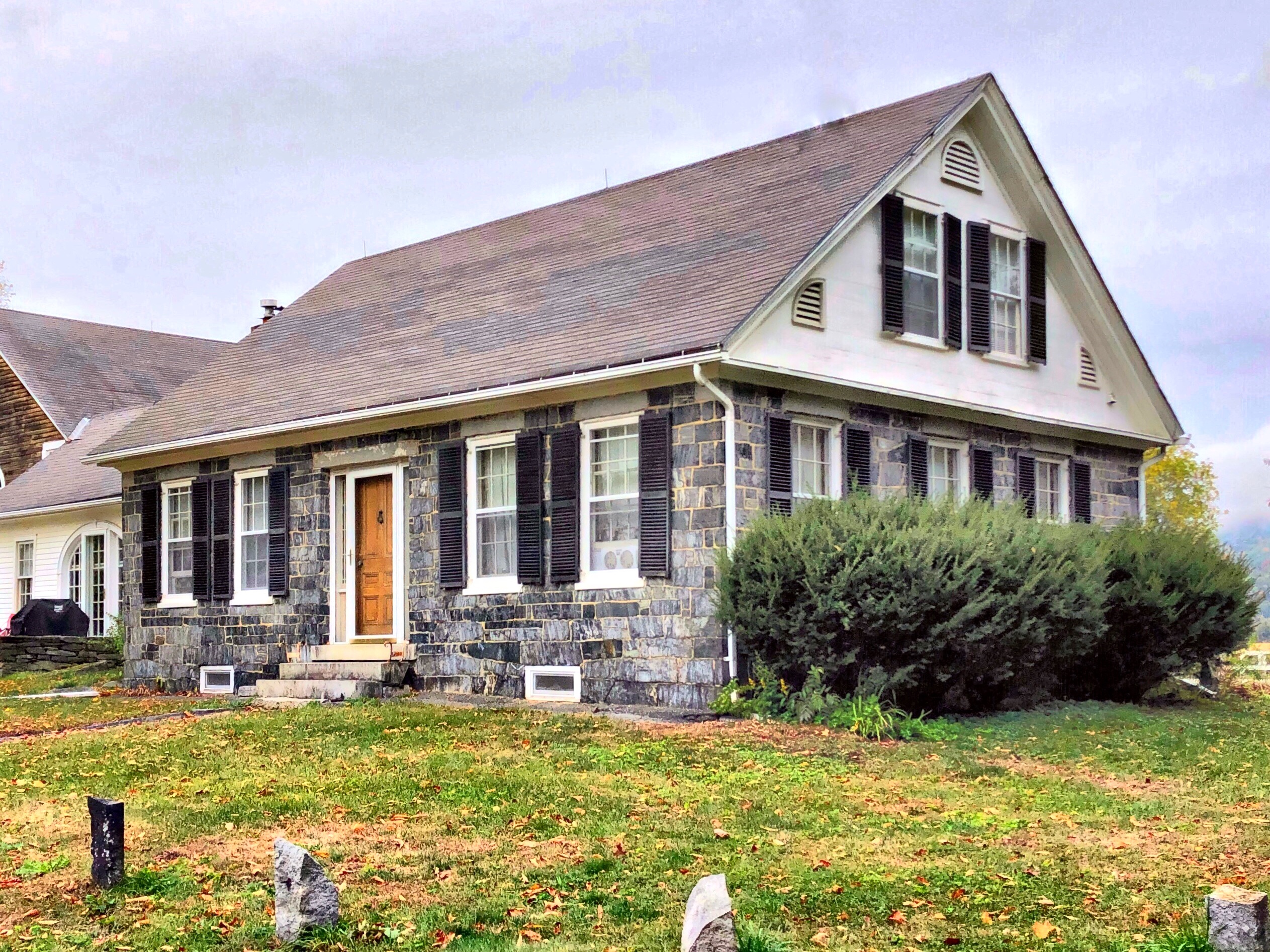
Child Farmhouse // c.1835

Constructed out of stone quarried from nearby Lyme, New Hampshire, the Child Farmhouse is one of a handful of stone houses in East Thetford, Vermont. This house is a particularly fine example of a Cape Cod with Federal detailing, as translated into granite construction. The home features stone lintels over the door and window openings. It was built for Bela Child (1786-1866), likely after the death of his first wife, as a new home for his second. The family operated a massive farm along the Connecticut river.

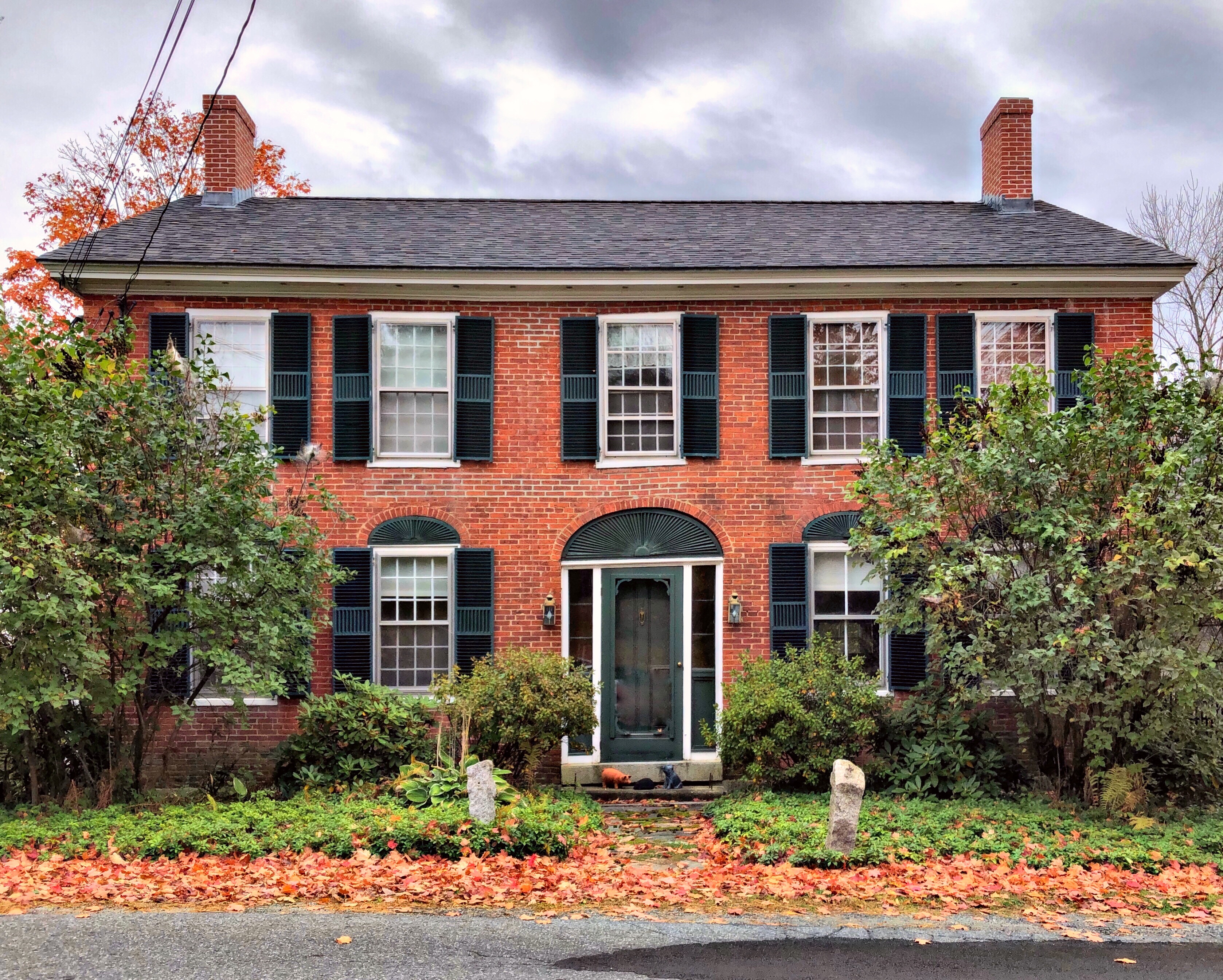
Turner House // 1825

In New England, brick houses are more scarce for the simple fact trees are everywhere, brickyards were not. As towns and cities developed all across the region, some towns found they had a lot of clay in their soil, perfect for the manufacturing of brick. In Thetford, a man named Hezekiah Porter was the first to start a brickyard, manufacturing bricks for construction projects around the area. By the 1820s, a couple brick houses were built in the Thetford Hill area of town including the Hosford House, one of the earliest. Thomas Turner, a builder constructed the Hosford House and this home nearby for his own use, both utilizing Porter’s bricks. This fine Federal home was likely a great advertisement for Turner’s building skills.

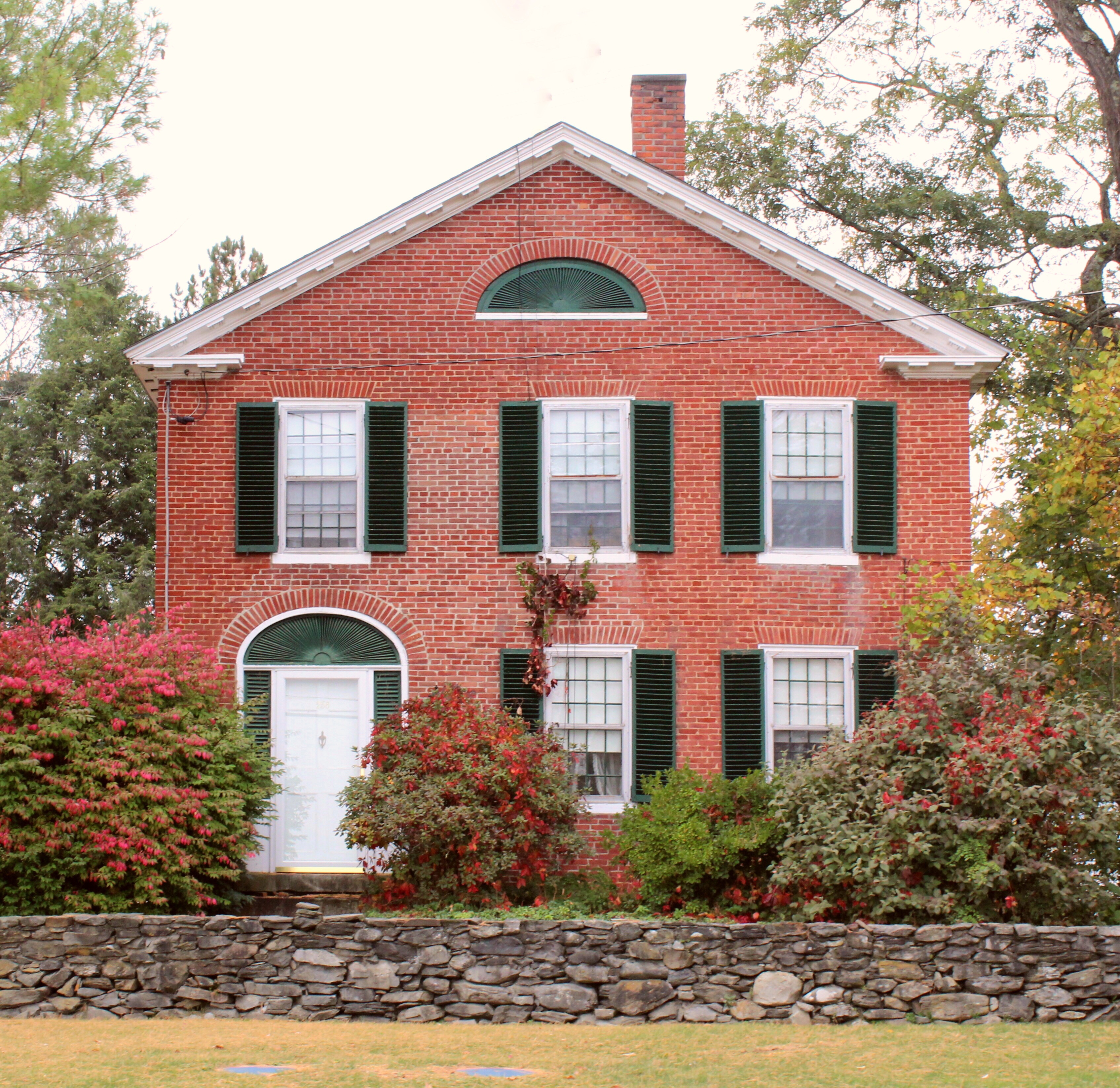
Hosford-Slade House // 1821

Is there anything better than a brick Federal style house?

This house in Thetford, Vermont was built for Heman Hosford in 1821 from bricks produced by Hezekiah Porter, who established the earliest known brickyard in Thetford. Hosford sold the house to Enoch Slade in 1837 and it remained in the Slade Family for over seven generations. He became a prominent citizen of Thetford, was a surveyor and for many years justice of the peace, and in the latter part of his life was generally known by the title of “Squire Slade.” He was a supporter and trustee of Thetford Academy, in which his children and grandchildren were educated. He was a member of the Congregational church and an earnest supporter of the principles of the Republican party. The brick gable front home features a louvered sidelights and fan over the front door and in the gable.

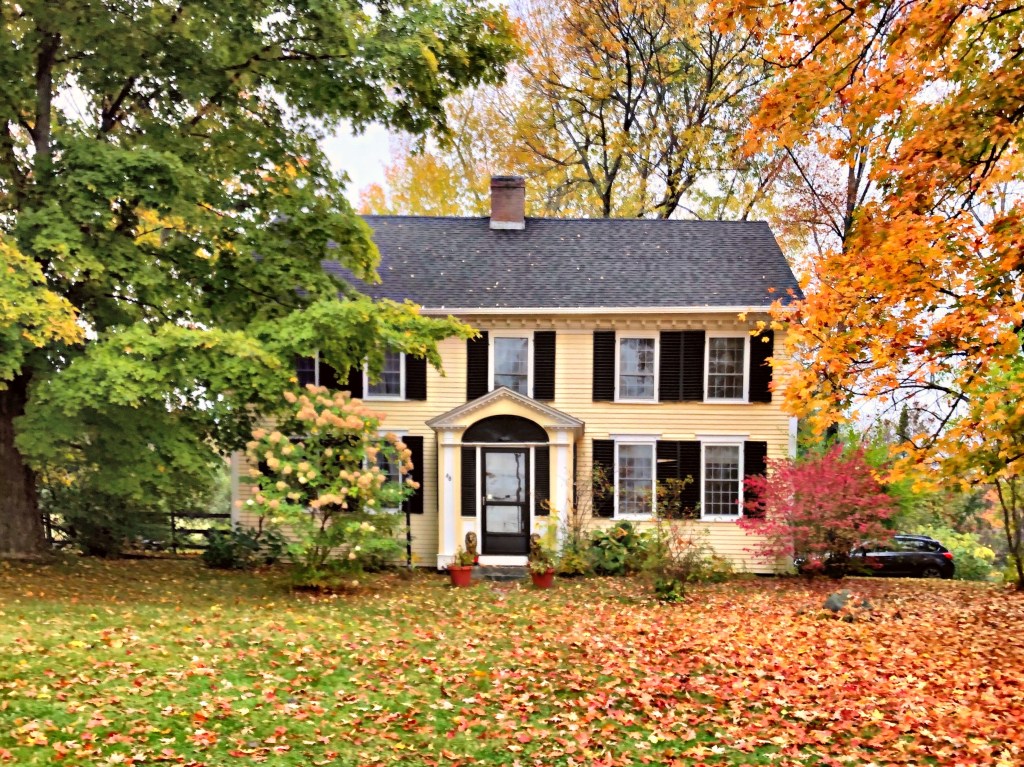
White-Heaton House // 1795

This transitional Federal house in Thetford was built around 1795 for an Isaac White. The house was later owned by Orange Heaton (who’s name perfectly fits the color of the leaves in the photo). The design is refined, yet stately with the enclosed, gabled, projecting entrance porch. Louvered panels and an elliptical louvered fan frame the door.

Latham-Kendrick Houses // 1817

This unique double-house was constructed in 1817 for Capt. William Harris Latham and Dr. Thomas Kendrick, brothers-in-law, merchants and partners in a store which stood until it was destroyed by fire about 1845. Latham served as a Captain in the War of 1812, and later was an important benefactor of the nearby Thetford Academy, donating money and building materials for the original construction. Wallpaper from this house depicting the City of Leon was donated by a previous owner, Mrs. Charles Vaughan, to the Currier Gallery in Manchester, NH. The homes are an excellent example of the Federal style with a vertical board at the center of the main house facade demarcating the property line. Blind fan transoms and multi-light double-hung windows add a lot of charm to the historic homes.

Gay Mansion // 1795

In 1795, Ebenezer King bought 26 acres of land on Main Street in Suffield, Connecticut for the development of his own house. He at the time was in the height of his prosperity and was estimated of having a net worth of $100,000. He eventually sold his property in 1811 to William Gay, who was a leading lawyer in Hartford County, and the postmaster of Suffield, actually running the town’s post office out of this home for over 30 years. The home is currently owned by Suffield Academy as the headmaster’s home. It is an excellent example of Federal style architecture and features two Palladian windows!

Thaddeus Leavitt Jr. House // 1800

One of the (many) grand homes on Main Street in Suffield is this Federal style home built in 1800 for a 21-year-old Thaddeus Leavitt. Like his father, Thaddeus was a merchant with a store in Suffield, and was known by the title Colonel, meaning he probably served in the local militia after the Revolutionary War. Immediately after the home was completed, Thaddeus got married and moved into the home with his new wife, Jemima Loomis. They lived happily in their mansion until Thaddeus’ death in 1828 and his wife’s death in 1846. The home was altered in the 1850s with Italianate features including a belvedere and bay windows, which lasted into the 20th century. The home was recently restored back close to original conditions with the removal of the belvedere at the roof.

John Fuller House // 1823

This home was built for John and Mary Fuller in rural Suffield, CT in 1823 and operated as a farm by the family for over fifty years. The town of Suffield purchased the house and farmland before the 1880s for use as a poor farm. Poor farms (also known as almshouses) were often rural houses where paupers (mainly elderly and disabled people) were supported at public expense. The land was available for the elderly and workers to harvest crops for sale and sustenance. According to an 1886 article, a former slave from Stamford, CT died in the poorhouse. “Old Cato” was a slave owned by Maj. John Davenport, a lawyer and politician of Stamford. Davenport offered Old Cato his freedom in 1812 if he enlisted to serve in the War of 1812, which he did. By the 1820s, he moved to Suffield CT, and worked at the West Suffield Congregational Church, paid to ring the bell at the church, likely also maintaining the property. He eventually ended up at the poorhouse and died, estimated to be over 100 years old. Back to the house… It was sold by the town at private auction in 1952 and purchased as a single family home, which it remains to this day. The house is a great example of a vernacular brick Federal style home with fanlights.

Colton House // 1806

Similar to the Charles Leonard House a block away, the Colton House on Main Street in Agawam remains as a historically and architecturally significant Federal style home in Western MA. The home was built in 1806 for Rufus Colton (1776-1862), a couple years after he married his first wife. The home was likely constructed by a local builder who took inspiration from Asher Benjamin’s early plan books and Captain Leonard’s home nearby. The house was later owned by Martin Luther who operated the home as a tavern for travelers along the route from Hartford to Boston. It was later owned by Isaac Cooley and documented under the Historic American Buildings Survey. Architecturally, the house features a stunning broad entry surround which incorporates a generous elliptical fan-light with leaded glass above a paneled door. Directly over the main entry on the second floor is a Palladian window with the side panels showing the urn and leaf pattern, seen only in high-style Federal homes.