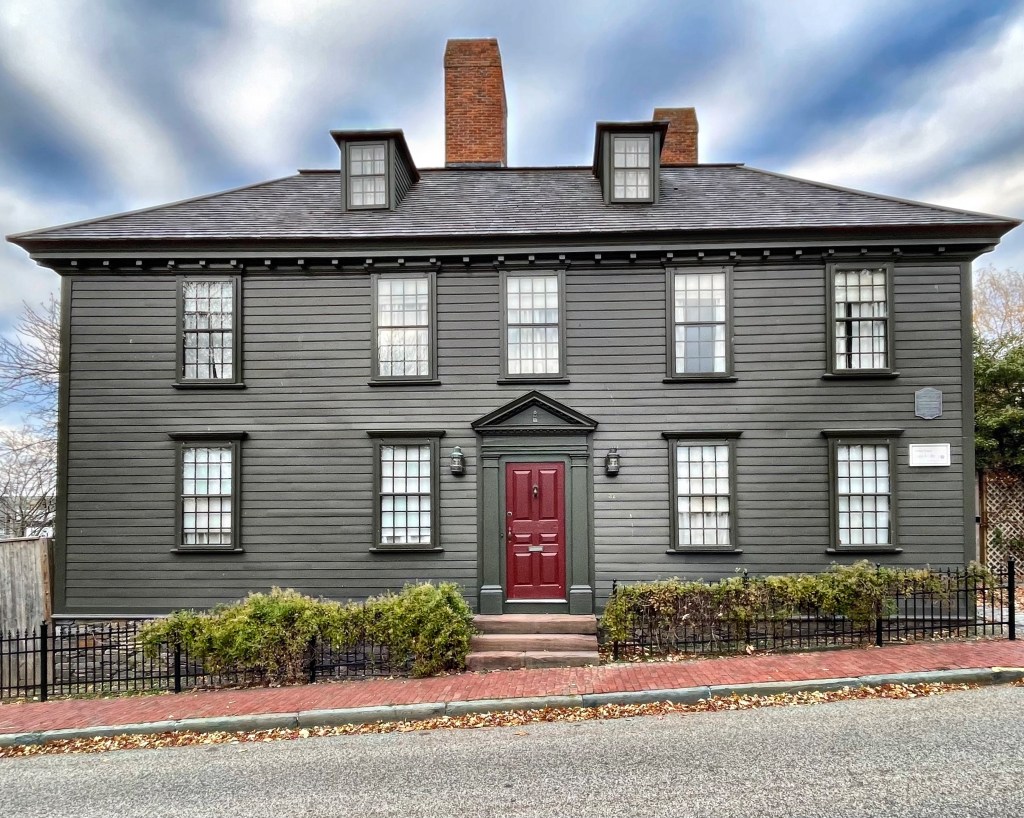
John Tillinghast House // c.1758

Built about 1758, this Georgian house in Newport was the home of John Tillinghast, a representative to the Rhode Island General Assembly in 1744 and 1749, and a wealthy merchant and ship owner. It is not unlikely to assume that Tillinghast was involved in the slave trade and transportation of goods in the Indies, like many other wealthy Rhode Island merchants at the time. During the American Revolution, General Nathanael Greene was quartered in this house. Greene was born to a Quaker family in what is now Warwick, Rhode Island, but because of his military affairs, the pacifist Quakers disowned him. After several decisive victories against the British in the Carolinas, Greene was named Commander of the Southern Army, second in command to George Washington! Also during this time, two of Greene’s aides are said to have visited him while he resided at the house. One was the Lithuanian General Thaddeus Kosciuszko, an engineer who designed fortifications along Delaware River and West Point. Another was the Inspector-General of the Continental Army, German-born Friedrich von Steuben. This house is significant and shows the international nature of the War for Independence, which saw American forces joined by French forces and German mercenaries to fight the British. In the early 19th century, the home was occupied by William C. Gibbs, Governor of Rhode Island from 1821-1824. The high-style Georgian home has been enlarged over the years, but remains one of the most significant properties in the town!
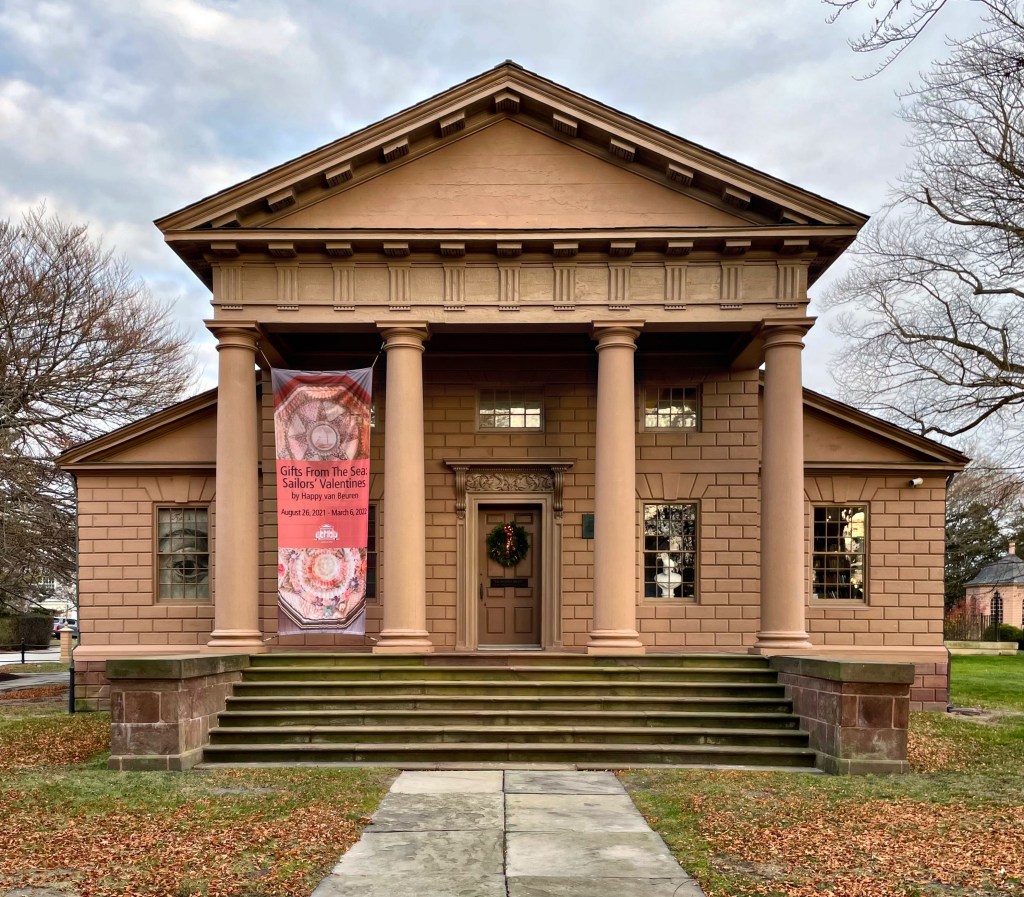
Redwood Library & Athenaeum // 1750

The Redwood Library and Athenaeum in Newport was built in 1750 and was the first purposely built library in the United States! This highly significant building is possibly the oldest neo-Classical building in the country and it was designed by British-born architect Peter Harrison, who is credited with bringing the Palladian architectural movement to the colonies. Harrison also designed the iconic Touro Synagogue in town (featured previously). The Redwood Library was established in 1747 by Abraham Redwood and 45 other wealthy residents with the goal of making written knowledge more widely available to the Newport community. The Redwood family had a large sugar plantation in Antigua. Abraham Redwood, Jr. was born in 1709 and he was active in the family sugar business from his teenage years. When his father died, the plantation – along with the over 200 enslaved people that worked it – were signed over to Abraham Redwood jr.

Rhode Island’s ties to slavery lasted much longer than other New England states. Many of the state’s wealthiest owned plantations in the Caribbean, where the conditions were comparable to that of the deep south. Once trafficked across the Atlantic arrived in the Caribbean islands, the Africans were prepared for sale. They were washed and their skin was oiled to be sold to local buyers. Often parents were separated from children, and husbands from wives. Upon his death in 1788, Redwood left his slaves in Newport and Antigua to his children and grandchildren, an inventory taken 22 years prior to his death listed 238 enslaved people in Antigua. I bring this history up because America was built on slavery, and I bet thousands walk by this architecturally beautiful building every year, with no idea about its namesake.

Cotton House // c.1720

One of the oldest houses in Newport, the Charles Cotton House stands on Church Street, and has a similar story to its neighbor, the Langley House (featured previously). The home was built around 1720 and is named for Dr. Charles Cotton who owned it in the early nineteenth century. Cotton was born in Plymouth, MA, and was a direct-descendant of ministers John and Josiah and worked as a surgeon aboard the USS Constitution during the War of 1812. From Newport Restoration Foundation: “The original structure was probably a small, single-chimney house of one-and-a-half or perhaps two stories. The house as seen today was obviously enlarged in the Georgian style in the mid-eighteenth century and received further improvements in the early nineteenth century.” The likelihood of the building’s incremental growth is evident from the two chimneys are not of the same size above the roofline, nor are they in line with each other. Had the house been built new in the later Georgian style, elements on the exterior probably would have been more symmetrical and balanced. This building, like the Langley House was moved by Newport Restoration in the 1970s to save it from the wrecking-ball. In its original place, a parking lot.

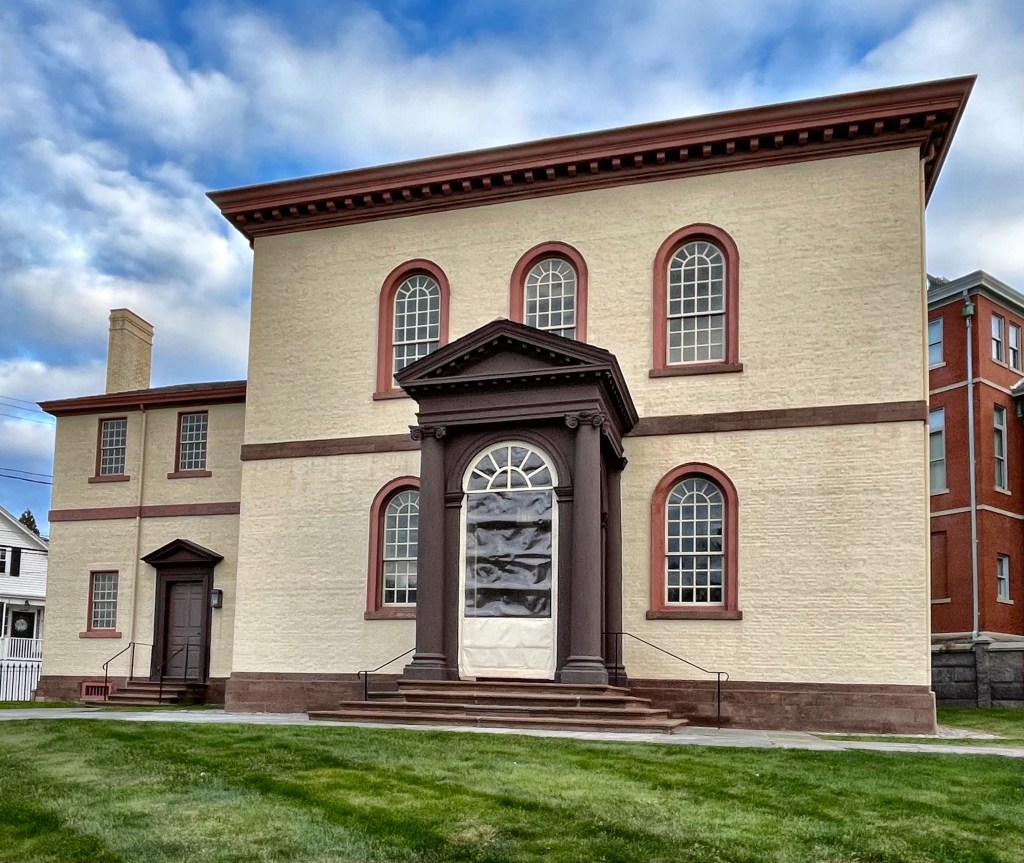
Touro Synagogue // 1763

While Newport is arguably best-known for the Newport mansions from the Gilded Age, there are soooo many amazing buildings from the Colonial era, including some of the most significant and historic in the United States. Touro Synagogue in Newport is the oldest synagogue building still standing in the United States, the only surviving synagogue building in the U.S. dating to the colonial era, and the oldest surviving Jewish synagogue building in North America (for reference, second-oldest extant synagogue in North America was built in 1833, seventy years later)! Its history begins in the 17th century when the small but growing colony of Newport received its first Jewish residents possibly as early as 1658. The earliest known Jewish settlers arrived from Barbados, where they participated in the triangular trade along with Dutch and English settlements. By 1758, the Jewish population had grown sufficiently that there was a need for a house of worship. The Congregation now known as Congregation Jeshuat Israel (Salvation of Israel) engaged Newport resident Peter Harrison to design the synagogue. Harrison, a British American merchant and sea captain, who was self-tutored in architecture, studying mostly from books and drawings. By the time he designed Touro Synagogue, he had already completed iconic buildings including Newport’s Redwood Library and King’s Chapel in Boston. Construction began on the “Jews Synagogue” in 1759, which was completed years later in 1763. The building is one of the most significant buildings in America, and is open to tours where you can see the immaculately restored interiors.

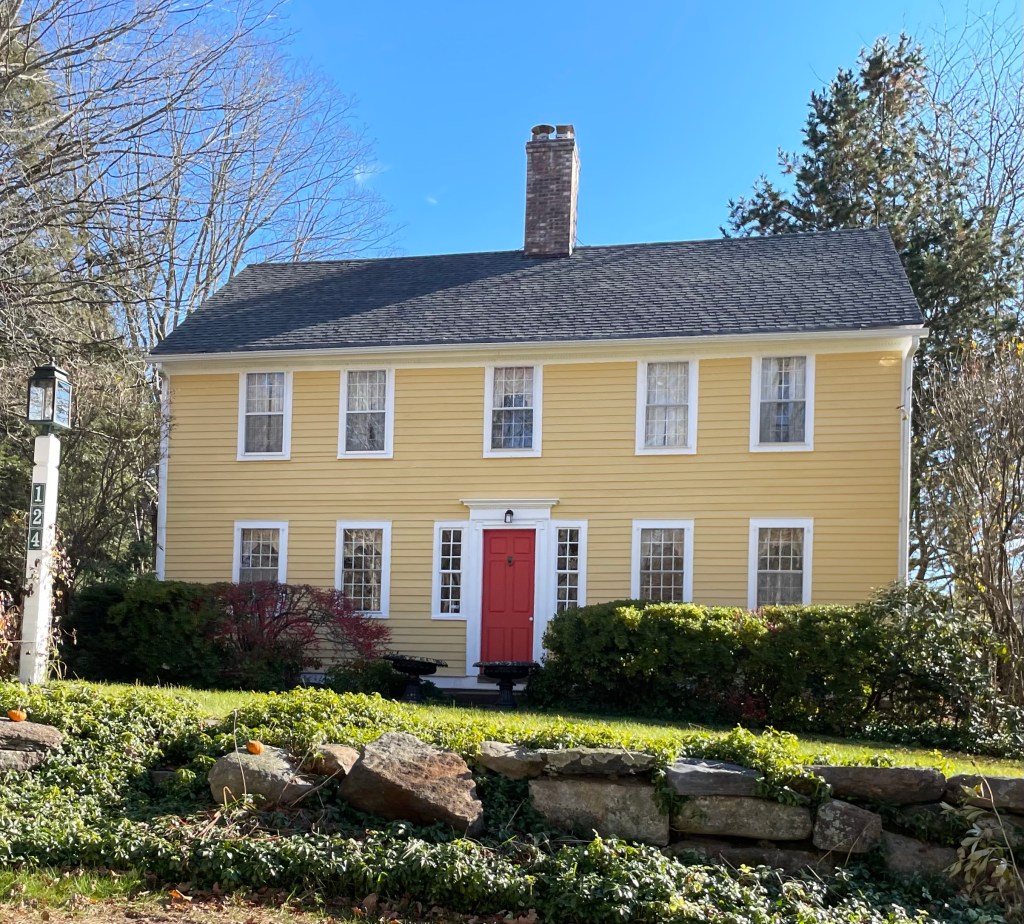
Humphrey House // 1797

So many of the late 18th century houses in Canton Center look similar to this house, making me wonder if a builder did a sort of “copy-paste” on many family homes. This late-Georgian farmhouse was built in 1797 by Loin Humphrey, seemingly in preparation of his marriage to Rhoda Case in 1798. The home features simple massing with a symmetrical facade and central chimney. Locally, it is common to see half-height sidelights flanking the front doors, which are truly beautiful.

Case Tavern // 1786

I now have a new favorite house! This STUNNING stone Georgian house with gambrel roof is located on a quiet country road in Canton, Connecticut. The house was built in 1786 by Dan Case (1761-1815), who served in the Revolutionary Army as a boy. Case operated the building as a tavern with an events/meeting hall in the third floor. Daniel later moved to Ohio, likely for more opportunity. The property is a single-family home and just looks so dang cozy. I am picturing small candles lit in the windows, with wreaths and snow dusting the lawn. Is it too early to dream about old houses dressed up for the Holidays?

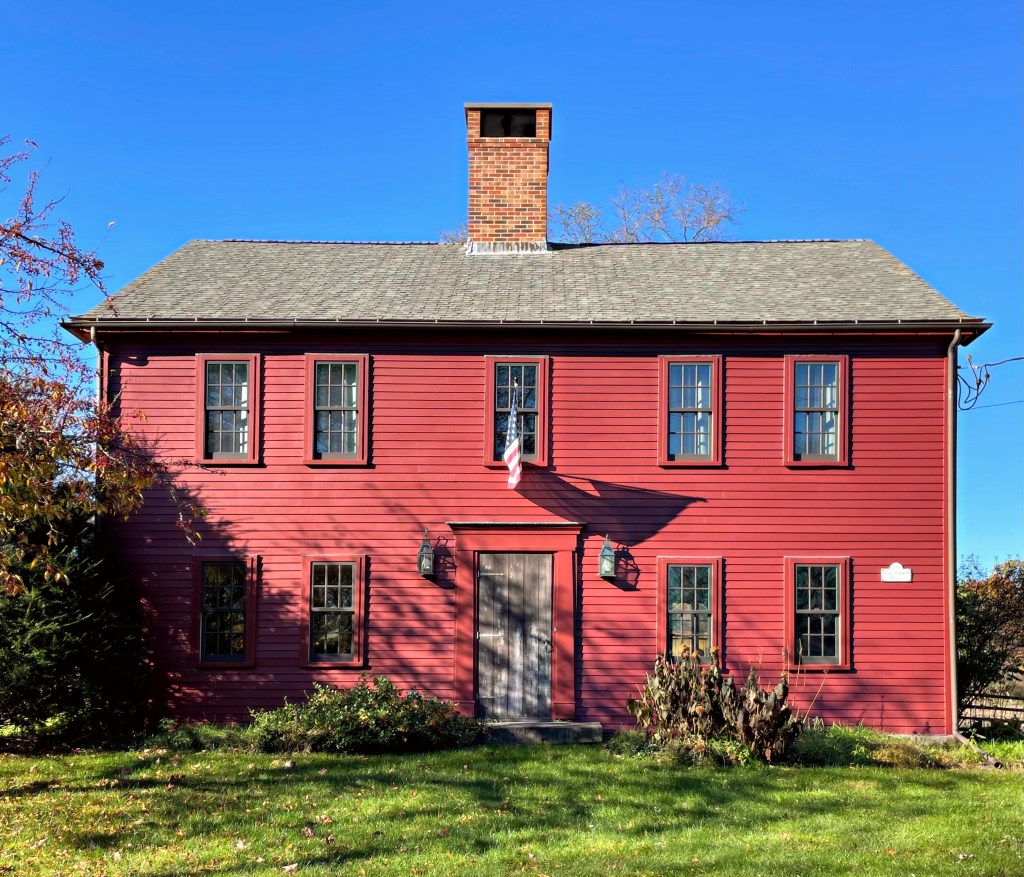
Adams House // c.1770

This old Georgian house in rural Canton, Connecticut was built before the Revolutionary War for David Adams (1742-1834). After David’s death, the home was willed to his family, and soon after became a local post office for the village, facilitated by the fact Oliver Adams became postmaster for the area. The family built an attached structure as a post office, but it was removed in the early 20th century. The post office was run out of the home by members of the family until the 1930s. Later owners restored the house and discovered that the home originally had a gambrel roof, which matched the office addition.

Jonas Whitney House // c.1803

This stunning old house in Lancaster was built in the early 19th century for Jonas Whitney (1772-1846), who acquired the land from his father, who lived across the street. The home was likely built as a wedding gift to his new bride, Mary Hawkes when they married in 1803. Jonas worked as a carpenter, and possibly built his house himself. The house is symmetrical with five bays. A classic door surround with batten door oozes charm, with the massive central chimney providing warmth throughout the house during the cold New England winters. I need this house!

Ropes Mansion // c.1727

The Ropes Mansion in Salem was constructed in 1727 for merchant Samuel Barnard, a native of Deerfield who moved to Salem and made a fortune in trade. Samuel died in 1762, and the property was willed to his nephew and brother. The property was sold in 1768 to Judge Nathaniel Ropes II. Ropes’s short tenure as an associate justice on the Superior Court of Judicature, the highest court in the colony, was marked by a significant controversy over how judges were paid. Because these royal judges were effectively at the mercy of the colonists, the British proposed paying them directly, through the already-unpopular colonial taxes. This action further outraged Massachusetts patriots, who feared that the judges would become partial to the Crown over colonial interests. Due to this significant backlash from colonists and Patriots, there was significant pressure on these judges to not accept their royal salaries, including Judge Ropes, who promised that he would not accept the royal salary. Although he had refused his royal salary, he nonetheless held Loyalist views, and his position as a high-ranking judge made him a symbol of British power in the colony. According to tradition, in March 1774 an angry mob attacked the house, throwing mud, sticks, and rocks at the windows and calling for Ropes to renounce his allegiance to the Crown. However, at the time Nathaniel was in his bed, gravely ill with smallpox, and he died the following day, with the stress from the mob supposedly being a contributing factor in his death at just 47 years old. With the death of the last two unmarried Ropes sisters, Mary and Eliza, the house and grounds were bequeathed to the Essex Institute (now the PEM) by 1907 for the purpose of establishing a school of botany, as a perpetual memorial to the Ropes family. The stunning public gardens there were laid out in 1912 John Robinson.

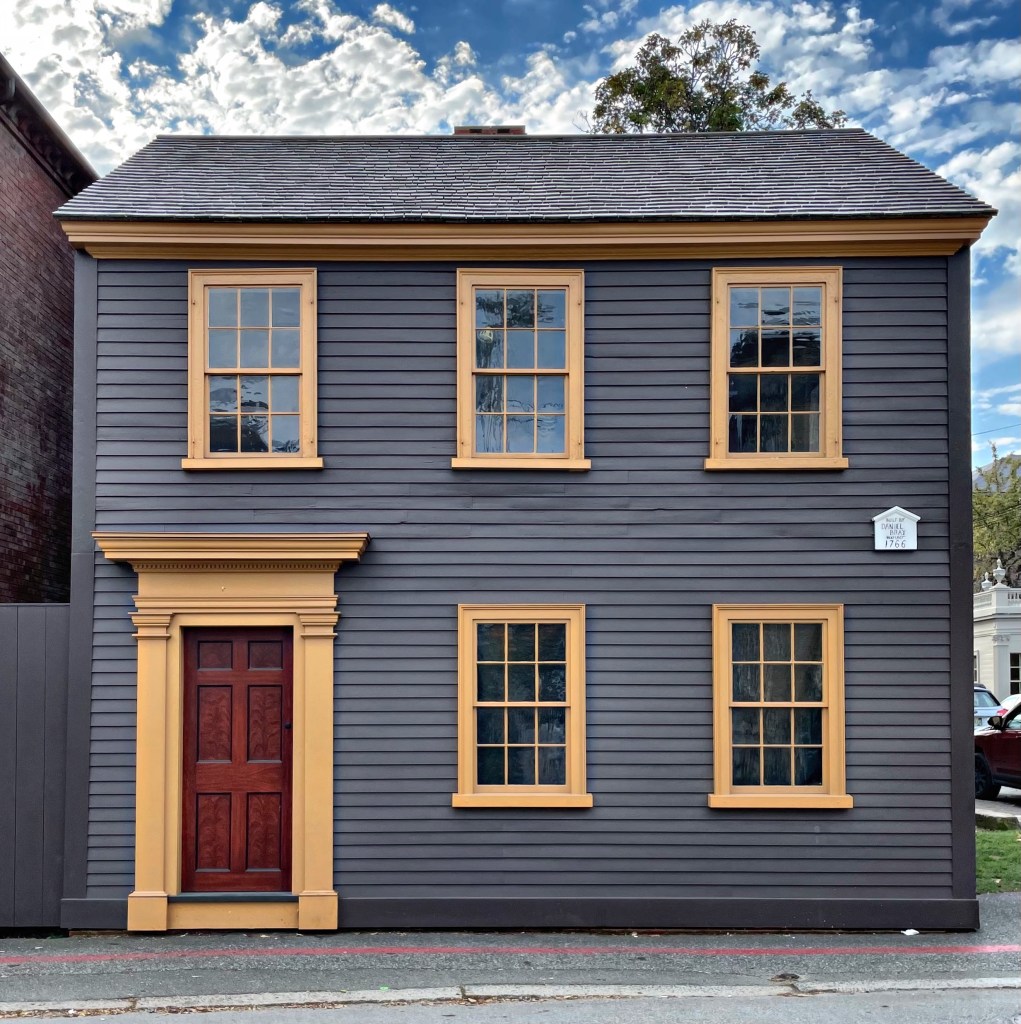
Daniel Bray House // 1766

Here is a preservation success story for you all! The Daniel Bray House in Salem, MA was built around 1766 as a two-and-a-half story wood-frame vernacular house with side-gable roof. Captain Daniel Bray, a master mariner, was born in 1735 in Salem, eventually marrying Mary Ingalls in 1760, and six years later the couple built this house for their growing family, on his family’s land, which he later purchased in 1770. Bray’s work as a master mariner gained him connections in town, especially since he sailed as captain on several vessels owned by merchant John Derby. After retiring from the sea, Bray managed Derby Wharf in Salem until his death in 1798. The home was willed to Daniel’s son, Daniel Jr., who was also a master mariner. By the early 1900s, the home was converted to commercial use, as a grocery and later as a candy store. The home was given storefront windows to showcase the goods inside. The home was eventually purchased by the Peabody Essex Museum in the 1980s. They undertook a massive restoration of the home using forensic study and research and skilled restoration carpenters and masons.