Austin Biscuit Company Building // 1906

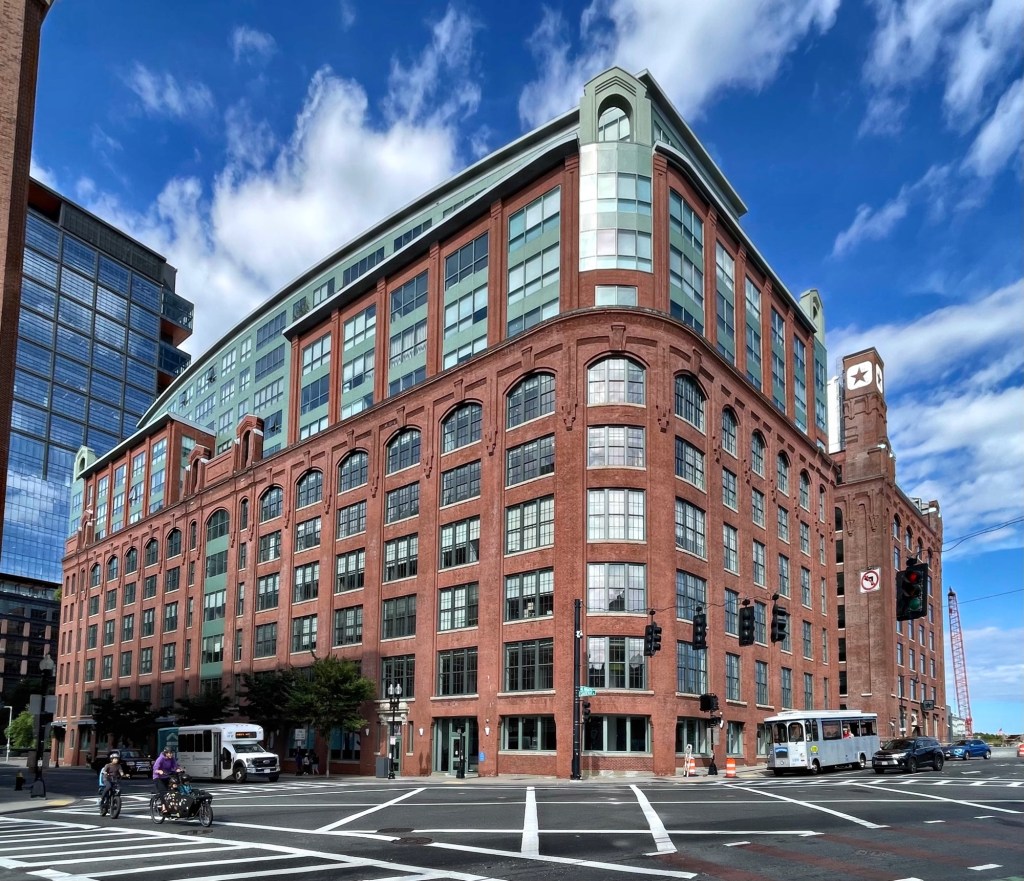
Originally constructed in 1906 for the Austin Biscuit Company, this building on Causeway Street serves as both a gateway into Boston from the north and as an excellent example of adaptive reuse with thoughtful additions. The massive structure, which was originally two separate but connected buildings are a significant example of the panel brick construction with Romanesque detailing. Part-owner of the site, Edmund Dwight Codman hired  his brother, architect Stephen Russell Hurd Codman (1867-1944) and business partner Constant-Desire Despradelle (1862-1912) to design the building which was immediately rented out to the Austin Biscuit Company and the American Glue Company. When opened, the Boston Daily Globe wrote that it was “…a large new building of a thousand windows, a building which on fine days is flooded with sunshine and good air”. By the late 1900s, the building was altered and suffering from deferred maintenance, with an unknown fate. Luckily by 2001, the local architectural firm of Finegold Alexander, was hired to re-envision the building. They converted the two connected buildings into a unified mixed-use residential condominium and retail/office complex. The adaptive reuse of this building provided for 108 dwelling units in the top six floors (in the addition), offices on floors two through six, retail space on the first floor and garage parking in the basement. This is one of my favorite success stories in Boston architecture and historic preservation!
William Lloyd Garrison School // 1910

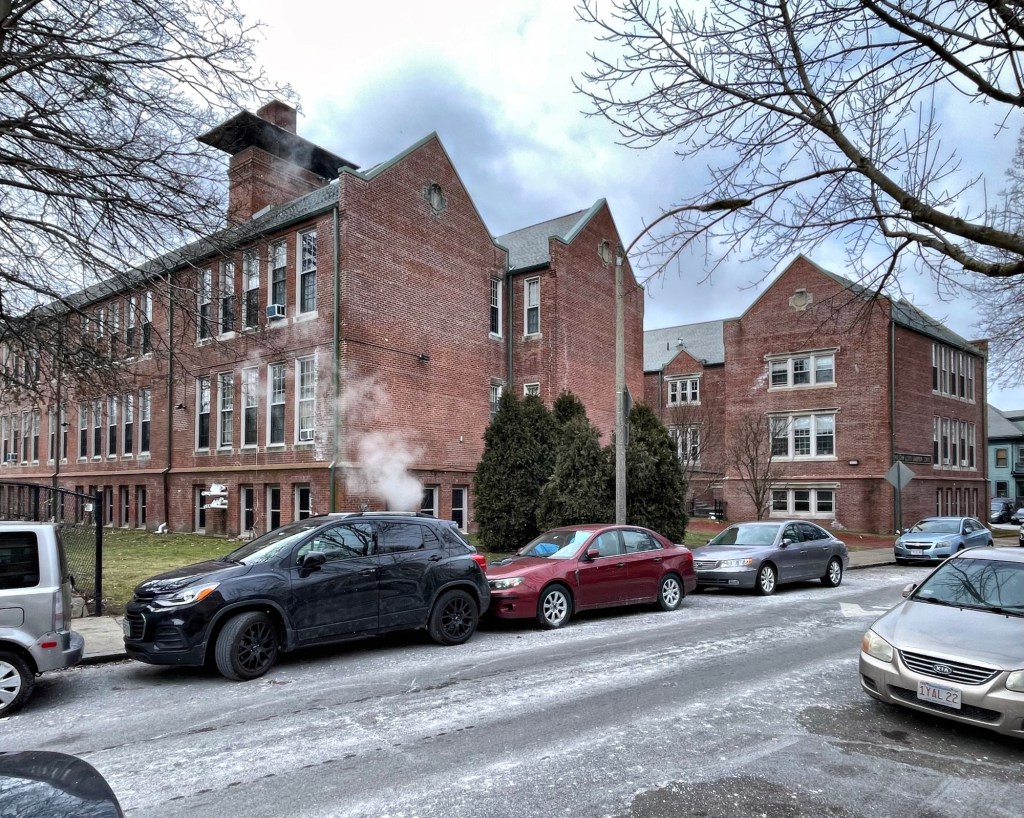
Tucked away in a residential neighborhood, the William Lloyd Garrison School in Roxbury’s Washington Park neighborhood is among one of the more successful school building designs of the early 20th century. Built in four stages between 1910 and 1929 to service a growing neighborhood over time, the school is named for abolitionist William Lloyd Garrison, who formerly lived in a home relatively closeby. The school complex consists of several different sections organized around a central courtyard and joined by passageways, all designed by the extremely underrated architectural firm of Newhall & Blevins in the Tudor style. Following the period of Urban Renewal in the neighborhood, the school district built contemporary schools and deaccessioned older schools. Today, the former William Lloyd Garrison School houses apartments.

Dorchester Mutual Fire Insurance Building // 1860

This is your sign to take a different route! When exploring a new town or neighborhood, I love to explore the obscure streets just as much as the iconic Main Streets as hidden treasures can always be found! This building in Dorchester’s Port Norfolk neighborhood was constructed in 1860 as the new home of the Dorchester Mutual Fire Insurance Company, which was incorporated in 1855. The company seemingly hired Dorchester-based architect Luther Briggs, who also laid out the streets for Port Norfolk and the Clam Point neighborhoods and designed many buildings in the area at the time. The high-style Italianate building features bold proportions, quoins, and cornice. While the former round-arched windows have since been enclosed and are traditional double-hung windows, they building still stands out! At the rear, Second Empire style rowhouses were built for private ownership. The building is now all condominiums following a renovation.

Parker-Hoogs-Baury House // c.1755

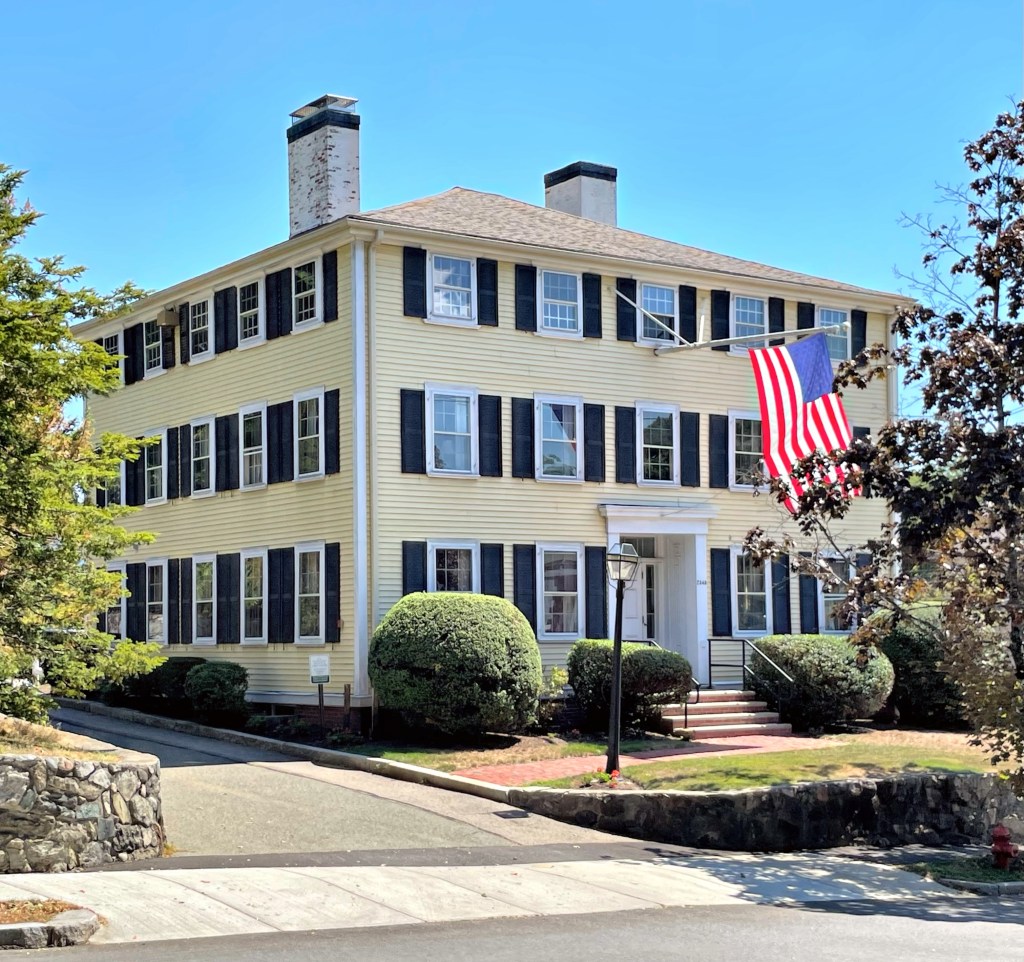
Thought to be the oldest extant house in Newton Lower Falls, this historic mansion has seen a lot of change over its nearly 300 years in the village. The house believed to have been built around 1755 by John Parker (1687-1761) for his son Ezra (b. 1731) after his marriage. William Hoogs, a ship carpenter from Boston, took ownership of the house in 1781 from his father-in-law (and boss), Aster Stoddard, who had bought it from the Parker family. William Hoogs was a sole-owner of a paper mill in the village and made a good name for himself. The house was likely modified during this period in the Federal style, with a third floor added. The home was possibly passed to his son, also William, who was written about in papers as fleeing town to Canada with the family maid, who was late in her pregnancy and their two-year-old child together. Hoogs had debtors looking for him. Hoogs had a change of heart and sent for his eight children to live with him in Quebec that same year. Sadly, the ship bringing them up sunk on Lake Champlain and all perished. By 1813, the property was purchased by Samuel Brown of Boston, a wealthy merchant who was a strong financial supporter of Saint Mary’s Church. By 1825, he officially bequeathed the property to Dr. Alfred Louis Baury (1764-1865) rector of Saint Mary’s Church. By 1917, the Lucy Jackson Chapter of the Daughters of the American Revolution operated it as a chapter house and a museum for antiques. In 1971, the Newton Redevelopment Authority bought the property and sold it to a developer for conversion into office space, it was rotated 90 degrees to face Concord Street at this time.

Chickering and Sons Piano Factory // 1853

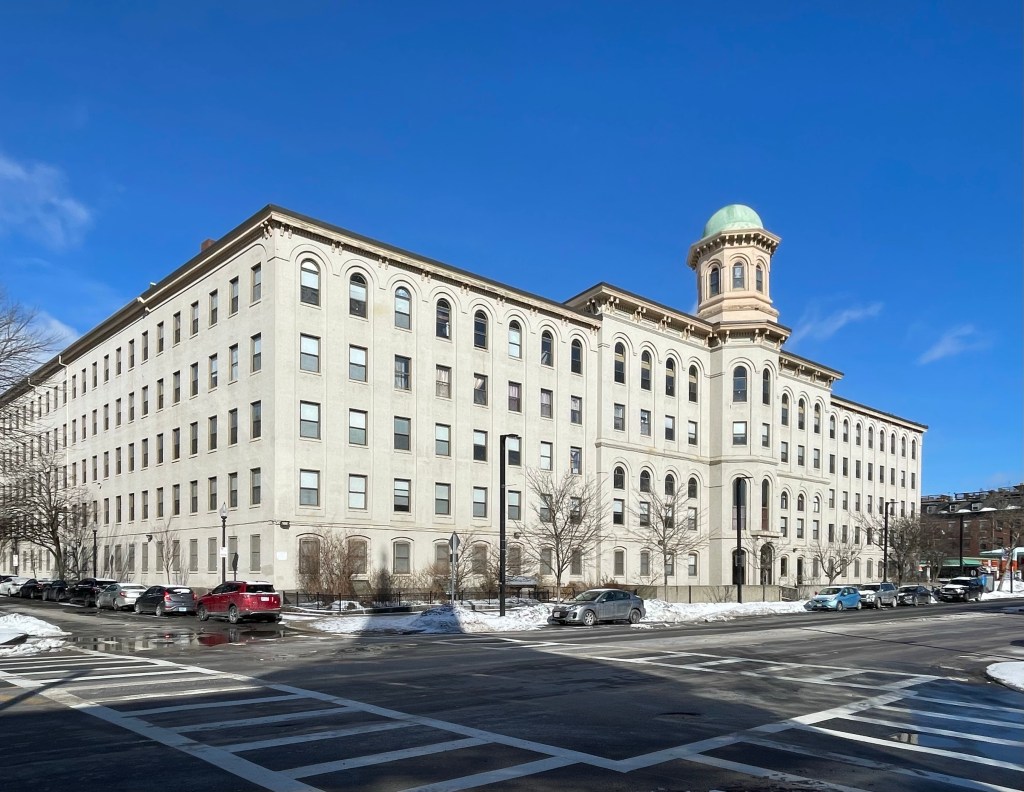
Jonas Chickering (1798-1853) was born in New Hampshire and eventually moved to Boston to work as a cabinet-maker. In 1823, Chickering formed a partnership with piano maker James Stewart and they began production of high-quality pianos. The partnership dissolved and Jonas partnered with wealthy shipbuilder and merchant John Mackay, using his factory for piano and organ production. John Mackay was lost at sea in 1841, and Chickering mortgaged the factory and bought out the Mackay’s shares, taking full ownership of the operation. In 1852, the factory burned, and was a complete loss. Undeterred, Chickering rebuilt, but in the rapidly developing South End neighborhood of Boston, hiring Edwin Payson to design a massive new steam-powered factory of fireproof construction. Jonas Chickering died before he could see the completion of his new factory, which opened in 1853 to great fanfare. The Italianate style building was bustling with over 400 employees when Chickering & Co. was the largest piano manufacturer in the United States in the middle of the 19th century, but was later surpassed in the 1860s by Steinway. From 1860-1868 space in the building was the location of the Spencer Repeating Rifle Company, who made over 100,000 rifles for the U.S. Army around the time of the Civil War. The Chickering and Sons Company moved out of the building by 1928 and the structure was occupied until 1973-4; when the building was rehabilitated by Brunner/Cott and Associates and subdivided into apartments and work and exhibit spaces for musicians, artists, and craftsmen, making this one of the earliest examples of adaptive reuse of an industrial building in Boston.