Spouting Rock Cottage // 1887

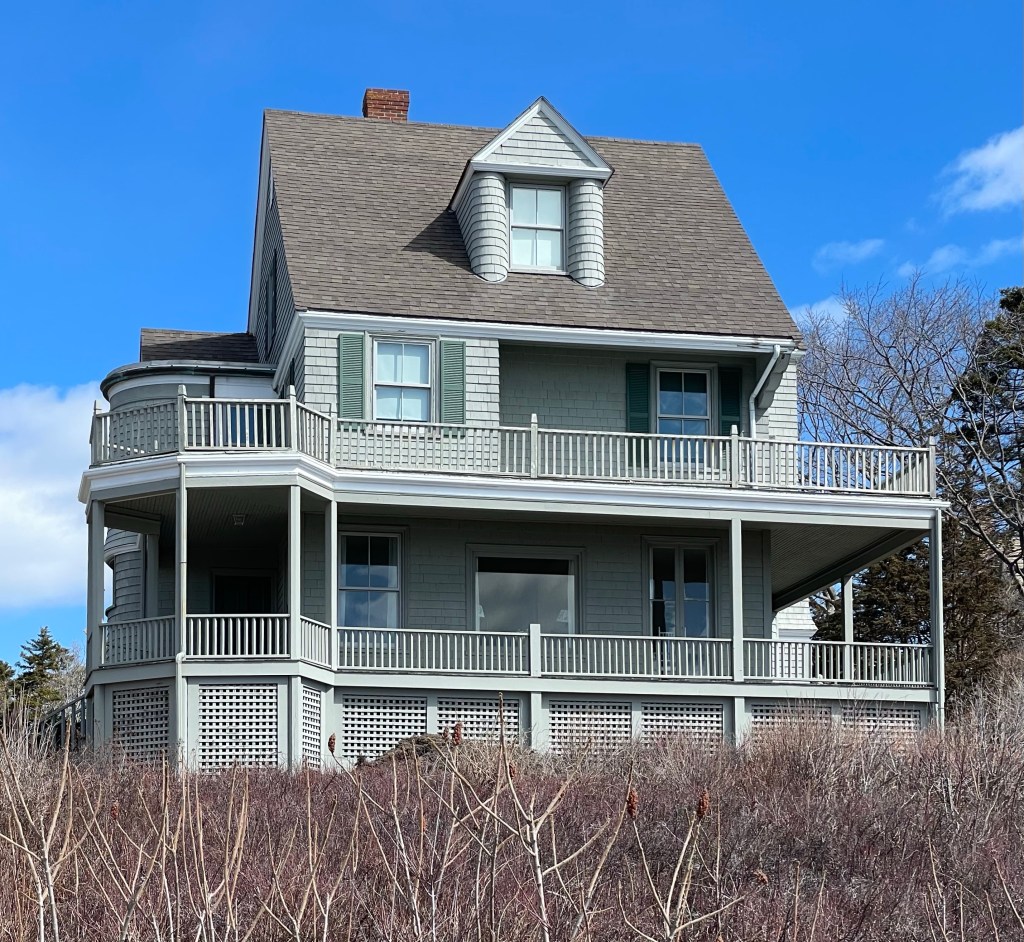
Another of the earlier summer cottages built in Kennebunkport’s Cape Arundel summer colony is this charming dwelling perched on a stone outcropping overlooking the rocky coast of Maine. Spouting Rock Cottage was built in 1887 as a transitional Shingle style and Queen Anne summer home for author John Townsend Trowbridge of Arlington, Massachusetts. Trowbridge spent many summers in Kennebunkport and was engaged in local cultural affairs, he even named Spouting Rock and Blowing Cave, natural features in the town. For his summer cottage, Trowbridge hired Arlington-based architect J. Merrill Brown, who provided a rustic, timeless design without all the unnecessary frills and details for the rugged coastline. That is to say that the cottage is anything but boring, with its sweeping porches, complex form with rounded stair-tower, and dormer with curved shingle returns. Perfection.

Gable and Tower Cottages // 1889

These two similar houses in the Cape Arundel Summer Colony in Kennebunkport, Maine, were built in 1889 for Prosper Louis Senat (1852–1925) and his wife Clementine. Prosper was a well-known artist from Philadelphia, who would summer in Kennebunkport and traveled the world with Clementine, painting landscapes and seascapes. Senat and his wife lived in one cottage and likely rented the other to family and friends when visiting town. His studio was built on a nearby street and is extant. Tower cottage (greenish-grey) was renamed Shady Oak Cottage in the 20th century. Both cottages were built by George Gooch, a local contractor from plans by an unknown architect and feature bay windows, short towers, smaller windows, and continuous shingle siding.

“The Dory” Cottage // 1888

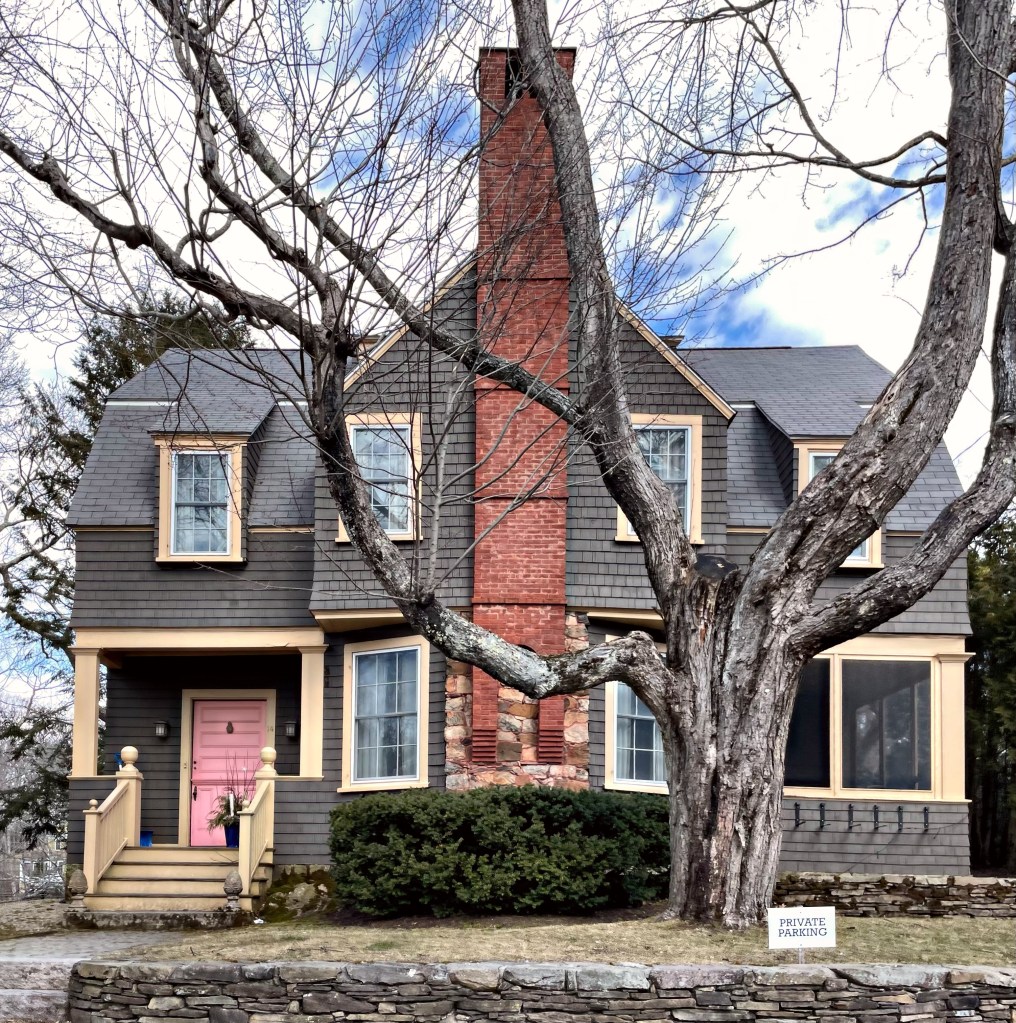
Before Miss Gerrard purchased the Glen Cottage (last post) in 1900 in Kennebunkport, Maine, she had already summered in her own summer cottage nextdoor for over a decade. In 1888, she hired an architect from New Jersey to furnish plans for this charming shingle and stone cottage as her summer retreat. The cottage features a prominent brick and rubble stone chimney facing the street with a gambrel roof. The entrance is tucked away under a recessed porch and looks to be the original dutch-door. I can’t imagine how amazing summers in this house would be!

Glen Cottage // c.1850

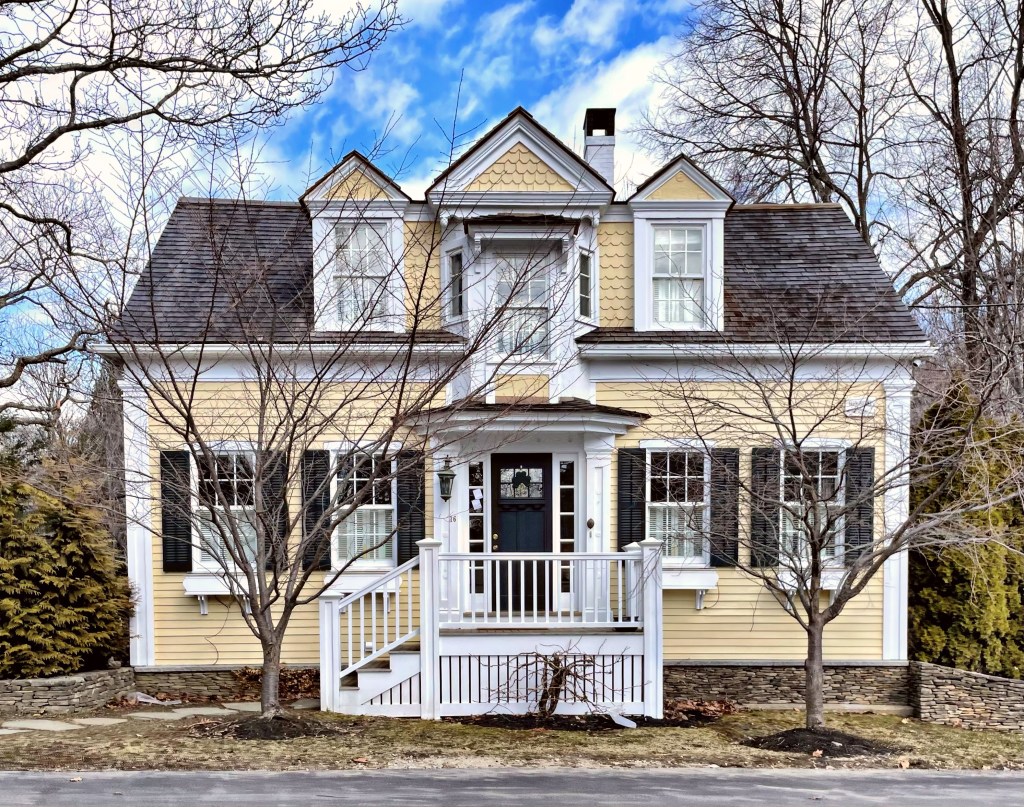
Not all of Kennebunkport’s summer “cottages” are grand, Shingle style mansions… Glen Cottage was originally built in c.1850 as a Greek Revival style cape house. As the town developed into a desirable summer colony for wealthy residents of Boston, New York and Philadelphia, the small cottage caught the eye of a Ms. Garrard. Margaret Garrard purchased Glen Cottage in 1900 and hired Maine architect William Barry to transform the old cape, adding the dormers, octagonal bay, and door hood. Here, she ran the Bonnie Brig Tearoom for twenty years. Tea houses were important social centers for wealthy summer residents Later owners renamed the tea house, “The Old Tree Tea Tavern” and “Periwinkle” but in 1926, the name reverted to The Bonnie Brig Tearoom. Today, the cottage has reverted back to residential use with the owners lovingly maintaining the old cape.

Nesmith-Kent Cottage // 1891

One of the most iconic summer “cottages” in Kennebunkport’s late 19th-early 20th century summer colony is the Nesmith-Kent Cottage, located next door to the often photographed St. Ann’s-by-the-Sea summer chapel. The cottage was built for Julia and Mary Nesmith, the daughters of John Nesmith a wealthy industrialist and textile manufacturer from Lowell MA. The sisters named the cottage “The Pebbles”, and spent their first night there on July 24, 1891. The half-timbered shingled house stood at the edge of the ocean near a former War of 1812 fortification. The sisters sold the property in 1910 to Arthur Atwater Kent, prominent radio manufacturer based in Philadelphia, who invented the modern form of the automobile ignition coil. Kent renovated the cottage extensively, increasing its size, and renamed “The Pebbles”, “At Water’s Edge” in a cheeky play on his last name. In 1919, he expanded again, purchasing a lot adjacent to his mansion which was the old fort constructed to protect the ships moored in the harbor during the War of 1812. In early 1919, workmen uncovered a few bones of what was calculated to be a seven-foot-tall man and two skulls of white men that had clearly met their end at the hands of Native people; one pierced by an arrow and the other scalped. The Kennebunkport Historical Society has one of these skulls in their collections. Today, the Nesmith-Kent Cottage is owned by the St. Ann’s-by-the-Sea congregation as their rectory.

The Dome Home // 2003

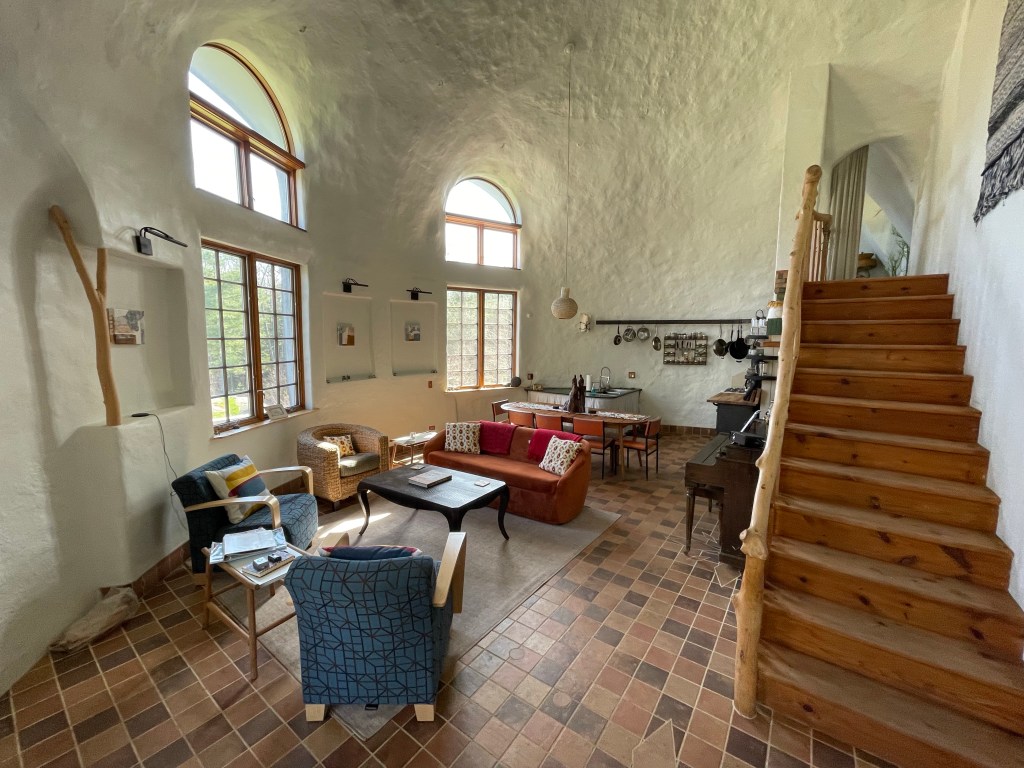
This past weekend, I was lucky enough to stay at one of the most unique Airbnb’s in New England, the Dome Home in idyllic Kennebunkport, Maine! The house itself was hand-built in 2003 by trained architect and sculptor Daphne Pulsifer with her husband Daniel Bates, on 43-acres of forest just miles from the iconic Maine beaches. Inside, the house features numerous custom touches designed and built by the original owners, including light fixtures, floor tiling, hand-built oak doors, wall tiling, woodwork — much of it claimed from the property itself. The Dome Home is completely sustainable with solar panels providing all the power needed, making the property completely off-the-grid. The original owners sold the property in 2022 to the new owners who have lovingly updated the spaces, keeping the charm and unique qualities of the Dome. If you are ever in Kennebunkport and are looking for a unique, off-the-grid stay with all of the amenities of modern living, definitely check out the Dome!

Waterbury Dam // 1938

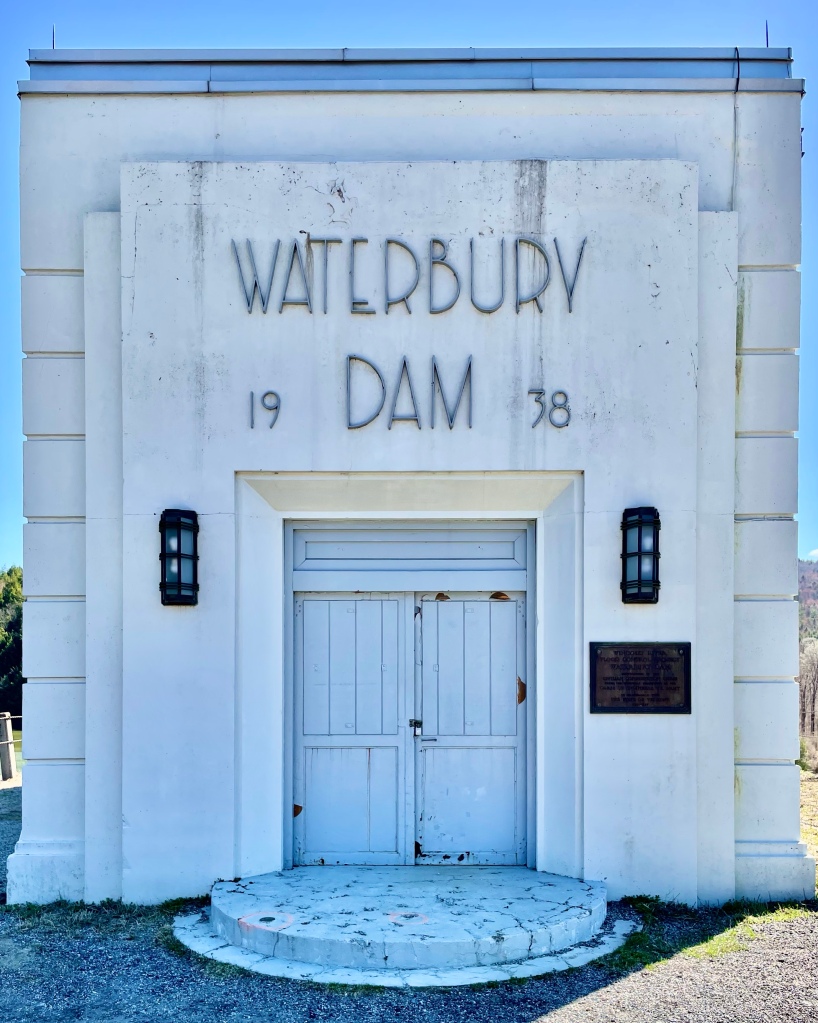
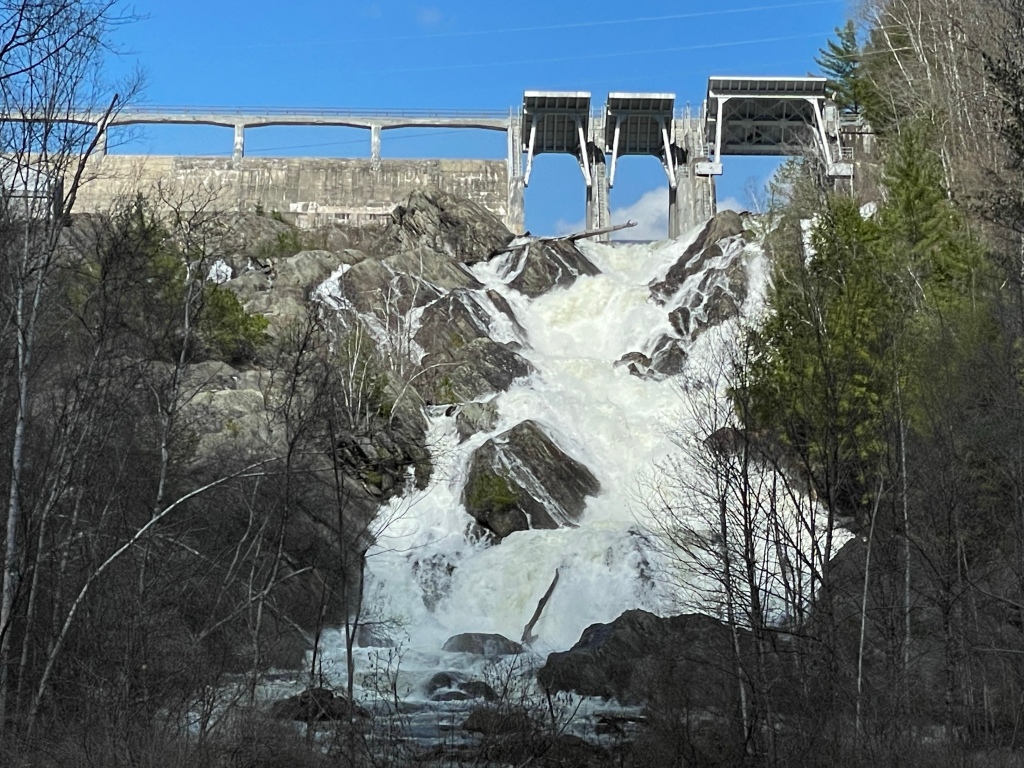
In November of 1927, a disastrous storm hit the State of Vermont. Severe flooding in the Winooski River Basin area resulted in the loss 55 lives and damages totaling over $22 Million. A Corps of Engineers study was initiated soon thereafter to investigate “the improvement of the Winooski River for the purposes of navigation in combination with the development of waterpower… and the control of floods.” The report presented a comprehensive plan for flood control and power development, consisting of: the construction of seven reservoirs; the installation of seven new hydropower plants, and the enlargement or improvement of 12 existing plants. Construction of the Waterbury Dam and Reservoir began in 1935 and was completed in 1938. The dam and reservoir were designed and built by the Corps of Engineers using contract services and Civilian Conservation Corps (CCC) labor, all thanks to the New Deal legislation enacted by President Franklin D. Roosevelt. The gatehouse at the top of the dam’s embankment is a rare example of Art Deco architecture in the state of Vermont and was completed in 1938 as the last piece of the project. The building and dam remain today as part of the Little River State Park and are a great example of Engineering History and a look into human intervention in the natural landscape.

Almeron Goodell Farmhouse // 1863

The Little River area of Waterbury, Vermont, was a very sparsely developed area of farms located on the slope of Ricker Mountain, which was difficult to traverse and farm. Almeron Goodell (1834-1910) and his wife Luthera bought farmland here in 1863 and built this farmhouse that year from rough-hewn timbers on the land. In 1870, the couple and their seven-year-old son, Bert, had four cows, one horse, and a flock of chickens on their property – enough to supply the family’s needs. Life on Ricker Mountain was hard. By the late 1800s, the loss of soil fertility on the land prompted some farmers to abandon the hillsides for more fertile land in the valleys nearby or the free land offered in the American West. Additionally, the Green Mountain Power Company began purchasing farmland to erect a hydroelectric dam and reservoir in 1920, effectively abandoning the area. The Little River area was left behind, with abandoned farms, family cemeteries, and carriage roads, slowly returning back to the earth. Luckily for us, the area is preserved as part of the Little River State Park, where you can hike and explore the area, learning about the past inhabitants of the now ghost village. The Goodell Farmhouse is the only extant farmhouse left from this early settlement and a lasting reminder of how hard life was for many who settled in undeveloped land in New England. The farmhouse was used as a hunting lodge in the 1940s, likely the only reason it still stands to this day.

Former Green Mountain Seminary // 1869

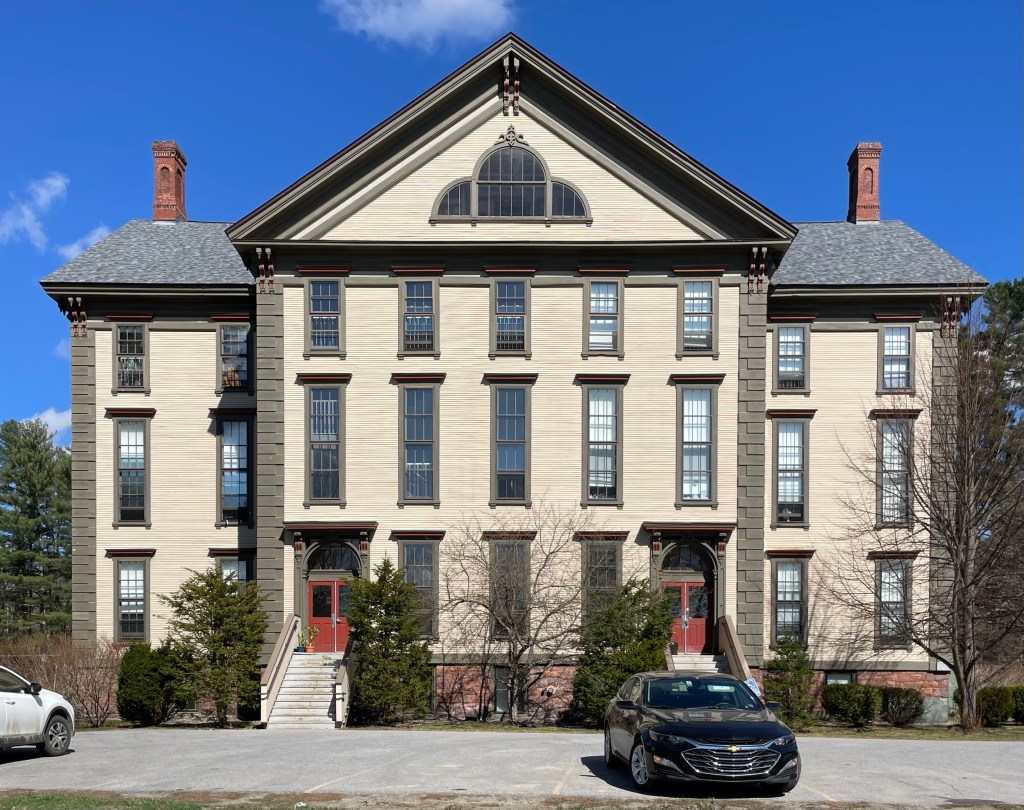
The Green Mountain Seminary building in Waterbury Center, Vermont was built in 1869 as a co-educational Free Will Baptist school. The building is one of the largest and grand examples of Italianate architecture in this part of the state. As originally laid out, the lower two floors were used for educational purposes and included a chapel, while the third floor and attic level were used for men’s housing. Here, men would be trained to be Baptist priests. Upon opening, a catalogue expressed the building’s rural location in the town as a benefit, stating “It is removed from the bustle and distraction of large commercial villages; is free from the haunts of vice and dissipation or temptation to idleness; and is surrounded by natural scenery unsurpassed in its magnificence and grandeur.” The building went through a variety of educational and boarding uses until 1895, when it was deeded to the town for use as a public school building. The building is nearly unchanged as when it was built in 1869, besides the removal of the rooftop belvedere and walkway in the 1940s.

Waterbury Railroad Depot // 1875

Historic train stations are among some of my favorite types of buildings as they transport you to a different time (no pun intended). The Waterbury Railroad Depot was built in 1875 by the Central Vermont Railroad, connecting Montreal, Quebec with New London, CT and to other lines to Boston and Albany on the way. Waterbury service began in 1849, but this updated station was built later as the railway prospered and expanded. The station suffered from some deferred maintenance for decades in the mid-20th century and its fate (like many such stations) was unknown. Beginning in the late 1990s into the 2000s, Revitalizing Waterbury worked with the Great American Station Foundation, the Vermont Agency of Transportation, and Green Mountain Coffee Roasters Foundation, establishing a capital fundraising campaign meeting the goal of $1,200,000 through donations from the private sector and community members. These funds helped restore the building in phases, beginning when Keurig Green Mountain, Inc. agreed to lease the station from Revitalizing Waterbury, and created a visitor center and cafe (now Black Cap Coffee and Bakery) that has become a first-class attraction and provided an economic boost to the downtown.