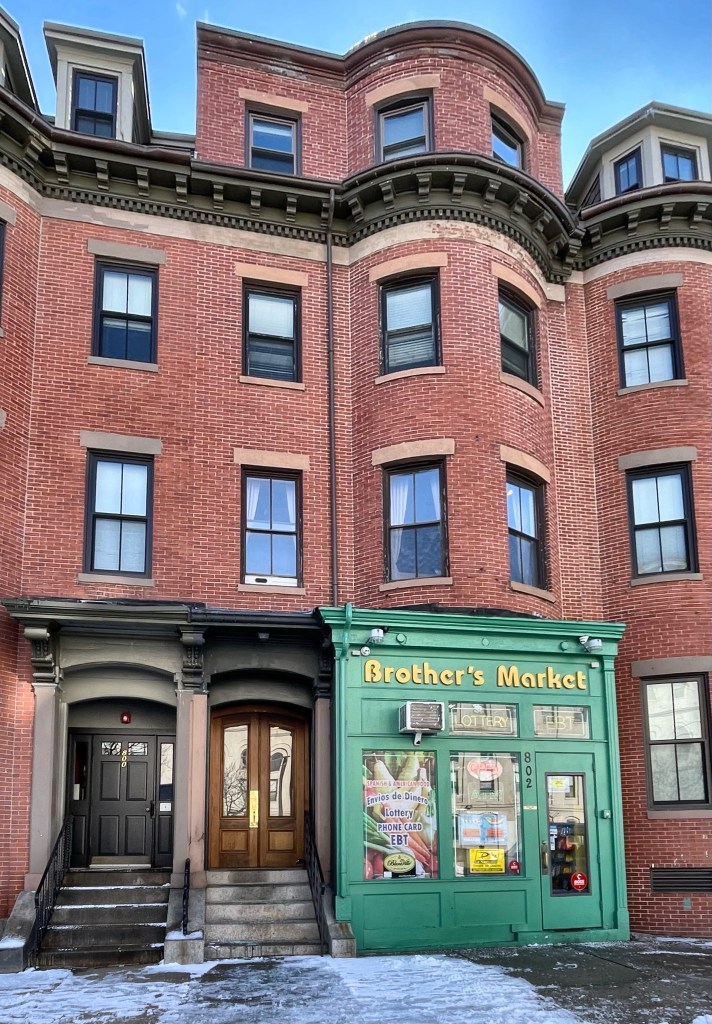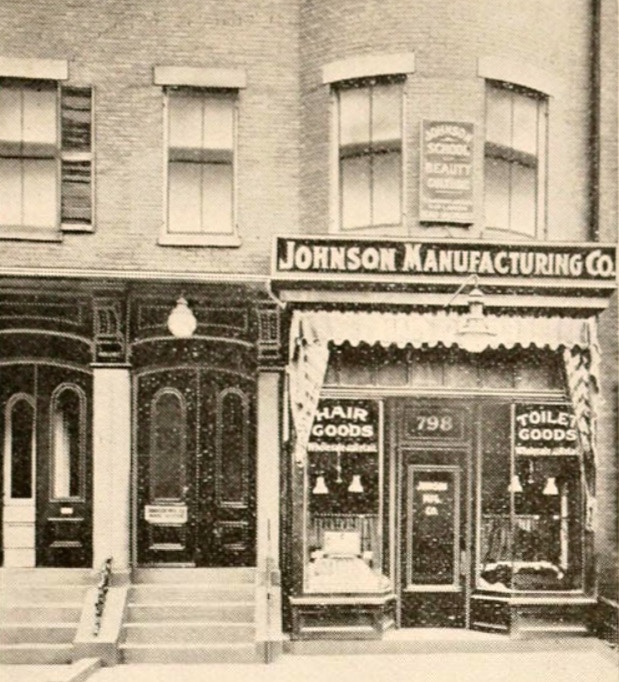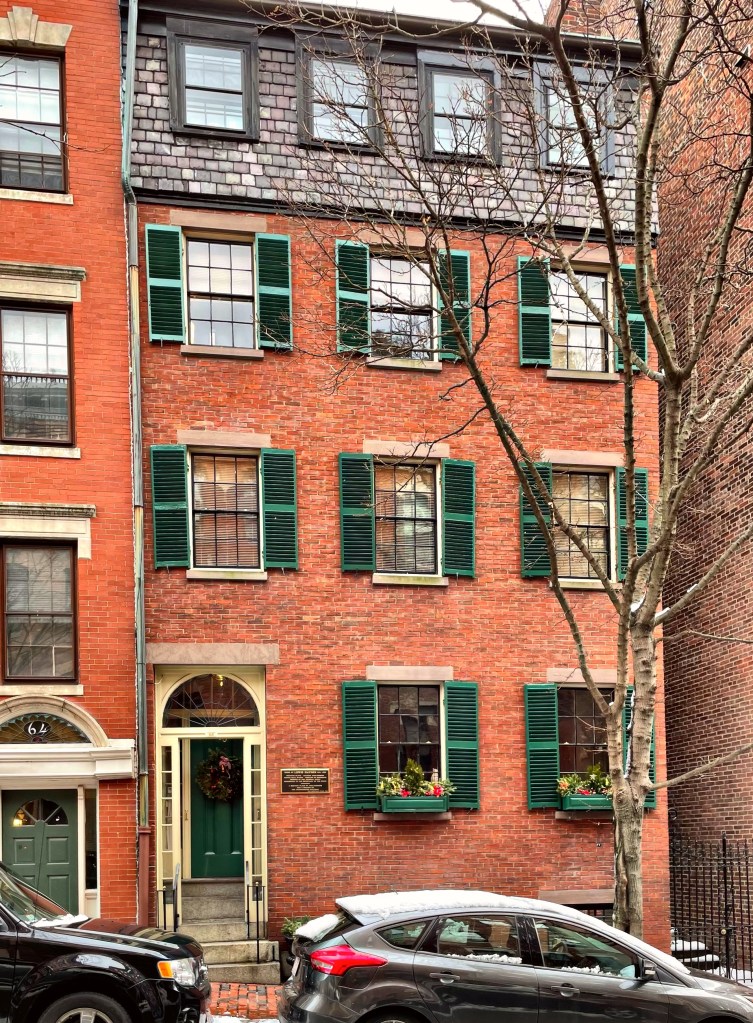
Johnson’s School of Beauty Culture // c.1865

Boston’s South End neighborhood has so much history that NEEDS to be showcased. From the repetitive architecture of beautiful brick and stone bowfronts, to the history of African American activism, enterprise, and stories, the neighborhood is a gem of Boston. This building was constructed around 1865 for Thomas H. Snow (1833-1908) as his home. Snow was a wine and spirit merchant who had a store in Faneuil Hall Square. While that is interesting, Mr. Snow is not the highlight of this building, that comes later in 1899, when the building was rented to Madame Mary L. Johnson, a wig maker, scientific scalp specialist, and hair culturist. Mary Johnson and her husband, Dr. W. Alexander Johnson, were Black and ran one of just 200 Black-owned businesses in the city of Boston by the beginning of the 20th century. At their storefront, they sold hair goods at Johnson’s Hair Store. Sold all over the United States since 1900, their famous “Johnson Hair Food” was “the most scientific pomade yet discovered for growing, beautifying and softening the hair,” they claimed. In connection with their hair product outfit, Madame Johnson operated Johnson’s School of Beauty Culture, where a variety of services including manicuring, shampooing, scalp massage, facial massage, hairdressing, and scalp treatment were offered. The school provided young Black women in Boston technical training and skills, which there were limited options at the time. Mr. Johnson also was President of the Boston Negro Business League, which helped bolster Black businesses at the turn of the century.

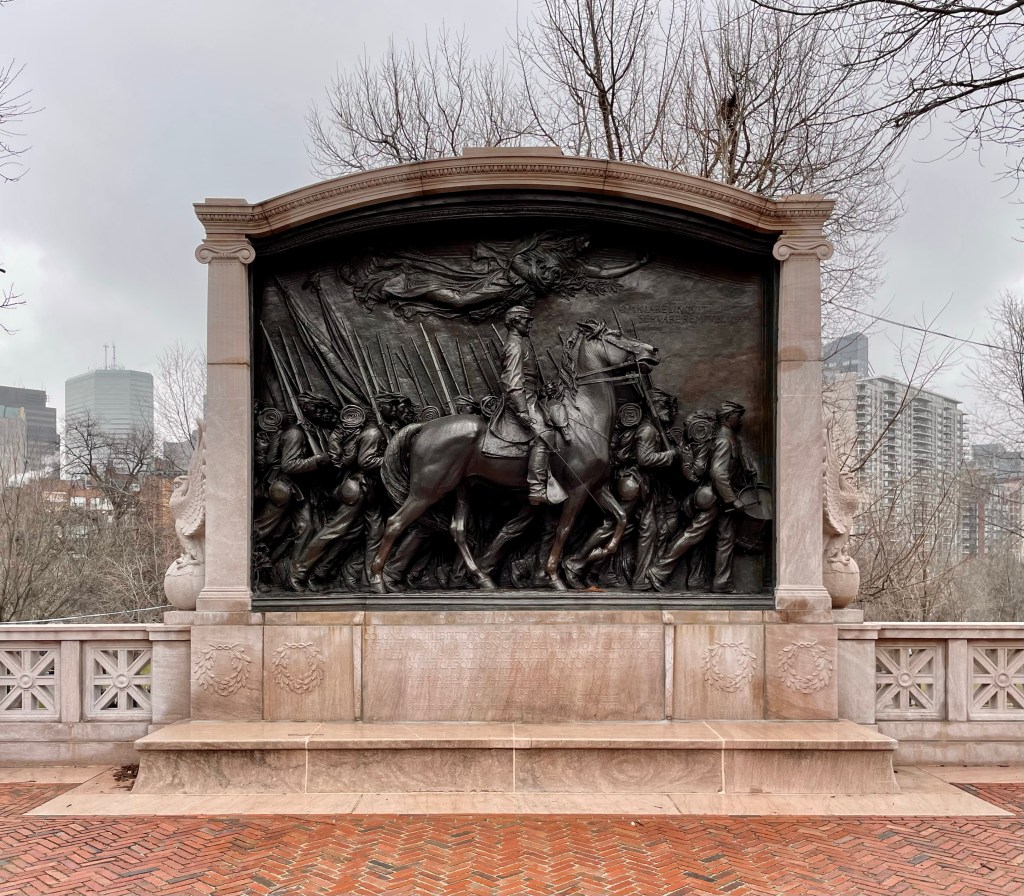
Robert Gould Shaw Memorial // 1897

Commissioned from the celebrated American sculptor Augustus Saint-Gaudens in the early 1880s and dedicated in 1897, The Shaw 54th Regiment Memorial (aka the Robert Gould Shaw Memorial) has been acclaimed as the greatest American sculpture of the 19th century. The memorial was designed by famed artist Augustus Saint-Gaudens, and it is a stop on the Boston Black Heritage Trail, commemorating the valiant efforts of Colonel Robert Gould Shaw and the men of the 54th Massachusetts, one of the first Civil War regiments of African Americans enlisted in the North. In July 1863, the regiment was sent to South Carolina where an assault was planned on Fort Wagner guarding Charleston harbor. Shaw had asked to have 54th Regiment lead the attack. Of the 600 men in the attack that day, there were 285 casualties, and Col. Shaw was killed, but the men never wavered in the battle and demonstrated great courage and determination. Following this display of valor, other black regiments were formed, and by the end of the war, 10% of the union army was made up of African American soldiers.

The monument in Boston shows the 25-year-old Shaw seated on his horse, with his regiment as it marched down Beacon Street on May 28, 1863 to depart the city to fight in the South. The concept of Shaw on horseback with marching soldiers was inspired, at least in part, from a painting Saint-Gaudens saw in France, Campagne de France 1814, by Jean-Louis Ernest Meissonier, which depicts Napoleon on horseback with rows of infantry in the background.While Shaw is the centerpiece of the monument, the significance of the monument is the Shaw Memorial is the first civic monument to pay homage to the heroism of African American soldiers in the U.S.

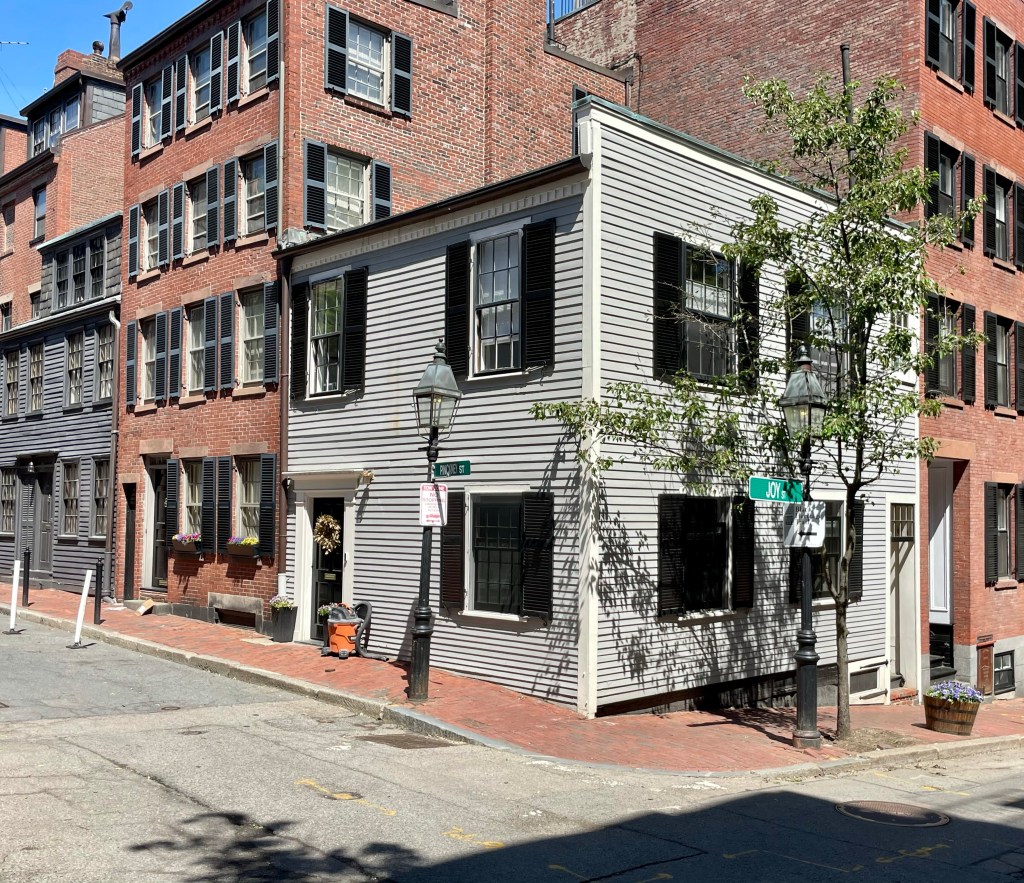
Glapion-Middleton House Ell // c.1800

Less than a dozen wood-frame buildings exist on Beacon Hill in Boston, and this curious building is one of them, and also happens to be one of the oldest structures in the neighborhood! Built by 1800, this structure was constructed as an ell/addition to the Glapion-Middleton House at 5 Pinckney Street in Boston. The Glapion-Middleton House (previously featured) was constructed in 1787 after two Black men, George Middleton and Louis Glapion and their wives, built a small double house in the abolitionist center of Boston, Beacon Hill. In recent years, some have speculated that due to this living arrangement and other accounts, that Glapion and Middleton were in-fact gay men, but this is unsubstantiated. After the home was constructed, a two-story, five-bay ell was constructed which connected the home to Joy Street at the corner. The ell served as additional space for the two families and they appear to have had a workshop or store in part of the building. In 1855, owners demolished the center bay of the ell and erected a brick townhouse, similar to others in the neighborhood. The ell in this building was occupied as a store for the majority of its life and became an Italian restaurant and soon after a “Boyer’s Creamery Luncheon”. The property has since been converted to a residence.

Lewis and Harriet Hayden House // 1833

Lewis Hayden was born into slavery in Lexington, Kentucky, in 1811, as one of a family of 25. Hayden was first owned by a Presbyterian minister, Rev. Adam Rankin. He sold off Lewis’ brothers and sisters in preparation for moving to Pennsylvania, and he traded 10-year-old Hayden for two carriage horses to a man who traveled the state selling clocks. In the mid-1830s, Hayden married Esther Harvey, also a slave. She and their son were sold to U.S. Senator Henry Clay, who sold them both to the Deep South, and Hayden never saw them again. By 1842, Hayden married a second time, to Harriet Bell, who was also enslaved, and he cared for her son Joseph as his stepson. After this marriage, Hayden began making plans to escape to the North, as he feared his second family might be split up like the first. In 1844, he and his family escaped with assistance of abolitionists all the way to Canada. From Canada, the Haydens moved in 1845 to Detroit in the free state of Michigan, and the next year, they moved to Boston, at the center of anti-slavery activity with the city’s strong abolitionist base. In Boston, Hayden became a lecturer and ran a clothing shop, acquiring enough money to live in this large home in Beacon Hill. The Haydens routinely cared for fugitive slaves at their home, which served as a boarding house. Guests included Ellen and William Craft, who escaped from slavery in 1848. Hayden prevented slave catchers from taking the Crafts by threatening to blow up his home with gunpowder if they tried to reclaim the pair. Hayden died in 1889, outliving the abolishment of slavery. Harriet died in 1894 and left $5,000, the entirety of their estate, to the Harvard University for scholarships for African American medical students. It was believed to have been the first, and perhaps only, endowment to a university by a former slave. Their former home remains a stop on Boston’s Black Heritage Trail.