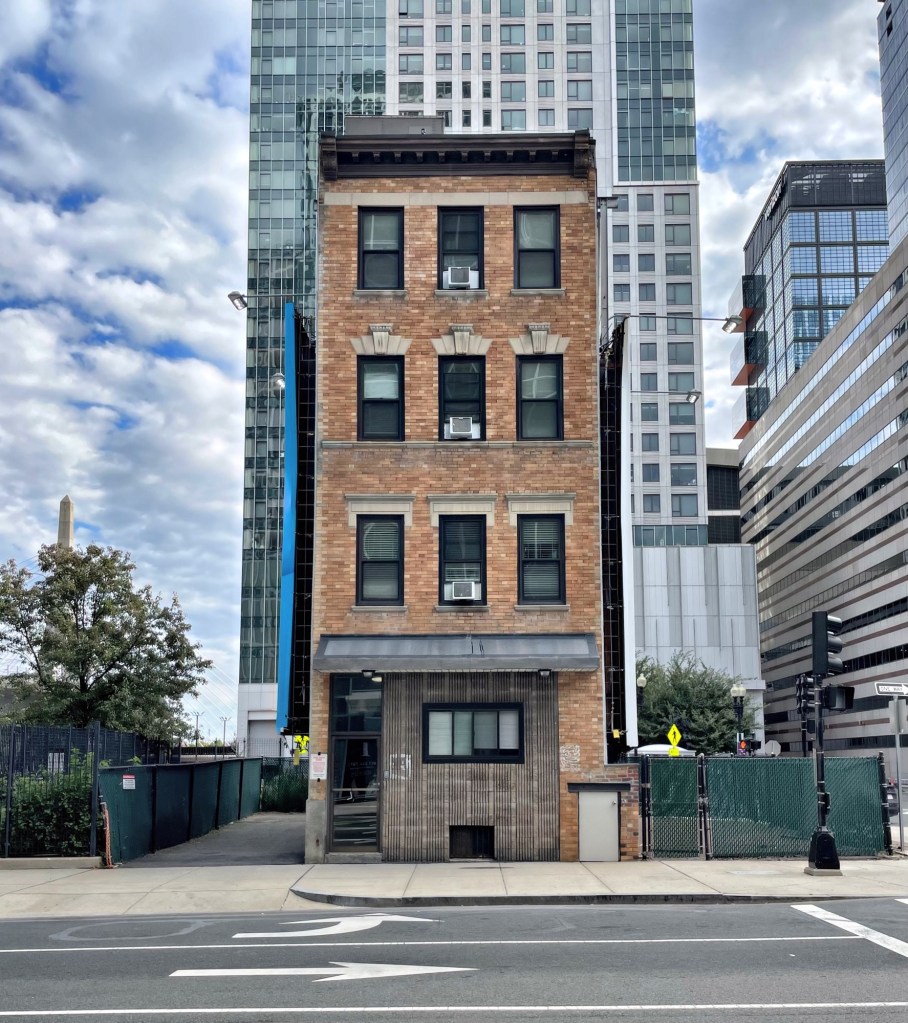
The Last Tenement // c.1870s

Originally built in the 1870s, and largely remodeled in the early 1900s, this charming building has been known locally as “The Last Tenement” of the old West End of Boston. Once part of an unbroken a row of 30 brick tenements along the east side of Lowell Street, this building typified much of the West End of Boston, a vibrant and dynamic immigrant neighborhood. Dwarfed by larger, modern apartment towers and highway off-ramps, this stand-alone building is a survivor, and should really be preserved! Here is a little history on The Last Tenement that I found. The building was originally built as a three-story residence just after the Civil War by furniture dealer, George M. Rogers. The building was rented to four families in the 1880 census, showing the diversity of the region with 20 people residing in the building of Irish, English, and German-Jewish backgrounds. At the turn of the century, an elevated rail line was laid out down Lowell Street. After WWII, the neighborhood would see a terrible demise, that has been widely told. City leaders effectively considered the vibrant immigrant neighborhood a slum, and in an effort to redevelop it to bring back middle-class families (and their tax dollars) handed much of the neighborhood to developers to start over, with little more than lip service for the displaced. This building, now with an address of 42 Lomasney Way, was occupied for some time by “Skinny” Kazonis, a low-level Mafia associate of the Angiulo Brothers, which was a leading gang in the North End until the Winter Hill Gang decided to run rackets in the area. The property sold, and residential units have been rented and the building maintained, with the assistance of a billboard for additional income for the owner. The Last Tenement showcases the strength and resilience of the old West End and will hopefully remain as a reminder of the vibrant neighborhood that was razed and replaced with mediocrity.
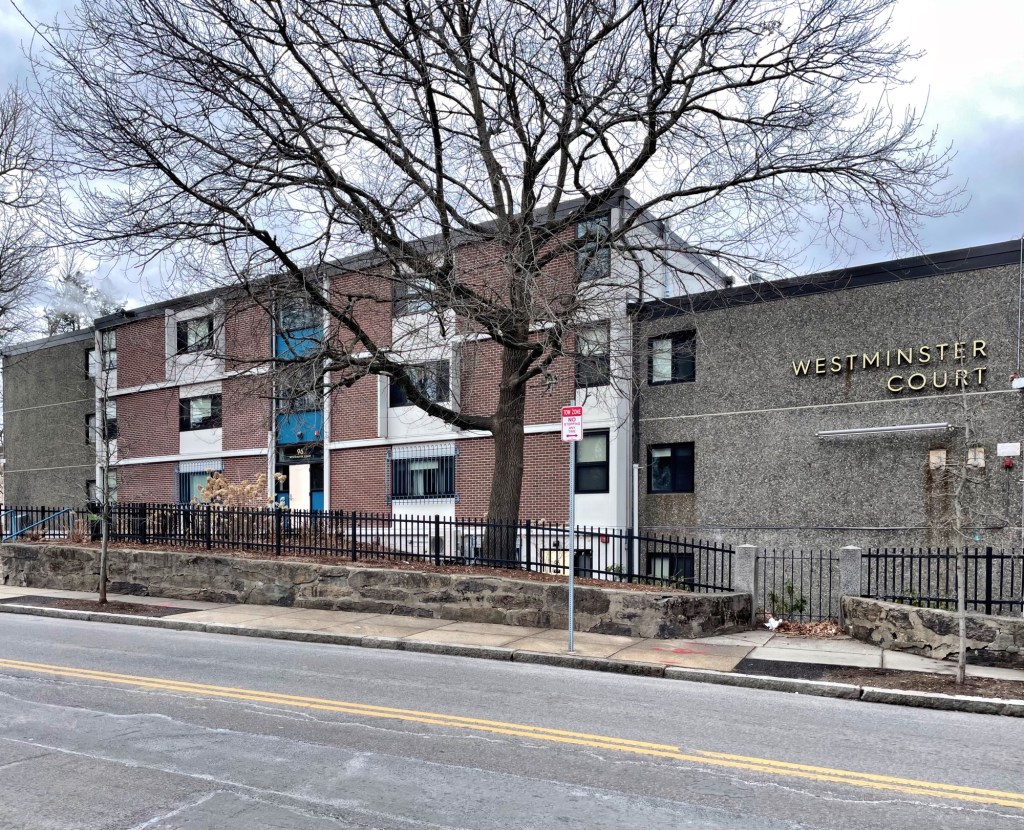
Westminster Court Housing // 1967

As populations boomed in the decades following the conclusion of WWII and suburbs drew wealthier residents to single-family neighborhoods, city governments were desperate to keep tax dollars in city limits. As a result, many cities instituted a policy called Urban Renewal, where neighborhoods (often with higher percentages of minority or immigrant populations) and historic housing were demolished as a form of “slum clearance” and modern housing centered around the automobile sprouted up in their place. The Washington Park section of Roxbury in Boston was one of the hardest-hit neighborhoods in the 1960s as part of a series of neighborhood plans by the Boston Redevelopment Authority. This housing development, called Westminster Court, was developed on one of the new Urban Renewal parcels in Washington Park. Designed by famed modernist architect Carl Koch, the Mid-Century Modern buildings were constructed in modular units to cut costs and expedite construction time. The buildings utilize precast frames with contrasting exterior panels of brick, exposed aggregate concrete, and aluminum. While many dislike these buildings, it is important to understand the history behind them and how they are part of the complex history of many cities.

Church of All Nations // 1975

One building in Boston that has always perplexed me is this round church building. It echoes Eero Saarinen’s MIT Chapel in Cambridge, but is much heavier and plain. After over an hour of researching, I finally found out some history behind it! The church was constructed in the South Cove Redevelopment area, an urban renewal program run by the Boston Redevelopment Authority (now BPDA) as a sort of “slum” clearance near Chinatown. The Church of All Nations was founded in the South End in 1917, housed in a Gothic Revival chapel that was seized by eminent domain for the Massachusetts Turnpike Extension and demolished in 1963. The congregation met in temporary quarters on Arlington Street until the new church was constructed in 1975. Records show that the congregation hired famed Modernist architect Bertram Goldberg as early as 1967 to design a new chapel, set in a new public park. The original plans called for a square building with a massive “steeple” incorporated as the entire roof. For some reason (possibly funding and changing demands for the church), the final design was a little more mundane. The cylindrical church is clad in dark glazed brick with a cross raised in the brickwork. The church suffered from a dwindling congregation in its location, and now appear to rent out the building. One of my favorite local architecture firms Touloukian Touloukian, Inc., re-imagined the site as a new residential tower. It would be one of the few beautiful new buildings in Boston in the past decade or two. Can we please make this happen?!