Josiah Talbot House // 1835

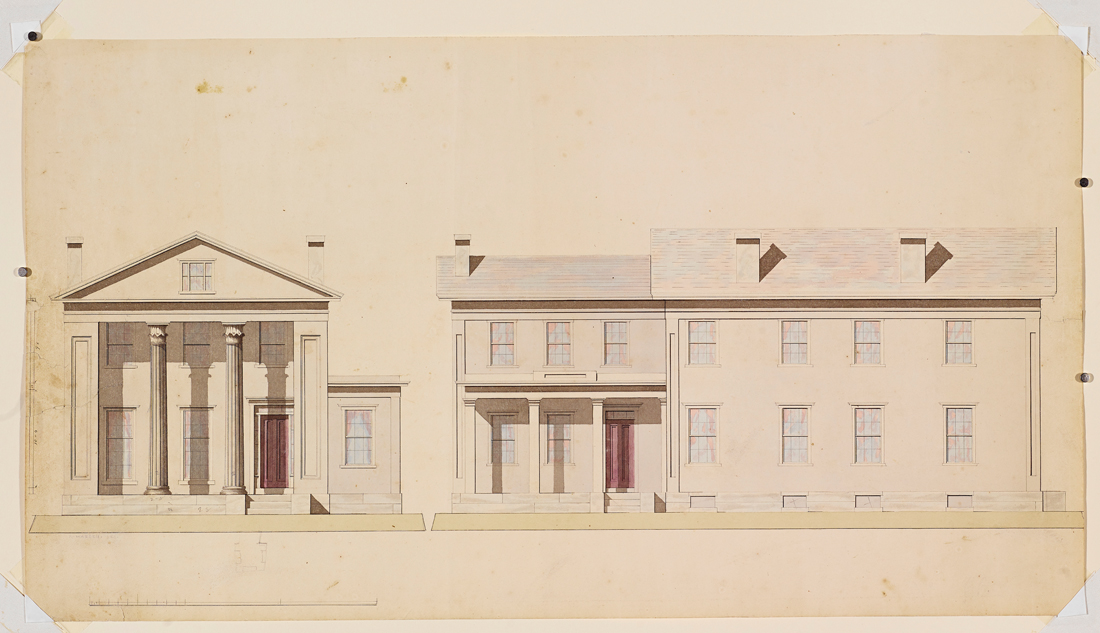
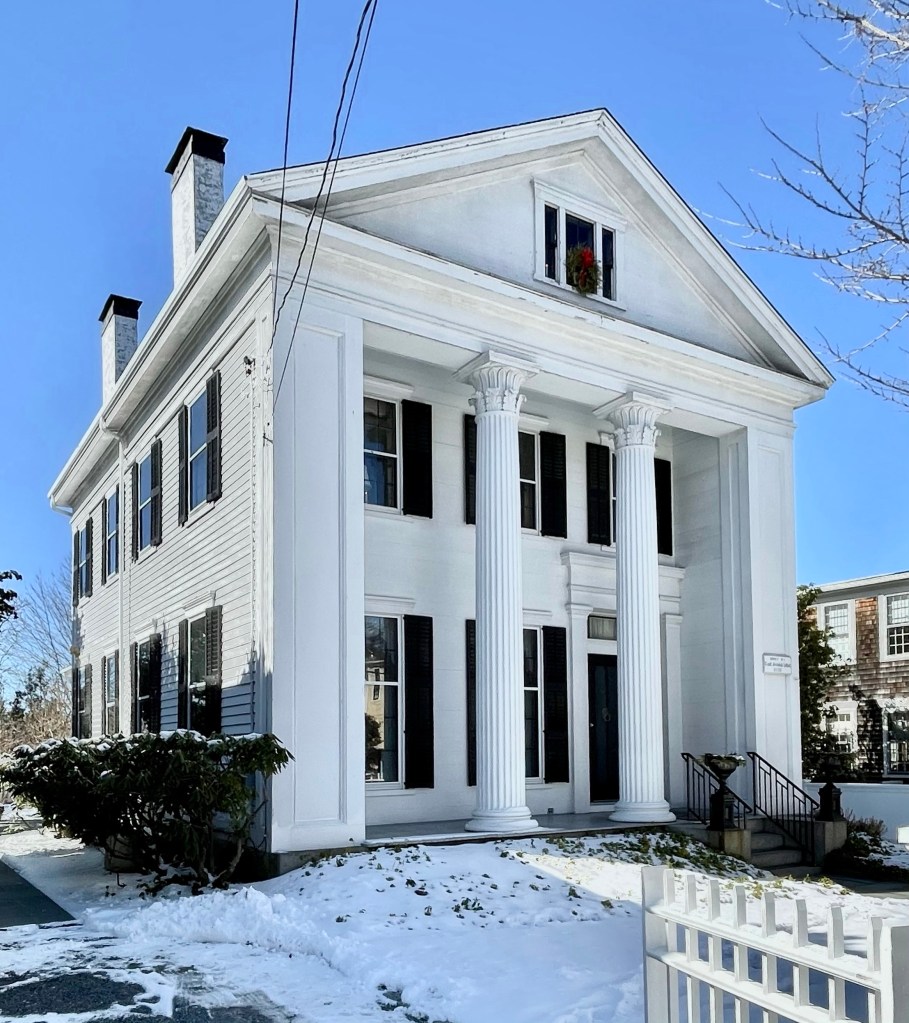
Anyone that has followed this account for a while knows at least one thing, I LOVE Greek temple-front homes. Designed by famed architect, and Bristol-native, Russell Warren, this 2-story, 3-bay, gable-roof Greek Revival house is one of the finest in the state. Its facade has a pair of fluted Corinthian columns, set in antis (where the side walls extend to the front of the porch). A simple side-hall entrance is framed by heavy Doric pilasters, supporting a broad, plain entablature, making this such a head-turning Greek Revival home. The walls are sheathed with horizontal flush boarding at the facade to give a smoother look and clapboards on the side and rear. The home was built for Josiah Talbot, a sea captain. The house is excellently preserved to this day, almost 200 years later.
Juniper Hill Cemetery Gate Lodge and Chapel // 1869 & 1913

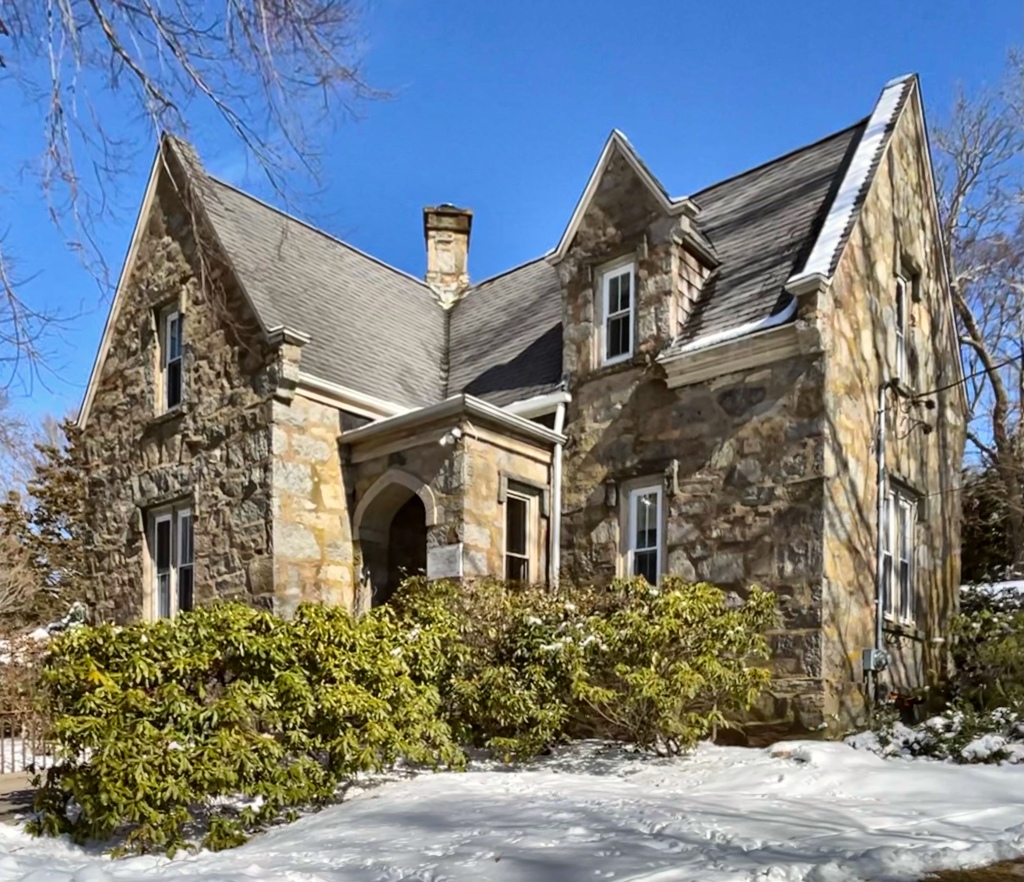
As Bristol grew to be a dominant financial center in Rhode Island in the mid 19th century, prominent families there decided that their loved ones (and later themselves) needed a place of beauty to rest eternally. In 1855, descendants of Levi DeWolf, of the infamous slave-trading family, donated 22-acres of land for use as a cemetery. The old Levi DeWolf home remains fronting Hope Street, featured previously as the Reynolds-DeWolf House. It is a fine example of the mid-19th century rural cemetery movement, with winding lanes and paths. The landscape was designed by Niles Bierragaard Schubarth, who had done similar work at other Rhode Island cemeteries. Upon the opening of Juniper Hill, many families relocated their loved ones from other cemeteries in town here, so the families could be interred nearby each-other. The cemetery has three main structures; a gateway, the gate lodge, and a chapel/receiving tomb. The gate is a massive stone archway set at the entry to the cemetery, and was built in 1876 by the Smith Granite Company of Westerly, R.I. The Gate Lodge was built years earlier is located at the side of the entry into the grounds, and is a stone Victorian Gothic Revival building, designed by Providence architect Clifton A. Hall and constructed of granite quarried on the site during construction of the landscape. Yards away, the charming Amory Chapel and Receiving Tomb, built in 1913, is a 1-story stuccoed structure with a tile roof, designed by the firm of Angell & Swift of Providence. The small chapel stands out as it is a rare example of the Spanish Revival style, but has seen better days, and is apparently being used as a tool shed.

William G. Low House // 1887-1962

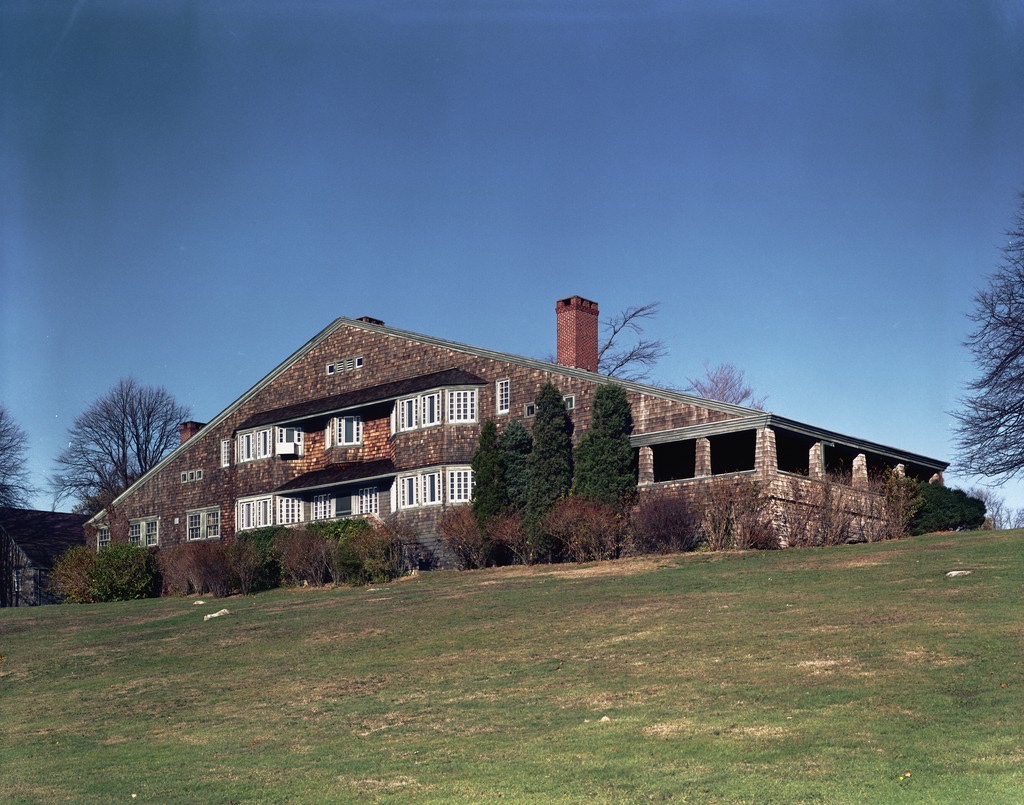
One of the many significant losses to American architecture is the demolition of the Low House, a perfect encapsulation of the Shingle style of architecture by one of the most prolific designers in American history. The William G. Low House was constructed at the southern tip of Bristol, Rhode Island by esteemed architect Charles Follen McKim (my personal favorite) of the firm McKim, Mead & White. The Shingle style, which took off in the Northeast United States, primarily in seaside communities in the late 20th century, the homes of the style often had a strong horizontal emphasis. The style contrasts the other Victorian-era styles, de-emphasizing applied decoration and detailing in favor of complex shapes wrapped in cedar shingles. The Low House, formerly located on Low Lane, stood out for its 140-foot long gable which appeared to protrude right from the hilly outlook. The home was demolished in 1962, but was documented by the Historic American Buildings Survey program, which documented the home inside and out before it was a pile of rubble. Architectural historian Leland Roth later wrote, “Although little known in its own time, the Low House has come to represent the high mark of the Shingle Style”.

Bristol Ferry Lighthouse // 1855

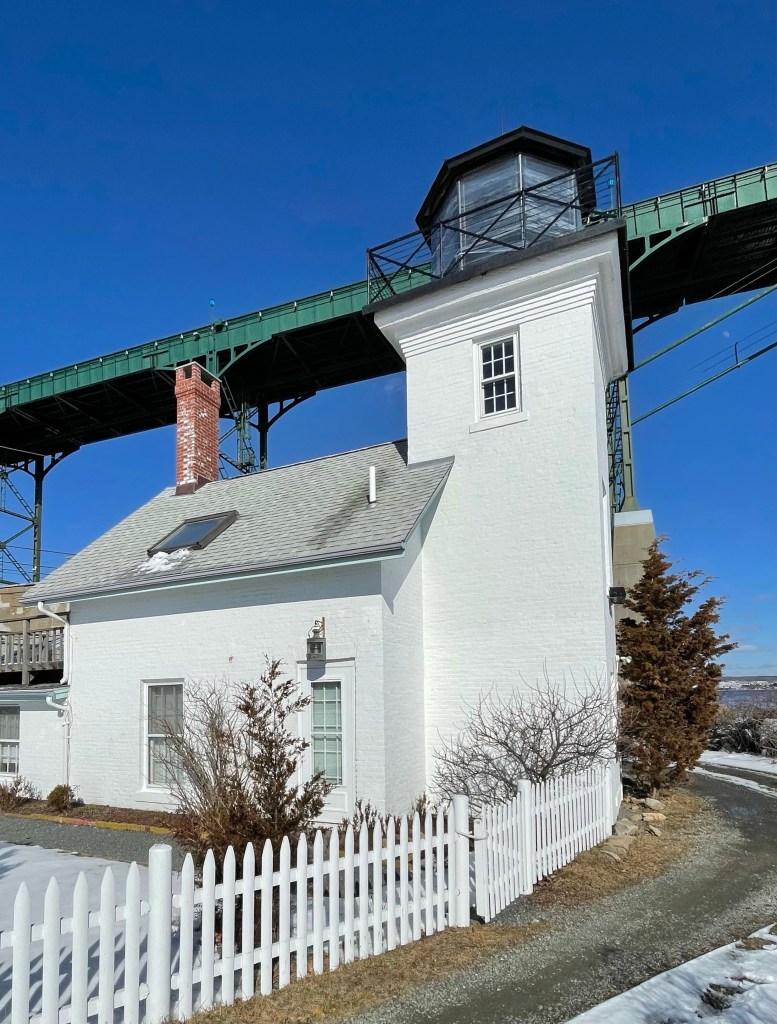
The Bristol Ferry Lighthouse, located on the southernmost tip of Bristol, Rhode Island, is possibly the most difficult building I have tried to photograph since starting this account. The lighthouse got its start in 1846, when the Bay State Steamboat Company, established a small lighted beacon at this location. The Fall River Line consisted of a railroad journey between Boston and Fall River, Massachusetts, where passengers would then board steamboats for the journey through Narragansett Bay and Long Island Sound to a dock in Manhattan. For many years, it was the preferred route to take for travel between the Boston and New York. The early beacon was unreliable, and Congress appropriated $1,500 in 1854, for a combined lighthouse and lightkeeper dwelling. The light served this chokepoint well, until the construction of the Mount Hope Bridge between Bristol and Portsmouth in 1928-1929. Spanning over a mile long, the bridge was built practically over the lighthouse and rendered it irrelevant as an aid to navigation. The lantern was removed from the tower in 1928. An automatic navigational light on a nearby skeletal tower remained in operation until 1934. Around that time, the lighthouse was sold off as excess and went into private ownership, and for a while, provided housing for a couple students at nearby Roger Williams University. The building was restored and now appears to be a private home.

George H. Reynolds House // 1839

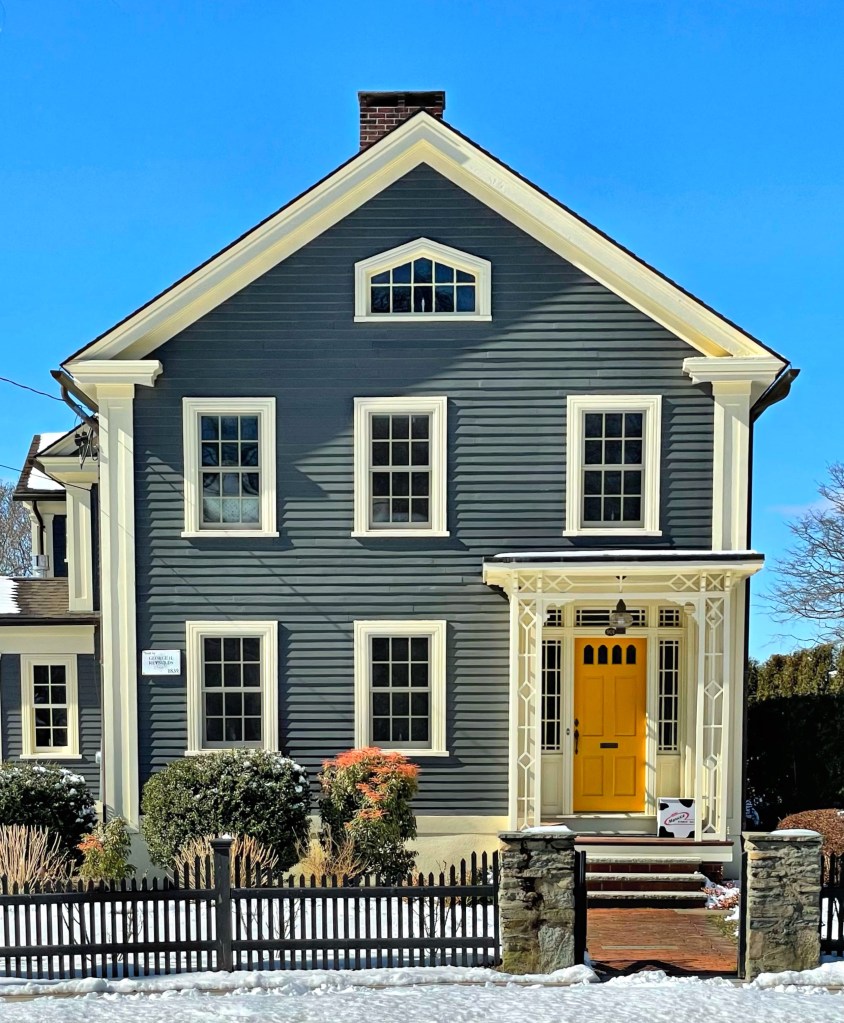
This two-story Greek Revival home was built in 1839 for George H. Reynolds (1809-1880), a descendant of Joseph Reynolds, who’s home was featured here previously. In 1836, George Reynolds worked as a blacksmith; by 1837 he sold shoes and groceries. By 1840, he was appointed postmaster. The side-hall home features corner pilasters and a gorgeous pedimented window in the gable end. The home was given a delicate entry portico in the latter half of the 19th century which immediately caught my attention.

Seth Paull House // 1880

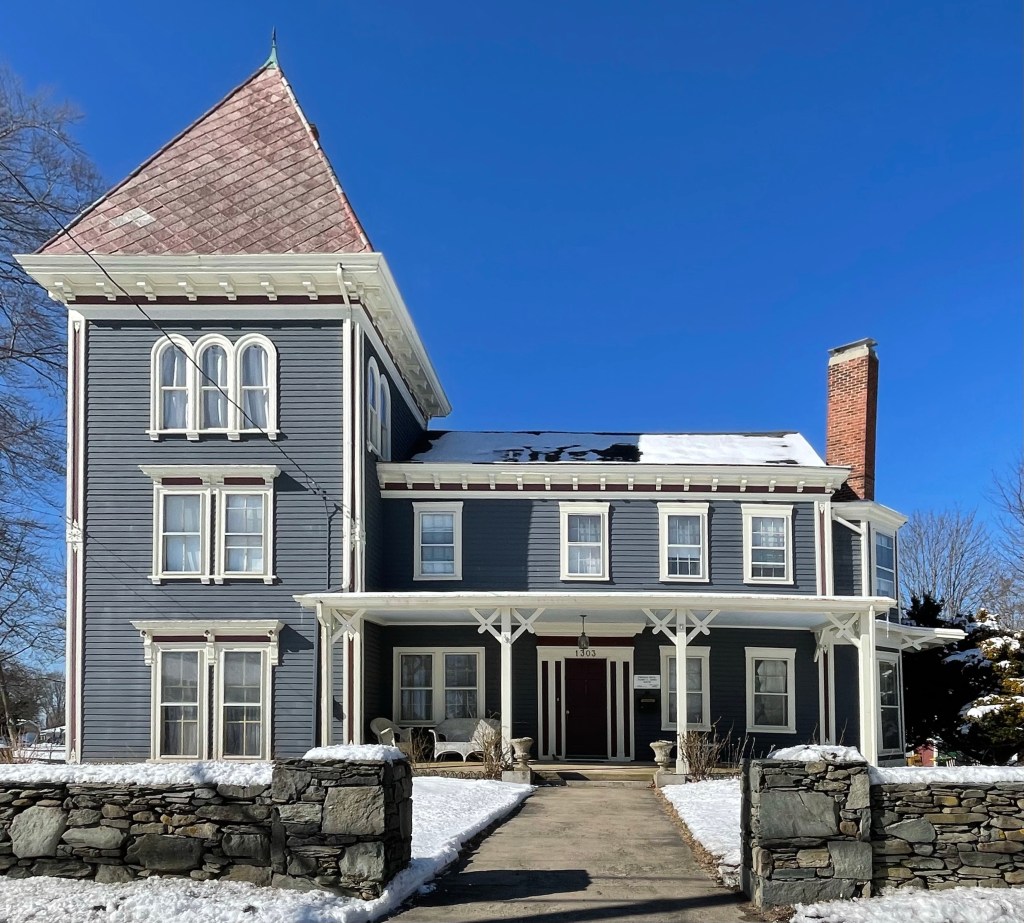
Seth Paull (1840-1906), a lumber merchant whose warehouse and business were located at the foot of State Street downtown, began construction of this house in 1879. It is evident that he sought to showcase his lumber’s quality in his own home, as a testament to his business. This elaborate 2-1/2-story, hip-roofed, Second Empire house has a three-bay facade with a projecting central pavilion capped by an ogee gable roof. A two-story tower on the right corner, topped by conical roof with a copper finial, has elaborate brackets, diamond panels in wood, and a saw-tooth frieze. The home is well-preserved and sits on a large lot, set back from the street behind a row of trees. The lot was once larger, but was subdivided for housing to the north. The former Paull barn was repurposed as a separate home.

Ferncliffe // c.1760

One of the most unique houses in Bristol (and the State of Rhode Island for that matter) is Ferncliffe, a colonial farmhouse that morphed into this beauty in the late 19th century. In 1749, the 200-acre farm of Benjamin Church, containing land where this home sits, was divided among his four daughters. Thomas Peck, a farmer, purchased one share in 1761; his deed refers to a house already on the property. The home was likely a five-bay Georgian home with little details. However, in 1882, James L. Tobin an undertaker, bought the property which then extended west to Narragansett Bay. He “modernized” the home with brackets, front porch, oh and a massive three-story tower with pyramidal roof! Tobin’s daughter Mary named the house for the fern plants lining the waterside cliffs at the far extent of the property, giving it the name “Ferncliffe”. Since then, the farmland was subdivided and sold off and now contains many house lots, with many of the streets laid out named after his children and wife. After Tobin’s death in 1925, he willed the home to his two living daughters, Helen and Annie.

Dennis Doran House // 1891

Located just east of downtown Bristol, the Dennis Doran House stands as an excellent example of the Queen Anne style of architecture for a middle-class residence. The home was built in 1891 by Dennis Doran as his personal house. He worked as a carpenter and cabinet maker, and showcased his wood-working skills on this home. The asymmetrical facade, dominated by an octagonal corner tower, capped by a steep conical roof stands out, but is complemented by a complex hipped roof broken up by various jerkin-head and gable dormers at two tiers. The home is also clad in shingles of varied shapes to provide a complex texture.

“Longfield” // 1848

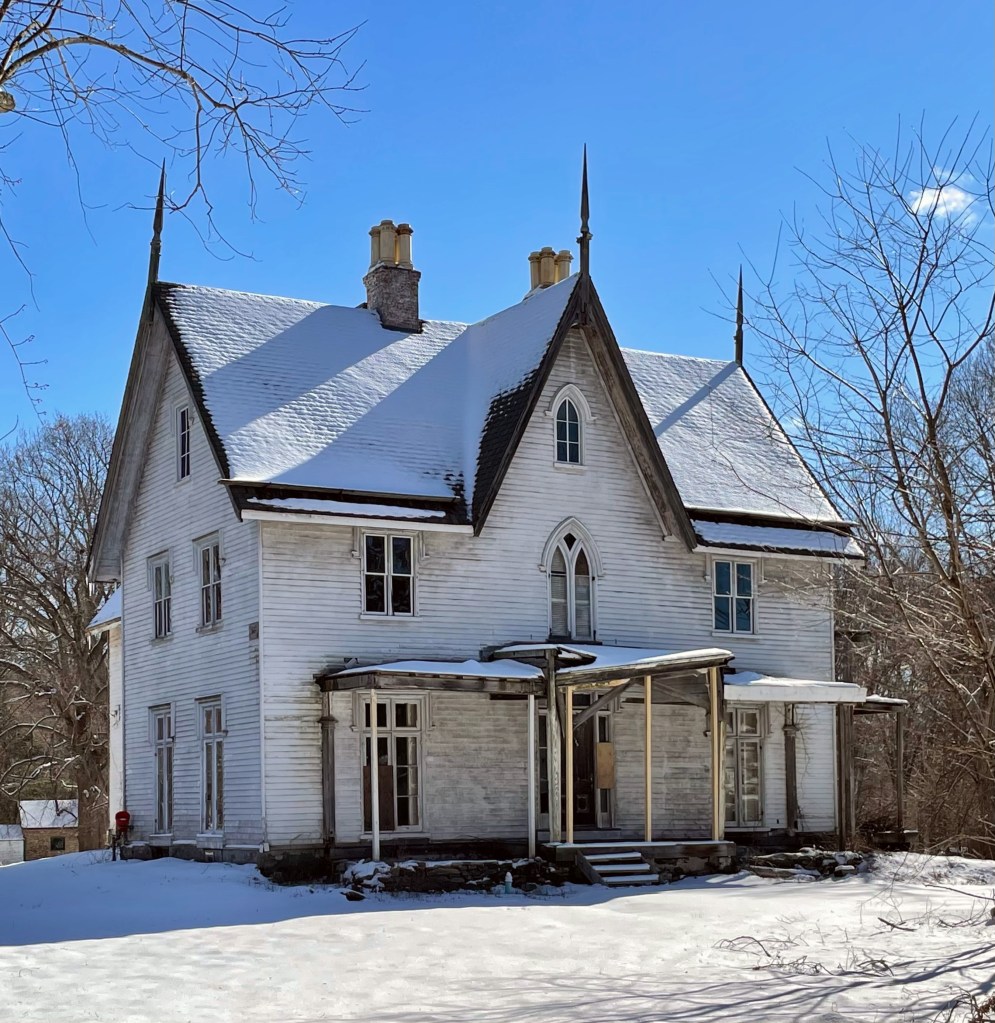
“Longfield”, aka the Abby DeWolf House was built in 1848 and is one of the finest homes in Bristol, Rhode Island. The home was completed from designs by Providence architect Russell Warren, who also designed other mansions in town (I’ll post those later on in this series), the Westminster Arcade in Providence, and “Hey Bonnie Hall” a since demolished Federal style home I featured a couple days ago. Longfield’s name derives from the 60-acre meadow, part of the 300-acre Henry DeWolf farm, given to Abby DeWolf when she married Charles Dana Gibson at just 21 years of age. The DeWolf Family paid for the home as a gift to Abby. The DeWolf Family is infamous for being highly active in the slave trade, and was believed to have transported over 11,000 enslaved people from Africa to the Americas before congress abolished the African Slave Trade in 1808, which “prohibited the importation of slaves into any port or place within the jurisdiction of the United States…from any foreign kingdom, place, or country.” This policy did little as many owners of slaves just kept children born into slavery and also opened plantations in the Caribbean and South America. After Abby died in 1901, the home went to her granddaughter who maintained the home. By the 1970s, the home was sold out of the family and began a period of decades of deterioration to its current state. The interior is effectively gutted, but some original woodwork and fireplaces remain. Recent calls for a townhouse development with ample parking was proposed and approved by the town a couple years ago, but would greatly diminish its siting and architectural integrity. Nothing has happened on the site, but here’s to an appropriate restoration!

Throope Place // 1760

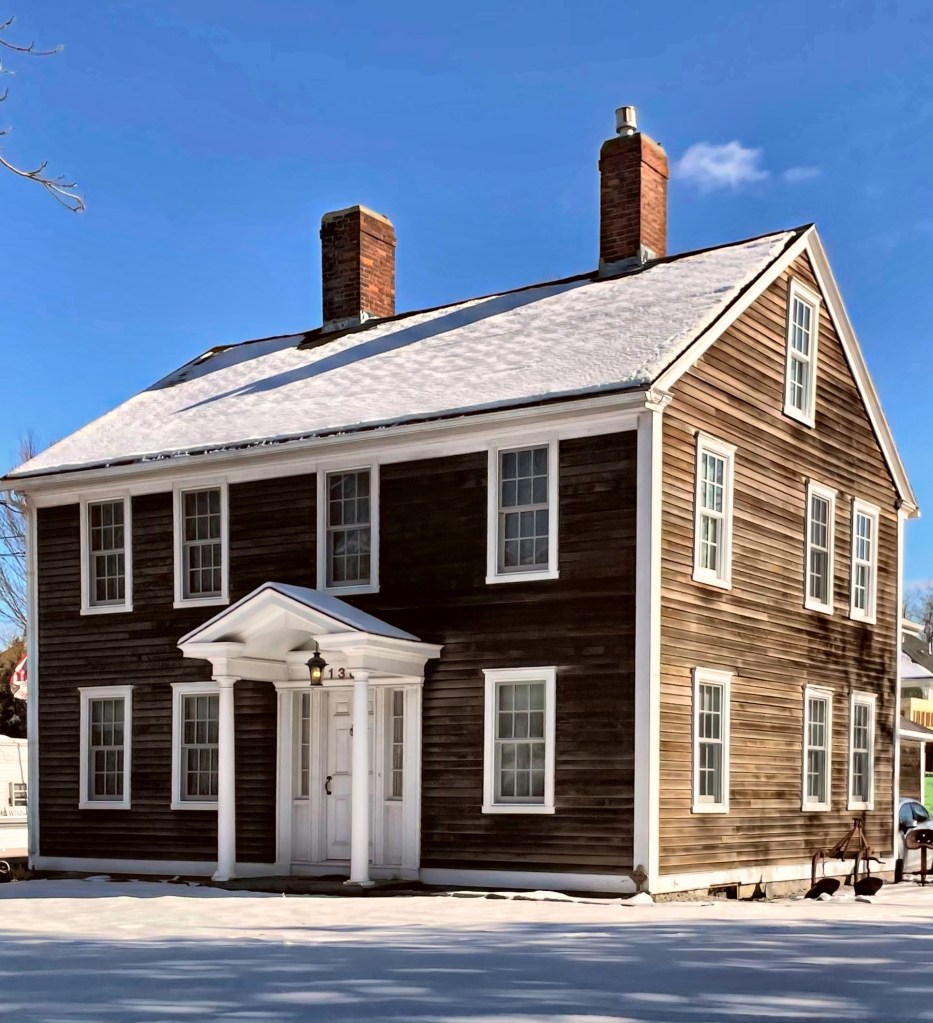
In 1687, William Throope 1637-1704, who migrated to Bristol from Barnstable, Massachusetts by way of England, purchased land in Bristol, Rhode Island. On it, he constructed a small, one-room deep, two-story house. Throope’s grandson, Thomas, Jr. (1710-1771), enlarged the house about 1760, when he constructed this four-bay Georgian home, adding the old 1687 Throope house to the rear. Interestingly, house moves were very common in America to the early 20th century, as materials such as glass, nails, and brick were more expensive while labor was much cheaper, making the reuse of original structures and materials common. The farm eventually passed to Isaiah Drown Simmons (1810-1882), a dairy farmer, in 1830, and remained in the Simmons family until 1922. Records show that the original 1687 house that was moved to the rear of the 1760 house was replaced in the 1830s by Simmons. The home remained in the Simmons Family until after the death of their only daughter Elizabeth, who died in 1914. It appears that the existing front portico was added after that time, which appears more Colonial Revival.