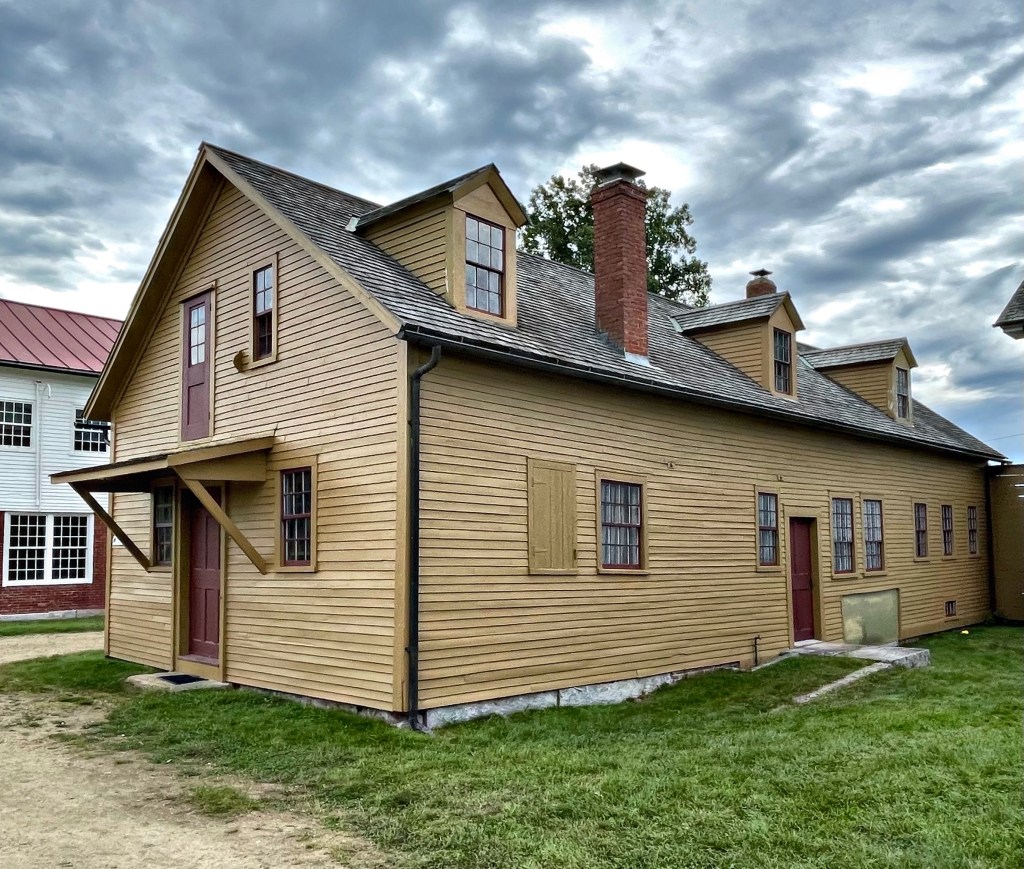
Canterbury Shaker Syrup Shop // c. 1780

When Benjamin Whitcher donated his farm for the beginnings of a utopian Shaker community, the land and buildings became the catalyst for the next 200 years of Shaker life in the community. It is known that Benjamin Whitcher constructed his farmhouse sometime between 1775 and 1782. With the arrival of the first Shakers in 1783, Whitcher allowed families to reside on the farmland, with the 1790 Census counting 35 people on the Whitcher property. This structure was one of the original structures on the old Whitcher Farm, and is possibly the oldest extant building in the Shaker village today. The building was moved to its present location in 1841 and was used for distilling sarsaparilla syrup for medicinal purposes by members of the community.

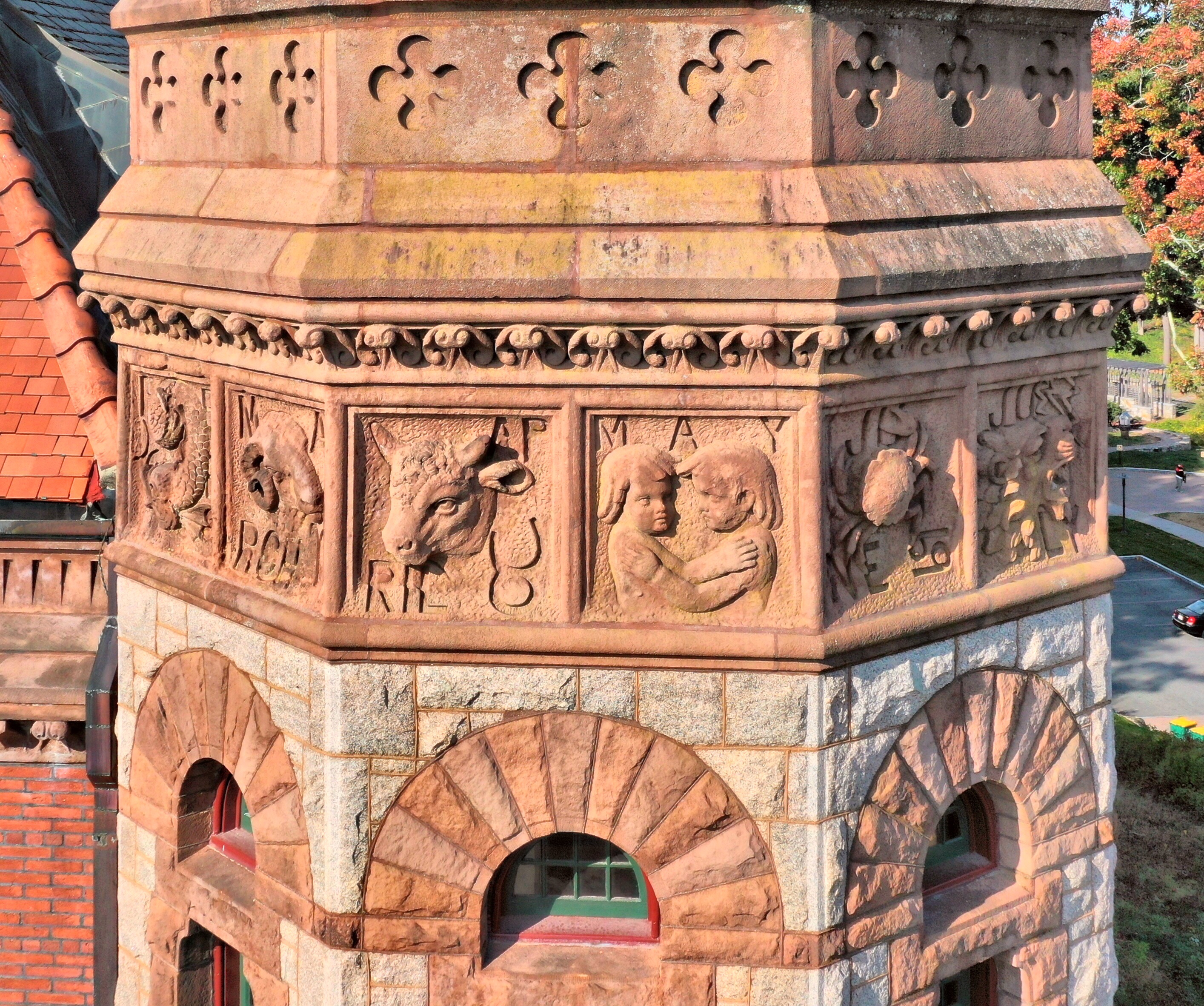
Ames Memorial Hall // 1881

There are few buildings that make you stop and stare in marvel at their perfect architectural proportions, detailing and design, the Ames Memorial Hall in Easton, Massachusetts is one of them for me! In the late 1870s, the children of Oakes Ames commissioned the great American architect Henry Hobson Richardson to design the Memorial Hall as a tribute to their father. Richardson, the architect of Boston’s beloved Trinity Church in Copley Square, responded with a picturesque masterpiece using his signature architectural elements of rounded arches, dramatic roof lines, and heavy masonry adorned with carvings. The building was provided to the inhabitants of Easton “for all the ordinary purposes of a town hall”. Oakes Ames (1804-1873) was partner in the family business, O. Ames & Sons, a U. S. congressman, an early investor in the Central Pacific Railroad, and, at the urging of President Abraham Lincoln, a prominent force in the building of the first transcontinental railroad. The Richardsonian Romanesque building stands on the solid foundation of a natural ledge, from the northeast corner of which rises the beautiful octagonal tower, on whose frieze are carved the twelve signs of the zodiac.

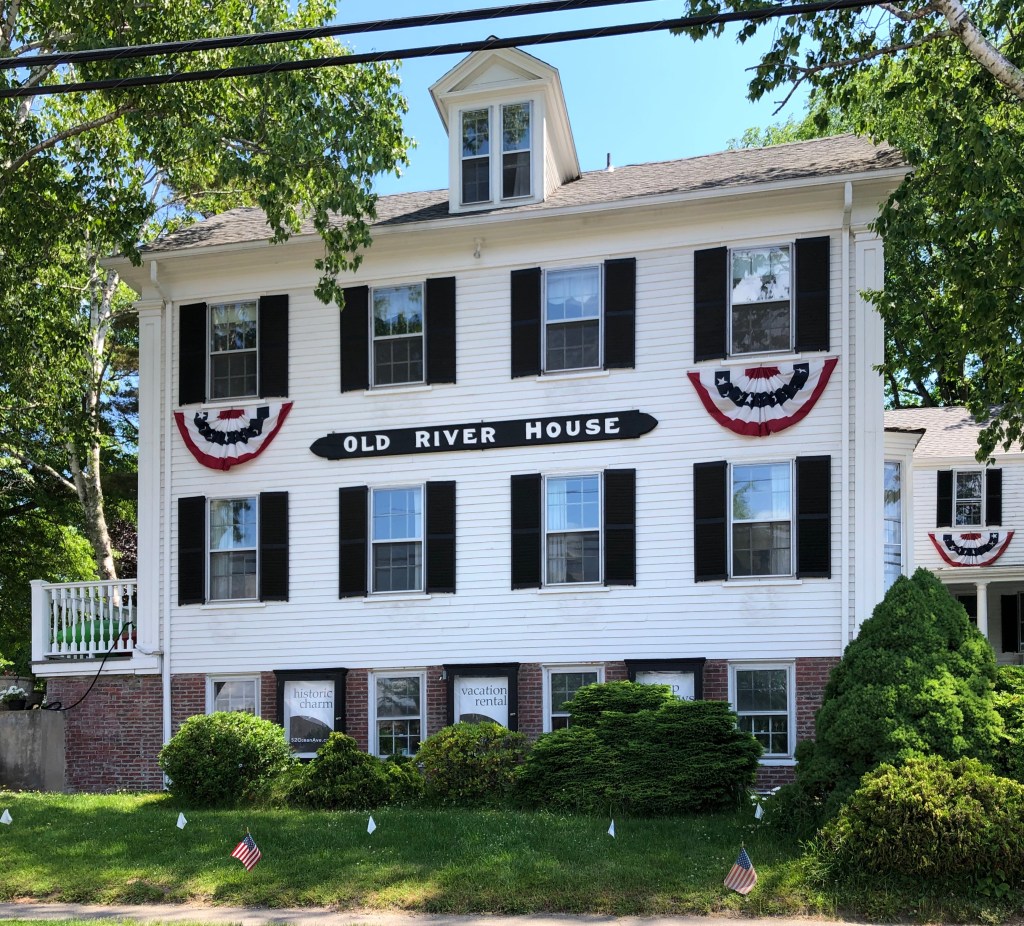
Thomas Maling House // 1848

This Greek Revival home was built around 1848 for Thomas Maling, a rigger (person who installs the system of ropes and chains for a ships mast and sails). The home is built upon a raised brick foundation, likely to elevate it from the rising and receding nature of the Kennebunk River just across the street. By the 1890s, the home was converted to an inn, known as the Maling’s Inn, after the original owner. Today, the inn is known as the Old River House. On the lot, the old rigging loft remains and has been converted on the inside as additional rooms.