Hopedale Village Cemetery Tool House // 1894

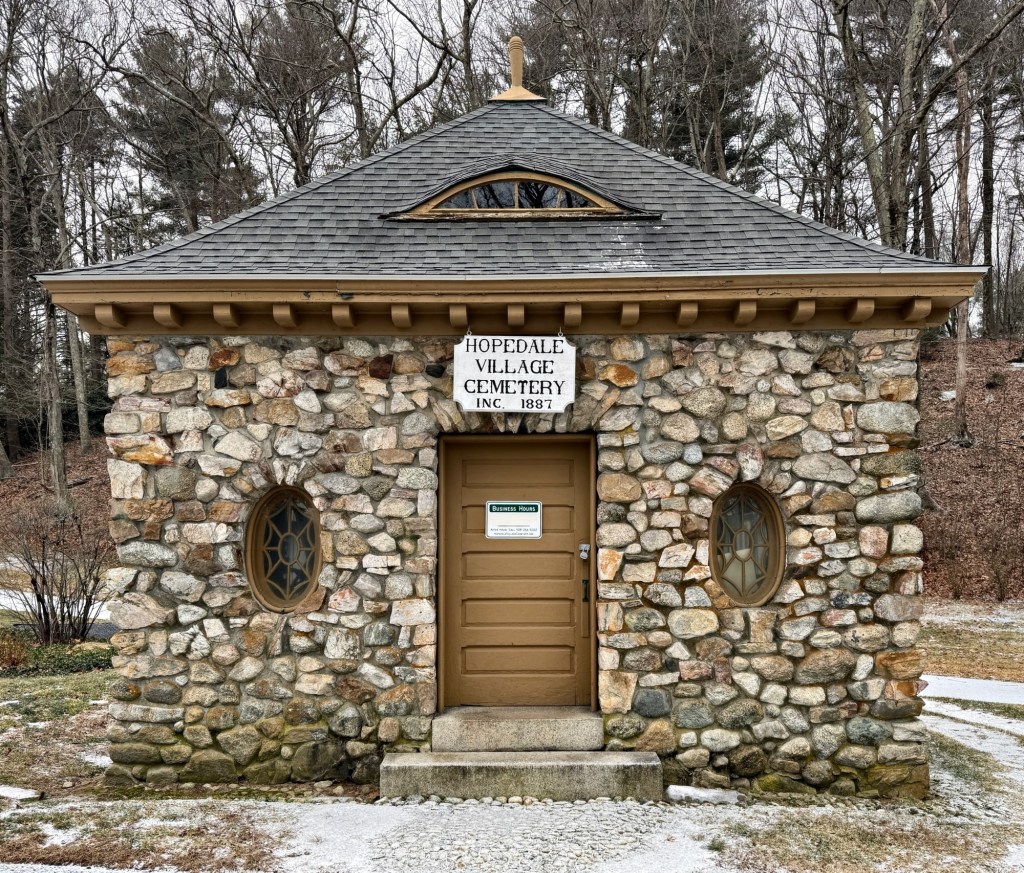
At the heart of the Hopedale Village Cemetery, this diminutive historic tool shed and office showcases that even for functional buildings set within a cemetery, high-quality materials and good design can enhance the landscape. The cemetery was laid out in 1845 in connection with Hopedale’s Utopian settlement, but expanded later in the 19th century as a formal landscaped cemetery in about 1887. The growth and investment of the cemetery coincides with the growth of the community as it prospered with the success of the Draper Corporation factories in town. Landscape architect, Warren Henry Manning updated the landscape here, with scenic vistas and hills, which followed the popular Rural cemetery movement of the 19th century. The cemetery contains many graves and mausoleums of the wealthy factory managers and benefactors of the community, which dot the sprawling landscape. In 1894, architect, Robert Allen Cook, designed this stone tool shed, which may have also contained a small office with cemetery records. The one-story, hip-roofed building features rough rubblestone walls with an eyebrow dormer centered on the façade, and has been preserved by the community for well over 100 years.
Wooster Memorial Chapel, Fountain Hill Cemetery // 1915

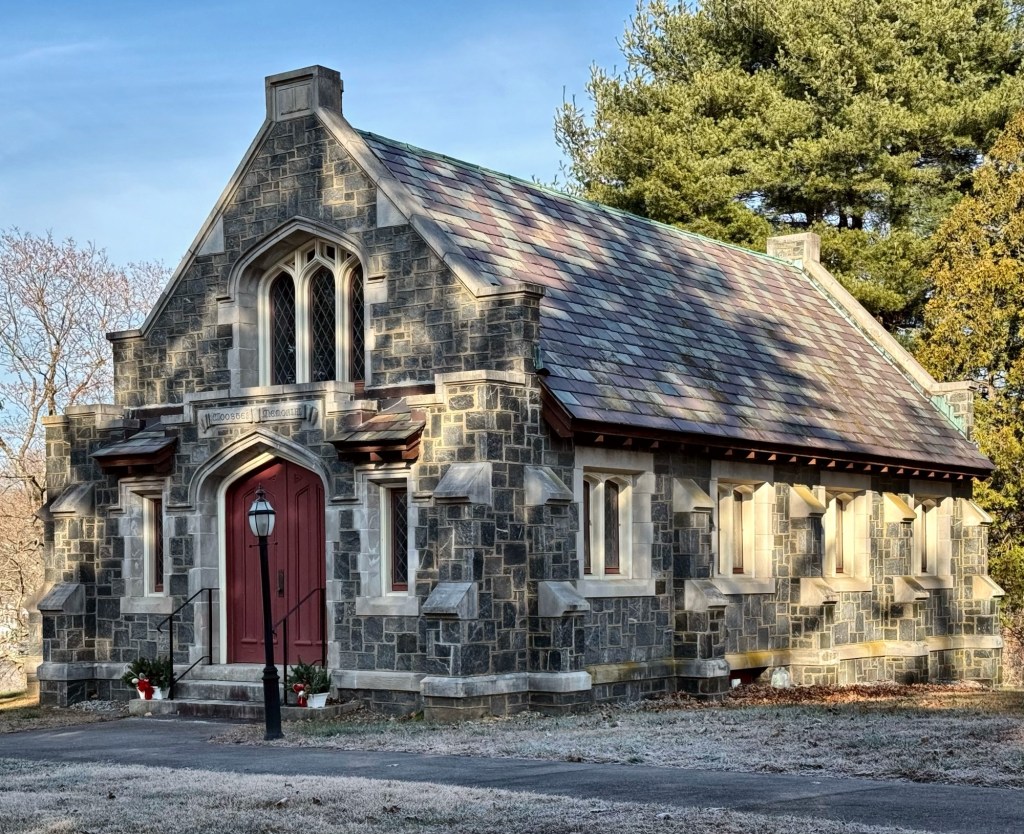
Located in Fountain Hill Cemetery, which has become a sort of Rural Cemetery in the small town of Deep River, Connecticut, this handsome gothic chapel graces the entrance and has provided a place of solemn memorials and celebrations of life for over 100 years. The Fountain Hill Cemetery was originally established in 1851, but after a half-century of use, Miss Mary McCellan Wooster (1839-1911), sought a non-denominational chapel for the grounds to not only beautify the local cemetery, but provide a place to honor the dead. In her will, Miss Wooster left $10,000 for a new chapel. The cemetery board of directors hired architect, Isaac Allen, Jr. of Hartford, Connecticut, to design the structure. The Neo-Gothic chapel was built of local stone and opened to the public in April 1915.

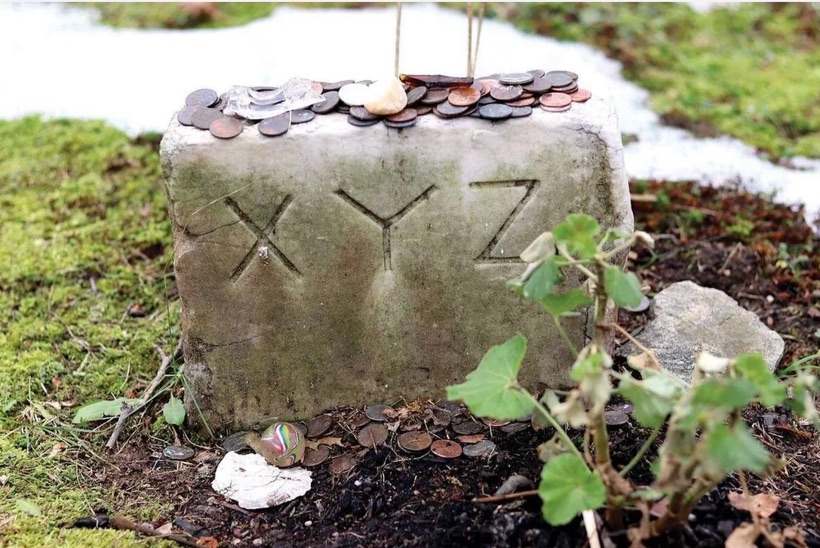
Another interesting story in the cemetery is the mysterious ‘XYZ’ gravestone. Legend says that in the evening of December 13, 1899, an unnamed man arrived in Deep River, Connecticut (along with three other male accomplices), to rob the local bank. This unnamed individual was confronted by the night security guard with a sawed-off shotgun, firing at the robber, blowing away part of his face. The other three robbers fled, leaving their accomplice in Deep River. In the hope that someone could identify him, his body was laid out for viewing at the local funeral parlor. During this time, an anonymous letter arrived, requesting that the man be buried with the headstone only marked as XYZ. The odd request was accorded, but was never fully explained. To this day, many locals leave stones and coins at the marker in Fountain Hill Cemetery.

Woodlawn Cemetery Lodge // 1897

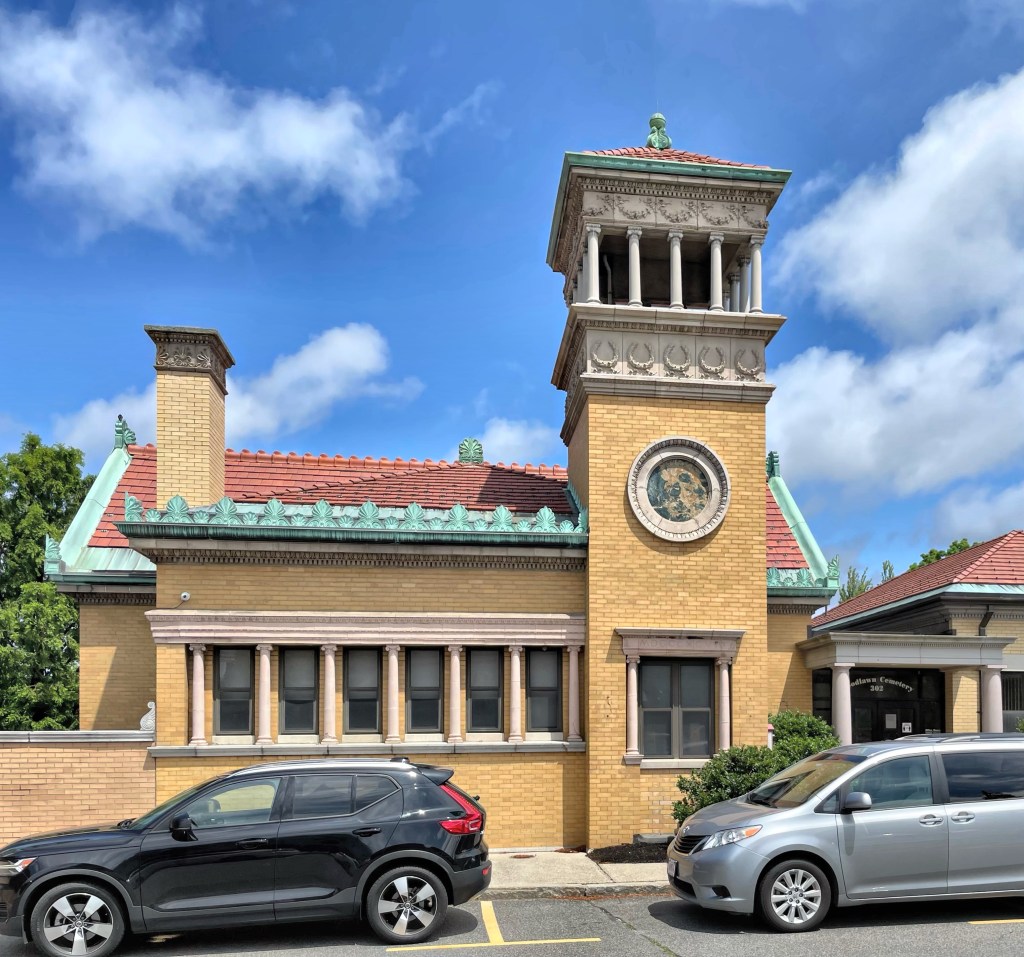
Woodlawn Cemetery in Everett, MA was established in 1850 as a rural, private cemetery in the tradition of Mount Auburn Cemetery in Cambridge. The story of Woodlawn Cemetery began in 1850 when a group of ten prominent Bostonians petitioned the Massachusetts General Court to organize a corporation “for the purpose of procuring, establishing and preparing a cemetery or burial place for the dead in Malden” (present-day Everett was established in 1870 from Malden). Adjacent to the Cemetery Gate and Tower (last post), the Woodlawn Cemetery Lodge replaced an 1850s lodge and office constructed of wood, in the Gothic-style, that was deemed unsatisfactory for later boards managing the cemetery. The group hired Boston architect William Hart Taylor to design the gate and lodge, the latter in the Classical Revival style. The buff brick building features terra-cotta trim and a red tile roof with dentil cornices and copper cresting along the ridges and eaves. The square entry tower has a columned belfry and incorporates additional Classically-inspired features including Ionic columns, moldings, swags, and wreaths, which looks like a Greek Temple plopped onto the top. Gorgeous!