Robbins & Marsh Store // c.1858

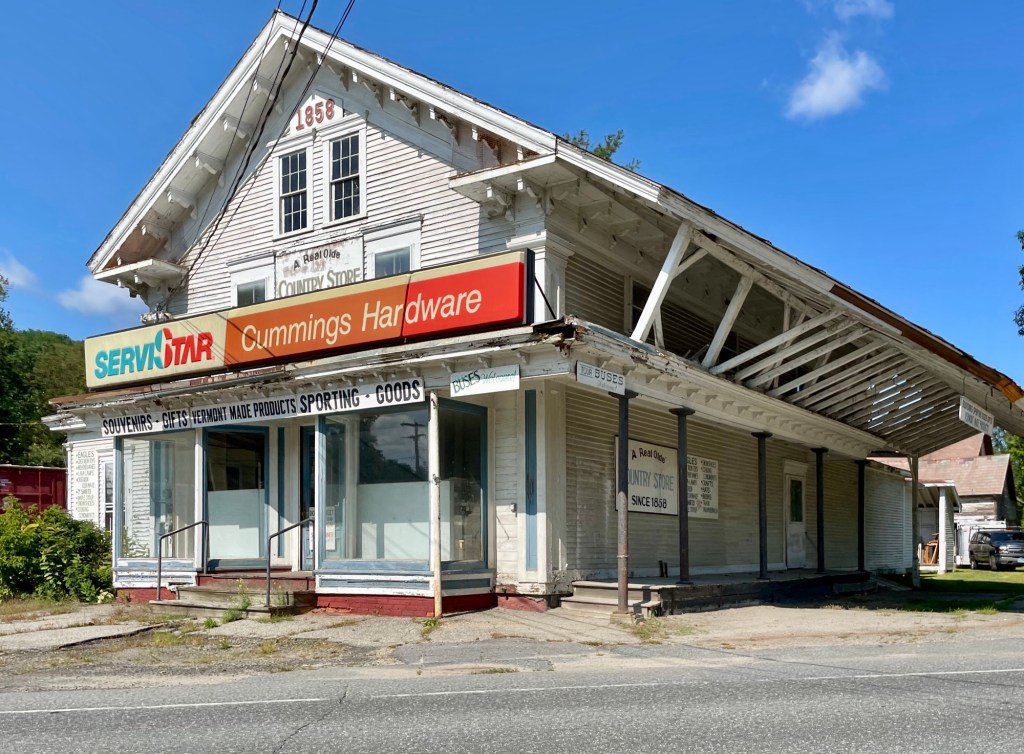
Located in the Chester Depot Village, a commercial and civic assortment of buildings constructed in the mid-19th century between the often feuding North and South villages in Chester, Vermont, this handsome commercial building contributes to the character and history of the once thriving commercial center of town. Built across the tracks of the Central Vermont Railroad from the town’s depot, this Italianate style building dates to about 1858 when a P. H. Robbins opened an all-in-one store, selling everything from groceries to hardware and building products. Mr. Marsh was later joined by Frederick W. Marsh, who entered into the business, then named the Robbins & Marsh Store. The business thrived with the close proximity to the railroad depot with later alterations to the building including the addition of plate glass storefronts and a massive side awning porch. Business slowed after WWII, as rail service slowed and ultimately stopped in town. Today, the handsome building remains as an important visual anchor to the depot village. 
Chester Depot // 1872

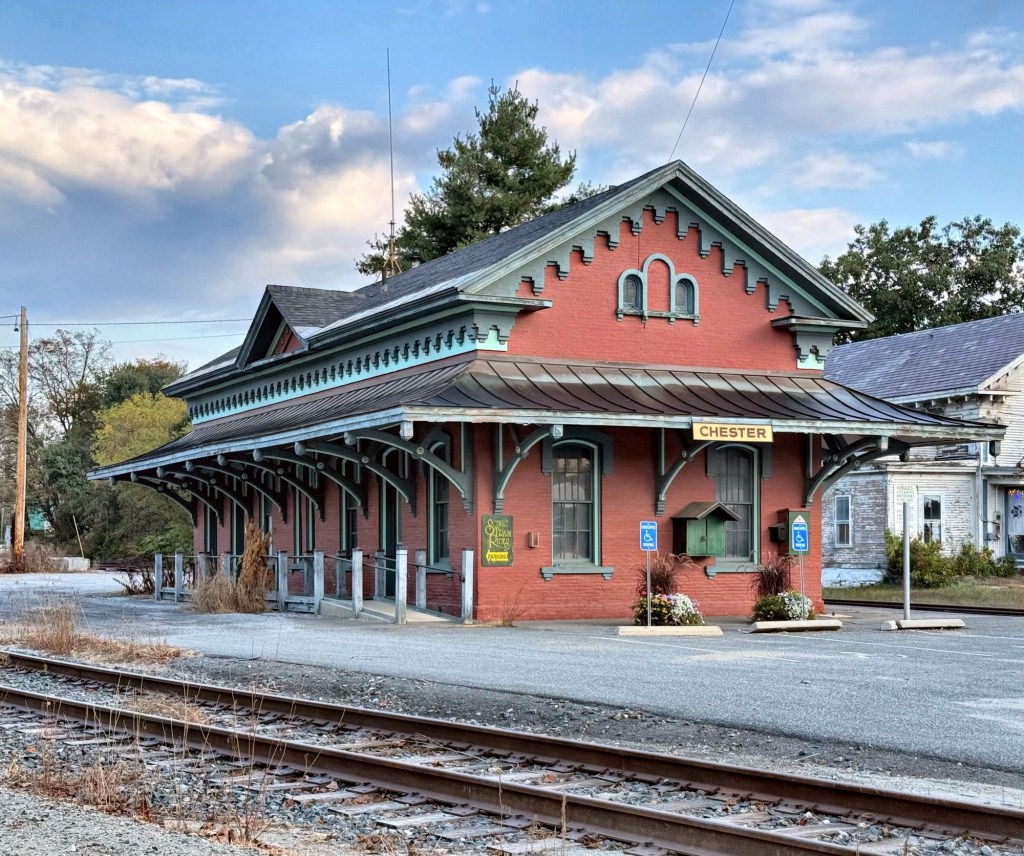
The first public train arrived in Chester, Vermont, on July 18, 1849, and in December, the Rutland & Burlington Railroad opened the first rail line across Vermont linking the Connecticut River valley at Bellows Falls and Lake Champlain at Burlington. A fire destroyed the first station in 1871, and the Vermont Central Railroad built the current station within a year. The State of Vermont purchased the line in 1963, leasing it in part to the Green Mountain Railroad. Exceptional in Vermont, this brick station retains its high-style Italianate design and continues in railroad use. The station can be classified as Italianate/Romanesque in style and has a corbeled cornice, windows capped by brick hood moldings, and a projecting trackside awning. It appears that the station is not in active use, does anyone know more?

Blaisdell House // 1868

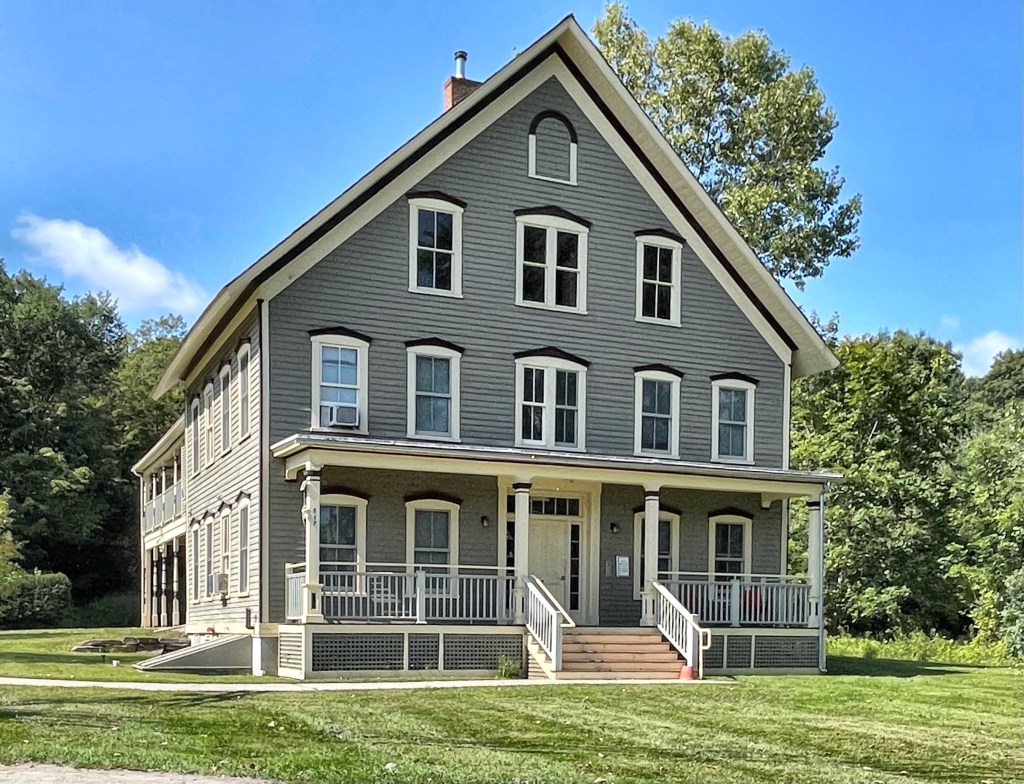
This Italianate style house was built in 1868 for Augustus and Laura Blaisdell, natives of New Hampshire who moved here to Chester, Vermont, in 1860. The Blaisdell’s operated a company that manufactured fireproof roofing and paint at their home base in New Hampshire, and built this building on a prominent site in the village to promote sales, which were conducted from a storefront on its ground floor. The location of the Blaisdell House alongside the tracks of the local railroad depot, was strategic in order to provide ease in the transportation of goods to the village of Chester Depot from the New Hampshire-based headquarters of A.H. Blaisdell & Co.The home and store is significant in the local economy and is itself, a significant example of the Italianate style in town.

Chester Town Hall // 1884

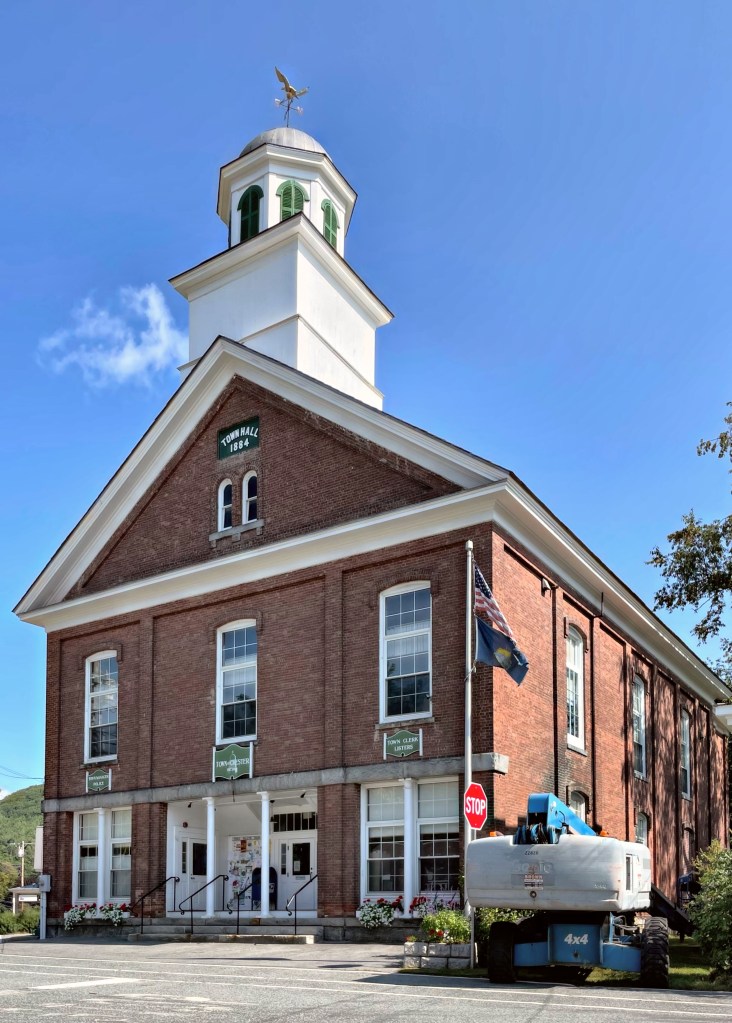
The town of Chester, Vermont, was originally chartered by New Hampshire Governor Benning Wentworth as Flamstead, in 1754. The terms of the charter were not met and the town was re-chartered as New Flamstead in 1761. In 1766, a patent was issued by New York that changed the name of the town to Chester, after George Augustus Frederick, the Earl of Chester and the eldest son of King George III. Vermont in the 18th century was contested land claimed by both New Hampshire and New York, unsettled until the colonists in the area decided to petition for their own statehood. The town of Chester voted to keep their name. The town grew with two distinct villages, Chester Village and Stone Village. Both villages were very distinct in terms of politics, religious affiliations, and architecture. When the railroad cut through the town, the route passed between Chester’s North and South villages, and Chester Depot village emerged right in the middle. The establishment of a third village by the railroad depot, offered neutral ground on which to erect a town hall, as before 1884, town meetings were held alternately each year in the two opposing villages. The large town hall building in Depot Village is a late example of Greek Revival and Italianate design.