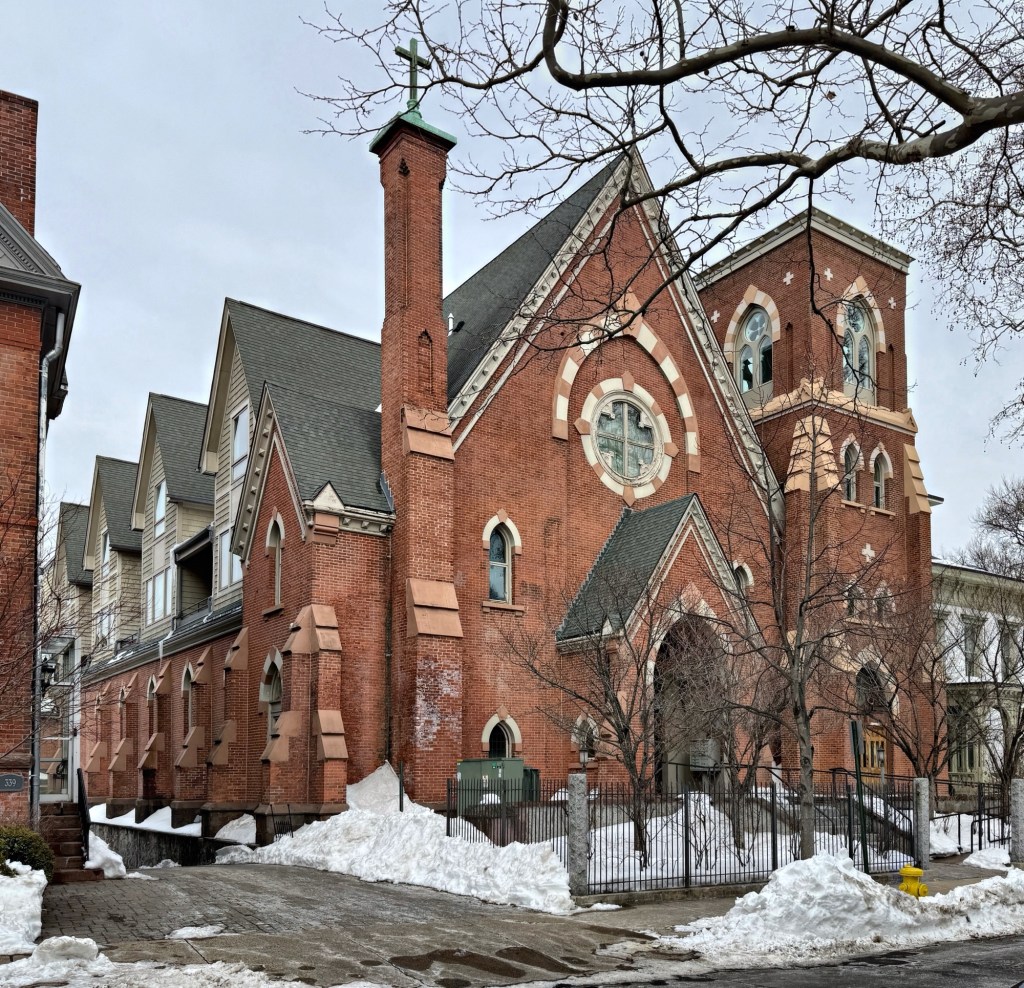
Former St. Casimir’s Church // 1872

Built in 1872, this Victorian Gothic style church on Greene Street in the Wooster Square area of New Haven, Connecticut, has had a varied history that tells the full story of its neighborhood. The church was originally constructed as the Davenport Congregational Church and was designed by New Haven architect, Rufus G. Russell, who formerly worked many years for Henry Austin, the city’s leading architect, before opening his own firm. In the early 20th century, the neighborhood demographics shifted to a more diverse area of recently arriving immigrants who worked in nearby industry and the edifice was occupied by an Italian Baptist church. 1927, the church was purchased by a local Lithuanian congregation, who re-established the building as the St. Casimir Catholic Church. For nearly 100 years, the church remained an active use anchoring the iconic Wooster Square park until the congregation closed, leaving the building’s fate unclear. Luckily, developers purchased the property, which is located within a local historic district, and converted the church into residential units.
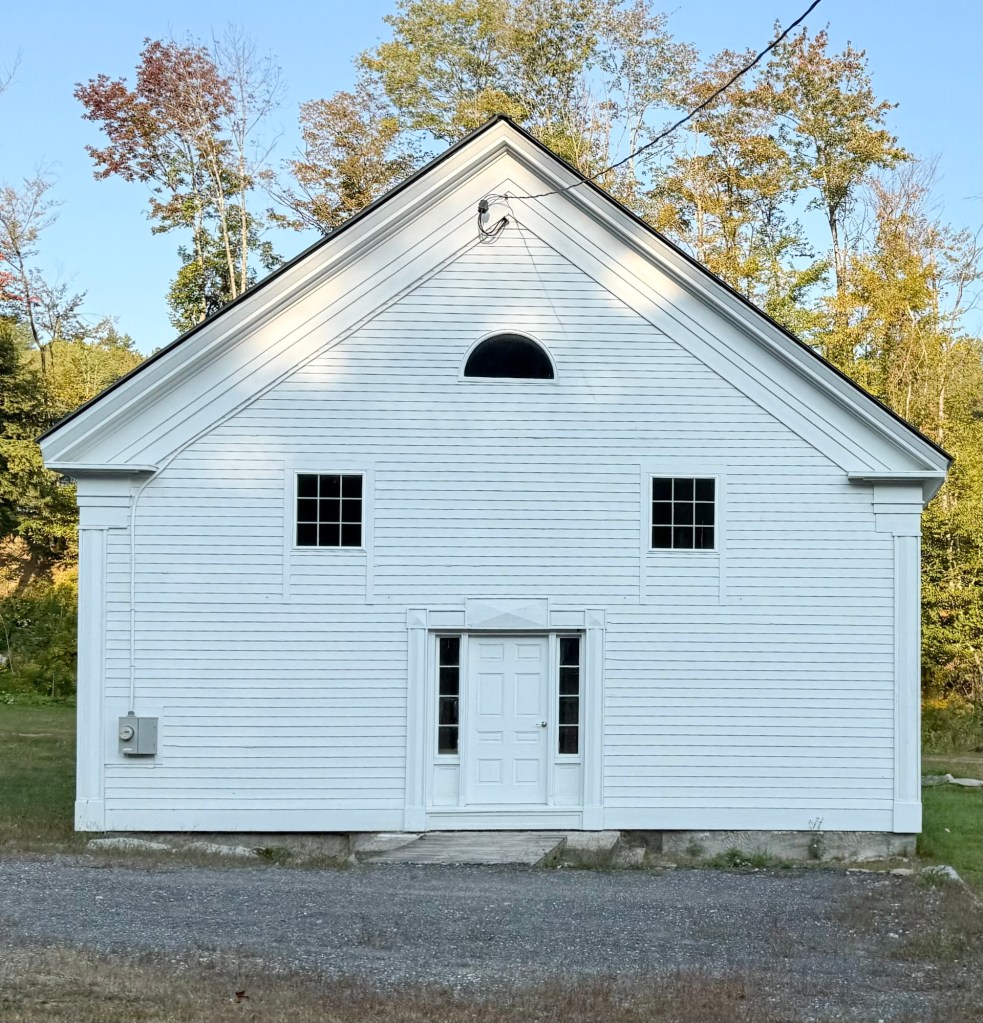
Simonsville Union Meetinghouse // 1848

A once excellent example of a Gothicized, vernacular Greek Revival church in Vermont, the former Simonsville Meetinghouse in Andover, Vermont, has since been renovated into a private residence, removing almost all of the original fabric. Long ago in the Simonsville area of Andover, the residents desired to have a meeting house. There was a Baptist church in the village of Peaseville, but not all the Simonsville residents were Baptists, in fact, there were several religious denominations being followed. None of the religious groups had enough followers in Simonsville to be able to afford a minister and a church building, so they got together and combined their efforts and finances to erect a union meetinghouse that they would share. In April of 1847, the Simonsville Union Meetinghouse Society was formed and later that year, construction began, with the building completed in the spring of 1848. By the late 20th century, membership and use of the building dwindled, causing deferred maintenance and threatening the future of the church. The trustees of the church sold the building, and the church has since been renovated for private home. Sadly, the gothic belfry and historic window fenestration were altered in the renovation, but the entry and basic form remain.