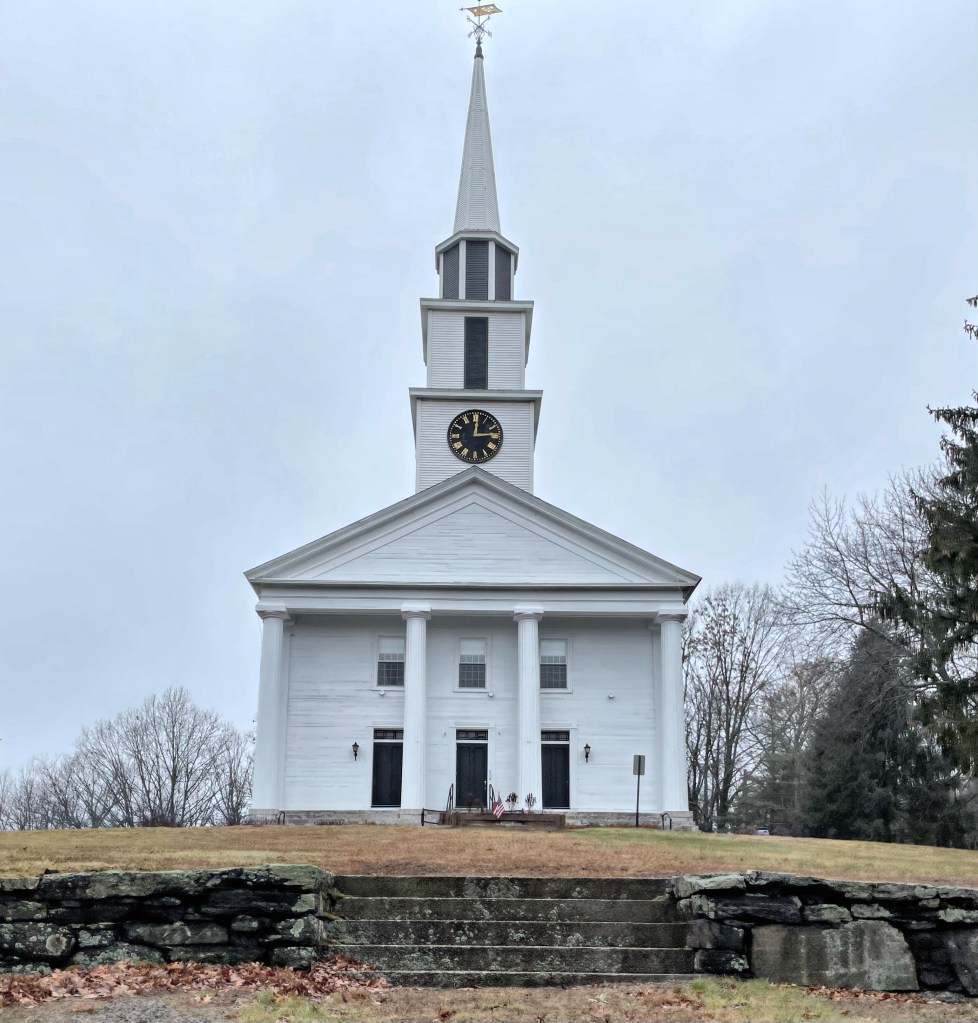
Greenfield Hill Congregational Church // 1855

Local residents of northern Fairfield successfully petitioned the General Assembly to establish a Congregational church in 1725 as a new Northwest Parish, a distinct group from the Fairfield Congregational Church. Their first meeting house was erected just years later in 1727. A larger, more substantial meetinghouse was built in 1760. The area of Greenfield Hill has always been remote and more suburban, but became important in the late 18th century when Timothy Dwight became minister of the Greenfield Hill Congregational Church in 1783. Dwight would go on to become the eighth president of Yale College (1795–1817). With increased funds and affluent members, another church was built in 1850 from plans by esteemed architect Richard Upjohn, in the Gothic style. Sadly, just years after it was completed, a fire from a furnace inside destroyed the church. So again, they rebuilt in 1855 with the building we see today, sort of. Architect Alfred Nash furnished plans for the building which was more Italianate in design. The church would be modernized in the 1940s in the Colonial Revival style, from plans by local architect Cameron Clark, likely inspired by the collection of Colonial-era homes nearby, including his own home in Greenfield Hill. The church remains a visual anchor for the affluent neighborhood.

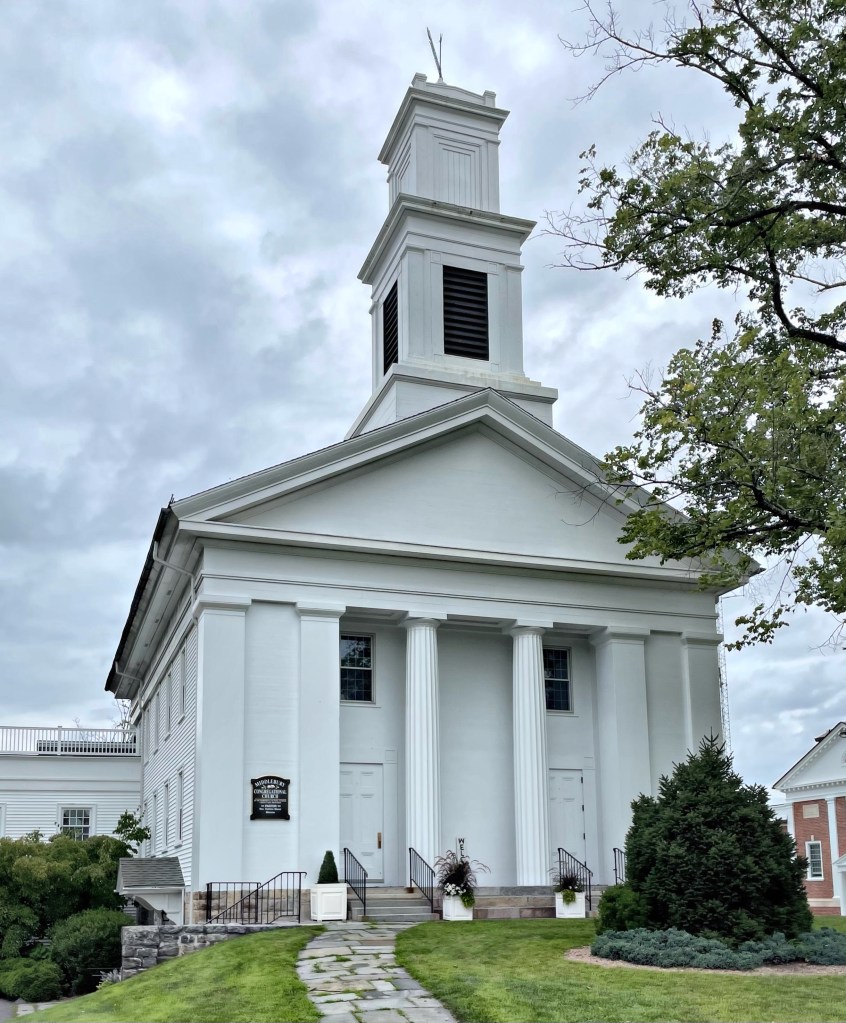
Bramanville Congregational Church // 1804

Not just your typical white New England church here… this one was moved! This church was built in 1804 in the north parish of Sutton (present day Millbury, Massachusetts). In the 1700s, the members of the northern part of Sutton petitioned to have a parish church of their own, rather than trekking across the large town to gather for town meetings and religious purposes. They were permitted to erect a parish church inn 1743, and built a church. The building was replaced in 1804, thanks to the wealth and new members of town moving there for manufacturing. Years later, the parish petitioned the Commonwealth of Massachusetts to have the North Parish of Sutton become the town of Millbury, due to the difference in needs being a mill town compared to Sutton’s more pastoral living, and they were designated as a town in 1813. The first town meeting of Millbury was held at First Congregational Church of Millbury that year on the town common. As industry along the Blackstone River picked up, so came waves of workers, many of whom were recent immigrants to New England. It was soon decided that the town church should relocate to provide a new center for town. In 1835, this church was moved about a mile away and erected high on a hill, in Bramanville village, a bustling industrial village. The church has remained in its location in Bramanville, even after the town center again moved, this time eastward to its present location. The Greek Revival style church elegantly reflects the significance of ecclesiastical buildings in early New England towns.

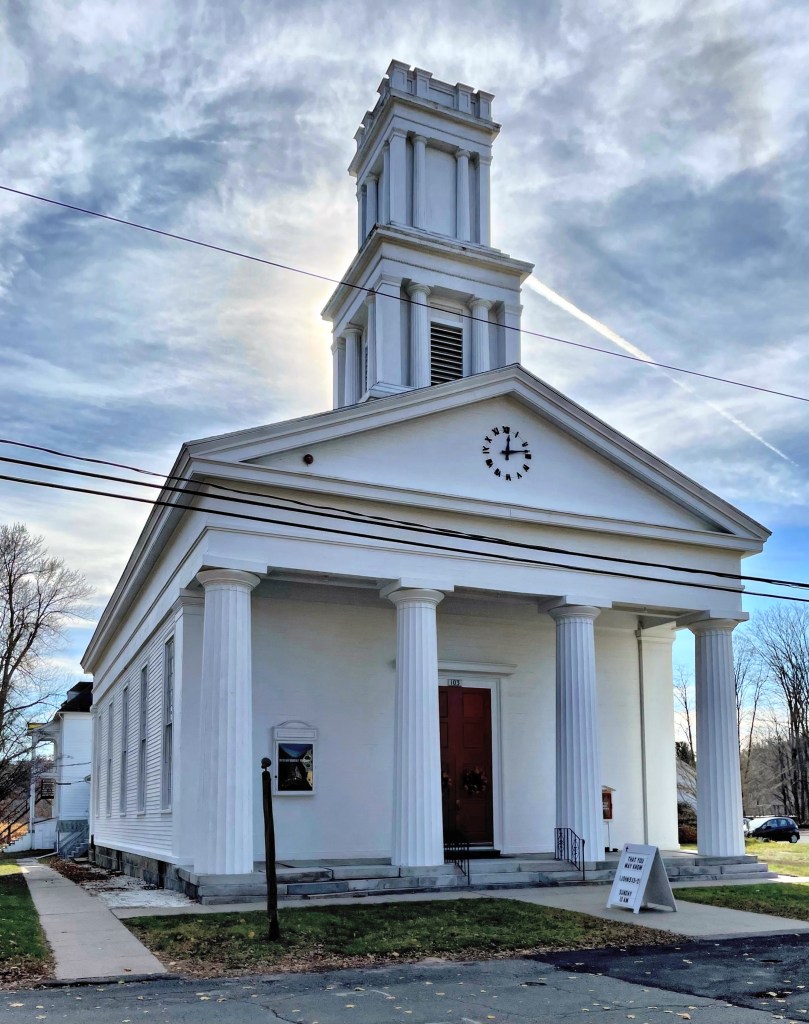
Collinsville Congregational Church // 1858

Shortly after Collins and Company was founded in 1826, religious services were held in various homes in the South Canton Village which came to be known as Collinsville. In 1830, the Collins Company erected its first office building on Front Street, and religious services were held there on the second floor. The first church building was erected on land bought by Collins and Company in 1826. By the mid-1850’s, the church membership was outgrowing the building. Although there may have been plans to enlarge the building, tragedy struck and in January 1857, and the church was consumed by fire, which started in the chimney, during a winter storm. The current building was erected almost immediately and dedicated on February 25, 1858. The present church is a grand Greek Revival style building, with a full pediment and large entablature supported by four monumental fluted columns. The two-tiered, square belfry has engaged columns as well. What a great example of a New England church!

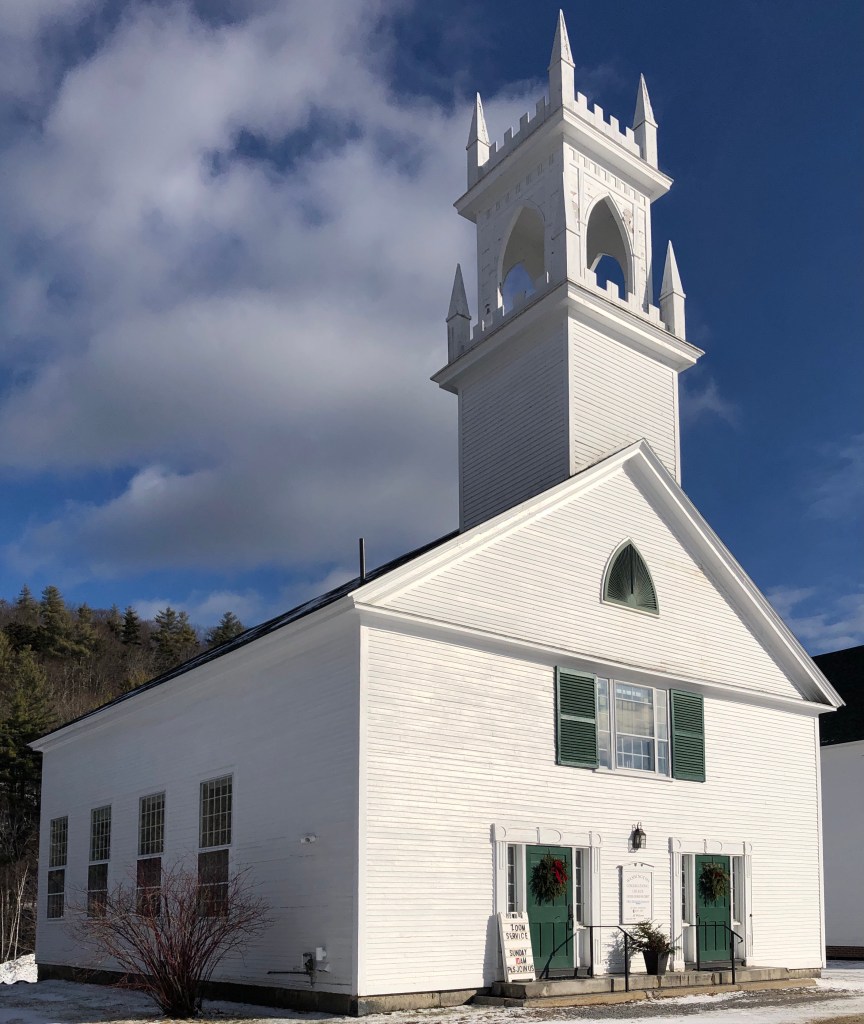
Washington Congregational Church // 1840

Located adjacent to the Washington Meeting House and Central Schoolhouse on the Washington, New Hampshire Town Green, the Washington Congregational Church perfectly compliments the collection of vernacular buildings here to create a very cohesive, three-building historic district. The church is dominated by a Gothic-inspired two stage square tower adorned by pointed pinnacles and crenellation. The building, constructed in 1840, is a great example of a Gothic Revival vernacular church building in rural New Hampshire and has been well-maintained over the years. In 1960, a fire in the church resulted in several thousand dollars worth of damage. A full basement was built under the church in 1985 to provide space for Sunday School classes and events. The simple arched sanctuary has remained in keeping with the original interior design, and features wide board wainscoting and wooden pews, taken from the old Meeting House.