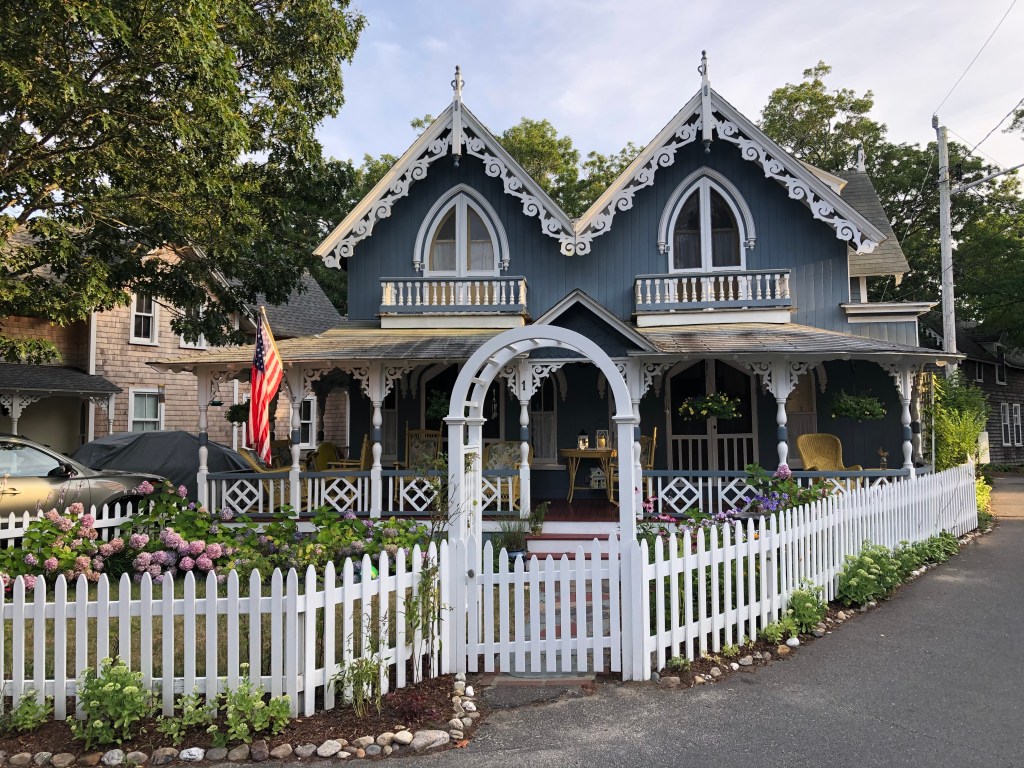
Kickemuit Cottage // 1869

Summer is here and I am missing my favorite place to explore, Oak Bluffs on Martha’s Vineyard. The town is sleepy most of the year, but in the Summer, the place explodes with summer residents and tourists, providing such a lively and diverse atmosphere. One of the most beautiful of the cottages in the Wesleyan Grove campground is the Kickemuit Cottage, built in 1869 for a family from Rhode Island. They so-named the cottage after the Kickemuit River which runs from Massachusetts through Warren, RI and spills out into the Mt. Hope Bay. The story goes that this double cottage was actually just a single peaked home until it was combined with another giving it the double-peaked appearance we see today. The cottage retains the turned posts, delicate gingerbread detailing, and the lancet windows and doors. Swoon!

Side note: If anyone has a cottage in Oak Bluffs that they’ll let me rent, I would love to be in touch!
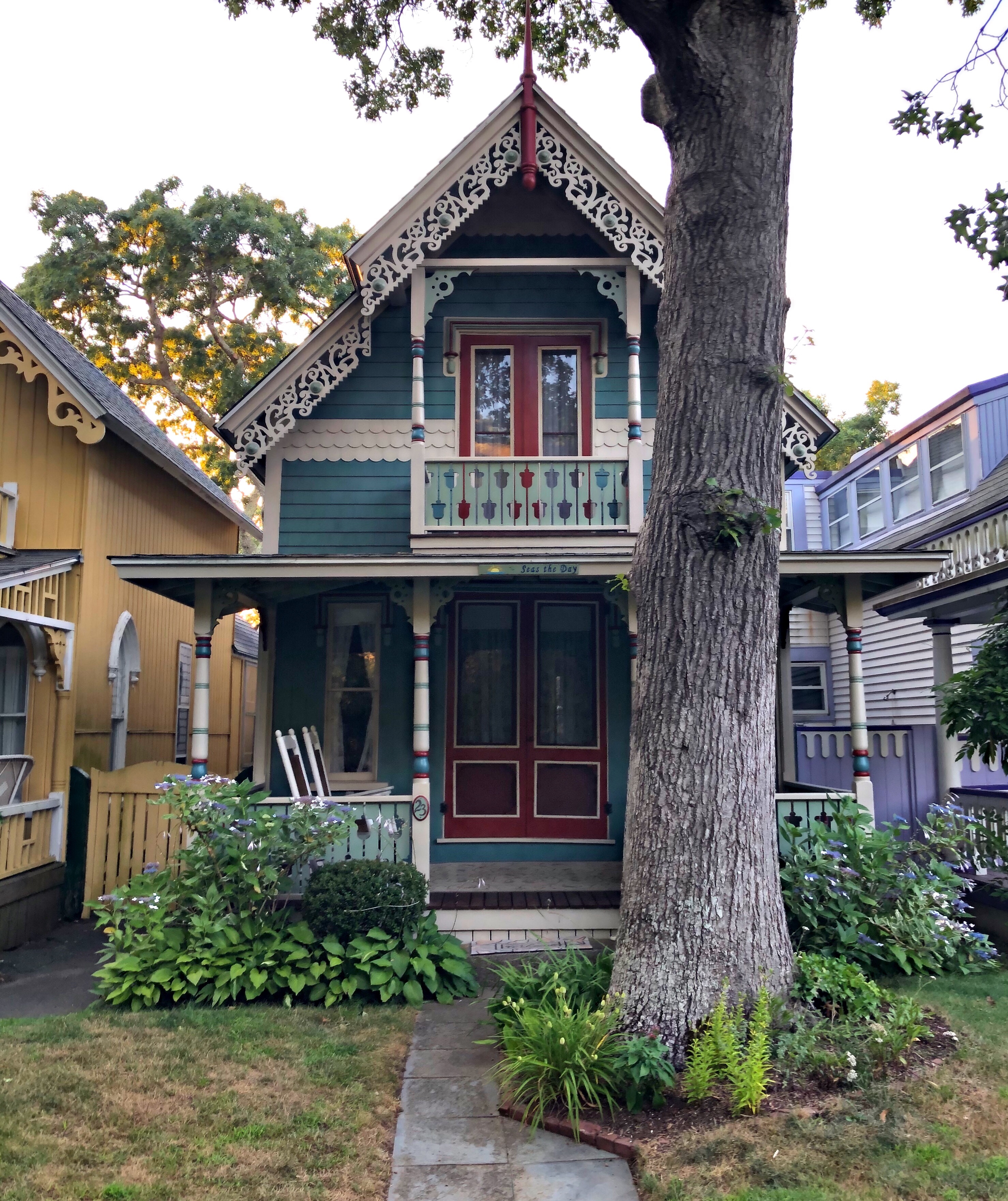
“Seas the Day” Cottage // 1875

This quaint little summer cottage in Wesleyan Grove was built in 1875 for Hanson Arnold, a merchant and methodist from Woonsocket, R.I. The home is typical of many other summer cottages in Oak Bluffs on Martha’s Vineyard, with its delicate stick work, turned posts, full-length porch, and second story balcony with pierced bargeboards. The home was at one point named “Seas the Day”, a trend of naming the cottages occurred sometime in the 20th century by families who summered on the island, many incorporating the family’s name somehow. The home was restored recently with all new detailing and a reversion back to the original porch configuration.

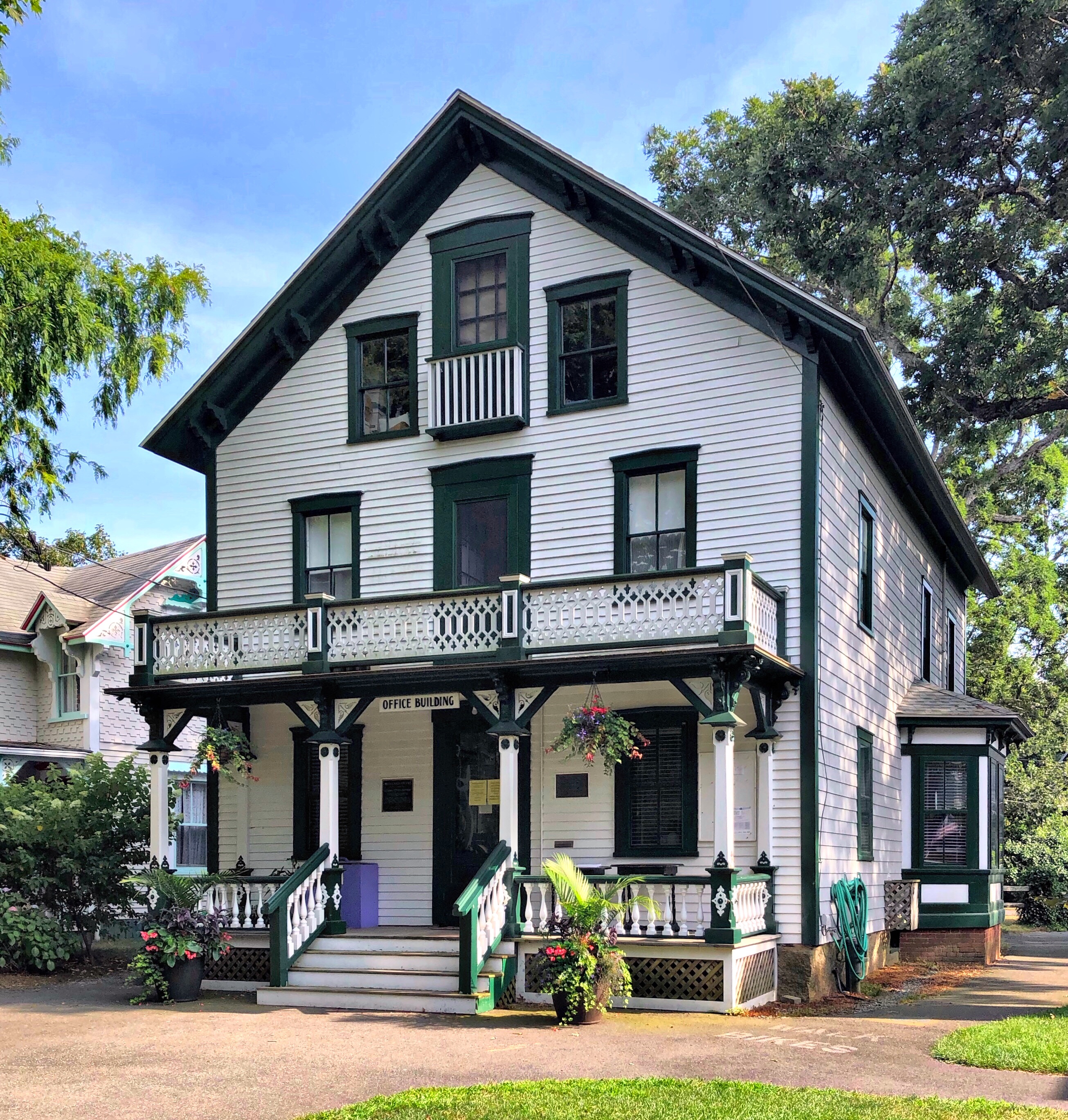
Methodist Camp Meeting Association Office // 1859

Located at the center of the Wesleyan Grove, – the Martha’s Vineyard Camp Meeting Association – this Italianate building has long served as a hub of the active summer community. The building was constructed in 1859, before any cottages were built in the newly formed summer colony. The office building was not only the headquarters for the Camp Meeting Association, it also served as a storage space for the baggage of the many who stayed in tents, many who didn’t have the means to purchase or rent a cottage. The building even was home to the associations’ post office. It now houses the Association director’s offices and contains the lease holders records back to 1864, a great way to learn about the diverse groups of people who visited and worshiped in this camp.