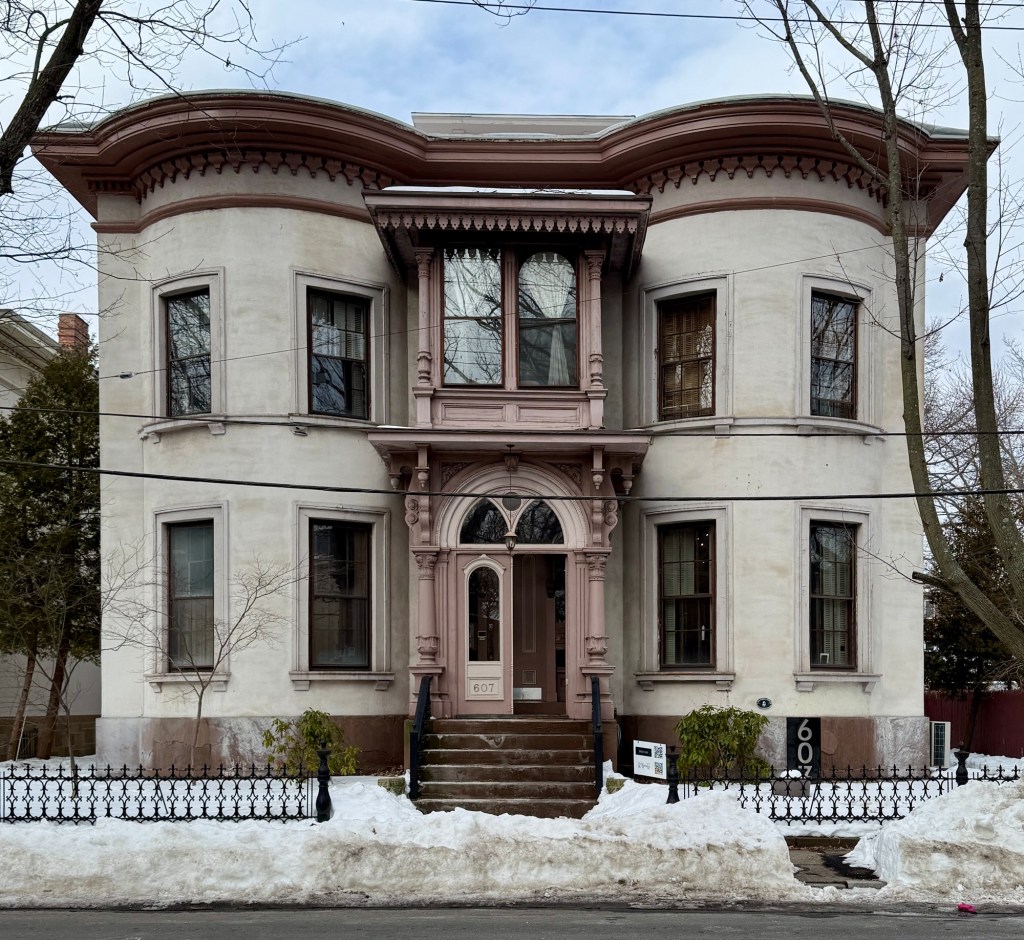
Hotchkiss-Shoninger House // 1854

The Hotchkiss-Shoninger House on Chapel Street in New Haven’s Wooster Square district is one of three residences in a row developed and designed by the duo of architect, Henry Austin, and lumber dealer/developer, Nelson Hotchkiss. The finest of the three residences, this house, was built in 1854 and features a double bow-front facade, brick walls covered in stucco, and ornate two-story central porch with brackets and colonettes. Nelson Hotchkiss moved into this home from his first Austin-designed house and resided here for a number of years before moving back to the first home again. The second owner Frederick Betts, was an insurance commissioner, and in the late 19th century and early 20th century, the home was owned by Bernard Shoninger, a German-born, Jewish organ maker.
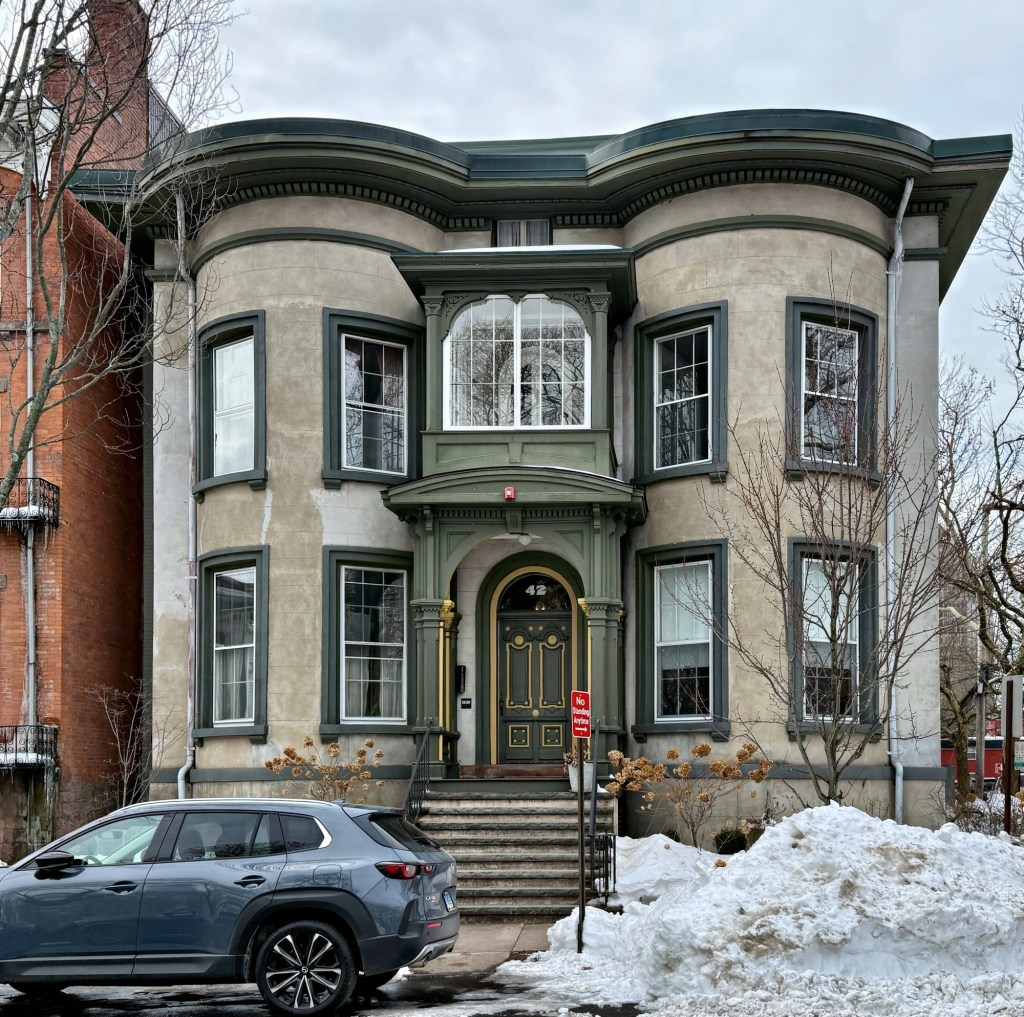
Edward Rowland House // 1857

The Edward Rowland House on Academy Street in New Haven’s Wooster Square neighborhood is among the many great mid-19th century residences in the city and a rare example of a bowfront form. The residence was built for Edward Sherman Rowland (1812-1882), a prominent grocer, real estate developer, and Assistant U.S. Assessor and his family. The home is an example of the Italianate style with double-bow facade and is built of brick covered in stucco. The property was converted to condominium units and now houses six families.

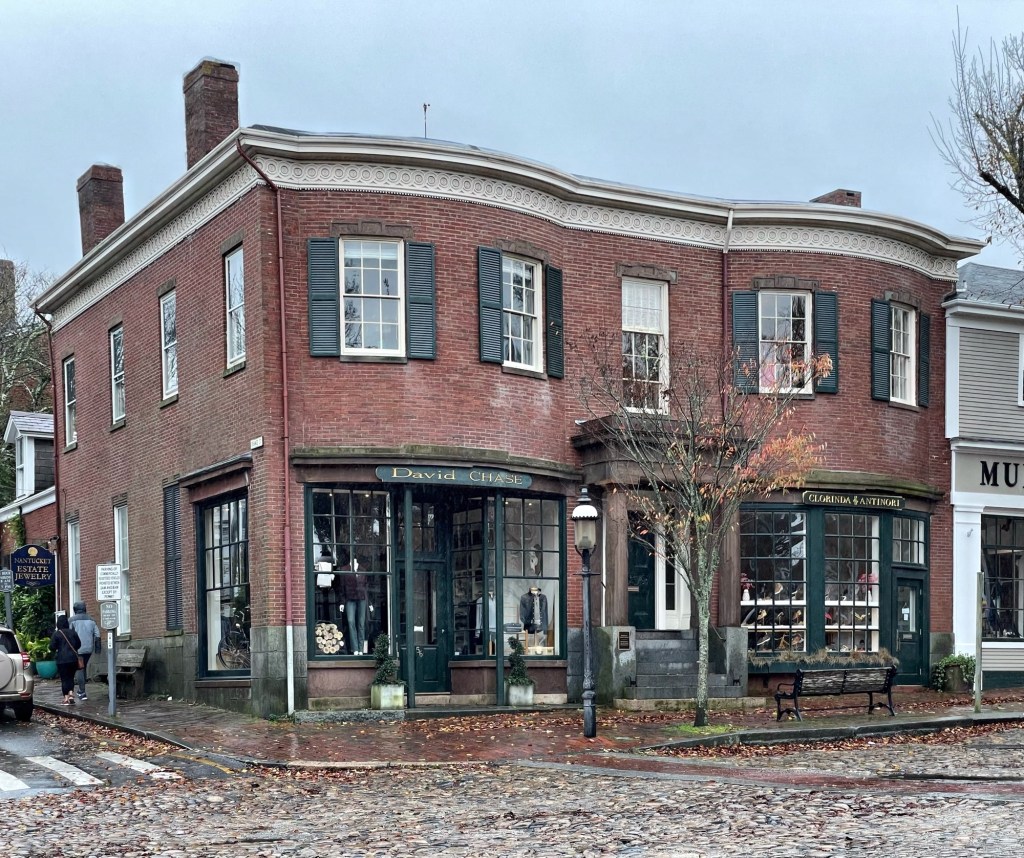
Folger House // 1831

Located in the middle of the commercial Main Street on Nantucket, the 1831 Folger House stands as a fully developed example of the Federal style in masonry construction. The house’s double bow front, brownstone lintels and Ionic portico, guilloche frieze, and cast-iron railings are the finest of their type in the community. Although the house was turned into commercial use in the mid-19th century with the addition of storefronts and the removal of its original hip roof, it retains substantial architectural elements of a more decorated design than was customary even among Nantucket’s wealthiest merchants in this period. The house was built for Philip H. Folger, a merchant and it was inherited by his son upon Philip’s death in 1865.