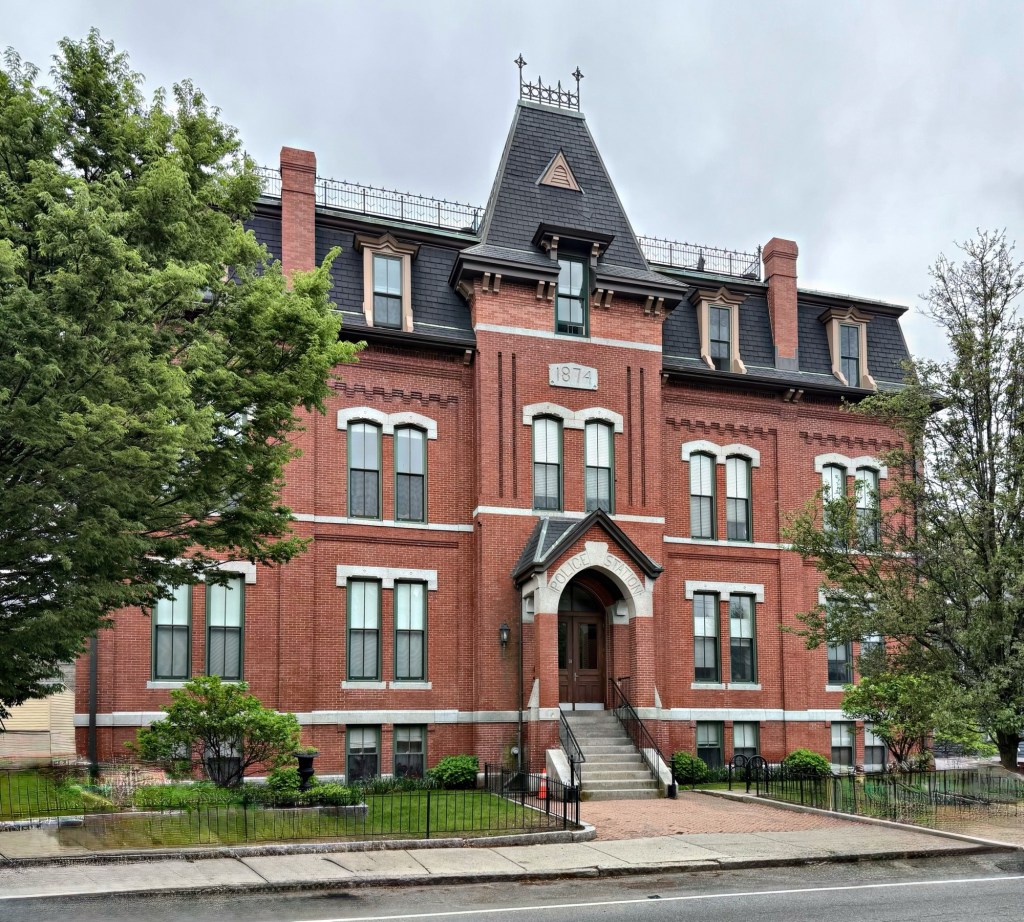
Former Somerville Police Station // 1874

Somerville, Massachusetts, was long part of Charlestown, until it incorporated as a separate town in 1842. From the 1840s until just after the Civil War, Somerville went from a sleepy farming village to manufacturing center, spurring a sharp influx of immigrants to the city, industry boomed and brick manufacturing became the predominant trade. The town of Somerville incorporated as a city in 1872, and one of the first civic buildings constructed as a new city, was this Victorian Gothic building on Bow Street in Union Square to house the growing Somerville Police Station. Built in 1874 from plans by architect, George Albert Clough, a prominent and busy local designer. The handsome station was in use until the new Police Headquarters further east in Union Square was built in 1932. This building was sold off by the city and became offices and housed meeting spaces for a local boy’s club and an American Legion Post until it was converted into housing in the late 20th century. 
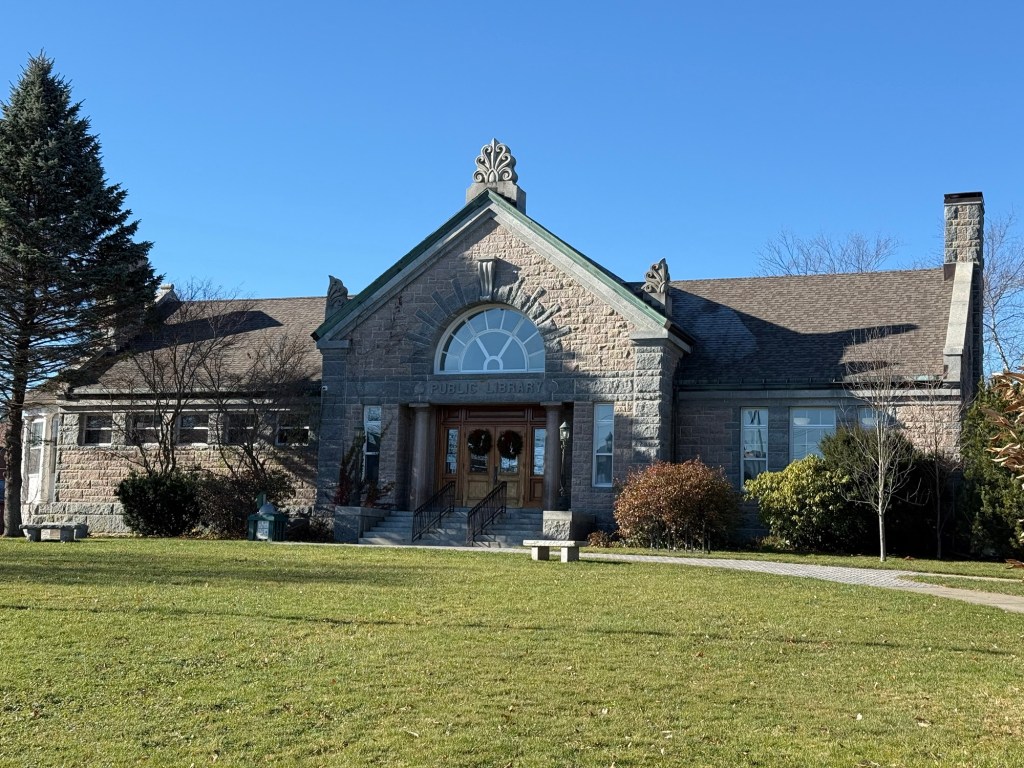
Rockland Public Library // 1903

The Rockland Public Library in Rockland, Maine, is an architecturally significant civic building that showcases the coastal town’s prosperity at the turn of the 20th century. The library was built in 1903–04, and was funded in part by a $20,000 grant from Andrew Carnegie. It is the city’s only major example of Beaux Arts architecture, a style that is also uncommon in the state. The library was designed by Maine native George Clough, who used granite quarried from nearby Vinalhaven in its construction. The building was later expanded by an addition at the rear, but from the street, the handsome Beaux Arts library looks near-identical as to when it was built over 120 years ago!

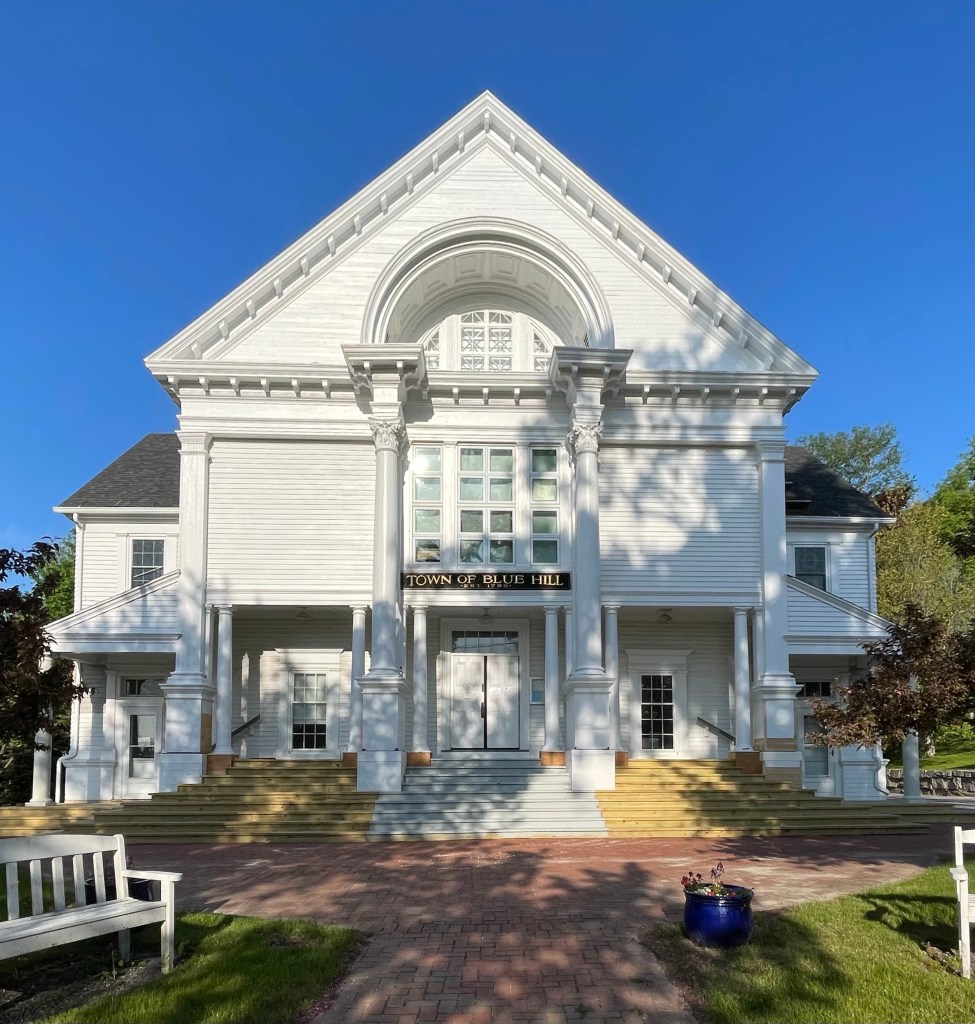
Blue Hill Town Hall // 1895

Blue Hill is a charming coastal town in Hancock County, Maine that retains so much of the charm that has been lost in many other coastal New England villages. Originally settled by the Penobscot Tribe, the town as we know it was incorporated in 1789 under the name “Blue Hill”, named after the summit overlooking the region. The town thrived early as a lumber and wood shingle exporter, later shifting to shipbuilding. The town was also noted for the quality of its granite, some of which was used to build the Brooklyn Bridge, New York Stock Exchange Building, and the U.S. Custom House at Norfolk, Virginia. In 1876, local quarries employed 300 workers. The town’s wealthy summer residents likely sought a new Town Hall for Blue Hill, as in the 1890s funding was acquired to erect a new building. It came as no surprise that George Albert Clough, an architect born in Blue Hill would furnish the plans for the new town hall. George was the son of Asa Clough an early settler and shipbuilder in town. He moved to Boston to work as an architect and later became the City of Boston’s first “City Architect” designing municipal buildings. For the Blue Hill Town Hall, he designed it in the Colonial Revival style, which remains well-preserved to this day.