Former Weeks Junior High School – Weeks House // 1931

Adaptive reuse projects will ALWAYS get love on here!
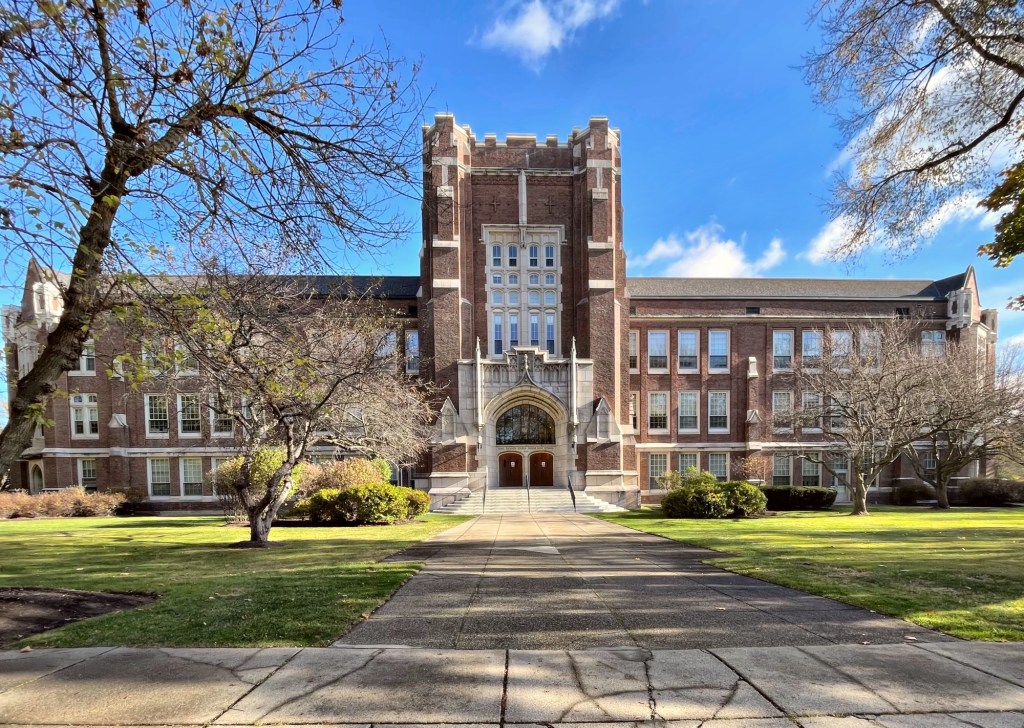
Originally constructed in 1931 as the Weeks Junior High School in Newton Centre, Newton, this architecturally significant school building is the finest local example of the Tudor Revival style in that use. The Weeks School was designed by Ralph Coolidge Henry and Henry Parsons Richmond, architects who were draftsmen for Guy Lowell, one of the greats, and the successors to his practice upon his death in 1927. The design for the Weeks School is of traditional brick and cast stone, with its main entrance through a large Gothic arch at the center of the building. Two wings extend parallel to the tower and then bend back at 45-degree angles, creating the distinctive U-shaped form, which provided ample natural light in all classrooms. After a consolidation of local schools in the mid-20th century, the Weeks School closed, but was beautifully rehabbed in 1984 into housing as the Weeks House. Today, the building is comprised of mixed income housing of about 75, one-, two- and three-bedroom units.
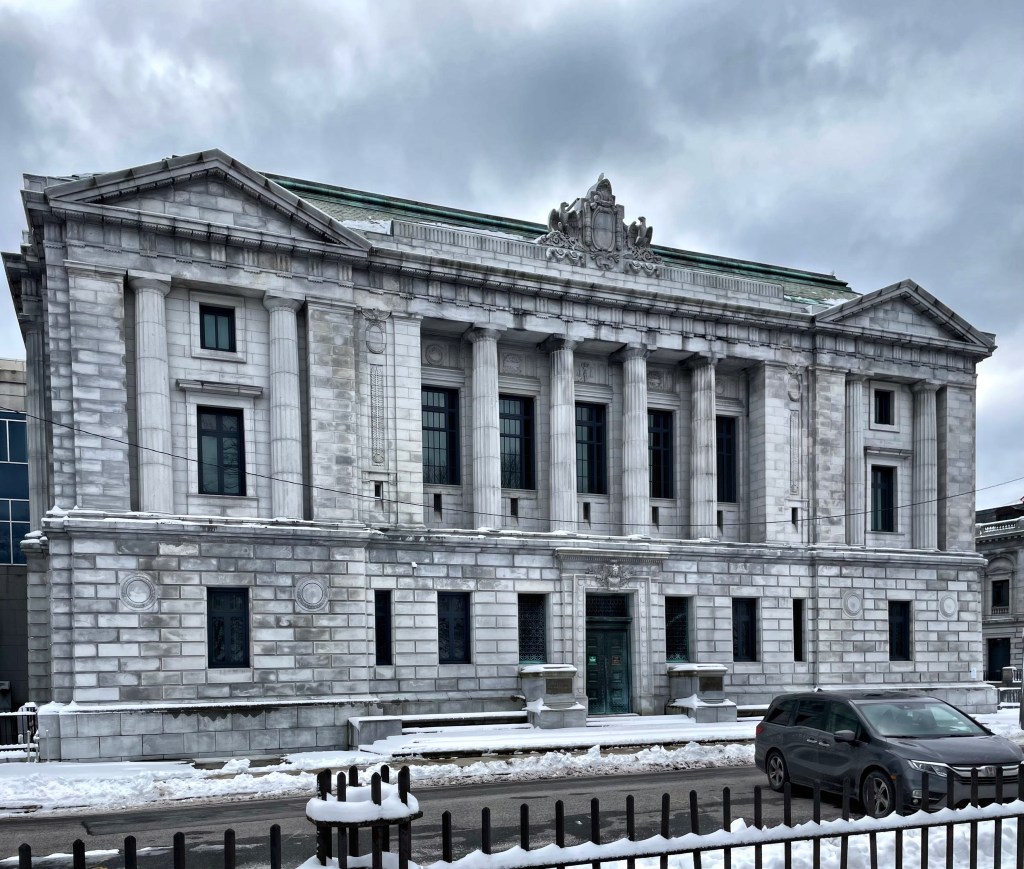
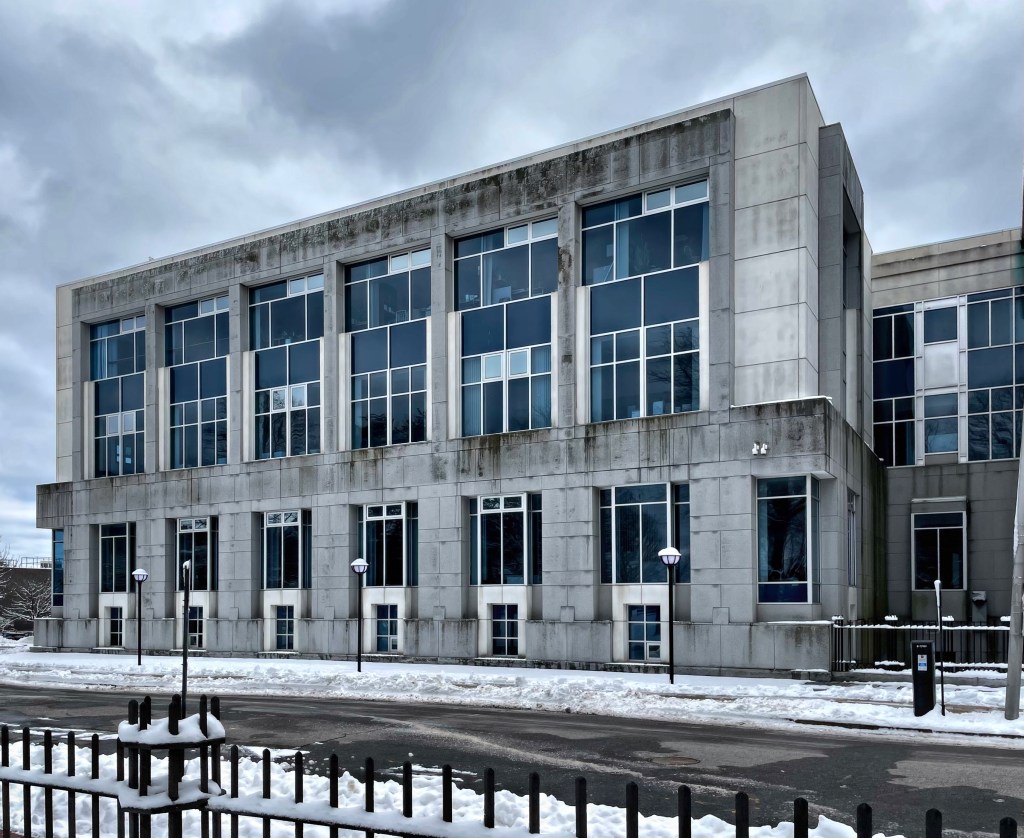
Cumberland County Courthouse // 1910

The Cumberland County Courthouse in Portland, Maine, designed by Guy Lowell, architect of Boston with local associate architect George Burnham was designed in 1906 and completed in 1910 and is the best in Classical Revival architecture. On the north and east sides is a three-story addition built between 1988 and 1991 by Terrien Architects Inc., showcases how Modern additions can be contextual and recessive, highlighting the historic buildings which they are attached to. What do you think of the original courthouse and its addition?

Unitarian Church of Barnstable // 1907

Early in the 17th century, the Rev. John Lothrop and his followers left England for these shores seeking religious independence. They settled first in Scituate and a few years later came to Barnstable, arriving in 1639. They constructed their first meetinghouse in 1646 on Coggins Pond, about a mile west of this church. Lothrop’s second dwelling in Barnstable is the current Public Library in town (featured previously). In the early 19th century there was considerable theological debate in the “churches of the standing order” in New England. Many churches actually split over this debate, the traditionalists becoming Congregationalists and the liberals becoming Unitarians. The Eastern Parish in town was thus occupied by the Unitarians. In 1836 the original meeting house was removed and a new, larger one was constructed. It was destroyed by fire in 1905, and planning began for a new church. The present edifice was dedicated in 1907, and was designed by architect Guy Lowell, the architect of the Boston Museum of Fine Arts and the New York County Courthouse. His traditional, Classical designs were featured in publications all over the country. This church in the Classical Revival style is one of the finest on Cape Cod.

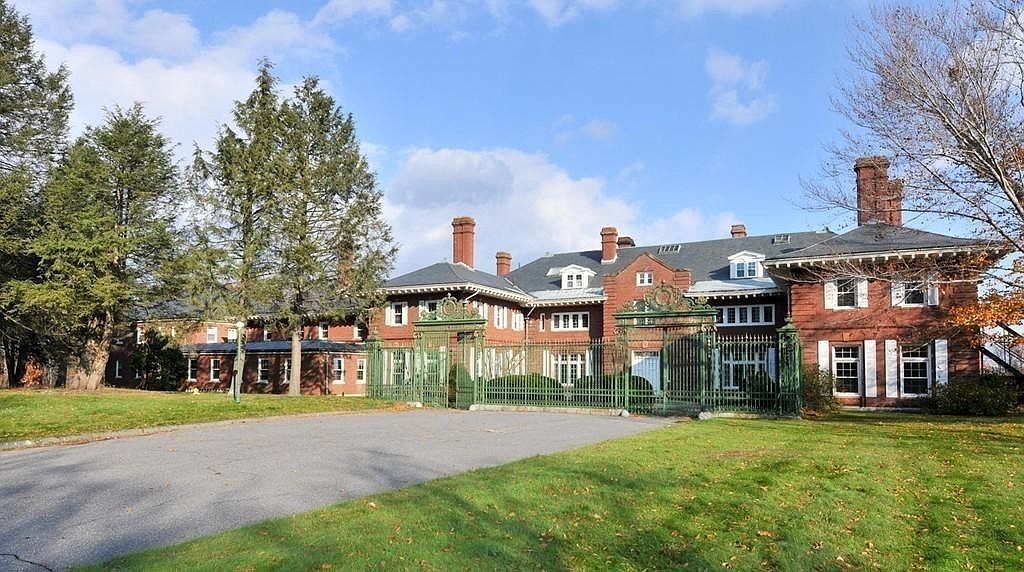
Hawthorn Hill Estate // 1903

The only estate in Lancaster that can rival the Nathaniel Thayer Estate in size and grandeur is the OTHER Thayer estate, built for Bayard Thayer. Sitting on over 55 acres of forests and gentle rolling fields, Hawthorn Hill is one of the most impressive mansions in Central Massachusetts. The property is so secluded that I had to rely on real estate photos to share! The listings mention that there are over 40 bedrooms and 27 bathrooms… Bayard Thayer (1862-1916) is the grandson of Nathaniel Thayer, Unitarian minister of the First Church of Christ in Lancaster and son of Nathaniel Thayer, a banker. When his brother was willed the family estate (featured previously) after the death of their father, Bayard used the opportunity to build a modern estate high upon a hill in town. The mansion was built in 1903-1904 under the direction of Guy Lowell, a renowned Boston architect of the time. In 1907-1908, Little and Browne were commissioned for landscape alterations and in 1914-15, Ogden Codman Jr. was commissioned to renovate the interiors. Bayard died one year later, and the property remained in the family until around WWII. In 1953, the property was acquired by the Boston Cenacle Society, who added a massive dormitory addition to the building. Recent plans were unveiled to subdivide the land and build house lots on half the estate, which gives me mixed feelings.