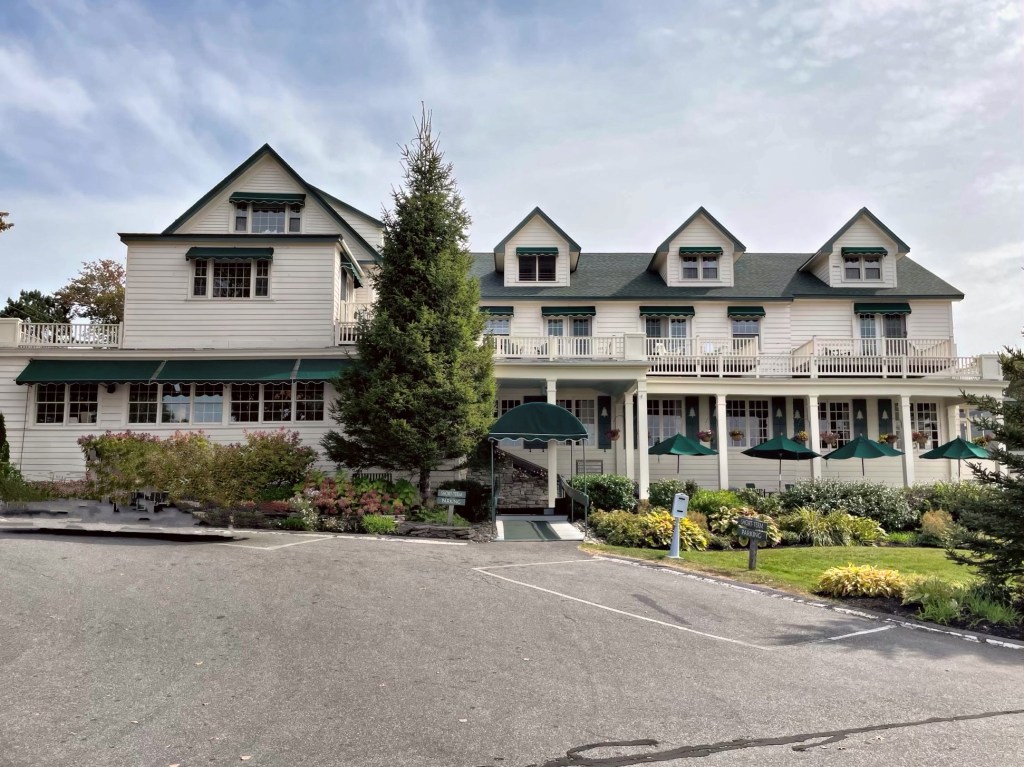
Spruce Point Inn // c.1892

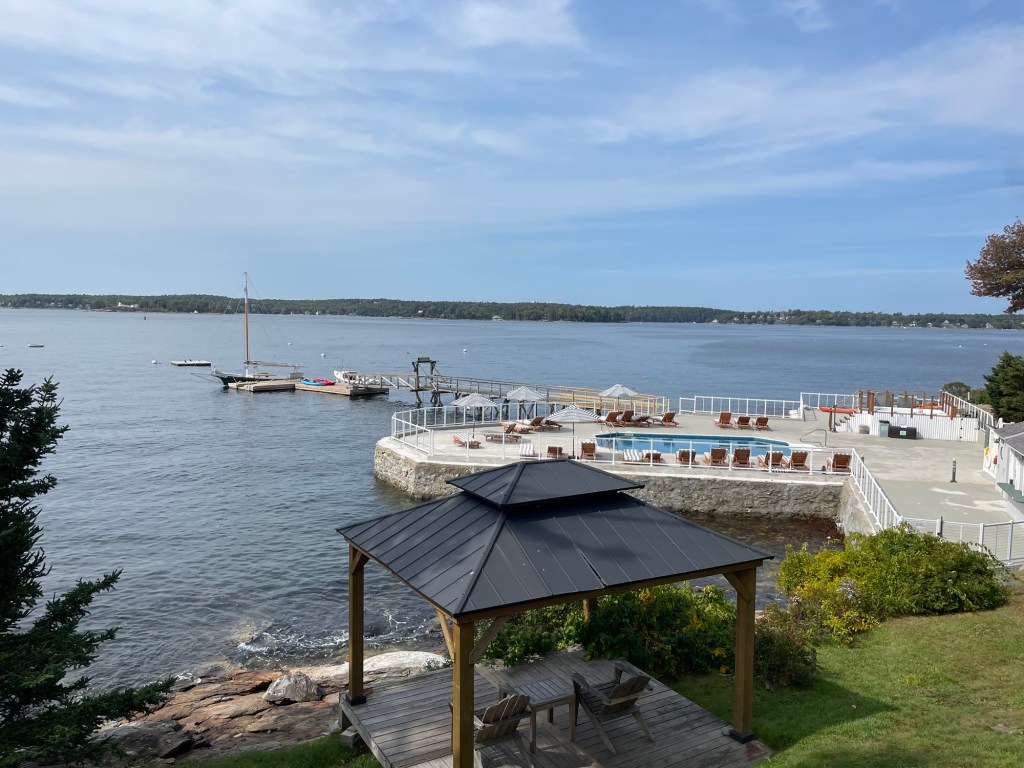
Spruce Point Inn sits amongst acres of pristine pine forests on the shore of the rugged coastline in Boothbay Harbor, in Mid-Coast Maine. The Inn had its beginnings in the 1890s as a hunting and fishing lodge when the peninsula was an undeveloped and remote point on the outer edge of Boothbay Harbor. The enchanting location off the beaten path attracted rusticators, who sought to escape the hot and polluted air of Boston and other cities, for the coastal breezes on Spruce Point. Private cottages were built nearby the old lodge, and frequented by summer rusticators year-after-year. By the 1940s the lodge was converted to an inn and many of the private summer cottages surrounding were acquired and rented out for summers. The buildings exhibit the warm, natural materials typical of the region, with weathered shingles and expansive porches that invite guests to take in the ocean breeze. Inside, the beadboard walls, wood floors, and fireplaces paired with period-appropriate furnishings really provide an authentic historic feeling. The resort’s first saltwater pool was constructed in a rocky outcropping right at the coastline and was recently restored, providing visitors a unique experience to swim in a historic saltwater pool just over the ocean! Over the years, the inn has undergone several renovations and expansions, ensuring that it continues to meet the needs of modern travelers while preserving its historical significance. The Spruce Point Inn is more than just a place to stay; it is a part of the rich history of Boothbay Harbor and ongoing legacy, a historic getaway that blends both luxury and history in a setting unlike any other.
Blue Hill Inn // c.1830

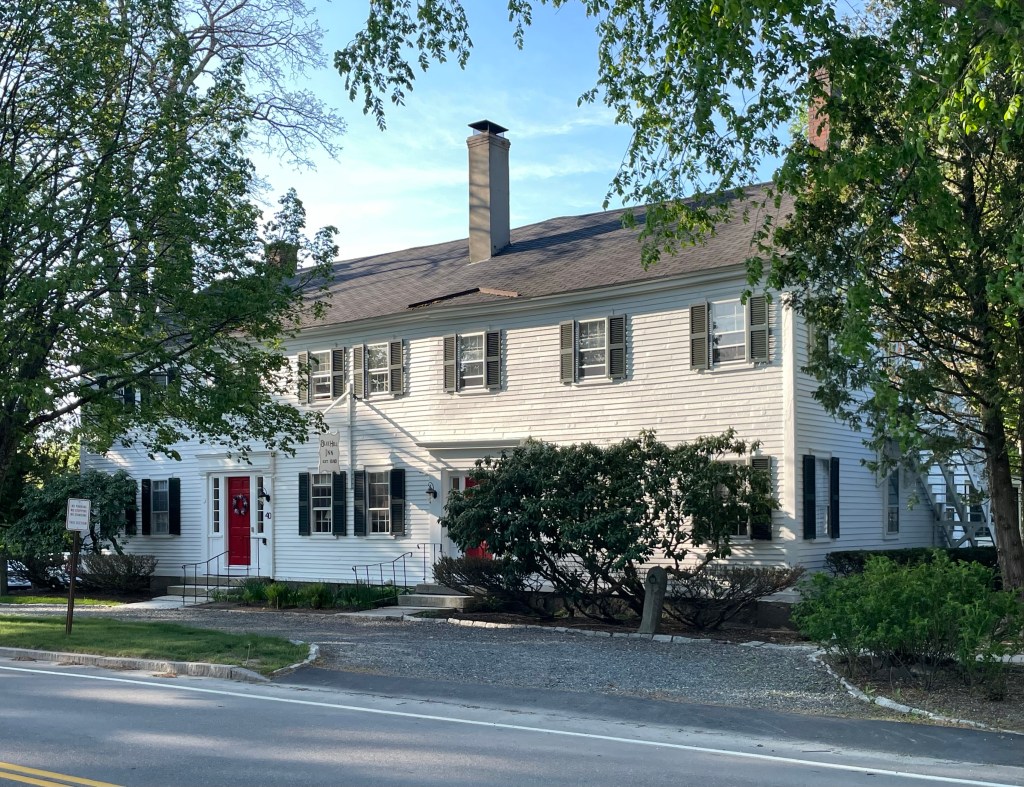
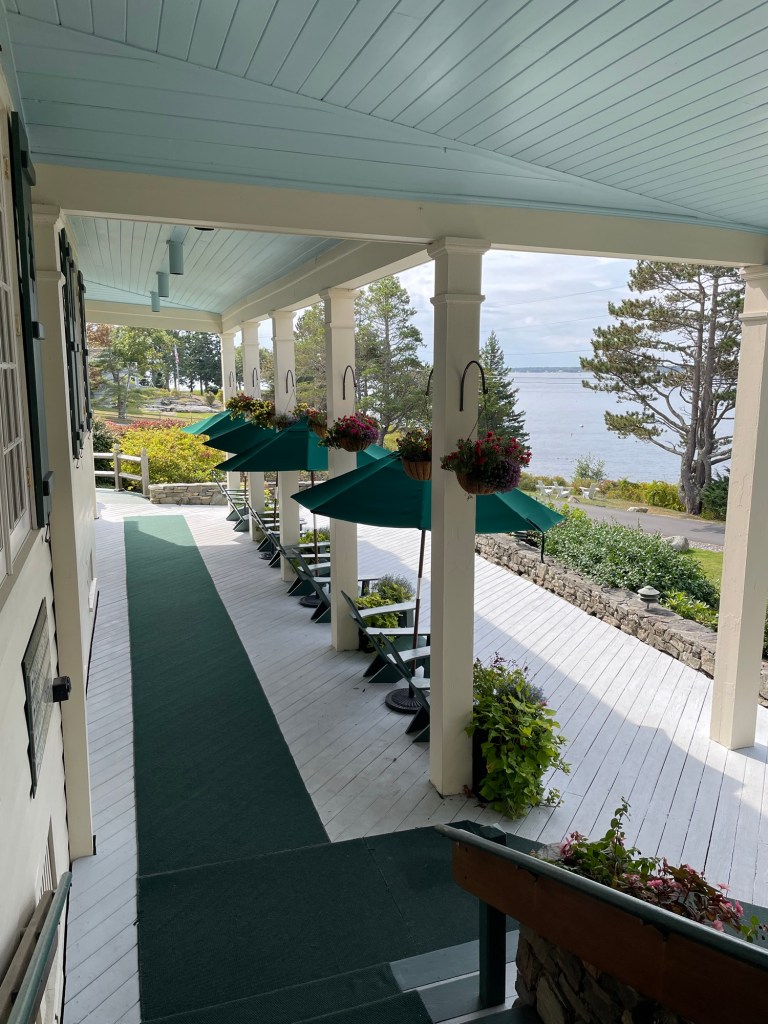
The major part of this structure in Blue Hill, Maine was built as a house around 1830 by Edward Varnum Stevens. Stevens started an inn in his home likely after his marriage to wife, Susannah Hinckley. When Edward died in 1857, the property was acquired by Haskell W. Hinckley in 1858, who was possibly Susannah’s brother. Hinckley was a sea captain and his wife, Fanny Hinckley operated the hotel here for 50 years, known as the Blue Hill House. The hotel became a social center for the community and became a gathering place for many. The structure, now known as the Blue Hill Inn, continues to welcome visitors today. The elongated Federal/Greek Revival style house is excellently preserved inside and out, and guests can stay in one of the 11 gorgeous suites inside, which take you back in time.

Four Columns Inn // 1832

One of the best examples of a temple-front Greek Revival house in the state of Vermont is this stunner, found in Newfane Village. The house was constructed in 1832 for General Pardon T. Kimball (1797-1873), a cattle-broker, general of the state militia and later, a state senator. Kimball made a name for himself locally as he donated much of his money to social causes, from a local almshouse to other charitable organizations. Kimball died in 1873 after falling from his carriage. The house was converted to an inn in 1965-6 and has since been known as the Four Columns Inn, so-named after the four monumental Ionic columns that dominate the house’s facade.

Bailey’s Mills // 1837

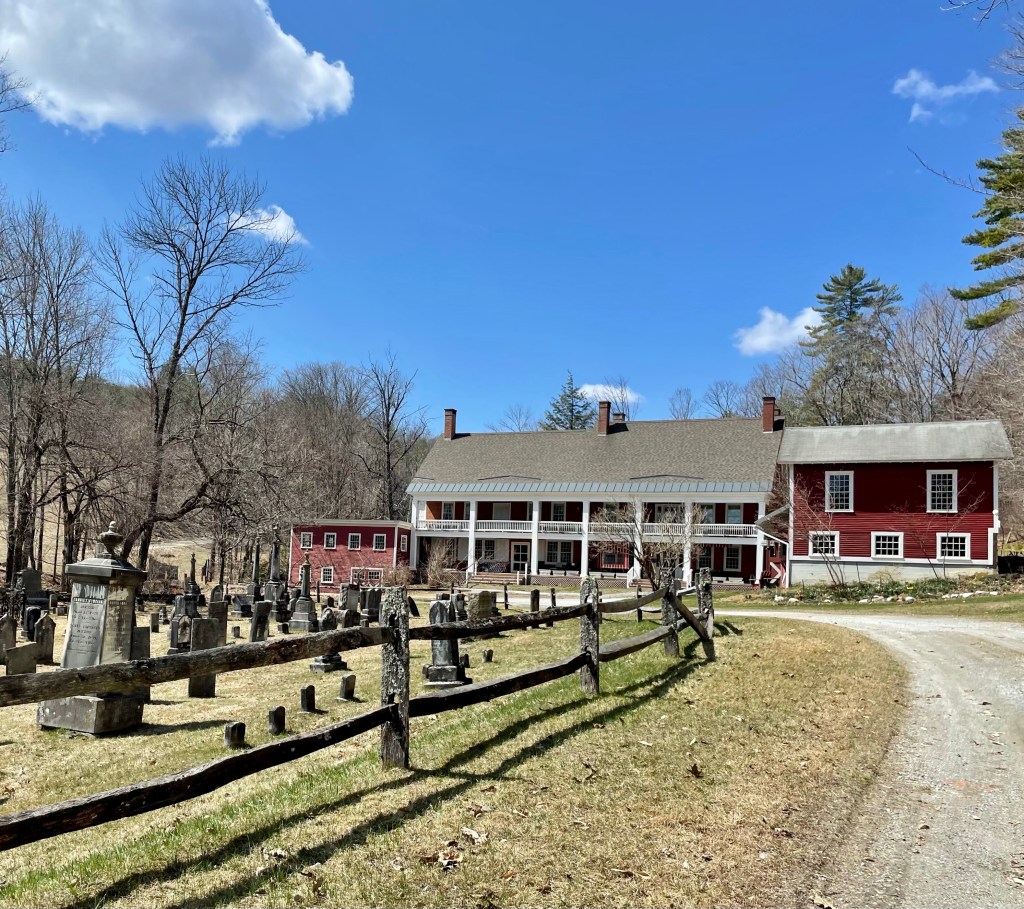
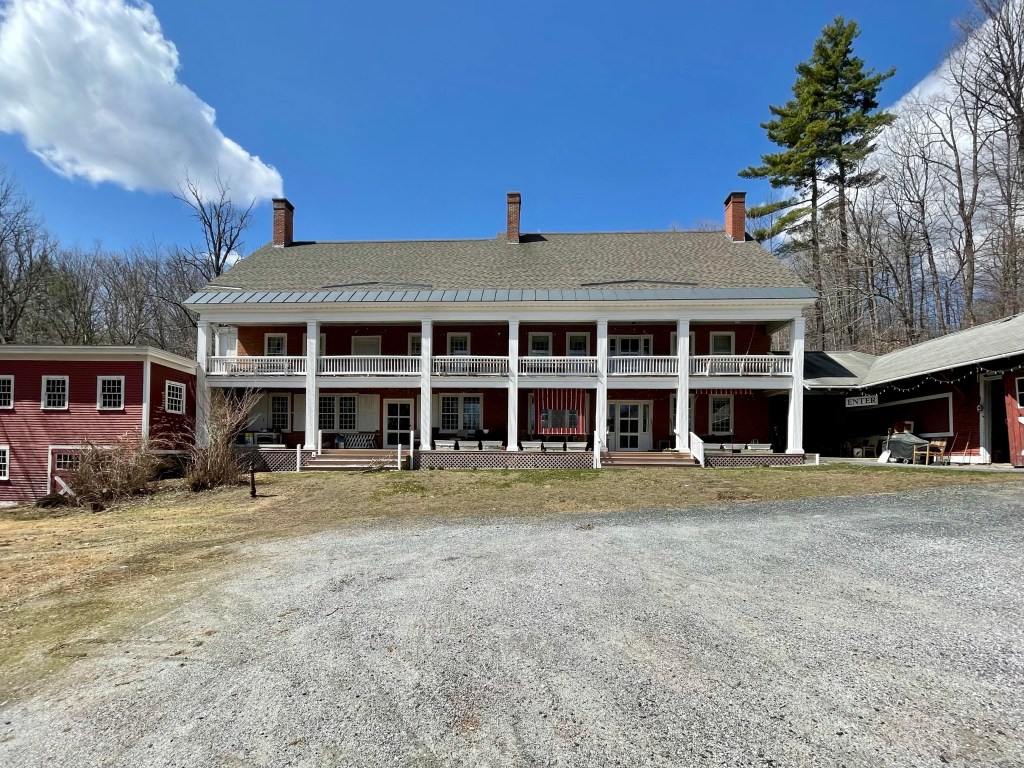
Driving down the dirt roads of rural Vermont with no cell phone service can be a great way to explore, so imagine my delight when i drove past this stunning old building tucked behind a historic cemetery! The building was erected in 1835-1837 by Levi Bailey, a local entrepreneur and mill owner who, in 1794, in partnership with a George Betterley, purchased the mill site and proceeded to build a dam, for later development. Legend says, in 1808, he required the good will of David Hapgood, his next door neighbor, so he could buy more land in front of his proposed mill. But, in fact, Levi had so irritated Hapgood somehow, that he instead donated the coveted acre to the Town of Reading for use as a town cemetery, ensuring that Bailey could never control it. Thus a “spite” cemetery was laid out, the only one I am aware of! Underterred, Bailey erected over the next two decades the series of buildings to manufacture goods, the buildings we see today. Bailey’s Mills in Reading, Vermont, is actually three connected, 2 1/2-story, brick, Greek Revival style buildings with several attached wood frame appendages added over time. He lived in the building and a store was run out of the building for locals. The building is now home to the Bailey Mills Bed & Breakfast.

New Hampshire Mountain Inn // c.1790

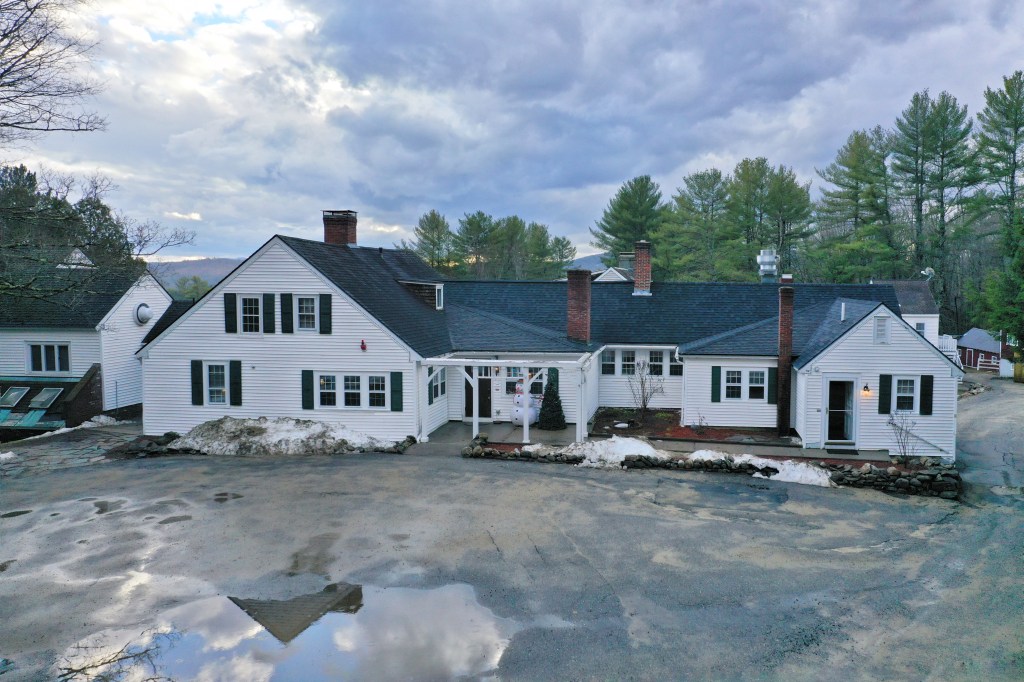
At the base of Ragged Mountain, on a winding dirt road lined by towering pine trees, I came across the New Hampshire Mountain Inn. The original Cape block of the house was built in the late 18th century and operated as a farm for a family in the rural town of Wilmot, New Hampshire. By the mid-19th century, the construction of the Northern Railroad through New Hampshire, created a housing demand for railroad workers who spent long days laying rail lines, thus the beginning of this farm becoming a short-term boarding house began. The railroad line was officially abandoned by the 1990s, and later converted to a linear park with biking, walking, and snowmobile trails in various sections. After the railroad’s construction, the farm saw visitors beginning in the 1930s, drawn to the area due to the skiing opportunities in the area. Subsequent owners added onto the farmhouse numerous times, to accommodate growing flocks of skiers every season. The house features telescoping additions, similar to many historic farms in New England, but on three sides, which expanded the once small farmhouse to a modern inn. The siting of the property on a hill overlooks the distant mountains with fresh country air blowing across the sloping fields.