Harkness Estate – Carriage House // 1908

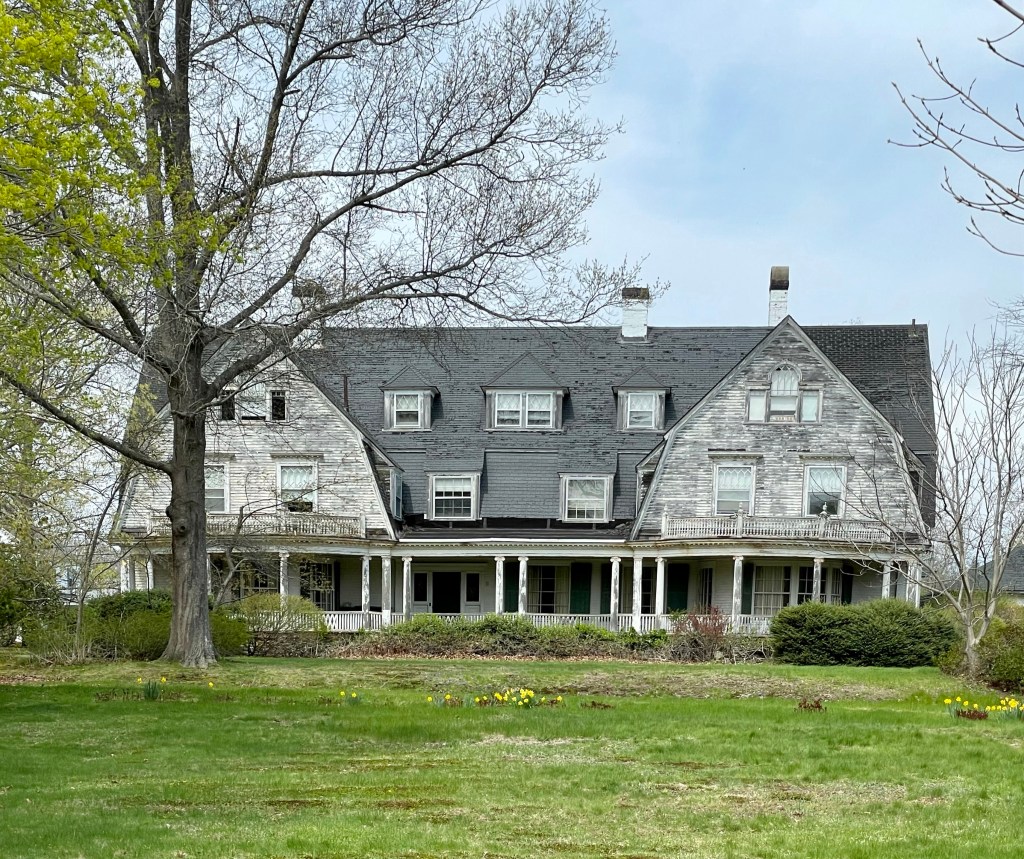
Another of the stunning buildings on the Harkness Estate is this massive all-purpose building that served a variety of functions, but I will call it the Carriage House. The building was constructed in 1908 and designed by James Gamble Rogers, mimicking the Renaissance Revival grandeur of the main home, Eolia. As previously mentioned, the large, U-shaped building was a multi-use support compound for the Harkness Family and their farm. The South Wing (right) of the building served as a clubhouse for Edward Harkness and his friends, with a billiards room, squash court, and two bowling lanes. This wing has large windows looking out towards the ocean and the large gardens on the property. The central block contained a garage with a turntable to facilitate the parking of limousines, a gas pump and a car wash for Mr. Harkness and his growing automobile collection. The North Wing (left) contained the horse stables, carriage area, tack room, smithy, and even a space dedicated to dog grooming. Upon close inspection you can see small rounded stones near the portals to allow the wheels to hit them rather than damage the building. Perhaps most importantly, the Carriage House was the location for the furnace room with its huge steam boiler. This boiler heated the Carriage House as well as the Mansion via an underground steam line. Apparently the building will soon be undergoing a restoration. Fingers crossed!

Henry C. White Estate // 1913

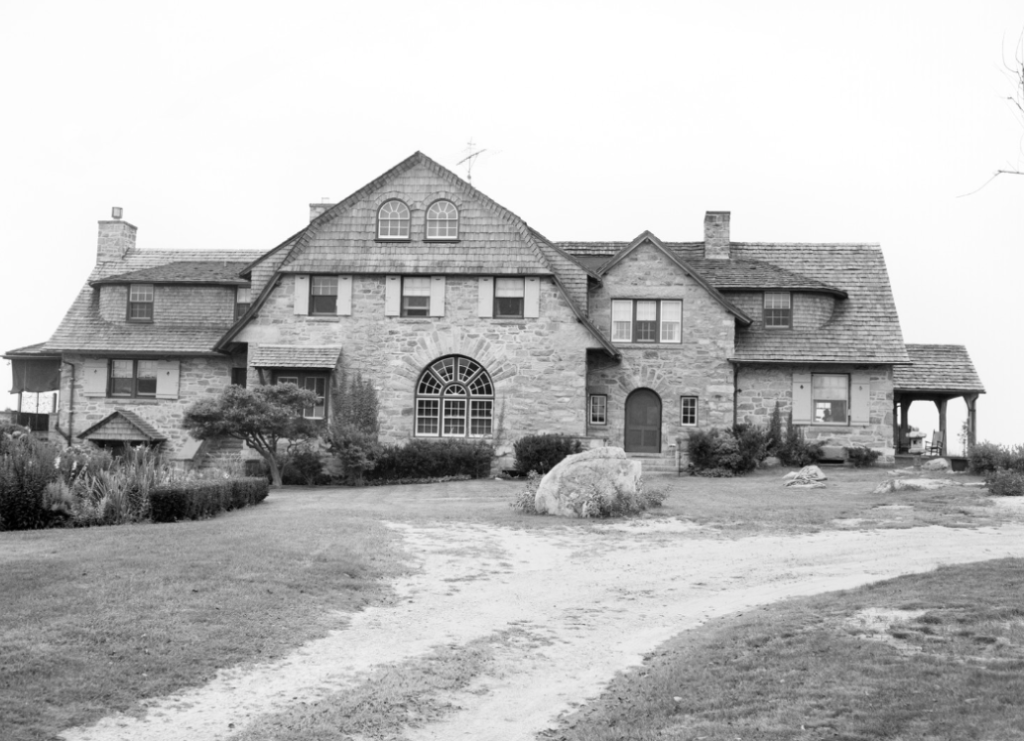
White Estate, c.1970, taken by Wayne Andrews

Henry Cooke White (1861-1952), the patriarch of an extremely artistic family, purchased undeveloped land on a coastal part of Waterford, Connecticut in 1891. When passing through the area he found a vantage point overlooking the water, he was overwhelmed by the panoramic view of Long Island Sound, writing in his memoirs, “…I was convinced that this was my Promised land.” Not long after, he built a summer cottage on what became known as White Point the following year. The Whites wintered with his parents in Hartford until they built a year-round home in Waterford in 1913, designed by Wilson Eyre, a Philadelphia architect, after he was inspired by Charles Lang Freer’s home in Detroit. The rustic Shingle style house was constructed of ashlar stone masonry with shingles above, which is sited perfectly on the rocky shoreline. Also on the site is a boat house and garage (which I could photograph from the street) in similar detailing. Henry‘s son and grandson both followed his footsteps: Nelson Cooke White (1900-1989), who was born at White Point, and inherited his father’s love of the sea, became a noted marine and landscape painter; and Nelson Holbrook White (1932-) who was taught by his grandfather and later studied in Italy how to perfect his painting.

Powers-Rosenthal House // c.1877

This gorgeous stone house was built circa 1877 by Phillip M. Powers (1814-1889), who served as President of the Millstone granite quarry in Waterford, Connecticut. The home is said to have been built off an earlier 1700s home, but all was constructed in ashlar granite to showcase Mr. Powers’ quality stone. It is said that Phillip went bankrupt not long after the construction of this home. In 1930, the house was purchased by Beatrice H. Rosenthal and her husband. Ms. Rosenthal served as both a delegate and as a committeewoman of the Democratic National party, and a staunch advocate for women’s rights. She was also active in women’s educational institutions around New England. The old home and barn are now available for rentals for events or overnight stays.

Walter Garde Cottage // c.1910

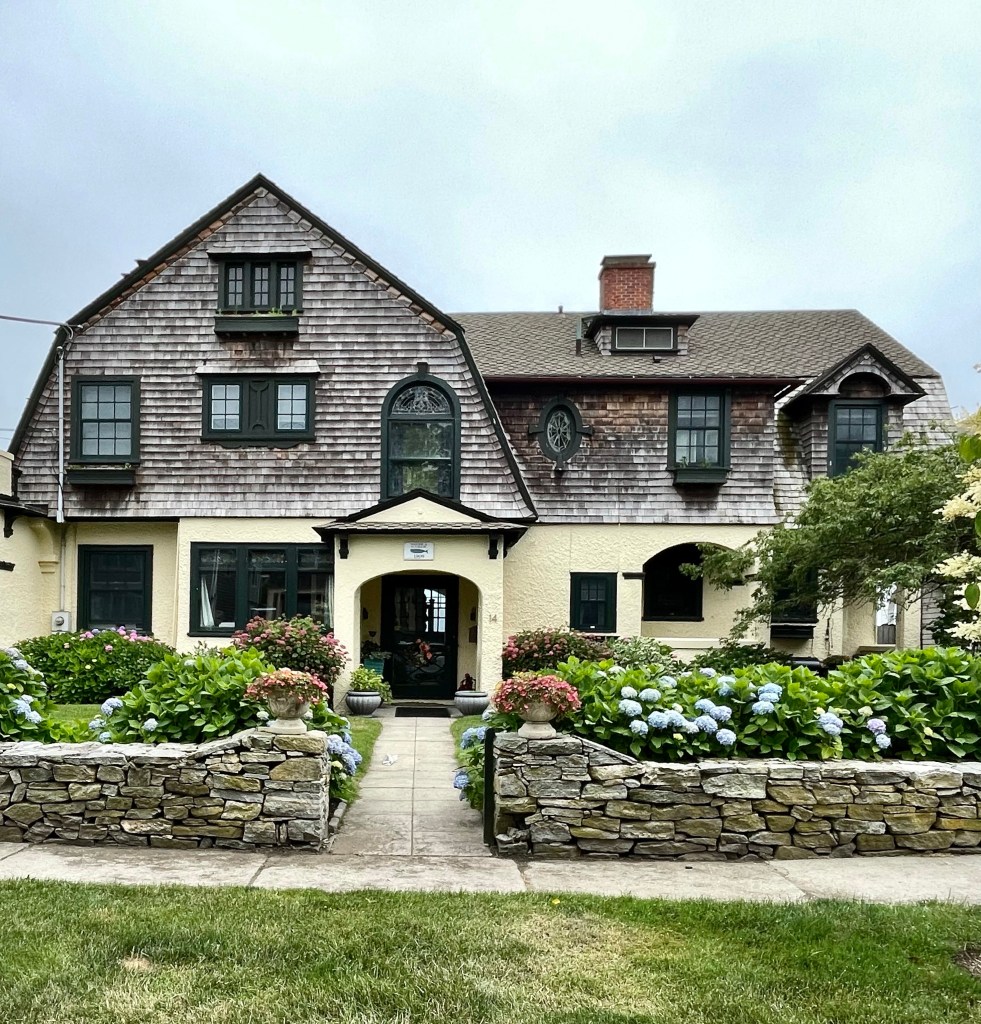
This summer cottage in the Neptune Park development of New London, Connecticut, was built around 1910 for Walter Garde, a resident of Hartford and New London. Walter built this home as a retreat from city-living where he could breathe the fresh sea breeze and not worry about smoke and pollution from the growing industrial cores of Hartford and New London. The home blends styles and forms elegantly with a stuccoed ground floor and shingles above. A cross-gambrel roof adds depth with windows in various shapes and sizes creating a pleasing composition at the street. Walter Garde was a businessman who notably opened the Garde Theatre (now Garde Arts Center) in Downtown New London.

Mary English Cottage // 1911

This shingled beach cottage on the southern tip of New London, Connecticut sits in the Neptune Park community, which was laid out by real estate speculators as summer homes, primarily for local families. The Post Hill Improvement Company made up of professionals, purchased the beach and the surrounding land for $25,000 and began selling off the land adjacent to the beach. Then, once developable lots were sold and many cottages were built, they sold the beach alone back to the City for the same sum of $25,000. Like many such developments, deed restrictions were placed on properties, and ensured that only a dwelling house, with a minimum value of $2,500 if not waterfront and $3,000 if waterfront, could be constructed on the lots. This formerly Colonial Revival cottage was built in 1911 for Mary R. English, and would have cost at least $3,000. The shingled home was later given the tower and other details, but retains much of its charm.

Simeon Wetherbee Farmhouse // c.1800

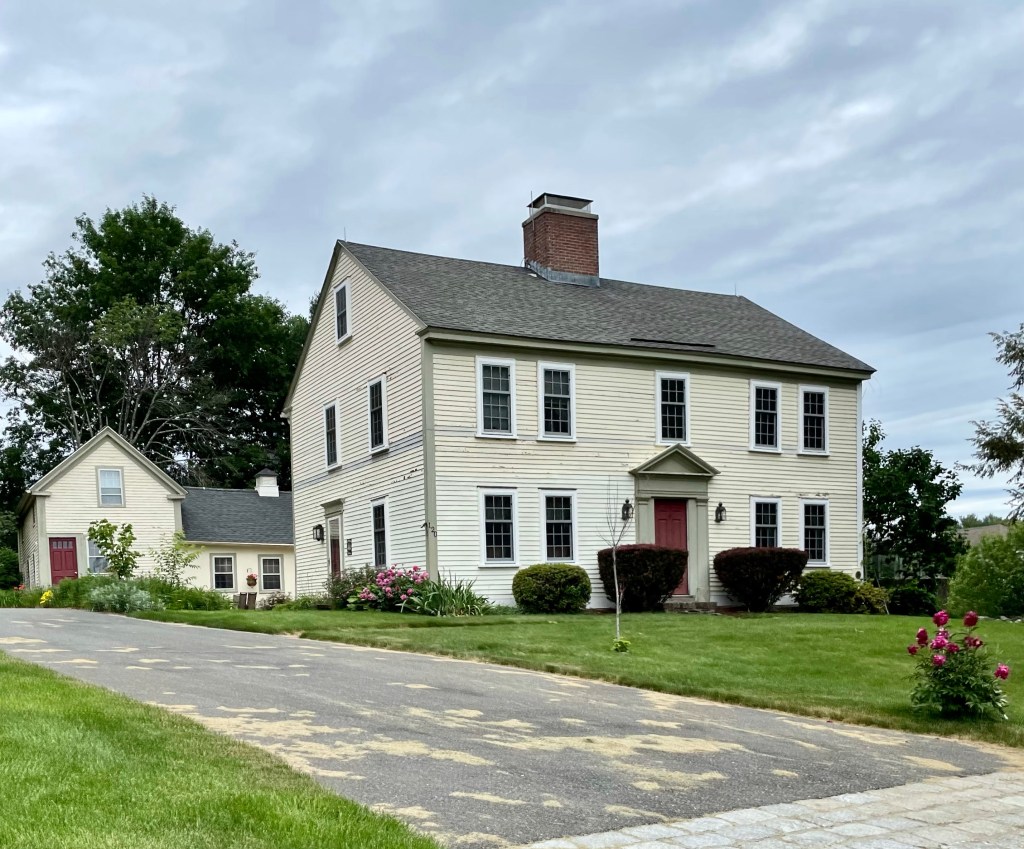
This late-Georgian farmhouse in Boxborough, Mass showcases how architectural integrity and historical context matter in historic preservation. Architectural integrity means the degree to which a building’s original design and physical composition is evident and intact. Historic contexts are the patterns, themes, or trends in history by which a specific property or site is understood and its meaning (or significance) within history is made clear. In this example, the old farmhouse retains much of its architectural integrity as it physically appears much as it would have upon its time of construction. However, the former farmland was sold off and developed as a residential subdivision, which completely obscures the historical context of the building in relation to its original use. The Simeon Wetherbee Farm remained in the Wetherbee family until the 1965, when the land was likely soon after subdivided and sold off for housing lots. A majority of the homes built surrounding this old farmhouse are classified as “Neo-Traditional” a modern take on Colonial architecture, but with cheaper materials and odd proportions. They are not a favorite among architects and historians.

John Foster Farmhouse // c.1810

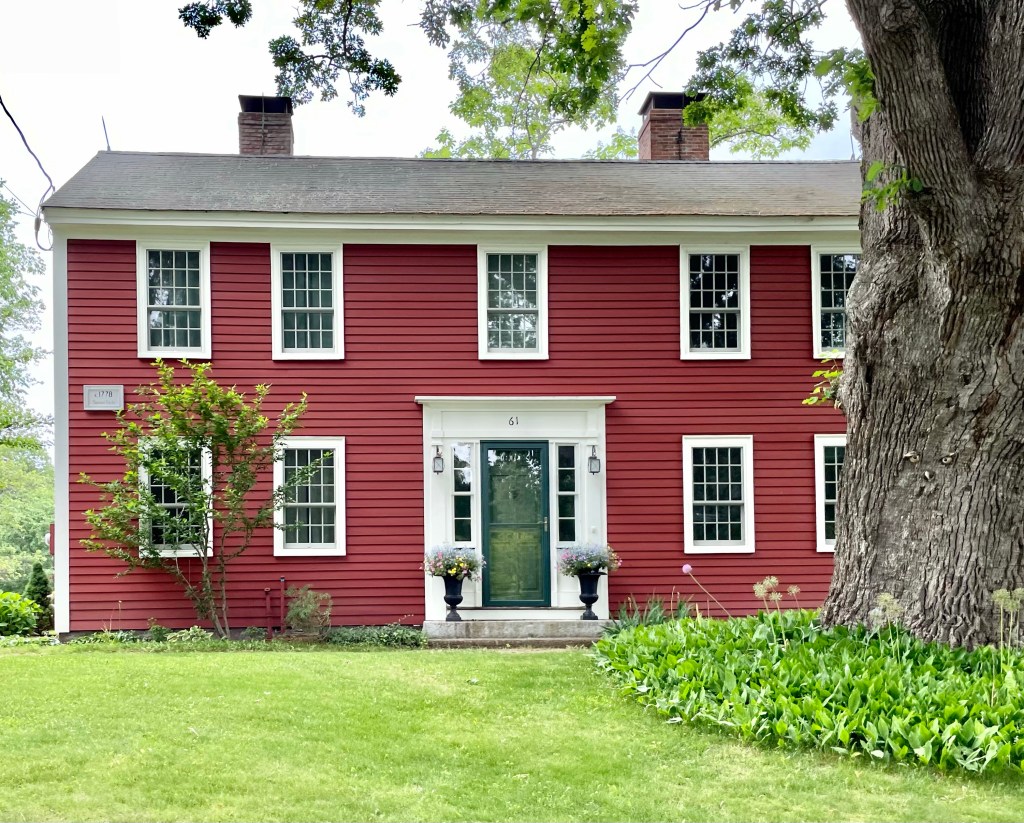
Tracing the history of old New England homes can be difficult and finding the history of this house is no different! The rural property here in Boxborough, MA, was owned in 1731 by Moses Foster, a teacher according to a deed of that year. A home was built here, but it appears it was a one-story house, which is verified as the 1798 tax lists report two single-story houses on the property. It is likely that a subsequent owner modified one of the homes and added a second story to fit a growing family here, probably in the early 19th century. To add more layers to this, the historical commission’s research lists the house date as c.1731, the sign on the house reads c.1778, and my estimation is c.1810. Who said historic preservation and house research is easy?!

Yates House // 1730

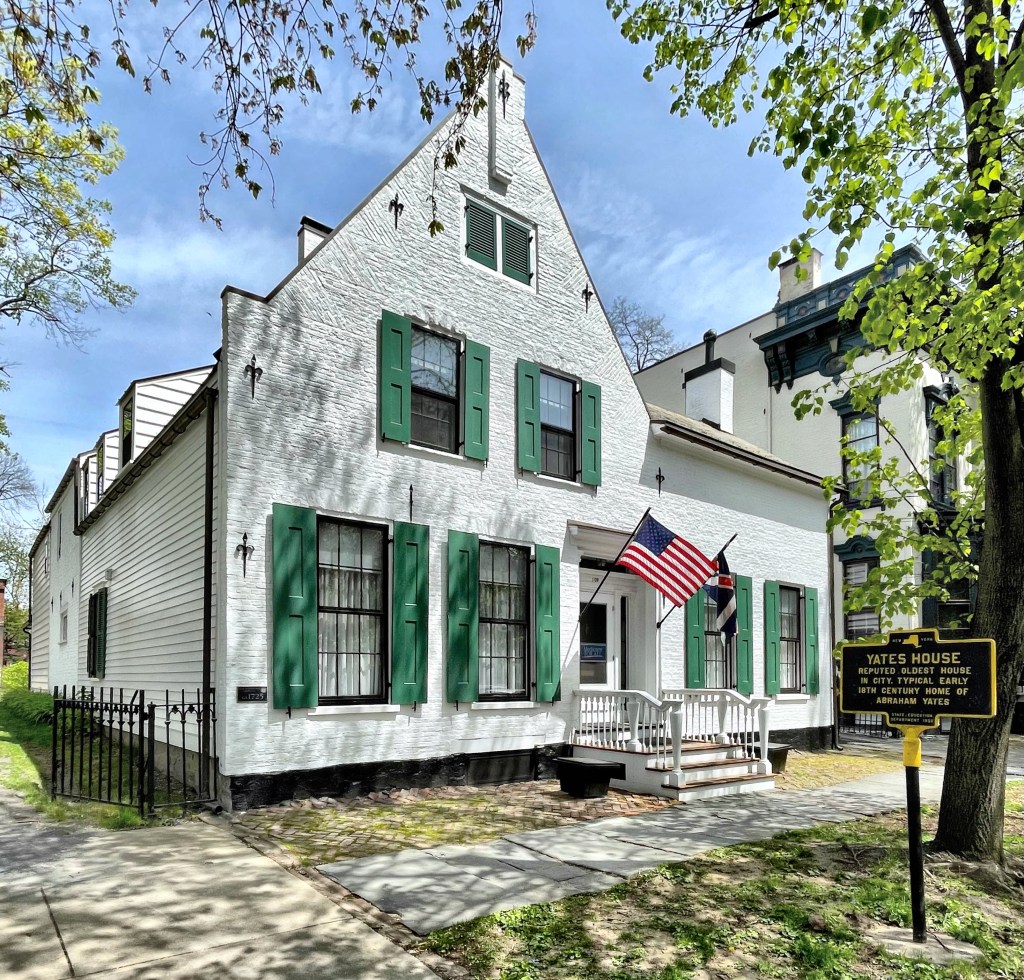
Thought to be the oldest extant home in Schenectady, New York, the Yates House serves as an excellent example of Dutch-inspired architecture found in the days before the founding of the United States of America. The house, believed to have been constructed around 1730, is an example of Dutch Colonial architecture. Dutch Colonial architecture was clearly common in New Netherland, present-day New York. As a contrast with New England, which featured British-inspired Georgian architecture, the homes and buildings found in the New Netherland colony was unapologetically Dutch. The Yates House in Schenectady’s Stockade neighborhood features a Dutch gable end wall facing the street with interesting brickwork.

Jacob A. Swits House // 1792

This gorgeous house in Schenectady’s Stockade neighborhood was built in 1792 for Jacob A. Swits. Swits was a descendant of the first settlers of Schenectady and served in the local militia upon the start of the American Revolution. He later, worked in town as a merchant and was involved with local affairs. He became Major General of the regional militia during the War of 1812. Between these two wars, he had this home built, which was likely a asymmetrical three-bay Federal home. Sometime later, the rightmost bay was added and much of the ornate detailing was added.

Daniel Campbell House // 1762

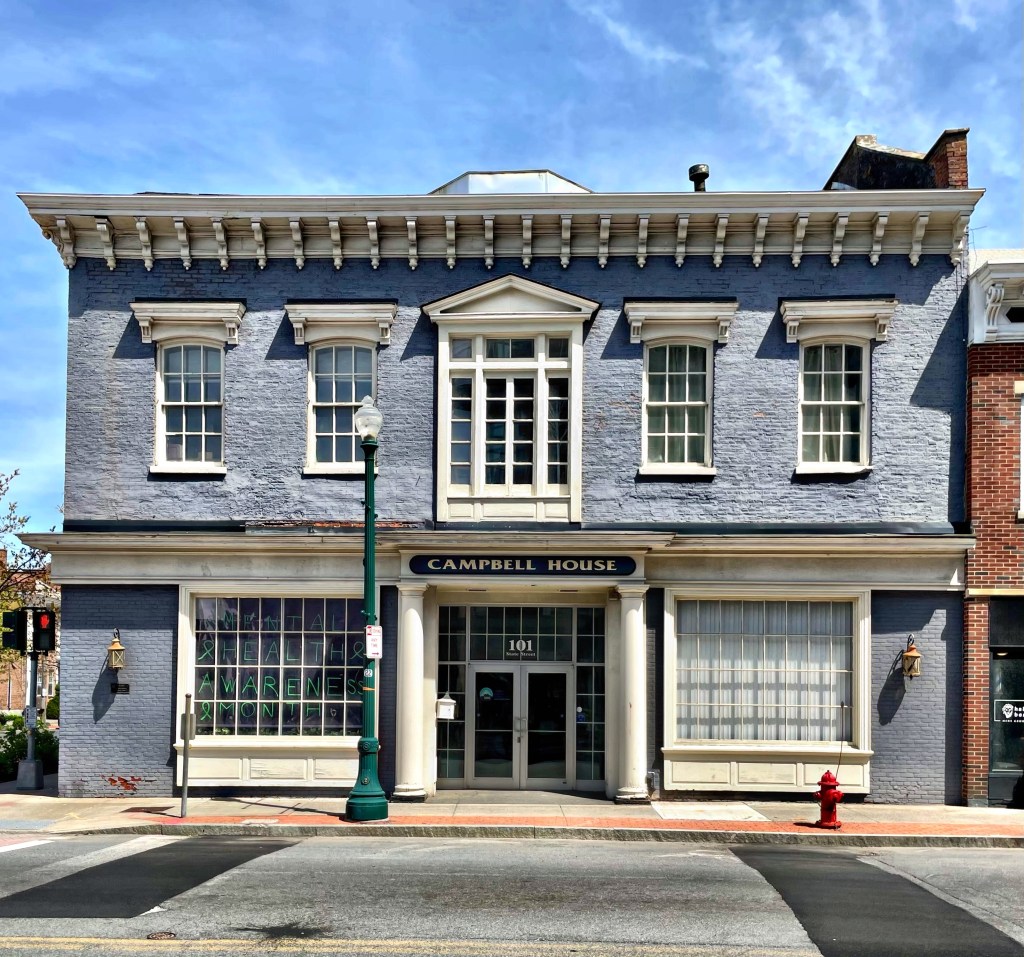
Daniel Campbell (1730-1802) emigrated to Schenectady, New York from Ireland, in 1754 at just 24. When he arrived to New York, he became involved in the fur trade, buying furs of animals from native people in the undeveloped lands of upstate, and selling the furs back to Europe. He began to purchase valuable land in the river town of Schenectady and nearby Albany, solidifying his position in those cities. In 1760, he married Engeltie Bradt, daughter of the Schenectady branch of a prominent New-Netherland era family. Soon after his marriage, he hired architect Samuel Fuller to design a spacious new Georgian mansion. The couple split their time between Schenectady and Albany until Daniel’s death in 1802. His widow resided at this home until her death ten years later. As State Street (where this mansion sits) turned more industrial, this home was modified with storefronts and later alterations in the mid 19th century.