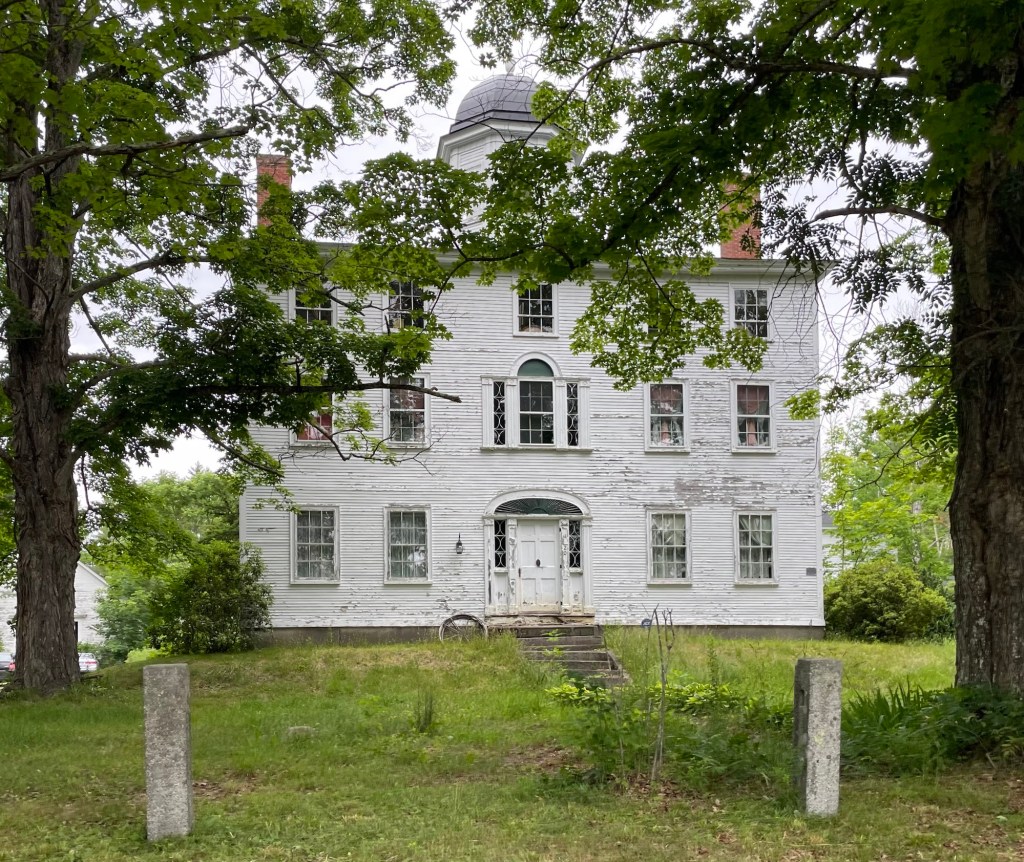
Isaac Lord (1772-1838) was born in Maine, but would spend much of his time transforming the small town of Effingham, New Hampshire. Isaac married the love of his life, Susanna Leavitt in Exeter in 1793 and the couple moved to Effingham, living and working in a tavern he built. Isaac prospered as an innkeeper, merchant, farmer, and entrepreneur, becoming Effingham’s wealthiest citizen, making the village he owned buildings to be called Lord’s Hill in his name. From 1818 to 1822, Isaac and Susanna lived in Portland, but he was ridiculed for “having money but no culture”. Growing tired of the city, he decided to return to Effingham. Mrs. Lord found the village too quiet and longed for the social life to be had in Portland, Maine. To convince his wife to remain with him, Isaac promised her a mansion that rivaled the homes in wealthy seaports like Portland and Portsmouth and began working on his mansion in Effingham in 1822. After years, the massive estate was completed, but Susanna remained in Portland. A heartbroken Isaac moved into the large mansion and continued business until his death in 1838. The Isaac Lord House consists of a three-story main block with a grand cupola on its roof and a three story ell to its rear. Stables and a carriage house are also on the lot today. I would do anything to see the inside of this beauty!
 Buildings of New England